Your First High Ropes Course: What to Expect
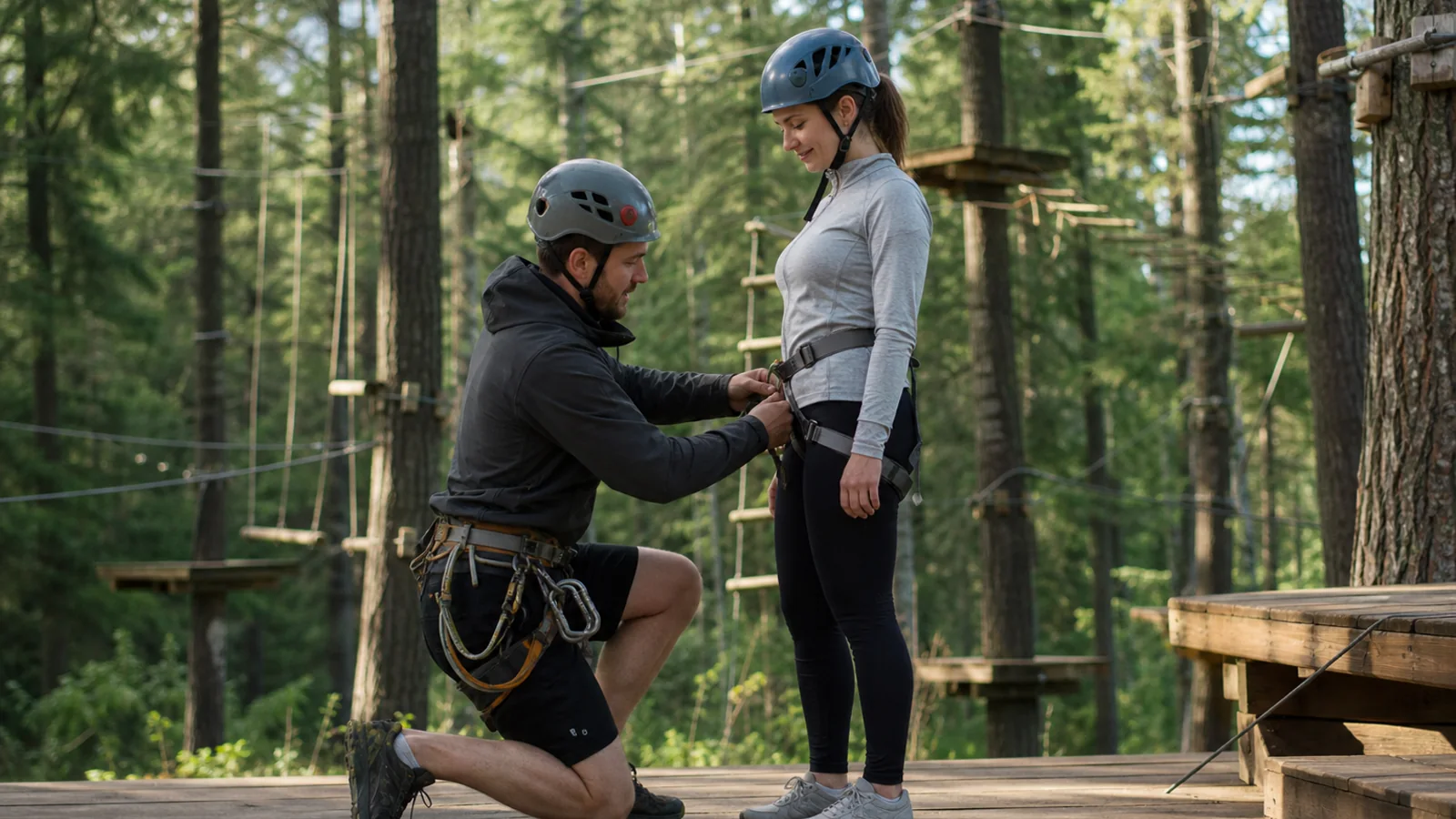
A first high ropes course is easier to enjoy when you know how the session is likely to work. This guide takes you from the booking screen to the practice line, without pretending that every adventure park uses the same rules.
Check the participation rules before booking
Start with the operator’s own website. Find the minimum age, height or reach requirement, adult supervision ratio and maximum participant weight if one is published. These limits can differ between courses at the same park, so a general family ticket does not always mean every person can use every route.
Read what the session time includes. Equipment fitting, the safety briefing and the practice course may form part of the advertised duration. Check the arrival time separately because a late arrival can mean missing the briefing and losing the session.
What to wear on a rope course
Choose closed-toe shoes with dependable grip and clothes that allow a full range of movement. Fitted layers are easier to manage around harnesses than loose coats or scarves. Tie back long hair, remove loose jewellery and use pockets that zip.
The operator supplies specialist safety equipment unless it says otherwise. Do not assume that your own helmet, gloves or harness can be used. Bring a light waterproof layer, water and dry clothing for the journey home, then follow the venue instructions at check-in.
Use the briefing and practice line
An instructor should explain how the attachment system works and give participants a chance to practise near ground level. Watch the whole demonstration, even if you have climbed elsewhere. The clips, trolley and rescue procedure may be different.
Ask a question immediately if the system is unclear. A practice line is also the right place to notice whether height exposure, moving obstacles or hand strength will affect the day. Starting on the lowest suitable loop is sensible preparation.
Choose the course that fits today
Colour names such as green, blue or red are local grading systems, not universal standards. Compare the stated height, obstacle type, independence required and exit points. A physically easy bridge can still feel demanding when it moves above the ground.
Leave room for someone to stop without turning the day into a failure. A lower loop, practice area or spectator route can be the better choice for a participant who is tired or uncertain.
Check weather and venue status on the day
Wind, lightning, ice, heat and maintenance can close part or all of a course. A normal weather forecast cannot confirm that a park is operating. Check the operator’s status update before leaving and keep its contact details with the booking confirmation.
Use our travel weather checker for the forecast, then let the operator make the operational decision. A nearby indoor activity or short woodland walk gives the group a useful fallback.
Explore High Ropes Adventure
Trip tools
Essential adventure planning guides
Use these practical guides to compare rope park activities, prepare for a first high ropes day, check a booking, choose suitable footwear and contact the editorial team. Each page links to the relevant live tools and current planning sections.
Latest articles
- How high ropes course difficulty ratings work
- Thousand Trails: How the Membership Works and What to Check Before You Join
- Turners Outdoor: A Practical Guide for Adventure Day Visitors
- Low ropes vs high ropes team building activities: how to choose
- Space Needle tickets: a practical guide to choosing, booking, and timing your visit
- Outdoor sauna: how it works, what it costs, and how to plan a safe setup
- What to pack for a family ropes course day
- Best mountain biking trails: how to choose, where to ride, and what to check
- Costco Disneyland tickets: how members really save and what to watch
- High ropes course waiver questions to read before you sign