The One-Day Forest Escape Planner
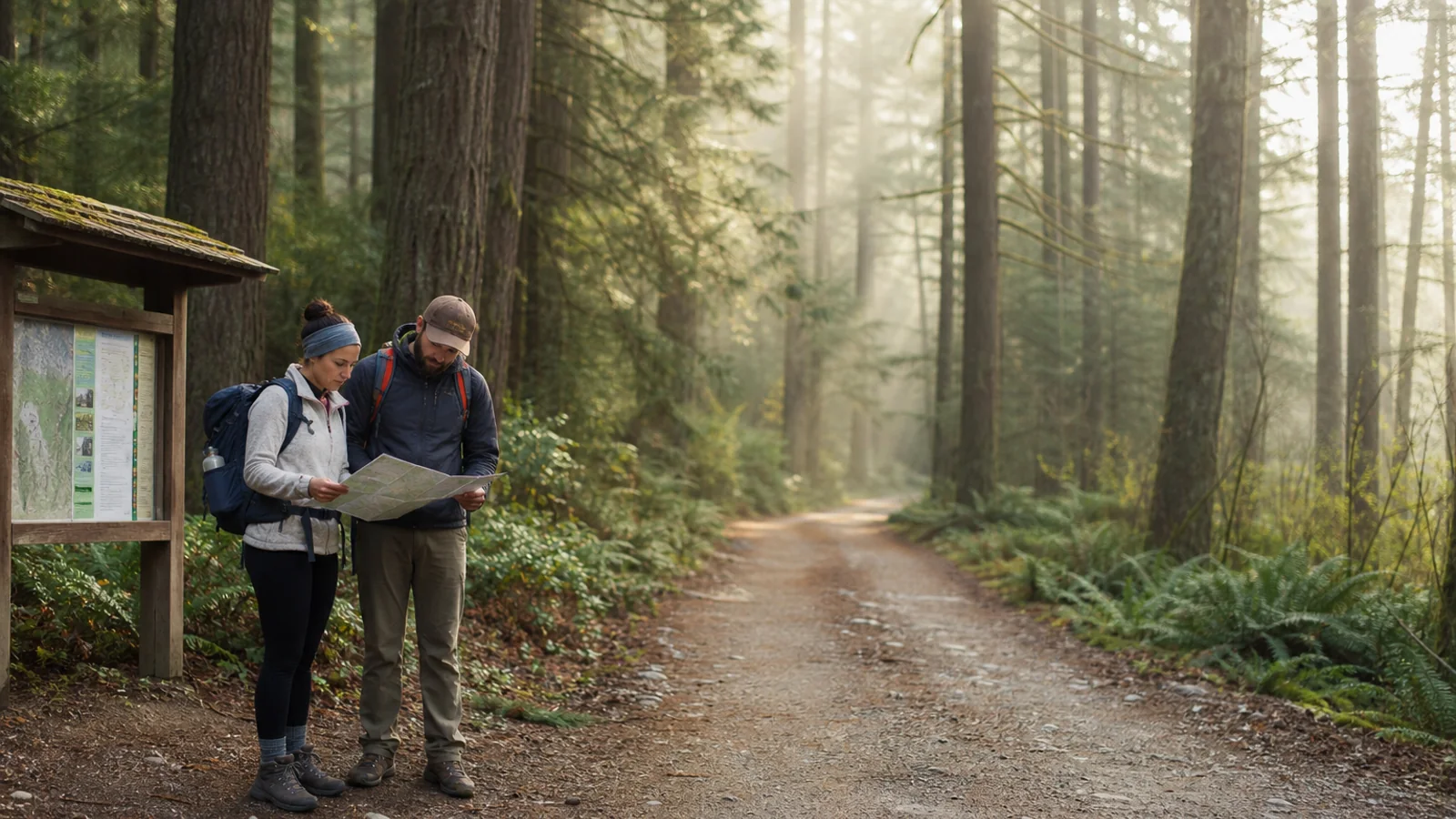
A good one-day forest escape does not need a crowded itinerary. It needs one worthwhile reason to travel, an honest time budget and a finish that still leaves enough energy for the journey home.
Choose one anchor for the day
Start with a forest walk, rope course, viewpoint, outdoor event or picnic area that would justify the journey on its own. Add a cafe or short stop only when it sits naturally on the route. Travelling across a region for a second headline attraction usually removes the time you hoped to spend outside.
Read the official route or venue page before adding anything else. Note the opening window, likely duration, access point and any booking deadline.
Calculate the door-to-door journey
Include the trip to the station, changes, parking, the walk from the final stop and the return. For a timed activity, use the required arrival time rather than the activity start. Rural stops may have limited evening services, so identify the last practical return before choosing a session.
The public transport planner can compare an international route where open timetable data is available. Confirm the final service with the relevant operator.
Match the walk to the group
Distance alone does not describe a forest route. Look at surface, climb, waymarking, recent rain and the pace of the slowest person. Tree cover can keep paths damp and reduce usable light well before sunset.
Save the access point and return point offline. A place name may refer to a village, car park or large forest area, so check the exact trailhead.
Choose a fallback before the forecast changes
A fallback should answer the same risk. If strong wind may close a canopy course, choose an indoor activity. If heavy rain makes an unsurfaced trail unsuitable, save a shorter surfaced loop or a local visitor attraction.
Check the seven-day weather forecast while planning, then check again the evening before and on the morning of travel. Local warnings and venue decisions come first.
Set a real budget
Add tickets, transport, parking, food, equipment and a small contingency. Shared travel costs and per-person costs should be separate so a group can see how the total changes.
Use the day trip cost calculator to compare two plans. Enter live prices from the operator rather than relying on an old article or search result.
Explore High Ropes Adventure
Trip tools
Essential adventure planning guides
Use these practical guides to compare rope park activities, prepare for a first high ropes day, check a booking, choose suitable footwear and contact the editorial team. Each page links to the relevant live tools and current planning sections.
Latest articles
- How high ropes course difficulty ratings work
- Thousand Trails: How the Membership Works and What to Check Before You Join
- Turners Outdoor: A Practical Guide for Adventure Day Visitors
- Low ropes vs high ropes team building activities: how to choose
- Space Needle tickets: a practical guide to choosing, booking, and timing your visit
- Outdoor sauna: how it works, what it costs, and how to plan a safe setup
- What to pack for a family ropes course day
- Best mountain biking trails: how to choose, where to ride, and what to check
- Costco Disneyland tickets: how members really save and what to watch
- High ropes course waiver questions to read before you sign