What to Pack for a Wet-Weather Trail Day
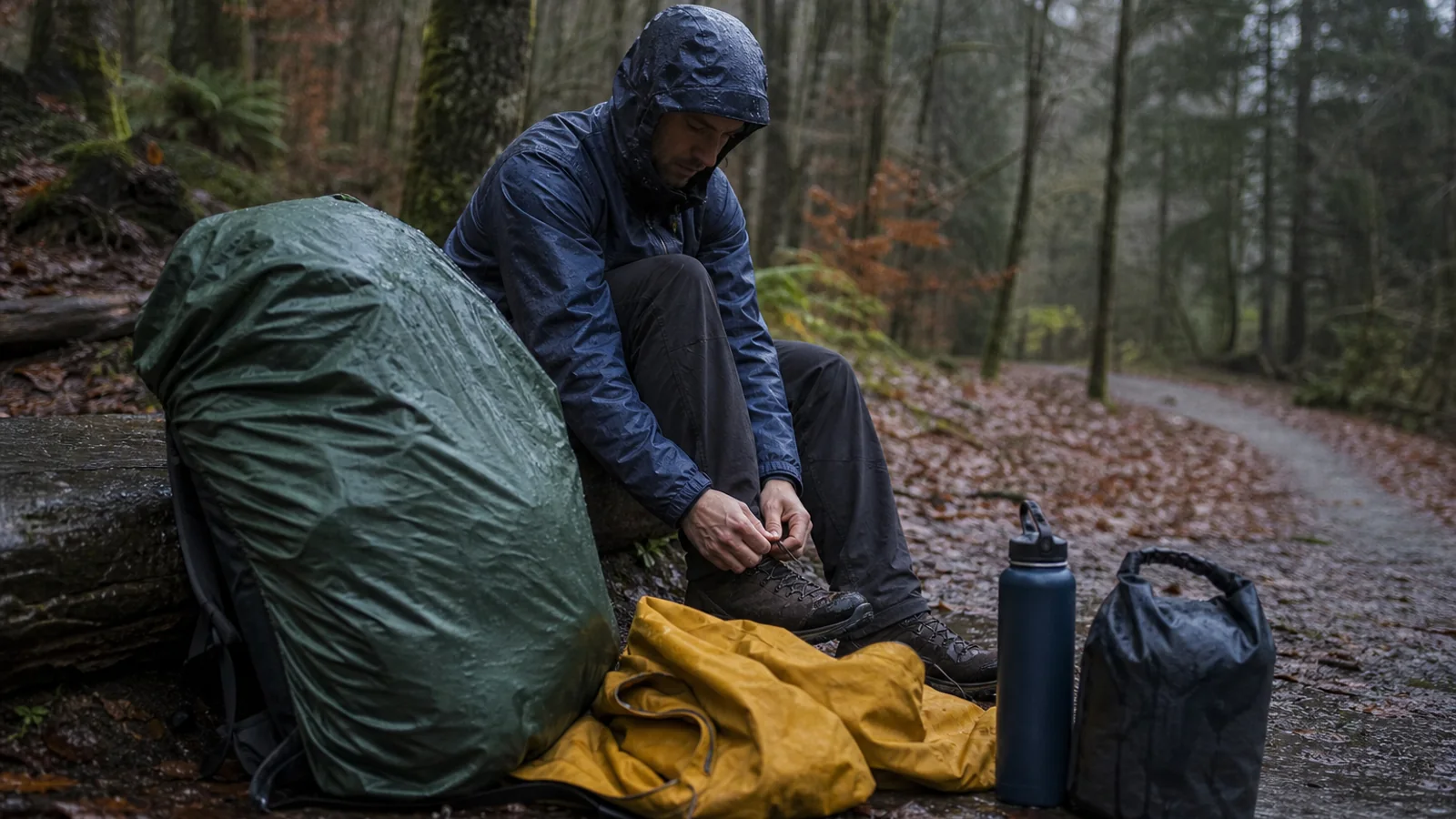
Wet weather does not automatically cancel a forest walk. The useful question is whether the route, clothing and experience of the group fit the expected conditions.
Read more than the rain percentage
Check temperature, wind, precipitation, visibility and any local warning. Recent rain can matter even when the walk itself looks dry because streams may be higher and unsurfaced paths may remain muddy. Use a local route notice where one is available.
Our travel weather checker gives a seven-day view. It cannot confirm path conditions or whether a land manager has closed an area.
Build clothing from practical layers
Use a quick-drying base, add warmth that can be removed and finish with a waterproof outer layer suited to the forecast. A single heavy coat can become uncomfortable when the group warms up on a climb. To place this section in context, the Appalachian Trail offers a concise background reference.
Choose grippy footwear that has already been worn. New boots on a wet day can create as many problems as old shoes with poor tread. Pack spare socks in a dry bag and keep a full change of clothes at the finish when possible.
Keep essential items dry and reachable
Use a waterproof liner or dry bags inside the pack. Keep the phone, paper map, medication, food and spare layer protected. Water should remain easy to reach because cool wet conditions can still lead people to drink less than they need.
Add a small first-aid kit, charged phone and a backup light when the route or daylight makes them appropriate. Specialist or remote routes require more than a generic day-walk list. As a separate reference, the hiker who went missing on appalachian adds source-specific context to this discussion.
Change the route before the kit becomes the solution
No jacket can make a flooded crossing, fallen-tree zone or exposed ridge suitable. Shorten the route when surface, wind, visibility or river conditions exceed the group’s experience. Choose established paths and obey temporary closures.
Set a turn-around time before starting. In dense woodland, usable light can fade earlier than the published sunset.
Generate a list from the forecast
The weather-based packing planner combines destination conditions with the type of activity. Treat the generated items as a starting point and add any medication, child-specific equipment or venue requirements your group needs.
Explore High Ropes Adventure
Trip tools
Essential adventure planning guides
Use these practical guides to compare rope park activities, prepare for a first high ropes day, check a booking, choose suitable footwear and contact the editorial team. Each page links to the relevant live tools and current planning sections.
Latest articles
- How high ropes course difficulty ratings work
- Thousand Trails: How the Membership Works and What to Check Before You Join
- Turners Outdoor: A Practical Guide for Adventure Day Visitors
- Low ropes vs high ropes team building activities: how to choose
- Space Needle tickets: a practical guide to choosing, booking, and timing your visit
- Outdoor sauna: how it works, what it costs, and how to plan a safe setup
- What to pack for a family ropes course day
- Best mountain biking trails: how to choose, where to ride, and what to check
- Costco Disneyland tickets: how members really save and what to watch
- High ropes course waiver questions to read before you sign