How to Build a Realistic Day Trip Budget
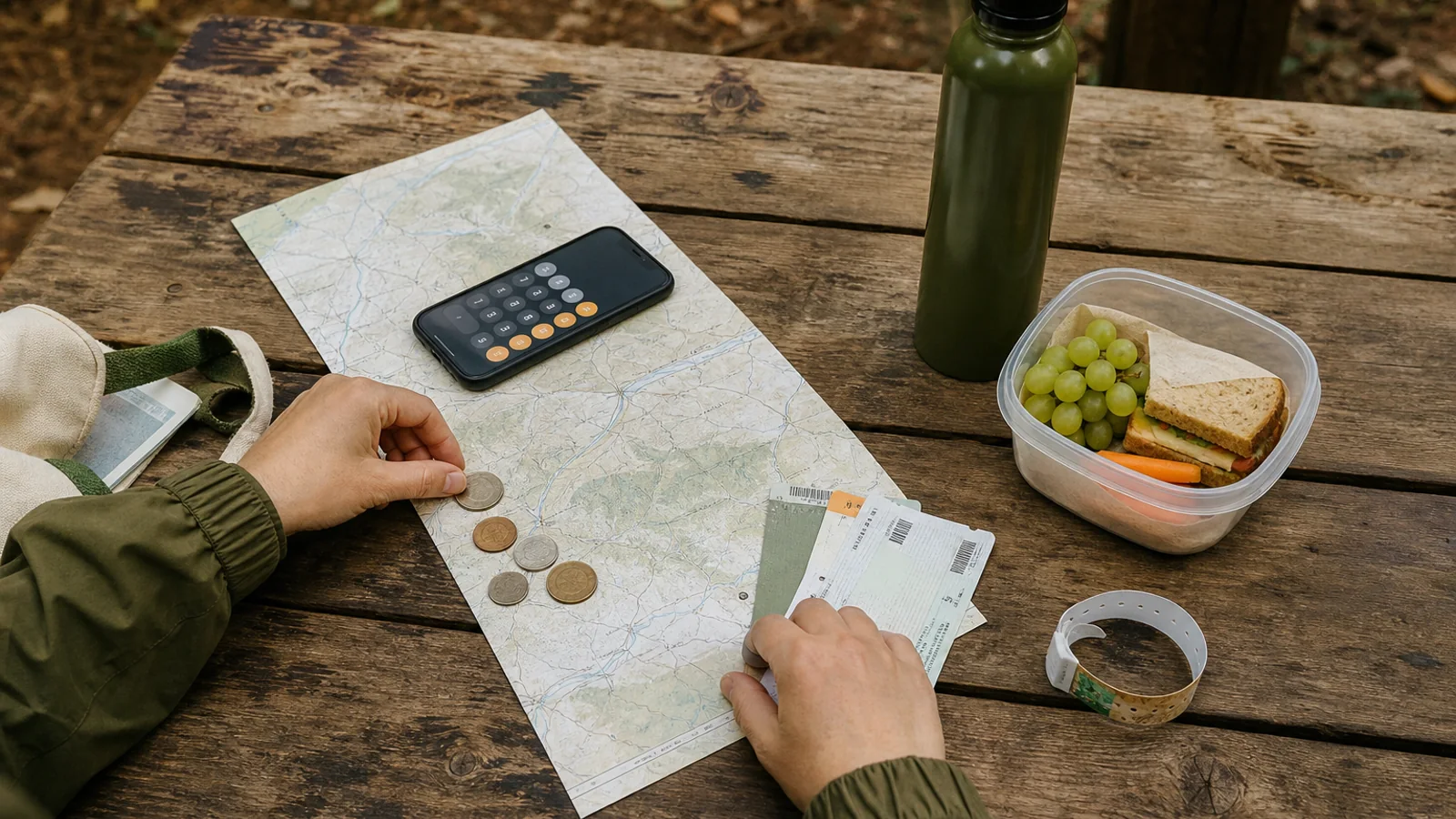
A day trip budget is useful when it helps you compare complete plans. A low ticket price can hide an expensive journey, while a higher-priced local activity may cost less once the full day is counted.
Separate shared and per-person costs
Tickets, meals and equipment hire are usually per-person costs. Parking, fuel or a taxi may be shared by the group. Keep those categories separate so the estimate changes correctly when another person joins.
Check whether supervising adults need a participant ticket and whether a family ticket includes the ages in your group.
Price the complete journey
For public transport, include local connections, reservations and the final bus or taxi. For driving, include fuel, parking and tolls. If the trip crosses a border, convert costs using a dated reference rate rather than guessing.
The currency converter provides a planning reference. Your bank or card can apply a different rate and fees.
Add food and activity extras
Use current menus or decide on a per-person food allowance. Add lockers, gloves, equipment hire, baggage storage and any booking fee shown before checkout. Do not assume optional equipment is optional until the venue rules say so.
Bring water and food where permitted, but check whether the activity area restricts bags or outside food.
Use a visible contingency
Add a small percentage or fixed amount for a missed connection, unexpected snack or price change. Keep the contingency separate from confirmed costs so you can see how much uncertainty remains.
A buffer is not a reason to ignore cancellation terms. Flexible booking can have more value than a cheaper non-refundable option when weather controls the activity.
Compare two plans with the same assumptions
Open the day trip cost calculator, choose the relevant currency and enter live prices. Save one total, then change the destination or travel method. Comparing the same categories prevents a cheap-looking option from hiding a missing cost.
Explore High Ropes Adventure
Trip tools
Essential adventure planning guides
Use these practical guides to compare rope park activities, prepare for a first high ropes day, check a booking, choose suitable footwear and contact the editorial team. Each page links to the relevant live tools and current planning sections.
Latest articles
- Parks Explained: Types, Rules, and How to Plan a Visit
- Planning a Parks Project: From Site Vision to Built Adventure Space
- How fast do ziplines go? Real speeds and what to expect
- Zipline age requirements: a practical guide for riders and parents
- Outdoor storage for adventure gear: a practical guide
- How to get Metallica Sphere tickets without overpaying
- What Is a Challenge Course Facilitator? Roles, Skills, and Training
- Outdoor storage box: how to choose the right one for your garden
- AAA travel insurance: what it covers and how to use it on a high ropes trip
- Zipline landing positions explained: how to approach, brake, and dismount safely