High Ropes Belay Systems Explained for First-Time Visitors
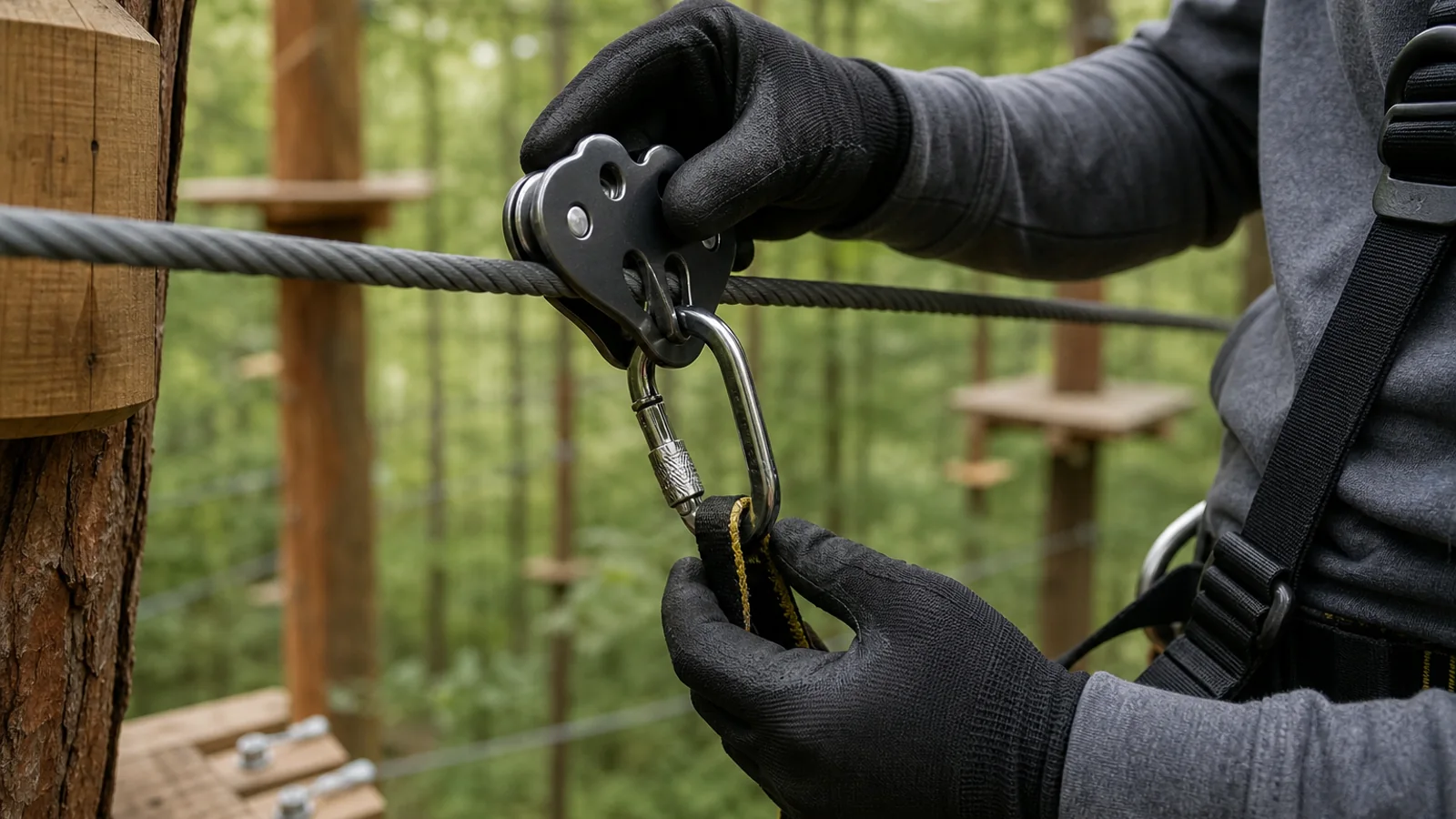
The attachment system is one of the most important differences between high ropes courses. Visitors do not need to become equipment experts, but they should understand the system used at their venue before leaving the practice area.
What a belay system does
A high ropes belay system connects the participant’s harness to an engineered safety line or structure. The exact equipment and method depend on the course. The operator is responsible for explaining the system, checking the harness and supervising its correct use under the rules that apply locally.
This article describes common categories, not a training procedure. Always follow the on-site briefing and never copy a method from a video or another park.
Continuous belay systems
A continuous system is designed so the participant remains connected while moving through a sequence of obstacles. A trolley or connector travels along the safety line and passes through course transitions in a controlled way. The participant may still need to handle parts of the system as instructed.
Ask how the trolley works on ziplines, whether staff check each transfer and what to do if the participant stops between platforms.
Communicating clip systems
Some courses use two connectors designed so that opening one affects the other, reducing the chance that both can be opened at the same time. The participant still needs a careful briefing and practice because obstacle transfers must follow the exact sequence taught by the operator.
The appearance of a clip does not tell you how it works. Keep hands away from gates or mechanisms unless the instructor has shown where to hold them.
Instructor-led or staff-operated systems
On some activities an instructor controls the safety rope, attachment or movement through the course. This may suit introductory groups, educational sessions or elements where independent transfers are not appropriate. Supervision style can change the pace and group size of the session.
Confirm whether an adult accompanying a child must climb, watch from the ground or participate in the safety process.
Questions worth asking the operator
Ask which system the course uses, what the practice assessment involves, how participants request assistance and how staff reach someone who cannot continue. A clear answer is more useful than a technical brand name on its own.
For a first visit, choose a park that publishes understandable rules and gives the group enough briefing time. Use our rope park map to build a shortlist, then verify every detail with the operator.
Explore High Ropes Adventure
Trip tools
Essential adventure planning guides
Use these practical guides to compare rope park activities, prepare for a first high ropes day, check a booking, choose suitable footwear and contact the editorial team. Each page links to the relevant live tools and current planning sections.
Latest articles
- Paylater travel: how buy now, pay later works for trip bookings
- Bagsmart Blast Travel Backpack: A Practical Review for Day Trips and Adventure Days
- How to choose an outdoor rocking chair that actually lasts
- Indiana travel advisory map: how to read it before a day trip
- How to plan an outdoor day around a concert stop: a cardi b tickets field guide
- Outdoor sectional sofas: a practical buyer’s guide for patio living
- How amusement parks actually work: rides, safety, and what to expect
- Beis Travel: What the Bag Brand Offers for Outdoor Days
- Adventure park: what it is, what to expect, and how to plan a visit
- Indoor activities near me: practical options for rainy days and tight schedules