Outdoor footwear
Are Nike Air Max good for high ropes and hiking?
Some Nike Air Max shoes can work for a dry approach, city walking or an easy maintained path. They are not automatically suitable for a high ropes course or hike. The answer depends on the exact model, outsole grip, secure fit, condition, weather and the operator's footwear rule.
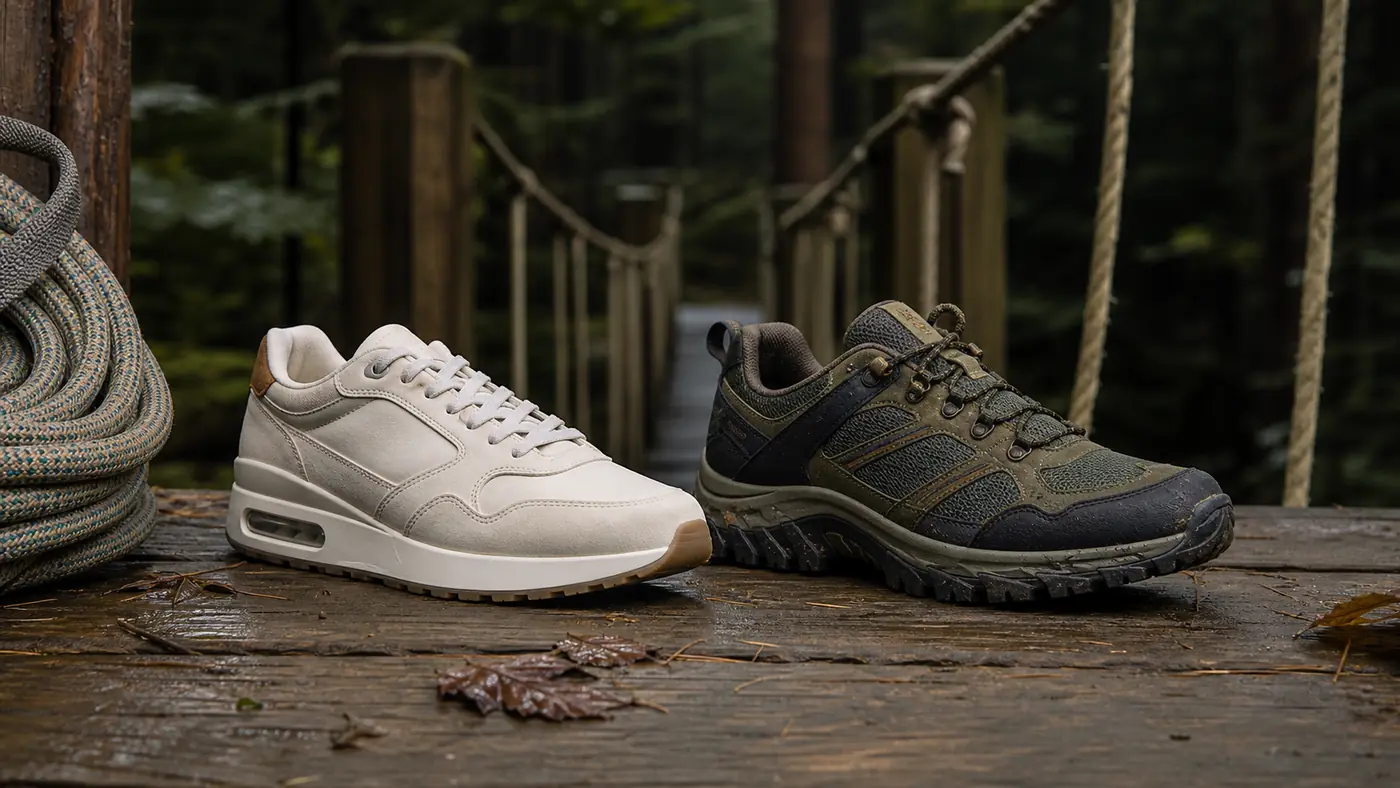
This is independent editorial guidance. High Ropes Adventure is not affiliated with Nike, does not sell the shoes discussed here and receives no payment from the source links on this page. Nike and Air Max are trademarks of their owner.
Air Max is a shoe family, not one specification
The name Air Max covers many designs produced across decades. Nike currently groups a large number of Air Max products under lifestyle shoes, while individual models can also appear in other categories. Heel shape, upper, tread, stack height and fastening differ, so a verdict about one pair should not be applied to every shoe carrying the name.
Visible air cushioning may feel comfortable underfoot, but it does not tell you how the outsole grips wet timber or loose ground. Before an outdoor day, inspect the exact shoe you own rather than relying on the range name, price or appearance.
What shoes need to do on a high ropes course
Rope-course footwear needs to stay attached to the foot, protect the toes and provide predictable contact on ladders, nets, cables and timber. Go Ape's current visitor material, for example, calls for closed-toe shoes with good grip. Older activity instructions from the same operator also specify a closed toe and closed heel. Your chosen venue may set a different or stricter rule.
A secure lace-up Air Max in good condition may pass those basic checks on a dry recreational course. A loose slip-on, damaged sole, worn-smooth outsole or shoe that lifts at the heel is a poor choice even if it feels comfortable on pavement. The staff member at the venue has the final say.
- Closed toe and, where required, closed heel
- Laces or fastening that holds the heel securely
- Outsole with visible, unworn tread
- Stable feel when edging on a narrow step
- No loose decorations, long lace loops or damaged panels
When Air Max can be reasonable for a rope park
A clean, well-fitting pair can be reasonable when the course is dry, the approach is short and firm, the outsole has useful tread, and the operator accepts the shoe. This is most plausible for a low-risk visitor day where you already know the pair does not slip or move around on your foot.
Test the shoe before travelling. Lace it as you would for the course, walk down stairs, stand on the edge of a step and change direction on a clean dry surface. Heel lift, pressure at the toes or sideways movement inside the shoe will not improve on an obstacle. Do not perform a slip test on a dangerous wet surface.
When to choose another shoe
Choose a grippier alternative when the outsole is smooth, the air unit or midsole is damaged, the shoe feels tall and unstable to you, rain is likely, or the approach crosses mud and roots. Also change footwear if the operator asks for a specific closed-heel or tread standard that the pair does not meet.
A familiar trail shoe is often the simpler option because its outsole and upper are built around outdoor movement. New shoes are not automatically better: wear them on shorter walks first and check for heel movement, pressure points and lace security.
Are Nike Air Max good for hiking?
For a short urban walk, park loop or smooth dry path, some Air Max models may be comfortable. That use is closer to travel walking than to technical hiking. Once the route becomes steep, rocky, muddy, remote or long, grip, lateral stability, underfoot protection and wet-weather performance matter more.
The National Park Service advises hikers to consider sturdy footwear with non-slip tread and ankle support for the conditions it describes. That does not mean every walk requires a boot, but it does show why a lifestyle label and cushioning alone cannot answer a trail question. Match footwear to the route, forecast, distance and consequences of a slip.
Lifestyle sneaker versus trail shoe
A lifestyle sneaker usually prioritises everyday comfort, appearance and pavement use. A trail shoe typically adds deeper outsole lugs, a more secure upper and a platform designed for changing ground. Hiking shoes or boots may add further protection and support, though they can be heavier and need more break-in time.
The useful comparison is not which category sounds tougher. Put the actual pairs side by side. Look at tread depth, heel wear, flex, toe coverage, fastening and how stable each feels when your weight moves sideways. A worn trail shoe can be less trustworthy than a sound everyday shoe on an easy dry path.
- Pavement and stations: everyday comfort may be the main requirement.
- Dry maintained path: inspect tread, fit, distance and weather.
- Mud, loose gravel or wet roots: favour purpose-built trail grip.
- Remote or rocky ground: add protection, stability and route-specific support.
- High ropes course: operator rules and secure fastening come first.
Grip matters more than a soft first impression
Cushioning can make standing and pavement walking pleasant, but a soft feel does not create friction. Outdoor grip comes from the rubber compound, tread pattern, contact area, wear and the surface underfoot. Wet leaves, algae, mud and polished timber can defeat a sole that feels secure indoors.
Inspect the heel and forefoot where wear is greatest. If the pattern is nearly smooth, separating from the midsole or hardened with age, retire the pair from demanding use. Clean embedded mud and stones after a trip, following the shoe maker's care instructions, so the next inspection is meaningful.
Fit, lacing and heel hold
The shoe should hold the heel without crushing the toes. On a descent or rope obstacle, the foot moves forward and sideways; excess space can create rubbing and reduce control. Socks also change volume, so test the complete combination you plan to wear.
Tie laces securely and keep loops short enough that they cannot catch. The National Park Service's footwear guidance for its more demanding cave adventure tours requires footwear that can lace and tie tightly, a useful illustration of how secure fastening becomes important when footing is irregular. A rope park's own wording still controls admission to that activity.
Wet weather changes the decision
Rain affects more than the upper. It changes timber, roots, stones, soil and the walk back to transport. A shoe that is acceptable on a dry platform may be uncomfortable once water enters or unreliable on the muddy approach. Check the forecast and the operator's same-day message.
Water-resistant materials do not guarantee a grippy outsole, and a deeply lugged sole does not guarantee dry feet. Treat weather protection and traction as separate questions. Pack dry socks and a change of footwear if the journey home would otherwise depend on a soaked pair.
A five-minute footwear check before leaving
Read the operator's current rule, identify the exact activity, inspect the outsole and upper, then wear the shoes around home with the intended socks. If any part of that check is uncertain, take the more secure outdoor pair or contact the venue with a photograph and model description.
For hiking, read a current route description and official warnings. Consider surface, ascent, distance, remoteness and the slowest member of the group. Footwear is one part of planning; water, navigation, daylight and a realistic turnaround still matter.
- Does the venue allow this footwear type?
- Are the toe and heel securely enclosed?
- Is the tread present and the sole undamaged?
- Does the heel stay down when climbing stairs?
- Does the route or forecast call for trail-specific grip?
The practical verdict
Nike Air Max can be acceptable for some dry rope-course visits and easy walks when the exact pair fits securely, retains useful tread and meets the operator's rule. The range name by itself is not evidence that a shoe is suitable for hiking.
For wet ropes courses, muddy approaches, uneven trails or long hikes, choose the pair that gives you better grip, secure heel hold and route-appropriate stability. If that is a trail shoe rather than an Air Max, comfort on pavement is not a good reason to ignore the terrain.
Frequently asked questions
Can you wear Nike Air Max to Go Ape?
Go Ape's current visitor material calls for closed-toe shoes with good grip, and venue staff make the live decision. Check your exact location and activity, because a particular Air Max model or worn pair may not meet the rule.
Are Air Max 90 shoes good for hiking?
They may be comfortable for travel and easy dry paths, but the model is commonly sold as a lifestyle shoe. Inspect the exact outsole and fit; choose trail footwear for mud, steep or uneven ground, long distances or remote routes.
Do Air Max shoes have enough grip for wet trails?
Grip varies by model, wear and surface. Visible air cushioning does not indicate wet-trail traction. For wet roots, mud or loose ground, use footwear designed and tested for those conditions.
What are the best shoes for a high ropes course?
The best pair is accepted by the operator, closes the toe and heel where required, fastens securely, fits well and has sound grip. A familiar trail or outdoor shoe is often a dependable choice.