Adventure park booking guide
How to book an adventure park without missing the important details
The right adventure park ticket is the one every participant can actually use. Before paying, match the course, date and supervision rules to the group, then read what happens if weather, transport or confidence changes the plan.
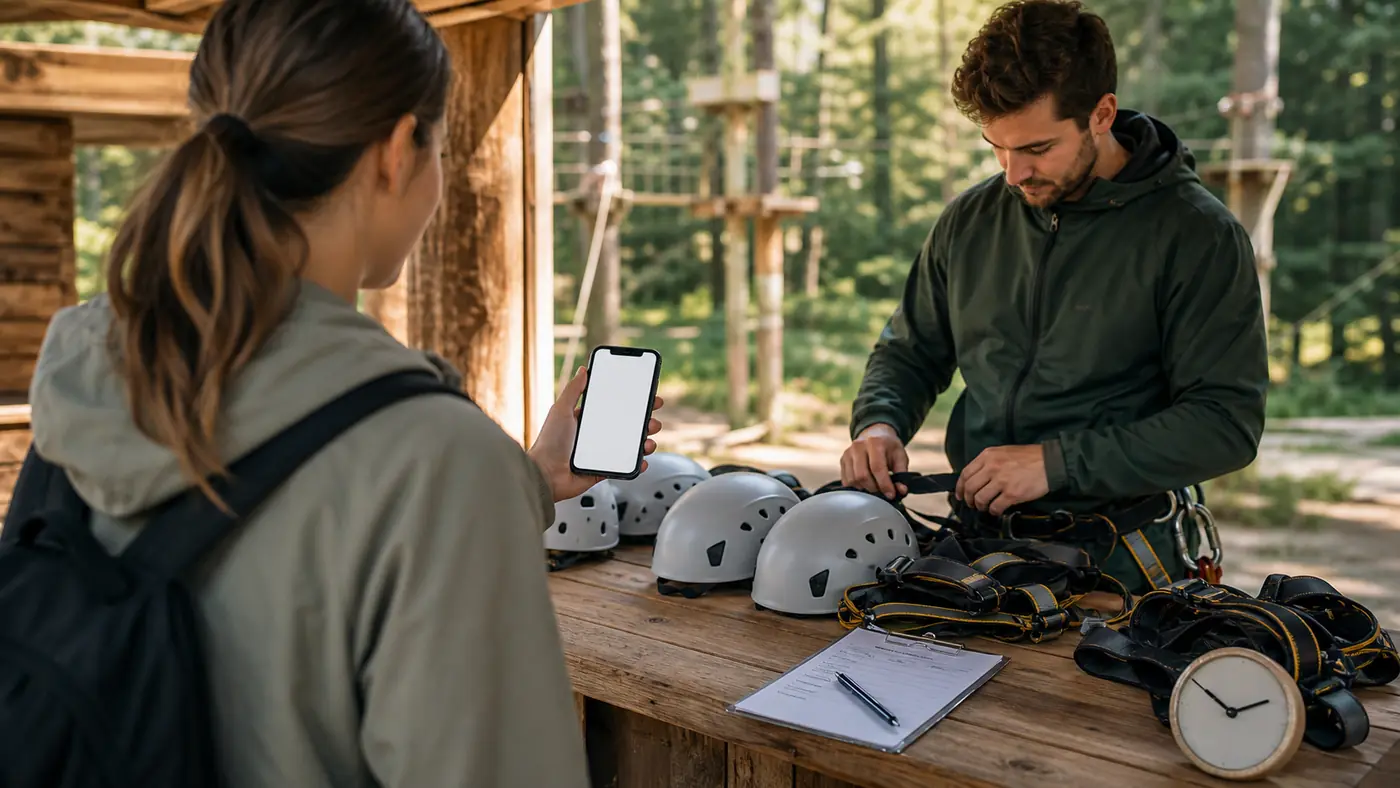
1. Identify the real operator and exact activity
Start from the venue's official website or a current page from the organisation that runs the course. Similar names and map listings can point to old entrances, third-party resellers or a different activity at the same forest. Check the business name, address and contact details before entering payment information.
Read the ticket name closely. A venue may sell junior trails, full high ropes courses, zipline tours, net parks and spectator entry separately. A general admission page does not guarantee that a specific course is included.
2. Write down the facts for every participant
Collect each participant's age and height, plus any information the operator asks you to consider about weight, health, mobility or supervision. Do not estimate a child's height against a rule that determines access on the day.
Check adult ratios and whether the adult must buy a participating ticket. Some courses allow ground supervision; others require the adult to complete the route. A group can satisfy the total headcount and still fail the supervision rule.
- Age and accurate height for each child
- Number of participating and non-participating adults
- Accessibility or adjustment questions
- Confidence with height, ladders and independent movement
- Any required waiver or guardian consent
3. Read the timing as a check-in instruction
A start time can mean the deadline for reception, the beginning of a safety briefing or the first entry onto the course. Look for an arrival instruction and calculate the journey to the correct entrance, not just the wider park postcode.
Add time for parking, the walk from a stop, toilets, waivers and equipment fitting. Keep a margin before the last return service. If the operator refuses late arrivals, a cheaper non-refundable slot can be poor value for a complicated journey.
4. Calculate the full booking cost
Compare the total for the group after booking fees, adult supervision, parking, lockers, gloves or equipment charges. Add transport, food and a contingency in a separate day trip budget. A lower ticket price can disappear after a long transfer or mandatory extras.
Check whether discounts apply automatically and what proof is needed. Do not rely on an old voucher page or screenshot. The final checkout should name the activity, date, time, people and complete price before you authorise payment.
5. Check footwear, clothing and supplied equipment
Many treetop activities require closed-toe footwear with secure fastening and good grip. Operators can be more specific, so read the current rule for your booking. Tie long hair back, avoid loose jewellery and choose clothes that fit comfortably under a harness.
Confirm what the park supplies. A helmet, harness, connectors or gloves should not be assumed from a photograph. Do not bring or substitute personal safety equipment unless the operator explicitly permits and checks it.
6. Understand weather, cancellation and rescheduling
Outdoor courses can operate in conditions that feel wet or cold to a visitor, and they can close for wind, lightning, ice or local hazards. Read who makes the closure decision, how customers are notified and what remedy applies when the operator cancels.
Then read what happens when the customer cancels or arrives late. Refunds, credit and rescheduling are different outcomes. Travel disruption or a change of mind may not be covered. Save the terms that applied when you paid.
7. Ask accessibility and confidence questions before checkout
A generic accessibility symbol cannot explain a forest approach, transfer into a harness, reach requirement, platform evacuation or the sensory pressure of a busy briefing. Contact the operator with a specific description of the support or adjustment needed.
For anxious participants, ask about the practice area, staff support and exit points. It is better to change the activity before booking than to pressure someone to finish a route because the ticket was expensive.
8. Save a usable confirmation
After payment, check the venue, date, arrival time, activity and participant count. Save the booking reference, receipt, operator phone number, entrance directions and terms somewhere available without mobile data. Share the essential details with another adult in the group.
On the morning of the visit, check the operator's current update and official weather warnings. High Ropes Adventure does not sell or manage tickets; booking changes must go to the operator or retailer named on the confirmation.
Frequently asked questions
Should I book a high ropes course in advance?
Popular dates and suitable course levels can sell out. Advance booking also gives time to check participant and supervision rules, but read the change and cancellation terms before paying.
What happens if it rains after I book?
Policies vary. Some parks operate in rain and close only for specific conditions. Read the operator's weather terms and check its same-day update rather than assuming rain creates a refund.
Can I book a rope park through High Ropes Adventure?
No. We provide independent planning information and tools. Complete and manage the booking with the named park or authorised ticket seller.