High ropes course guide
How to plan a high ropes adventure day
A high ropes day is easier to enjoy when the important decisions happen before the harness goes on. Start with the operator's current rules, match the course to the least confident participant and leave enough time for briefing, queues and a change of plan.
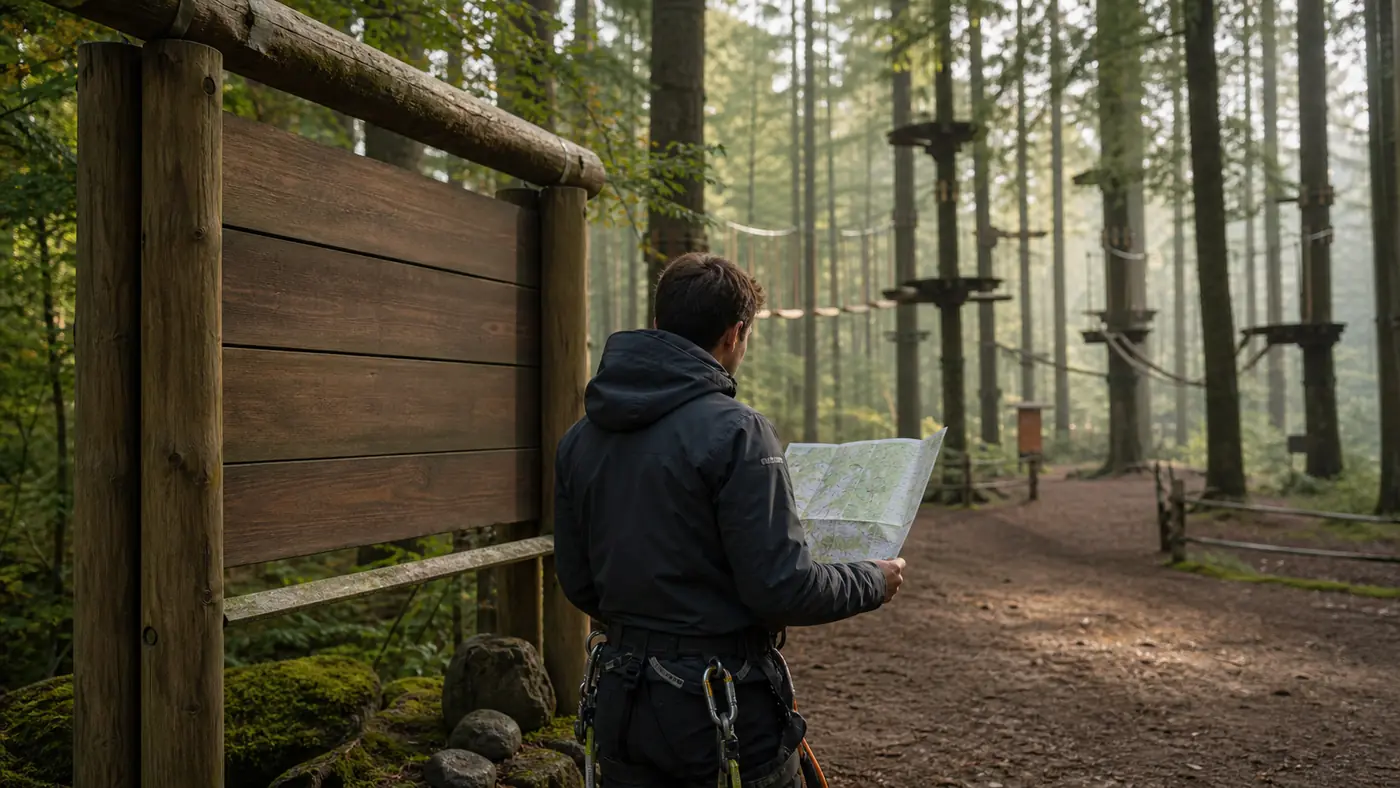
What a high ropes course actually involves
A high ropes course is a sequence of elevated obstacles connected by platforms, cables, nets, bridges or ziplines. Some venues use a continuous safety line; others use connectors that participants move under instruction. The course format affects how independently a visitor moves and how easy it is to stop after starting.
Adventure parks often divide routes by height, difficulty or age. A family trail close to the ground can feel completely different from an exposed canopy course. Read the operator's description of the exact activity rather than assuming every ticket covers the same experience.
Choose a course for the whole group
Begin with the person who has the tightest restriction or the lowest confidence. Check minimum and maximum ages, height or reach requirements, weight limits, adult supervision ratios and whether a supervising adult must participate. Rules can differ between courses at the same venue.
Ask how participants leave a route once they have started. A practice circuit, staff-access point or early exit can matter more to a nervous visitor than the number of obstacles. For children, show the venue's current photographs and explain the briefing without promising that the course will feel easy.
- Record each participant's age and height before choosing a ticket.
- Confirm whether the adult watches from the ground or must climb.
- Check whether gloves are supplied, required or sold separately.
- Ask about hearing, mobility or sensory adjustments before paying.
Book enough time, not only a start slot
The booked time may be a check-in deadline rather than the moment you step onto the course. Add parking or the walk from public transport, toilets, waivers, equipment fitting, a safety briefing and the practice section. A two-hour activity can occupy much more of the day.
Work backwards from the last sensible train, bus or daylight window. If the venue gives an estimated duration, treat it as guidance rather than a guaranteed finish time. Groups move at different speeds, and a pause on a platform can slow everyone behind.
What to wear to a rope park
Use secure, closed-toe footwear that stays on the foot and has enough grip for timber, netting and the approach path. Tie laces firmly and tuck away loose ends. The venue's rule takes priority, because some operators also specify a closed heel or prohibit particular footwear.
Wear close-fitting clothes that can sit comfortably under a harness. Tie back long hair and remove loose jewellery. Bring a layer for waiting on the ground: the person watching may feel colder than the person moving through the course. Do not buy specialist equipment until you know what the operator supplies.
Check weather, closures and ground conditions
Light rain does not automatically mean a park is closed, while wind, lightning, ice or a local warning may change operations quickly. Read the operator's weather policy and check the contact channel used for same-day updates. A generic forecast cannot confirm whether a specific course will open.
Wet timber and muddy approaches make footwear more important. Pack dry socks and a change of clothes when rain is likely, but do not assume gloves or waterproof clothing remove the need to follow an operator instruction. Keep an indoor or low-level alternative for the group.
Build a realistic adventure park budget
The ticket is only one part of the cost. Add booking fees, transport, parking, food, lockers, gloves or equipment charges, and the cost of a non-participating adult if the venue charges entry. For a family or group, calculate the total before comparing parks.
Read cancellation and rescheduling terms before choosing the cheapest slot. A flexible booking can be worth more than a small discount when the trip depends on weather, public transport or a child's confidence. Our day trip cost calculator keeps these categories separate.
Final checks on the morning of the visit
Open the operator's own website or message before leaving. Confirm that the course is operating, the arrival time has not changed and the route to the entrance is still practical. Save the booking reference and a contact number outside the browser.
Pack water, any required medication and clothes suitable for the approach as well as the activity. Arrive ready to listen to the full briefing. This guide helps organise the day; it cannot replace the instructor, the equipment check or the live decision made by the venue.
- Booking confirmation and participant details
- Current operator update and weather warning check
- Secure footwear and suitable clothing
- Travel plan, return option and extra time
- Medication, water and a simple fallback activity
Frequently asked questions
Do I need experience for a high ropes course?
Many recreational courses are designed for beginners and start with an instructor briefing and practice section. Check the exact activity description and participation rules before booking.
Can I visit a high ropes course in the rain?
Some venues operate in light rain, but wind, lightning, ice or local conditions can cause changes. Only the operator can confirm whether the course is running.
How long should I allow for a rope park visit?
Add check-in, waivers, equipment fitting, the briefing and travel between the entrance and course to the advertised activity duration. Leave a buffer for queues and slower progress.