Outdoor bar ideas: design, layout, and practical choices
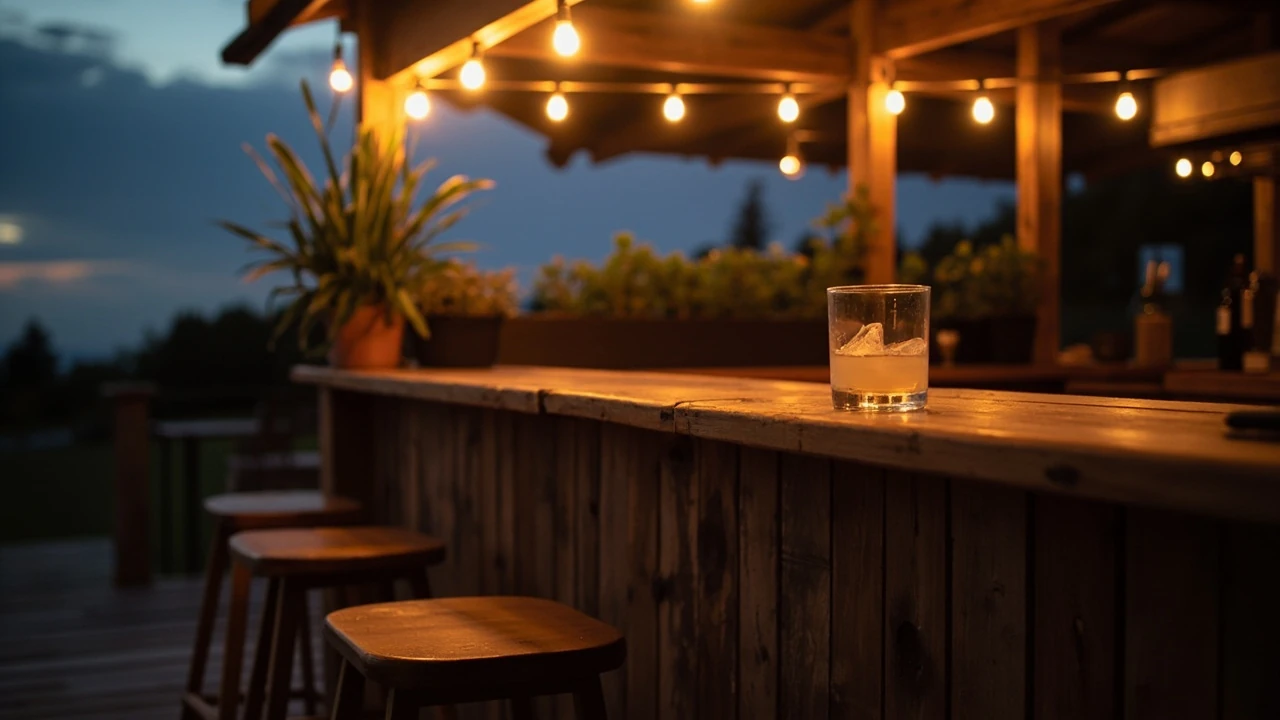
Outdoor bar ideas: design, layout, and practical choices
A guest walks up to the back of your garden and the first question is rarely about the drinks list. It is about where to put a glass down, where to stand without blocking the route to the fridge, and whether the counter will still be usable after a sudden shower. An outdoor bar is built or bought to solve those small problems, and the planning stage is where most of them are decided. This guide walks through the choices that actually affect how a backyard, terrace, or event bar functions, from footprint and materials to lighting, water, and waste, so the finished setup works on a busy Saturday rather than just on the day it is photographed.
What counts as an outdoor bar
An outdoor bar is any fixed or semi-fixed serving station placed outside a main building, used to prepare and serve drinks to people standing or sitting in the open air. That simple definition covers a wide range of real setups, and the differences between them drive most planning decisions.
- A backyard outdoor bar built against a fence or wall, usually serving family and friends on a weekly basis.
- A poolside or terrace bar integrated into a deck, often linked to a kitchen or grill zone.
- A pop-up or portable outdoor bar, set up for events, weddings, or markets and then broken down.
- A commercial outdoor bar attached to a pub, restaurant, or hotel, used during a defined season.
The common thread is service in open air. Once you accept that, the design questions become easier, because every choice about materials, layout, and equipment is really a question about how weather, traffic, and cleaning will affect the bar across a typical week or season.
How to read the space before you design
Before thinking about counters or finishes, walk the area at the times the bar will actually be used. A south-facing patio at noon is a different problem from the same patio at 7pm in autumn, and a corner near the kitchen door behaves differently from a spot deep in the garden. Several site checks shape every later decision.
- Sun path and shade: note where direct sun falls during service hours and whether nearby trees or buildings cast usable shade later.
- Wind direction: a prevailing wind drives rain under cover and pushes smells from bins toward diners, so the bar should sit downwind of seating and waste.
- Footfall: trace the natural route from kitchen, fridge, or front gate to the seating area, because the bar has to sit on that route without becoming a bottleneck.
- Ground condition: a level paved or decked area is simpler to build on than a slope, but a slope can be used to hide drainage and utilities.
- Utilities: distance to power, water, and waste lines sets a hard limit on whether a sink, ice machine, or lighting plan is realistic.
Skipping this step is the most common reason an outdoor bar ends up too small, too exposed, or stranded away from the seating. The dimensions in a supplier catalogue assume a flat, sheltered, utility-rich site that rarely matches the real garden.
Choosing the right type of outdoor bar
Once the site is understood, the type of bar can be chosen with intent. The table below compares the four most common formats against the factors that usually matter most at the planning stage. Use it to narrow down before talking to a builder or browsing kit.
| Bar type | Typical footprint | Best for | Mobility | Weather exposure | Main trade-off |
|---|---|---|---|---|---|
| Backyard built-in | 2.5-4 m of counter | Regular home use, 6-15 guests | Fixed | High unless roofed | Higher upfront cost, permanent location |
| Modular outdoor kitchen bar | 3-6 m of counter | Cooking-led entertaining | Often fixed, sometimes modular | Medium to high | Needs utility planning and ventilation |
| Portable or pop-up bar | 1.5-2.5 m of counter | Events, occasional hosting | Fully mobile | Low structural, high sun exposure | Limited storage, no plumbing |
| Commercial outdoor bar | 4-8 m of counter | Pub, restaurant, or hotel terrace | Fixed for the season | High, with full canopy and drainage | Licensing, drainage, and staff flow |
For most home projects, the choice is between a built-in bar and a portable one. The built-in version earns its keep when the bar is used weekly and the household already spends time outside. The portable version is the better answer for renters, small gardens, or anyone hosting two or three times a year rather than every weekend.
Sizing the counter and service zone
Counter length is the single number that determines how the bar feels in use. Too short and guests queue, the bartender cannot lay out glasses, and storage disappears. Too long and the bar dominates the garden and blocks conversation across it. The reference points below come from hospitality layout practice and translate well to a home setting when scaled down.
| Use case | Recommended counter length | Back-bar depth | Standing room per guest | Staff or host working zone |
|---|---|---|---|---|
| Family and small gatherings | 1.8-2.4 m | 40-50 cm | 60 cm linear | 90-110 cm deep |
| Regular entertaining (6-15 guests) | 2.4-3.6 m | 45-60 cm | 60 cm linear | 110-130 cm deep |
| Event bar (20-50 guests) | 3.6-5.5 m | 50-70 cm | 50-60 cm linear | 120-150 cm deep |
| Commercial terrace bar | 5-8 m, often L-shaped | 60-80 cm | 45-50 cm linear | 140-180 cm deep |
Height is the other number worth fixing early. A standard bar counter of about 110 cm with bar stools at 75-80 cm works for most adults and matches off-the-shelf seating. A lower counter of 90-95 cm suits a more casual setting, is easier for children to reach, and lets the bartender work without a step. The wrong height turns a useful bar into a constant source of awkward posture, so it is worth checking it against the people who will actually stand behind it.
Materials that survive the weather
Materials are where the outdoor bar either pays for itself or becomes a maintenance project. The rule of thumb is to match the material to the local climate rather than to a moodboard image. Coastal air, freeze-thaw cycles, and strong UV each punish different materials, and the wrong choice costs more in refinishing than it saves in purchase price.
- Stainless steel 304 or 316: the default for outdoor kitchen bars because it handles rain, sun, and cleaning chemicals; 316 is worth the extra cost within about 1 km of saltwater.
- Marine-grade plywood with a sealed finish: a lighter, warmer alternative for counters, often faced with tile or stone.
- Hardwood such as iroko, teak, or thermally modified ash: visually warm, durable when oiled annually, but more upkeep than steel or composite.
- Composite or porcelain counters: dense, UV-stable, and easy to clean, with a more uniform look than natural stone.
- Concrete counters: very durable and heavy, often cast in place, with sealing required to resist stains from wine, citrus, and oil.
Whatever the top surface, the structure underneath has to be rated for outdoor use. Standard MDF or untreated softwood will swell, sag, and harbour mould within a season or two. A bar built around an outdoor-rated frame, with stainless or hot-dip-galvanised fixings, will outlast several re-finishes of the surfaces.
Layout and flow around the bar
A good outdoor bar layout separates three flows and keeps them from crossing: guest approach, service work, and waste or restock. Mixing them is what causes the feeling of crowding even when the garden itself is large. Working from the bartender’s position outward is usually the clearest way to draw the layout.
- Approach zone: guests should be able to step up to the counter, decide, and step away without squeezing past anyone; a 90 cm gap from counter front to nearest seat or wall is a useful minimum.
- Service zone: the bartender needs unbroken access from the back-bar or kitchen to the counter without crossing the guest path, and a fridge or ice bin should be within arm’s reach.
- Restock and waste: crates, bins, and cleaning supplies are best kept in a defined side area or behind a screen so they are out of sight and easy to reach from a delivery route.
A simple L or U shape handles most home gardens well, because it gives a clear front for guests, a back for the host, and an end that can face seating or a grill. A long straight bar against a wall is the easiest to build but tends to push guests into a narrow line unless the seating is generous.
Weather, shade, and lighting decisions
An outdoor bar that is only pleasant on a perfect summer evening is not really an outdoor bar; it is a fair-weather prop. A few modest investments turn the same counter into something usable across most of the year, and most of them are decisions made during the build, not afterwards.
- Roof or canopy: a simple lean-to roof or retractable awning extends the bar’s usable hours by shielding guests and the bartender from light rain and low sun; retractable systems let you keep the open-sky feel on good days.
- Side screens: louvered screens or planted trellises break crosswinds that would otherwise carry rain under a shallow roof and knock glasses off the counter.
- Lighting: layered lighting works better than a single bright source; aim for overhead task light over the counter, low-level path or step lighting for safety, and a warmer ambient glow on seating.
- Heating: a ceiling-mounted infrared heater or a free-standing patio heater expands the season by several weeks on either end and is far cheaper per use than building a full enclosure.
- Drainage: a slight fall in the deck away from the bar, plus a channel or slot drain, keeps standing water from collecting underfoot and shortens drying time after rain.
For an event or pop-up outdoor bar, the equivalent decisions are simpler but no less real: weighted umbrellas for shade, battery-powered LED strips for lighting, and a tarp and sandbags for the one shower that always arrives halfway through the evening.
Plumbing, power, and waste planning
Any outdoor bar that needs a sink, a fridge, or lighting has to be planned around utilities from day one, because retrofitting a water line or a dedicated circuit across a finished garden is expensive. The table below summarises what each utility implies in cost, complexity, and ongoing use.
| Utility | What it powers | Installation complexity | Approximate cost band | Key code or safety point |
|---|---|---|---|---|
| Cold water | Sink, ice bin rinse, drink station | Medium: trench or under-deck pipe | Moderate | Insulate or drain before frost in cold climates |
| Hot water | Washing glassware, handwash | Higher: trace heating or short run from house | Moderate to high | A small point-of-use heater avoids a long hot run |
| Waste water | Sink, ice melt, cleaning | Medium to high: depends on connection to sewer or septic | Moderate to high | Local rules on greywater vary; check before installing |
| Power circuit | Fridge, lighting, sockets, heater | Medium: dedicated outdoor circuit with RCD protection | Moderate | Use IP-rated fittings and cable rated for outdoor use |
| Gas | Outdoor kitchen, pizza oven, heater | High: must be fitted by a qualified engineer | High | Local codes on gas runs and shut-off valves apply |
For a portable or event bar, none of these are relevant in the same way. A pump-action water container, a cooler with ice, and a battery pack cover most needs. The decision is whether the bar justifies the cost of permanent utilities, and the honest answer is usually yes only if the bar is used weekly for at least half the year.
Choosing seating that actually works outside
Bar stools and benches live a harder life outdoors than they do indoors. Sun fades fabric finishes, rain collects in seats, and wind tips lightweight stools over. Choosing seating with the environment in mind keeps the area looking presentable without daily tidying.
- Heavier stools in powder-coated aluminium, steel, or dense hardwood stay put in wind and are easier to clean than lightweight rattan styles.
- Stackable or folding stools allow the seating to be cleared when the bar is not in use, which protects cushions and keeps the space flexible.
- Cushions in solution-dyed acrylic or outdoor-grade polyester resist UV and dry quickly after a shower, unlike standard indoor fabrics.
- A mixed line-up of two or three stool heights and a couple of lounge chairs suits guests who want to stand, perch, or sit for a long time.
A useful layout tip is to keep at least 60 cm between the front of the stools and the nearest obstacle, so guests can pull back, sit down, and stand up without bumping into a planter or a wall. This single spacing choice tends to make a bar feel comfortable even when the furniture is plain.
Building a portable or pop-up outdoor bar
Not every outdoor bar needs foundations and a builder. A portable or pop-up bar solves the same problem in a different way, and is often the right first step before committing to a permanent build. Most hire and event setups follow a simple core kit.
- Frame: a folding steel or aluminium frame with a laminate or stainless top, sized to fit through standard doorways when folded.
- Front valance: a fabric or printed wrap that hides the frame and turns the bar into a branded or styled surface for events.
- Back shelving: lightweight shelves for bottles and glassware, often height-adjustable to suit bottles and glassware of different sizes.
- Cooling: under-counter or drop-in ice wells for bottled drinks, paired with a separate display area for glasses and garnishes.
- Accessories: speed rails, drip trays, bottle openers, and waste bins mounted within arm’s reach of the centre of the bar.
For a one-off event, the cheapest route is usually to hire the core bar and bring in your own glassware, ice, and a dedicated waste bin. For a recurring market stall or wedding season, a bought portable bar pays back faster than repeated hire once you pass about four to six uses a year.
Common mistakes when planning an outdoor bar
Most problems with outdoor bars are predictable, and most of them show up within the first month of use. A short list of the most common ones helps to keep the project honest.
- Undersizing the counter and over-sizing the gap to the seating, so guests queue while the bar itself looks under-used.
- Choosing beautiful but high-maintenance materials, then skipping the annual refinishing that keeps them looking good.
- Ignoring the wind, which blows umbrellas, tips stools, and pushes rain under shallow roofs that looked fine in the design stage.
- Placing the bin and bottle storage too far from the bar, so the host spends the evening ferrying empties across the garden.
- Forgetting drainage, with standing water around the bar after every shower and a slippery surface for several hours afterwards.
None of these are expensive to fix during the build, and each of them is awkward to fix afterwards. A practical way to test a design before committing is to mark the counter footprint with tape on the deck or lawn and live with it for a weekend. That short test catches more layout problems than another round of moodboards.
Budgeting honestly for an outdoor bar
Costs vary widely by region and material choice, but the structure of an outdoor bar budget is fairly consistent. Materials and labour usually account for roughly two-thirds of the cost on a home build, with utilities, surfacing, and seating taking most of the rest. A small built-in bar in a modest garden typically lands in the lower end of typical home improvement budgets, while a full outdoor kitchen with a sink, fridge, and roof sits firmly in the mid-range. A portable or pop-up bar is the lowest cost route, but replacement parts and ongoing hire fees erode the saving once the bar is used often.
Two numbers are worth tracking separately from the headline build cost: ongoing maintenance (oils, sealants, replacement cushions, gas checks) and operating cost (ice, power for a fridge or heater, water). For a home bar used weekly, maintenance and operating costs together often run into a few hundred units of currency per year after the first season, which is a useful figure to know before the build is approved.
Matching an outdoor bar to the way you entertain
Once the technical questions are settled, the bar should match the actual habits of the household. A bar designed for a couple of quiet evening drinks a week looks and feels different from a bar designed for a monthly full-garden party, and a one-size-fits-all approach usually pleases no one. Asking a few direct questions before the final design is approved keeps the result honest.
- How many people will usually be standing at the bar at the same time, and how many in the wider garden?
- Is the bar primarily a self-serve drinks station, a host-served station, or a hybrid?
- Will food be served from the same area, or does that happen elsewhere on a grill or in a kitchen?
- How often will the bar be used in shoulder seasons, and is the cost of a roof or heater justified by that use?
- How important is the view: should the bartender face the garden or the guests?
These answers tend to refine the design more than any single product choice. A host-served bar for a big garden needs a long, deep counter and a back-bar for bottles, while a self-serve bar for a small terrace needs a clear front, a labelled fridge, and a small bin within reach.
How an outdoor bar fits into a wider day out
For households that already use their local rope park, forest, or trail network, an outdoor bar at home is often the other end of the same routine: the place everyone gathers after the day out, rather than the day out itself. If the bar sits inside that pattern, a few of the choices become easier. Storage for muddy boots, a washing line for kit, and a covered seating area for wet jackets earn their space very quickly. If the bar is rarely the end of an outdoor day, simpler furniture and a smaller footprint will probably serve the household better.
Readers planning the wider day, including transport and the route, may find it useful to weigh the choice between train and car for an outdoor day trip, since the answer often changes how much kit is carried back to the bar at the end of the day. Equally, anyone fitting the bar into a busy weekend may want to plan the day trip around age and height rules at the local rope park, so the family arrives home in time to use the bar in the evening rather than after the children have gone to bed.
Maintenance through the year
An outdoor bar does not need a long maintenance schedule, but it does need a consistent one. A short list of recurring tasks, run through once per season, prevents the slow drift from “looking good” to “looking tired” that puts people off using the bar at all.
- Spring: wash down all surfaces, check fixings for winter movement, refresh oil on timber, test lighting and power, deep-clean cushions.
- Summer: wipe down counters after use, empty and clean bins weekly, top up teak oil on hardwoods every two to three months.
- Autumn: clear leaves from drains and counter channels, store cushions and fabric screens, drain and isolate external water lines before frost if relevant.
- Winter: cover or store portable bars, check canopies and awnings for damage, service gas appliances if fitted, plan any refurbishment work for the quiet months.
A bar that is maintained on this kind of light schedule will outlast one that is left to weather and then refurbished in a single expensive burst. The rhythm matters more than the time spent, and a 30-minute walk-through each season is usually enough.
Frequently asked questions
How big should an outdoor bar be for a family of four?
A counter of about 1.8-2.4 m gives enough room to lay out drinks, glasses, and a small ice bucket without dominating a typical garden. Add a back-bar shelf of 40-50 cm for bottles, and leave at least 90 cm of clear standing space in front of the counter so two adults can use it at the same time.
What is the best material for an outdoor bar counter?
Stainless steel (grade 304 in most areas, 316 near the coast) is the most weather-resistant and easiest to clean. Hardwoods such as iroko or teak look warmer but need an annual oil to stay presentable. Composite and porcelain counters sit between the two on upkeep and are a strong compromise for family use.
Do I need a roof over my outdoor bar?
A roof or retractable awning is not strictly required, but it extends the bar’s usable hours by sheltering both the bartender and the drinks from light rain and low sun. A simple lean-to roof is usually enough; a full enclosure is only worth the cost if the bar is used year-round.
Can a portable outdoor bar work for a wedding or large event?
Yes, provided the bar is sized for the guest count and supported by enough staff, ice, and glassware. A 3-4 m folding bar typically serves up to around 80 guests across a few hours if drinks are simple, and several modular bars can be joined to handle larger events.
How much does it cost to build a basic outdoor bar?
A small built-in bar in treated timber with a laminate counter and no plumbing usually lands at the lower end of typical home improvement project costs. Adding a sink, fridge, and roof roughly doubles or triples that figure, and a full outdoor kitchen with cooking appliances sits firmly in the mid-range. A portable or pop-up bar is the lowest cost route, especially if used only a few times a year.
Do I need planning permission for an outdoor bar?
In most regions, a small open-sided bar or outdoor kitchen is treated as permitted development, but a roofed structure over a certain height, or a bar within a listed or coastal area, may need approval. The rules vary by country and by local authority, so it is worth checking with the local planning office before a permanent build.
What lighting works best for an outdoor bar?
Layered lighting is more useful than a single bright source: warm overhead task lighting over the counter for safe drink preparation, low-level path or step lighting for guest safety, and softer ambient lighting around the seating. Warm colour temperatures (around 2700-3000K) tend to feel more inviting than cool white.
How do I keep an outdoor bar clean in bad weather?
Slope the deck slightly away from the bar, fit a channel or slot drain along the front, and choose a counter material that can be hosed down. Keep a small covered caddy with cloths and a food-safe spray so spills and bird droppings can be wiped quickly, and store cushions in a dry box when the bar is not in use.
Is an outdoor bar worth it if I only entertain a few times a year?
If the bar is used only a handful of times each season, a portable or pop-up bar usually offers better value than a permanent build. It can be set up for those few occasions, stored away the rest of the time, and replaced if it wears out, without the cost of utilities or a roof.
Where should I position an outdoor bar in the garden?
The best position is on the natural route between the kitchen or fridge and the main seating area, ideally downwind of any waste or bin storage and within reach of a power supply. A spot that gets afternoon shade and evening sun tends to be the most comfortable across a typical day.
Related reading
Explore High Ropes Adventure
Trip tools
Essential adventure planning guides
Use these practical guides to compare rope park activities, prepare for a first high ropes day, check a booking, choose suitable footwear and contact the editorial team. Each page links to the relevant live tools and current planning sections.
Latest articles
- Outdoor bar ideas: design, layout, and practical choices
- Tate McRae tickets: how to find, compare, and buy seats without the stress
- Tame Impala tickets: how to find them, what they cost, and what to know before you buy
- Outdoor pillows: how to choose the right ones for a deck or trail rest stop
- How to find Morgan Jay tickets without overpaying
- How to find national parks near me: a practical local search guide
- Paylater travel: how buy now, pay later works for trip bookings
- Bagsmart Blast Travel Backpack: A Practical Review for Day Trips and Adventure Days
- How to choose an outdoor rocking chair that actually lasts
- Indiana travel advisory map: how to read it before a day trip