Zipline safety: what riders and operators actually check
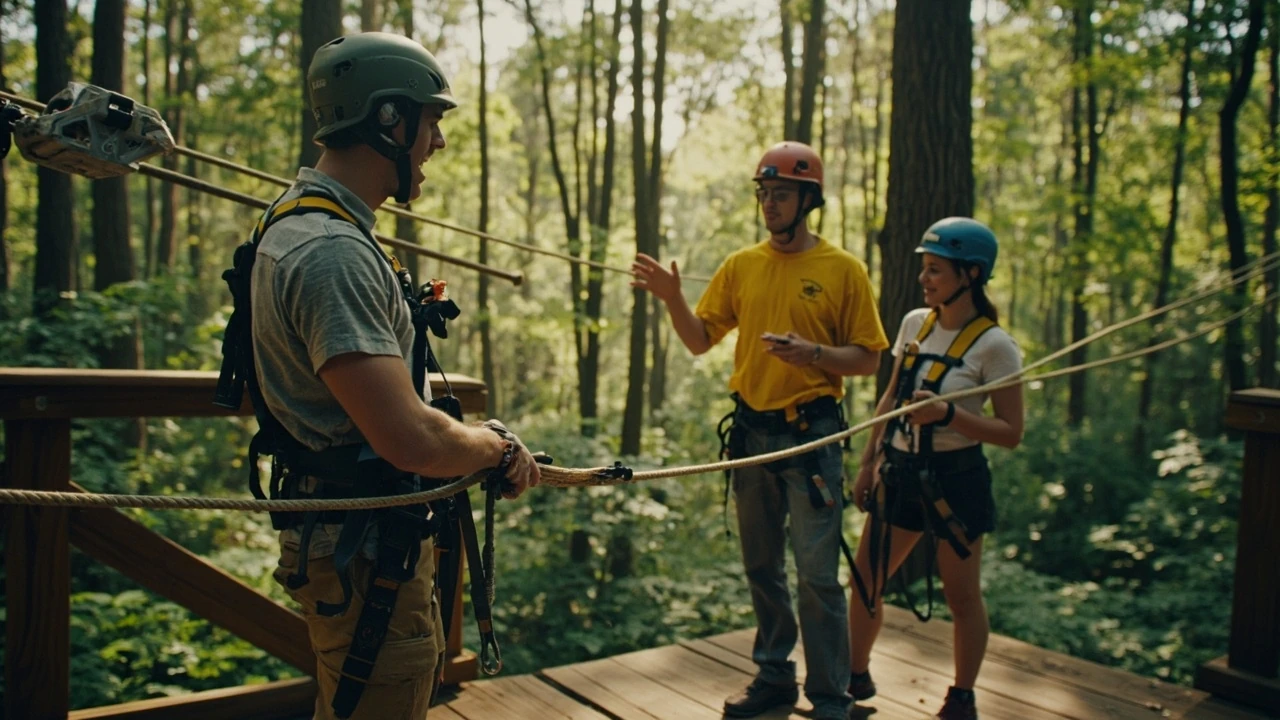
Zipline safety: how modern courses keep riders secure
A group of friends arrives at a forest park on a bright Saturday morning, watches a ten-minute briefing, clips a waist-height steel cable to a trolley, and lands a hundred metres later, smiling, wet, and slightly surprised that the whole thing felt so ordinary. That ordinariness is the point of modern zipline safety. It is the result of layered equipment, training, and course design choices, not luck. Understanding those layers helps first-time riders ask better questions, helps parents decide whether a child is ready, and helps anyone evaluating an adventure park separate marketing language from real practice.
This guide walks through the parts of a zipline that affect safety, the checks that operators are expected to perform, and the practical things you can do as a rider. It is written for visitors of high ropes and adventure parks, not for engineers designing a course. Where a topic touches regulation, the wording is kept general, because rules differ by country, region, and operator. Treat anything below as a way to think clearly about the activity and to have a useful conversation with the staff at the park you are visiting.
What “zipline safety” actually covers
The phrase “zipline safety” gets used loosely. In a well-run park it refers to the combined system of equipment, course design, staff training, and rider behaviour that keeps the activity within an acceptable level of risk. None of these layers works alone. A high-quality harness is meaningless if the trolley is the wrong type for the cable. A well-built cable is meaningless if riders ignore the briefing. The four main layers are:
- Equipment: harnesses, helmets, trolleys, cables, anchors, and braking systems.
- Course design: cable tension, span length, height, sag, clearance from the ground, trees, and water.
- People: guides, instructors, riggers, and inspectors, and the training each role receives.
- Rider behaviour: briefing comprehension, weight, footwear, loose items, posture, and listening to staff.
When you see a list of safety claims on a park’s website, it is worth asking which of those four layers each claim refers to. A park that only talks about the brand of its harness is telling you about one quarter of the picture. A park that talks about daily inspection routines, training records, and braking redundancy is describing a system, not a product.
How a zipline is built to keep riders safe
Most recreational ziplines are not the simple rope-and-pulley contraptions of childhood. They are engineered systems where each part has a specific job. The exact specification varies, but the core components are the same across most courses.
Cable type, tension, and sag
The cable is the spine of the system. Modern recreational ziplines usually use galvanised steel wire rope, typically 8 to 12 millimetres in diameter, although the precise specification depends on the span, expected loads, and design standard. The cable is anchored at each end with heavy steel terminations and is tensioned so the sag between supports is small and predictable. Excessive sag increases the peak loads at the anchors and changes the angle at which a rider arrives at the landing platform. Low, controlled sag also keeps the trolley running smoothly, which matters because a bouncing or jerky ride is harder to brake cleanly.
Two attributes matter for riders to understand, even if they will not measure them. First, the cable is rated for a working load that is well above the weight of any rider the park accepts. Second, the cable will move slightly under load. A small amount of flex is normal and is part of how the system absorbs energy.
Trolleys, carabiners, and the connection to the rider
The trolley is the device that rolls along the cable. On most recreational courses, the trolley attaches to the cable at the launch platform and stays there for the duration of the ride. The rider clips into the trolley with one or two lanyards that connect to the harness, often through a locking carabiner. The trolley is usually designed so that the connection between rider and cable is mechanical and cannot be undone mid-ride. A common pattern is a double-lanyard setup, where two independent lanyards connect to two independent points on the trolley or harness. If one lanyard or one attachment point fails, the second one continues to hold the rider.
This redundancy is a quiet but important part of zipline safety. You will not notice it during a normal ride. It exists for the abnormal case.
Braking systems
How a zipline stops is one of the most visible parts of the system, and one of the most discussed. There are several common approaches, and the choice affects how a rider should behave at the end of the line.
| Brake type | How it works | What it means for the rider |
|---|---|---|
| Gravity catch / passive brake | A spring-loaded or weighted device at the end of the cable decelerates the trolley before it reaches a hard stop. | Rider should arrive hands-up, feet forward, and let the brake catch them; no active braking required. |
| Active hand brake (leather pad or similar) | A pad lowered onto the cable by the rider near the end of the run, controlled with a gloved hand. | Rider must follow the guide’s instructions carefully; technique matters, especially for heavier or lighter riders. |
| Eddy-current or magnetic brake | A non-contact braking system that uses magnetic fields to slow the trolley; common in larger commercial and tour-style ziplines. | Smooth, consistent deceleration; rider just sits back and waits for the trolley to stop. |
| Guide-controlled capture | A trained staff member catches the rider’s trolley at the landing platform. | Rider follows the guide’s positioning cues and does not grab at the guide or platform. |
If you want to understand the character of a particular course, ask which braking system it uses and how a rider is expected to interact with it. The answer tells you whether the ride is mostly passive or whether you are expected to participate in your own deceleration, and that changes how much coaching the briefing should give you.
Anchors and supports
The cable is held in place by anchors at the launch and landing ends, and by intermediate supports on longer spans. These supports may be living trees, treated poles, or steel towers. The anchors are engineered to resist the full working load of the cable, multiplied by safety factors defined in the relevant standard. From a rider’s perspective, anchors matter because they are one of the few parts of the system that are visible and physically impressive, and a good park will not hide them or discourage questions about how they are inspected.
What riders wear and carry
Personal equipment is the layer that riders have the most direct control over, and the layer most often compromised by small, avoidable mistakes.
Harnesses and helmets
Most recreational zipline courses use a sit harness, similar in style to those used in climbing and aerial adventure parks. The harness should be snug, with the waist belt level and the leg loops adjusted so the padding sits flat against the body. A poorly adjusted harness can ride up under load, which is uncomfortable and can change the geometry of how the lanyard connects to the trolley. Staff should check the fit before you leave the platform. If something pinches, slides, or feels odd, say so before you launch.
Helmets are standard on most courses. A climbing-style or skate-style helmet in good condition is appropriate. Helmets protect against accidental head contact with the trolley, the cable, branches, or the landing platform. They do not turn a risky course into a safe one, but they are a useful last line of defence. Readers who want more background can use the Zipline drone delivery company as a reference while reviewing this point.
Clothing and footwear
Closed-toe shoes with laces or straps are the rule on nearly every course. Sandals, flip-flops, and loose slip-ons are usually refused at check-in, and for good reason. A rider whose foot slips at landing can twist an ankle or step off the platform. Long hair should be tied back. Loose scarves, untied jacket hoods, and very baggy ponchos can catch wind and shift the rider’s centre of gravity, especially on longer or higher runs.
Loose items, phones, and pockets
Phones, keys, and small cameras are the most common sources of mid-ride incidents that have nothing to do with the cable. A phone in a shirt pocket can slide out at the launch and strike the rider’s face. A set of keys dangling from a belt loop can catch on the harness and twist the rider sideways on landing. Most parks provide small lockers, a designated drop zone, or a strap to secure loose items. Use them. If you want photos, ask whether the park has a photographer on the landing platform, or use a chest-mounted action camera with a proper tether.
Daily checks, inspections, and staff roles
Equipment only does its job if it is in good condition and properly set up. The visible signs of a well-run course are the daily routines, not the equipment itself.
What a daily check looks like
Before the first rider of the day, a qualified staff member walks the course and inspects it. The exact list depends on the operator, but a typical pre-opening routine includes:
- Visual inspection of the cable from end to end, looking for fraying, kinks, bird damage, or corrosion.
- Check of cable tension and sag at the mid-span, often using a simple gauge.
- Inspection of every trolley, lanyard, and carabiner that will be used that day.
- Test of every braking system, including any redundant capture mechanism.
- Check that the landing and launch platforms are clear, clean, and dry where possible.
- Confirmation that staff rosters match the planned training levels for the day.
For a more thorough understanding of how belay and rider-attachment systems are wired into aerial courses, the explanation in High Ropes Belay Systems Explained for First-Time Visitors covers the sister system used on high ropes elements, where similar redundancy logic applies.
Periodic and annual inspections
Daily checks are the first line. Below them sit periodic inspections, often monthly or quarterly, and a deeper annual inspection that may involve the course being taken out of service for a day. The annual review usually includes proof-loading of anchors, detailed examination of every harness and lanyard, and replacement of any item that is approaching the end of its service life. Ask the park whether they can describe the schedule, in general terms, without quoting proprietary documents. A confident answer is a good sign.
Staff training and rider-to-staff ratios
The number of trained staff on a course and what they are qualified to do matters more than the brand of any single piece of gear. Common roles include:
- Briefer: explains the equipment, demonstrates the correct posture, and answers questions before the launch platform.
- Launch guide: clips riders in, performs a final check, and gives the signal to go.
- Spotter or landing guide: catches or guides the trolley, helps the rider out of the harness, and resets the system.
- Rigger or technician: responsible for inspection, maintenance, and any re-rigging after a fault or after a weather event.
You will not see most of this work, but you can see its results. Briefers should be willing to slow down or repeat themselves. Launch guides should look at the harness and the carabiner, not just at the rider’s face. Landing guides should be in position before the rider arrives, not arriving as the rider arrives.
Weather, weight, and other limits you will be asked about
Operational limits exist for a reason. They are usually the result of engineering calculations, manufacturer instructions, and the accumulated experience of the operator. From a rider’s perspective, the most common limits are weather, weight, age, height, and group size.
Wind, rain, and lightning
Wind affects how a rider hangs from the cable and how a braking system performs. Most recreational courses have a wind threshold above which the activity is paused. Rain affects grip, visibility, and the operation of some braking systems. Lightning is non-negotiable: a course should be closed if lightning is within the range the operator has set, and it should stay closed until the all-clear. If you want a closer look at how parks decide when to close for weather, the article on Rope Park Weather: Rain, Wind and Closure Questions to Ask walks through the kinds of questions you can put to staff at the desk.
Weight, age, and height
Weight limits are usually set by the lowest-rated component in the system, often a carabiner, a lanyard, or a section of the harness. The range varies, but a common pattern is a minimum weight to make sure the rider is heavy enough to be slowed by the brake, and a maximum weight to stay within the rated load. Age and height limits are usually about harness fit and the rider’s ability to follow instructions and reach handholds on the platform. A park that does not check any of these at check-in is cutting a corner.
Group size and spacing
Sending riders one at a time is the simplest and most common approach. Some courses allow pairs to ride together, which changes the dynamics of braking and recovery if one rider stops short. If a course advertises tandem riding, ask how the trolley and brake are set up for two riders and what the staff do if one rider is significantly heavier than the other. Readers can also consult the zipline platform droid drone delivery for an independent source related to this section.
What to do as a rider
Most zipline incidents are not caused by equipment failure. They are caused by predictable human factors: inattention at the briefing, poor posture during the ride, or panic at the landing. The good news is that the rider’s contribution is also the easiest part of the system to get right.
Before you arrive
Wear closed-toe shoes, comfortable clothing that does not flap in the wind, and leave the loose items in the car. Tie back long hair. If you wear glasses, use a strap. If you have a medical condition that affects balance, blood pressure, or joints, mention it at check-in. The staff are not doctors, but they can tell you which elements are likely to be uncomfortable and may have alternative routes on a multi-element course.
During the briefing
The briefing is the most under-rated part of the experience. Listen to it as if you were going to teach it back to a friend, because that is roughly what the staff need from you. If the briefer asks a question and you are not sure of the answer, ask again. The briefer would rather repeat the answer than watch you guess at the landing platform.
On the platform
When the launch guide clips you in, look down at the carabiner and the harness. You do not need to be able to recite the gear’s specifications, but you should be able to see that the gate is closed and the lanyard is not twisted. The guide will check it as well. The two checks are not redundant; they are layered.
During the ride
Most courses want a relaxed posture: hands up or on the trolley, legs slightly out in front, head up, eyes forward. Avoid grabbing the cable above the trolley, twisting in the harness, or trying to brake yourself unless you have been trained and told to do so. Braking systems are designed for a specific behaviour, and improvised braking is one of the more common causes of minor neck and shoulder strain.
At the landing
Let the brake or the landing guide do the work. Keep your feet forward until you have stopped, then bring them down to the platform only when the guide tells you to. A common mistake is to reach forward to the platform while still moving; on a fast arrival this can twist a shoulder or pull a rider off balance. Patience at the landing is a small habit with a large safety margin.
How to evaluate a park before you book
If you are choosing between two or three parks, or you have never been to a zipline before and want to pick a sensible first experience, a few practical questions will tell you almost everything you need to know. You can ask them by email, by phone, or in person. The quality of the answer usually matters more than the exact words.
| Question to ask | Why it matters | A confident answer looks like |
|---|---|---|
| Which standard or guideline does the course follow? | Most reputable courses are built or audited to a recognised standard for aerial adventure or rope-based activities. | A named standard, an external auditor, or a clear internal procedure, not just “we follow best practice”. |
| How often is the course inspected, and by whom? | Daily, periodic, and annual inspections are all part of a real program. | A description of daily routines and at least one deeper inspection per year. |
| What training do your staff have? | Briefers, launch guides, and riggers have different training paths and refreshers. | Specific course names, certifications, and a regular refresher schedule. |
| What is the rider-to-staff ratio on the course? | Understaffed courses cut corners on checks and on landing coaching. | A clear number per platform, with a fallback if a staff member is absent. |
| What is the procedure if a rider stops short of the landing? | Short-stops are a routine operational event, not an emergency. | A calm, specific recovery plan using a designated secondary line or rescue kit. |
| What weather conditions close the course? | Wind, rain, lightning, and temperature all have thresholds. | Concrete numbers, not vague phrases like “if it’s too bad”. |
You do not need to interrogate the front desk. A relaxed, honest conversation is a better signal than a defensive one. If staff can describe their routines in plain terms, the system is probably well understood by the people running it. If the answers are vague, treat that as useful information too.
Special cases: kids, nervous adults, and tandem riders
Standard briefings assume a typical rider. Several groups benefit from a more specific conversation before booking, and the staff at a good park will invite that conversation rather than resist it.
Children and family groups
Children are usually allowed on simpler, lower lines first, with a height or age threshold that aligns with the harness fit. The first run is often the slowest, with a smaller drop and a gentler brake. If you are planning a family day, the practical breakdown of age and height rules for siblings and cousins of different ages is covered in How to Plan a Family Rope Park Day Around Age and Height Rules.
Nervous or first-time adults
If you have never been on a zipline and you are uneasy about heights, mention it at check-in. A good briefer will slow down, demonstrate the posture on the ground, and may let you watch one or two other riders go first. Watching a stranger glide down a line without incident is one of the most effective ways to reset an anxious brain. If the course offers a short practice line or a low training element, take it.
Tandem and group rides
Tandem riding introduces a small set of extra considerations. Weight differences between two riders change the braking dynamics. Communication between riders matters more, because the heavier rider’s harness takes more of the load at the moment of deceleration. If the park allows tandems, ask how they handle mixed-weight pairs, and whether the second rider has their own lanyard or shares one with the first. Either approach can be safe, but the briefing should explain which one is in use.
What a real safety incident usually looks like
Reading about incidents is uncomfortable but useful, because it replaces vague fear with a clearer picture of what actually goes wrong. In the recreational zipline sector, the most commonly reported incidents fall into a few categories:
- Short-stops where a rider does not reach the landing platform and must be recovered by staff using a secondary system.
- Landing impacts where a rider comes in faster than expected, often because of a hand-braking error, and twists an ankle or knee on the platform.
- Harness fit issues where a rider slips in the harness at the moment of arrest, leading to momentary discomfort or, very rarely, a brief suspension injury.
- Equipment faults that are caught during pre-use checks, which is why those checks are not optional.
None of these categories should be read as a reason to avoid the activity. They are reasons to choose a course that handles them well, and to follow the briefing closely. A short-stop is a routine event for trained staff. A landing impact is less likely if the braking technique is correct. Harness fit issues are almost always visible during the launch guide’s check.
Frequently asked questions
How safe is ziplining for a first-time rider?
For a healthy adult or older child who follows the briefing and uses the equipment as instructed, modern recreational ziplining is a low-risk activity. The risk is not zero, but the combination of trained staff, inspected equipment, and standard operating procedures is designed to keep it within a range that most regulatory frameworks consider acceptable for adventure activities. Your contribution is to listen, ask questions when something is unclear, and follow the posted limits on weight, weather, and behaviour.
What should I wear for a zipline course?
Closed-toe shoes with laces or straps, comfortable clothing that does not flap, and hair tied back. Avoid loose scarves, very baggy ponchos, and dangling jewellery. Leave phones, keys, and loose items in a locker or in the car. If you wear glasses, use a strap. If you have a medical device you need to keep on you, tell the staff so they can position your harness around it.
Are helmets really necessary on a zipline?
Yes, on most courses. A helmet protects against the small but real chance of head contact with the trolley, the cable above your head, a low branch, or the landing platform. It is not a substitute for a well-run course, but it is a useful last layer in the system. Most parks include a helmet as part of the standard kit, and you should wear it for every run, including the easiest one.
Can I bring my phone or a camera on the ride?
It is best not to. A phone in a pocket or a hand can be dropped, can strike you during launch, and is a distraction at the landing. If you want photos, ask whether the park offers a photographer on the landing platform. If you use a chest-mounted action camera, secure it with the tether the manufacturer recommends, and make sure the mount does not interfere with the harness or lanyard.
What happens if a rider stops short of the landing platform?
Trained staff recover the rider using a secondary system, usually a second line or a rescue kit, while a colleague keeps the rider calm and talks them through the next steps. The rider is clipped onto the rescue line, lowered or pulled to the platform, and unharnessed normally. Short-stops are a routine event on many courses, and a good park will not be flustered by one. The important thing is that staff rehearse the procedure, not that it never happens.
How strict are the weight limits on a zipline?
Strict, and you should expect to be weighed or asked for an estimate at check-in. Weight limits are usually set by the lowest-rated component in the system, often a carabiner, a lanyard, or a section of the harness. They are not a sales tactic. If you are close to a limit, mention it before you book so the park can advise you.
Is ziplining safe in the rain?
Light rain is often acceptable, but heavy rain reduces visibility, makes platforms slippery, and can affect the operation of some braking systems. Most parks have a clear rainfall threshold and will pause operations when it is crossed. Lightning is a different category: courses should be closed if lightning is within the range the operator has set, and should stay closed until the all-clear. If you are unsure, ask before you drive to the park.
Can two people ride together on the same trolley?
Some courses allow tandem or paired riding, others do not. Tandem riding has additional considerations around weight differences and braking, and the briefing should explain how the trolley is set up for two riders. If the course does not offer tandem riding, do not improvise. The trolley and the brake are not designed for an extra rider, and the load on the cable is calculated for a single rider at a time.
What is the most important thing I can do as a rider for zipline safety?
Listen to the briefing, ask questions when something is unclear, and follow the instructions of the launch and landing guides. Equipment, training, and course design do most of the work, but a rider who is paying attention and behaving predictably is the part of the system the staff can rely on. Most incidents on well-run courses are linked to a moment when the rider was not listening, not the moment when the cable was under load.
How do I know whether a zipline park is reputable?
Look for clear answers about inspection routines, staff training, and weather thresholds. A reputable park will describe its procedures in plain language, will invite questions, and will not pressure you to skip steps. If you are choosing between options, the park that explains how it works is usually the safer choice, even if it is not the cheapest. For a broader checklist on picking an adventure park in your area, the article on How to Find a Safe Adventure Park Near You pulls these signals into a single decision framework.
The most useful thing to take away from any discussion of zipline safety is that it is a layered system, not a single product. Cable, trolley, harness, helmet, briefing, staff, weather limits, and rider behaviour all contribute. When you understand the layers, you can ask better questions, you can spot the difference between a park that takes the system seriously and one that only talks about its equipment, and you can let yourself enjoy the ride without pretending the engineering is not there.
Related reading
Explore High Ropes Adventure
Trip tools
Essential adventure planning guides
Use these practical guides to compare rope park activities, prepare for a first high ropes day, check a booking, choose suitable footwear and contact the editorial team. Each page links to the relevant live tools and current planning sections.
Latest articles
- How to find national parks near me: a practical local search guide
- Paylater travel: how buy now, pay later works for trip bookings
- Bagsmart Blast Travel Backpack: A Practical Review for Day Trips and Adventure Days
- How to choose an outdoor rocking chair that actually lasts
- Indiana travel advisory map: how to read it before a day trip
- How to plan an outdoor day around a concert stop: a cardi b tickets field guide
- Outdoor sectional sofas: a practical buyer’s guide for patio living
- How amusement parks actually work: rides, safety, and what to expect
- Beis Travel: What the Bag Brand Offers for Outdoor Days
- Adventure park: what it is, what to expect, and how to plan a visit