Kids activities near me: a practical guide for parents
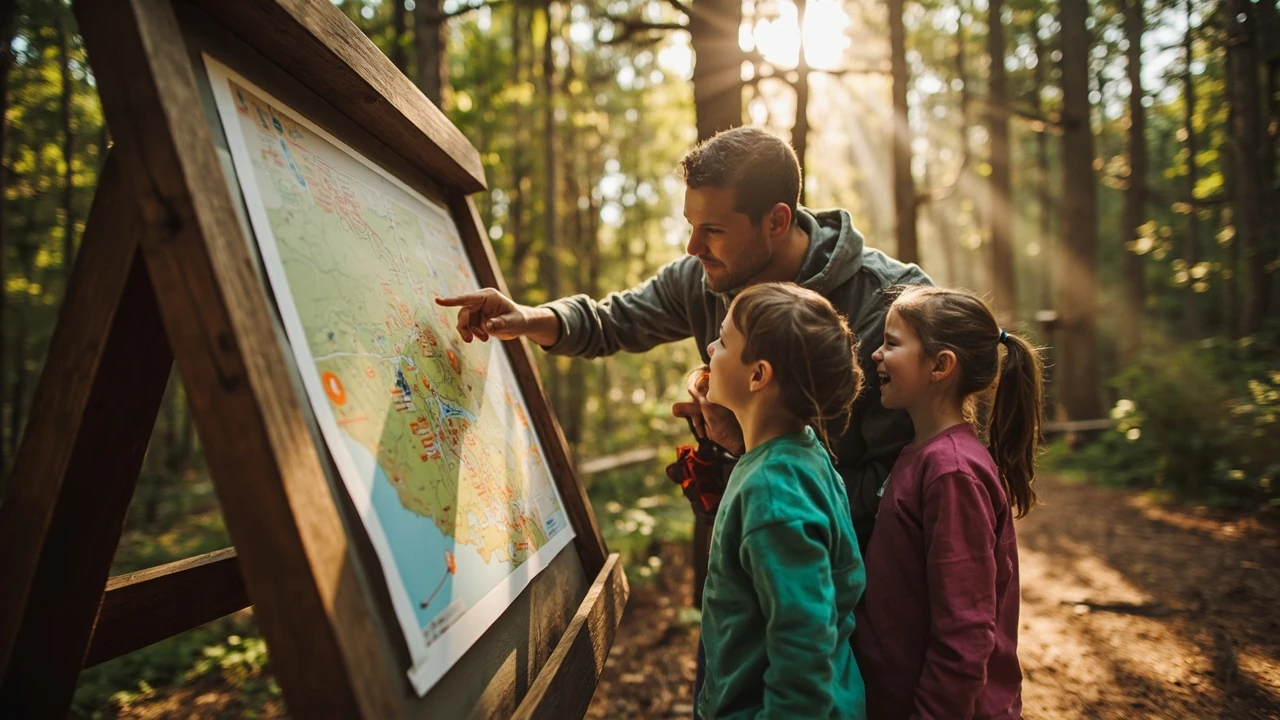
A Saturday morning, a kettle on, and a parent typing “kids activities near me” into a phone while a bored eight-year-old wanders in and out of the kitchen. Most parents hit that search bar the same way: they have a half-day to fill, a child of a specific age, and a rough idea of what they want to avoid. The phrase looks simple, but the results pages mix soft-play centres, weekend workshops, farm parks, holiday clubs, junior sports sessions, and adventure parks, often with very little in common beyond the word “kids.”
This guide helps you turn that broad search into a short, realistic list. It walks through the categories of local activities worth considering, the questions that separate a good day out from an expensive mistake, and the practical checks that make a venue safe and age-appropriate. The aim is not to list every attraction within driving distance. It is to give you a clear way to compare the options, so the place you end up choosing fits your child’s age, your budget, and the kind of day you actually want to have.
Kids activities near me: how to turn a noisy search into a short list
The phrase “kids activities near me” works because search engines can usually tell where you are. The problem is that the results are not sorted by what your family actually needs. They are sorted by what the local businesses have paid to surface, how well each site is optimised, and how often the page has been updated. Your first job is to filter that list down to places that genuinely match your situation.
A useful starting frame is to answer four questions before you click a result:
- How old is the child, and what height or weight limits apply?
- How long do you want the activity to last, and how far are you willing to drive?
- Is the activity weather-dependent, indoor, or covered?
- Does any member of the group have a specific need, such as a fear of heights, a sensory trigger, or a mobility limit?
With those four answers, you can quickly drop a third of the results without leaving the search page. A toddler-focused farm park, for example, is rarely a good fit for a 12-year-old who wants a physical challenge, and a two-hour ropes course is rarely a good fit for a tired four-year-old after nursery.
The main categories of local kids activities
Local listings tend to mix several very different types of venue under the same keyword. The table below compares the most common ones a parent will see, with realistic notes on who each tends to suit. These are general patterns rather than rules, because individual venues vary widely.
| Category | Typical age range | Typical duration | Best for | Main watchpoint |
|---|---|---|---|---|
| Soft-play and indoor play centres | 0–10 | 1–3 hours | Younger children, rainy days, birthday parties | Crowding at peak times, food quality, supervision ratio |
| Trampoline and indoor adventure parks | 4–14 | 1.5–2.5 hours | Burn-off-energy sessions, mixed-age groups | Sizing rules, collision risk, grip socks |
| High ropes and outdoor adventure parks | 6–adult | 2–4 hours | Physical challenge, group activities, school-age kids | Height limits, weather, belay system training time |
| Zipline attractions | 6–adult | 1–3 hours | Older children, family milestones | Weight range, harness fit, queue length |
| Farm parks and animal experiences | 2–12 | 2–5 hours | Toddler and primary-age children, gentle days out | Hand-washing, animal welfare, pram access |
| Museums and discovery centres | 3–14 | 1.5–3 hours | Curious children, rainy days, school holidays | Cost of extras, workshop booking, lunch options |
| Junior sports and activity classes | 3–14 | 45–90 minutes | Regular weekly routine, skill-building | Term-time only, booking windows, kit needed |
| Holiday clubs and day camps | 5–14 | Full day | Working parents during school breaks | Early booking, food policy, pickup rules |
Most families end up combining two of these on a single day, such as a morning at a farm park and an afternoon at a high ropes course, or an indoor venue in the morning and a park walk afterwards. Thinking in categories rather than venues makes that easier to plan.
What to check before you book a kids activity
Once a category fits, the next step is to check the specific venue. Parents often book on price or on the quality of the website, neither of which is a reliable indicator of what the day will actually feel like. A short checklist of factual questions is more useful than reviews, which tend to over-represent extreme experiences.
- What is the age, height, and weight policy, and is it enforced? This is the single most common source of disappointment. A venue may technically accept a six-year-old, but a minimum height of 1.2 m can rule out half of the activities. Many operators now publish a clear safety guide for choosing a venue that lists the limits upfront, which is a good sign.
- Is the activity supervised, guided, or self-led? Self-led courses are usually cheaper, but require a competent adult in the group. Guided sessions cost more and book out faster, but the venue takes responsibility for the technical side.
- What is the cancellation and weather policy? Outdoor activities are often affected by rain, wind, or lightning. Look for explicit rules rather than vague phrases like “we may close in poor weather.” A clear closure policy usually means the operator has thought it through.
- What is included in the price? A basic entry ticket may not include harness hire, parking, food, or the headline activity. A headline price that seems cheap is often the entry only, with add-ons on the day.
- How long is the typical session, and is the schedule tight? Some venues run tight slots with a fixed start time, which can be stressful if you are driving in from a distance. Others allow a flexible arrival window, which is usually easier with children.
- What are the food, water, and toilet arrangements? For younger children, these are often the deciding factors between a good day and a difficult one. A packed-lunch policy, refill stations, and accessible toilets are worth checking in advance.
You do not need to answer all six of these for every venue. A quick scan of the FAQ page and the booking terms will usually cover them. If the information is missing, that itself is a signal.
Outdoor versus indoor kids activities
Parents often frame the choice as indoor versus outdoor, but the more useful split is weather-independent versus weather-dependent. Indoor venues are not automatically safer, and outdoor venues are not automatically harder to organise. The deciding factor is usually the time of year and the type of group.
Outdoor venues such as forest adventure parks, zipline sites, and farm parks tend to work best in spring and early autumn, when temperatures are mild and queues are shorter. They also tend to be more physically demanding, which suits primary-age children and works well as a “burn energy” day. The main risks are weather closures and a longer drive, both of which can be planned around with a little notice.
Indoor venues such as soft-play centres, museums, and trampoline parks are the safer default in deep winter and during heavy rain, but they have their own limits. Crowding at weekends, expensive extras, and a relatively short attention span for older children are common complaints. For school-age children, an indoor venue is often best as part of a day, not as the whole day.
For most families, the most reliable combination is an outdoor anchor activity in the morning, when children have the most energy, and a flexible indoor option in the afternoon if the weather turns. A one-day outdoor planner can be useful here, because it forces a realistic view of travel time, food, and backup options.
How to compare kids activities on cost
Cost is one of the main reasons parents search in the first place. A useful comparison is not just the headline ticket price, but the total cost of the day including travel, food, parking, and the small extras that add up. The table below sets out a simple framework rather than real prices, which vary by region.
| Cost element | Indoor play centre | High ropes or adventure park | Farm park | Museum or discovery centre |
|---|---|---|---|---|
| Entry per child | Low to mid | Mid to high | Mid | Low to mid |
| Adult entry | Often free | Sometimes charged | Often free or low | Often free or low |
| Add-ons (harness, lockers, grip socks) | Rare | Common | Occasional | Rare |
| Food on site | Expensive | Expensive | Variable | Cafés, often mid-range |
| Parking | Often small, may charge | Often free | Often free | Mixed |
| Hidden extras (workshops, animal feed) | Rare | Rare | Common | Common |
A useful rule of thumb is to assume the headline price will rise by 20–40 percent once you add food, parking, and small extras. If that pushes the day above your realistic day-trip budget, it is often better to choose a simpler venue than to stretch a fancier one. A short, calm day at a basic farm park usually beats a long, stressful day at a premium adventure park, especially for younger children.
Matching kids activities to age and temperament
Age is the most obvious filter, but temperament matters just as much. A confident six-year-old can often handle a beginner ropes course that a cautious eight-year-old would find overwhelming. The list below groups the most common combinations and the kinds of venue that tend to suit them.
- Toddlers (1–3): soft-play, farm parks, small animal experiences, library story sessions, sensory rooms in museums.
- Early primary (4–7): indoor play centres with separate toddler zones, junior sports classes, beginner-friendly farm parks, short guided nature activities, simple first-time high ropes courses with a parent on the same route.
- Late primary (8–11): high ropes and zipline attractions, junior trampoline sessions, museum workshops, bike trails, climbing walls, longer farm visits with animal handling.
- Early teens (12–14): full adventure park circuits, longer zipline routes, climbing and bouldering, escape rooms, water-based activities in season, sports camps.
Temperament cuts across these bands. A child who is anxious about new environments usually does better in a small, familiar venue, even if they are technically old enough for a larger one. A child who is constantly bored benefits from venues with several distinct activities in one site, so they can self-select what to do next. Parents usually know this already; the search just makes it easier to act on.
Safety and supervision considerations
Safety is a recurring worry in the comments on most kids activity pages, often out of proportion to the actual risk. The data consistently shows that well-run commercial venues have a strong safety record, but the wording of their safety information is a reliable signal. Operators who describe their zipline safety procedures in concrete terms, with named systems and visible checks, are usually safer than those who use vague reassurance.
Three things are worth checking regardless of the activity:
- Staff training and ratios. Look for a published ratio of staff to participants, and a mention of external inspection or certification. A reputable operator will list this on the safety page rather than only on the marketing pages.
- Equipment maintenance. Harnesses, helmets, and carabiners should be visibly clean and in date. A site that photographs its equipment and inspection routine is usually safer than one that does not mention it at all.
- What happens if something goes wrong. Clear first-aid arrangements, an on-site responder, and a written incident policy are good signs. A site that explains how it handles weather closures and refunds is also a useful indicator that the operator is used to managing real situations.
These checks do not need to take long. Ten minutes on the operator’s safety and FAQ pages is usually enough to decide whether a venue has thought it through.
Planning the day around the activity
The most common reason an activity day goes wrong is not the activity itself, but the timing around it. Children are usually sharper in the morning, slower after lunch, and unpredictable in the late afternoon. The activity is the anchor, and the rest of the day should bend around it rather than the other way around.
A simple structure that works for most ages is to start with the main activity, take a real lunch break, and then plan something lower-energy for the afternoon. The list below is a realistic day shape rather than a one-size-fits-all timetable.
- Arrive 15–20 minutes early. This is the single most useful piece of advice for any kids activity. It covers check-in, harness fitting, the safety briefing, and the small delays that otherwise turn into stress.
- Plan food and water. A snack before the activity, a proper meal after, and refillable bottles for everyone. The wet-weather packing list is a useful starting point even in dry conditions, because it focuses on small, sensible items.
- Allow buffer time. Most activities overrun by 15–30 minutes once you include the briefing and the kit return. If you have another commitment afterwards, build that in.
- Have a quiet backup. For a long day, a short walk, a small playground, or a café stop in the afternoon gives everyone a chance to reset before the drive home.
For families travelling by train, the same structure works, but the buffer needs to be longer. A comparison of train and car travel for outdoor day trips is often worth reading before booking, because the trade-offs around cost, luggage, and arrival time are not always obvious.
Local events and one-off kids activities
Regular venues are the backbone of the “kids activities near me” search, but the most rewarding days are often one-off events. Local fairs, school holiday programmes, library workshops, and outdoor festivals are usually listed on council websites, community noticeboards, and the social media pages of local venues. The signal that an event is well-organised is that it is described in concrete terms: times, ages, costs, what to bring, and how to book. A vague flyer with only a logo and a date is usually a sign of poor planning.
For one-off events, the same checks apply as for regular venues, with a few extra:
- Is the event indoors, outdoors, or partly outdoors? An outdoor festival with no rain plan is rarely worth a long drive.
- Is the capacity limited, and how is it managed? A small event with timed entry is usually calmer than a large event with open access.
- Is the organiser a known operator or a one-off? A community event run by an experienced local operator is usually safer than a new commercial brand.
A useful test of whether a one-off event is worth the trip is the same question used for any outdoor event: would the day be good even without the headline activity? If the answer is yes, the event is likely to be a success. If the headline is the only draw, the day is more fragile.
How to build a shortlist from local search results
Once you have a category, an age band, and a budget, the final step is to turn a long list of search results into a shortlist of two or three venues. The simplest method is to apply the same five filters in order, and stop as soon as a venue fails one of them.
- Is the venue within a realistic travel time, and is the journey itself reasonable with the children?
- Does the age and height policy actually include your child?
- Is the total cost, including add-ons, within budget?
- Are the safety and supervision information clear and specific?
- Is the timing compatible with your day, including the food and travel buffer?
Most families end up with one or two strong options after this exercise. Booking the most weather-flexible of the two is usually the safer choice, because it gives you a backup if conditions or queues change on the day.
Frequently asked questions
How do I find kids activities near me that are open today?
Use your usual search engine with the phrase “kids activities near me” plus today’s day, then filter by “open now” or check the venue’s Google Business listing for current hours. Calling ahead is usually faster than relying on a website, because operators often update their phone lines before their online calendars.
What is a good age to take a child to a high ropes course?
Most commercial courses accept children from around six, but the practical lower limit is usually height-based rather than age-based. A child who meets the minimum height, listens to instructions, and is comfortable with the harness will usually manage a beginner circuit. Operators with a clear first-time visitor guide make this easier to judge.
Are kids activities near me usually safe?
Reputable commercial venues have a strong safety record. The operators to trust are those who describe their safety systems, training, and inspection routines in concrete language on their website, rather than using vague reassurance. A short read of the safety page is usually enough to tell the difference.
How far in advance should I book kids activities?
For school holidays and weekends, two to four weeks is usually sensible for popular venues. For midweek visits outside of holidays, a few days is often enough. Adventure parks and zipline sites tend to book out fastest, because their capacity is limited by the number of harnesses or guides available.
What should I pack for a day of kids activities?
A small day bag with water, snacks, a change of clothes for younger children, sun protection or rain layers depending on the forecast, and any medication that might be needed. The specific list depends on the activity, but most of the same items appear on a wet-weather trail packing list, which is a good starting point even in dry conditions.
How do I keep costs down on a day of kids activities?
Build the day around one paid anchor activity rather than two, take your own food and water, and check whether parking, harness hire, or other add-ons are included. A simple, well-chosen venue usually beats a busy premium one for both cost and the children’s enjoyment.
What if my child is anxious about trying a new activity?
Start with a venue that allows a parent to join the child on the activity, and pick the easiest level available. Most operators will briefly show the course before the harness fitting, which gives anxious children a chance to see what is involved. Avoiding pressure and giving the child a way to opt out of one element is usually more effective than pushing them through.
How do I know if a kids activity is good value?
Compare the total cost of the day, not just the ticket, against the time the child is genuinely engaged. A cheap venue where the child is bored after an hour is rarely good value, and an expensive venue where they are engaged for three hours often is. The clearest signal is the venue’s policy on what is included and how long the typical session lasts.
Are kids activities near me usually open in bad weather?
Indoor venues usually are. Outdoor venues close more often than parents expect, particularly in heavy rain, high winds, or thunderstorms. A clear closure policy on the operator’s website is the best indicator of how the day will be handled if the weather turns.
How do I choose between two similar kids activities near me?
Compare the age and height policies, the total cost, the safety information, and the food and parking arrangements. If those are roughly equal, the deciding factor is usually the practical one: which venue fits the timing of your day, including the drive and the meal afterwards.
Further reading from this site
Related reading
Explore High Ropes Adventure
Trip tools
Essential adventure planning guides
Use these practical guides to compare rope park activities, prepare for a first high ropes day, check a booking, choose suitable footwear and contact the editorial team. Each page links to the relevant live tools and current planning sections.
Latest articles
- Tame Impala tickets: how to find them, what they cost, and what to know before you buy
- Outdoor pillows: how to choose the right ones for a deck or trail rest stop
- How to find Morgan Jay tickets without overpaying
- How to find national parks near me: a practical local search guide
- Paylater travel: how buy now, pay later works for trip bookings
- Bagsmart Blast Travel Backpack: A Practical Review for Day Trips and Adventure Days
- How to choose an outdoor rocking chair that actually lasts
- Indiana travel advisory map: how to read it before a day trip
- How to plan an outdoor day around a concert stop: a cardi b tickets field guide
- Outdoor sectional sofas: a practical buyer’s guide for patio living