Govee permanent outdoor lights: a practical buyer’s guide
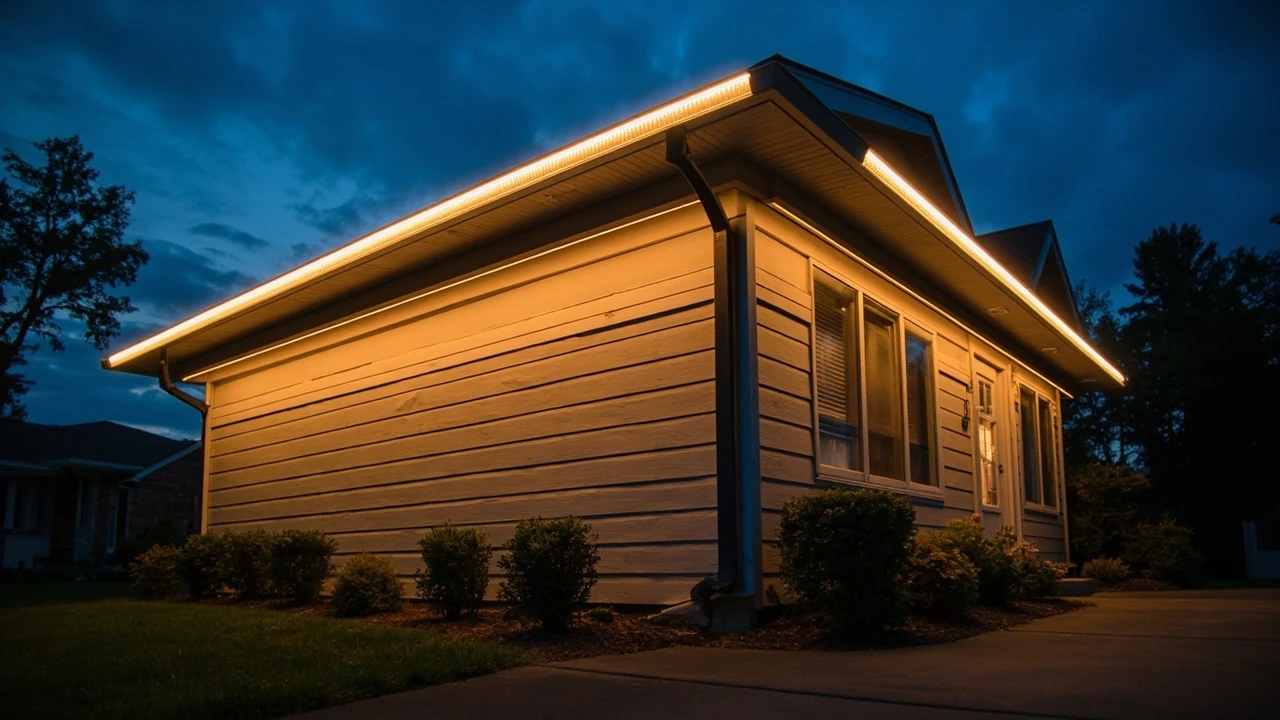
Govee permanent outdoor lights: a practical buyer’s guide
A neighbor installs a clean line of warm LED light along the roofline in a single afternoon, and suddenly the front of the house looks like it belongs in a holiday catalog every night of the year. That is the appeal of govee permanent outdoor lights, a category of LED system designed to stay mounted through rain, sun, and snow, with app control and color-changing scenes for holidays, game days, and everyday accent lighting. The pitch is straightforward, but the buying decision is not, because “permanent” actually covers several quite different products and installation choices.
This guide walks through what the Govee permanent outdoor lights line really includes, how the systems differ from traditional holiday string lights, what to check on the house before you order, and what the realistic day-to-day experience looks like after the ladder is put away. The goal is to help you decide whether the system suits your home, your climate, and your tolerance for a small weekend project.
What “permanent outdoor lights” actually means
The phrase has become shorthand for a track-mounted LED system that stays on the house year-round. Instead of climbing up each December to hang string lights and taking them down in January, you install a low-profile aluminum track under the eaves or along the fascia, and the LED strip clicks into that track. The track hides the wiring and shields the strip from direct UV exposure, which is the usual reason cheap string lights fade and crack.
Within that broad category, Govee offers several product families. Some are sold as DIY string-light replacements with adhesive or clip mounting. Others are explicitly marketed as permanent systems, complete with a rigid track, cuttable extension runs, and a control box that ties into the Govee Home app. The terms permanent, year-round, and everyday get used loosely in product listings, so the first job is to confirm which family a given listing actually refers to.
For most readers comparing options, three questions frame the decision:
- Do you want one fixed warm-white look, or full color and scenes?
- Do you want to install it yourself on a Saturday, or hire an installer?
- Do you need the lights to disappear visually during the day, or are you happy with a visible track?
How Govee’s permanent systems differ from traditional string lights
Traditional holiday string lights are a temporary lighting choice. You staple them to the fascia, leave them up for a few months, take them down to store, and repeat. Govee’s permanent outdoor lights are designed as a building feature, more like a low-voltage landscape lighting system than a decoration.
The practical differences show up in a few places:
| Feature | Traditional string lights | Govee permanent outdoor lights |
|---|---|---|
| Mounting | Clips, staples, or adhesive hooks on fascia and gutters | Aluminum track screwed into fascia or soffit |
| Visibility by day | Visible wires and bulbs along the roofline | Low-profile track; strip hidden from street view on most homes |
| Color options | Usually one color or a fixed warm/cool choice | RGBIC addressable colors, scenes, and music sync in the app |
| Control | Manual on/off or basic timer | Wi-Fi or Bluetooth via Govee Home app, voice assistant support on many models |
| Weather rating | Varies; many consumer strings are not sealed for year-round wet exposure | IP65 or IP67 rated on most outdoor models, designed for permanent outdoor mounting |
| Typical lifespan claim | 1-3 seasons before noticeable fading or failures | 30,000+ hour LED lifespan claims from Govee for current generation strips |
The trade-off is real. Permanent systems cost more up front and require a more careful install, but they remove the annual ladder ritual and offer a level of control that plug-in string lights cannot match.
What to check on your house before you order
The biggest source of regret with permanent outdoor lights is not the lights themselves; it is the house. Before you add a system to cart, spend fifteen minutes walking the perimeter and answering a few honest questions.
Roofline shape and total length
Permanent systems are sold in fixed lengths, typically 50 ft, 100 ft, or 150 ft kits, with cuttable extensions for shorter runs. Measure the eaves where the track will sit, not the footprint of the house. A simple rectangular ranch will have a much longer total run than a two-story with deep rooflines, and the run you need to cover determines which kit you should buy.
Power source location
The control box and power supply need an outdoor-rated outlet, or a junction box if you want a fully hardwired look. Most DIY installs use an existing outdoor GFCI outlet, with the control box mounted near the outlet and the low-voltage cable running through the track to the first LED segment. Walk the perimeter and note where the closest outdoor outlet is, and whether the run to the start of your roofline is reasonable.
Material of the fascia and soffit
Wood fascia takes screws easily. Aluminum soffit may need different anchors. Stucco or brick eaves often require pre-drilling and masonry bits. The track is light, but every five to ten inches of track needs a secure fastener, so a 100 ft run means a lot of holes. Confirm you are comfortable with that, or plan to hire a handyman.
Climate and sun exposure
Permanent outdoor lights live on the house through everything. In hot, sunny climates, UV exposure is the main enemy, and track-based systems are specifically designed to shield the LED strip from direct sun. In very cold climates, look for published lower temperature ratings. In coastal areas, salt air is the bigger concern, and stainless or coated fasteners are worth specifying.
Local rules and HOA requirements
Some HOAs and a small number of municipalities restrict visible exterior modifications, including permanent light tracks. A quick check of your HOA guidelines, or a short email to the management company, can save a Saturday of installation that you later have to undo.
Key features to compare between Govee kits
Within the broader Govee catalog, the differences between kits are not just cosmetic. They affect how the system feels after the install is done.
| Feature | What to look for | Why it matters |
|---|---|---|
| LED density | LEDs per meter; higher density = smoother light, fewer visible hot spots | On a long, straight fascia, low-density strips can look “dotty” rather than continuous |
| Color technology | RGBIC (addressable) vs RGB (single color at a time) | RGBIC supports chasing, gradient, and per-segment effects; RGB only shows one color across the whole strip |
| Brightness | Look for lumen output per meter, not just wattage | Useful for both everyday accent lighting and holiday-style color washes |
| App control | Confirm Wi-Fi (not only Bluetooth) if you want control away from home | Bluetooth-only kits work at the house, but cannot be scheduled remotely |
| Voice integration | Alexa, Google Assistant, Matter support on newer models | Matters if your household already uses voice control for lights |
| Cuttable / extendable | Ability to cut strips at marked points and add extensions | Critical for matching your exact roofline length without leaving a dark gap |
| IP rating | IP65 dust-tight and water-jet resistant, or IP67 for brief immersion | For eaves and fascia, IP65 is normally sufficient |
If two kits look similar on price, the deciding factors are usually LED density, the type of color control, and whether the kit can be cut and extended to your exact roofline. A cheaper kit with low LED density and a fixed color will quickly look underwhelming next to the marketing photos.
Installation: what a typical DIY weekend looks like
Permanent systems are sold as DIY-friendly, and on a single-story home with wood fascia, they genuinely are. The install breaks down into a small set of repeatable steps.
Step 1: Plan the run and mark fastener positions
Decide where the track will start, where it will end, and where the control box will mount. Most people start at the corner closest to the outdoor outlet. Use a chalk line or laser level to mark a straight line along the fascia, then mark fastener points every five to ten inches along that line.
Step 2: Mount the track
Pre-drill pilot holes, then screw the aluminum track to the fascia using the included or appropriate exterior screws. The track should be straight, with the open channel facing away from the roof edge so the LED strip faces outward, not up into the soffit.
Step 3: Snap in the LED strip and run the cable
Most Govee permanent systems use a strip that clicks or slides into the track. Avoid forcing the strip. The low-voltage cable runs from the end of the strip back to the control box, normally tucked into the track or clipped along the run.
Step 4: Connect the control box and power up
Mount the control box near the outdoor outlet, connect the strip cable, plug in the power supply, and pair the system with the Govee Home app. The first power-on is the moment to test colors, brightness, and any cut joints before sealing everything up.
Step 5: Seal, tidy, and test scenes
Where the strip was cut to length, use the provided end caps and any recommended sealant. Walk the run with the lights on at night to look for dark spots, gaps, or sections that are visibly brighter than the rest. Adjust before you put the ladder away.
For a typical 100 ft single-story install, expect four to six hours of work spread over a Saturday, longer if you are working around landscaping, second-story eaves, or a complex roofline. If you are not comfortable on a tall ladder, this is the point at which hiring a handyman or a specialist installer makes sense, and is a common route for two-story homes.
Day-to-day use: scenes, schedules, and routine maintenance
Once installed, the system becomes part of the house, and the day-to-day experience is closer to a smart bulb than to a holiday decoration. A few habits tend to make the system feel like a real upgrade rather than a gadget you forget about.
- Set a few named scenes in the app, for example Everyday Warm, Game Day, Holidays, and Late Night, and assign each a clear use.
- Use schedules for sunrise and sunset rather than fixed times, so the lights track the seasons without you editing the schedule every few weeks.
- Leave a small “away” scene active when you travel, so the house does not look unoccupied for a full week.
- Update the Govee Home app when prompted; the app is also how the strips receive firmware fixes.
Maintenance is light. Once or twice a year, wipe the front of the track with a soft cloth from a ladder to remove dust and pollen. Check the visible cable runs and end caps after major storms, and confirm the control box is still seated and dry. LED strips rarely fail outright; the more common issues are a loose connector at a cut joint or a small section of track pulling away from a fascia board that has expanded and contracted with the seasons.
Costs, value, and what a realistic budget looks like
Permanent outdoor lighting is a mid-range home upgrade, not a small purchase and not a full renovation. A reasonable budget range for a typical U.S. home in 2026 looks like this:
| Component | DIY route (typical U.S. home) | With hired install |
|---|---|---|
| 100 ft Govee permanent kit, control box, power supply | Mid-hundreds of USD, varies by model and current sale pricing | Same kit cost, plus labor |
| Additional track, extensions, mounting hardware | Often included; budget for extras if roofline is complex | Usually included in installer quote |
| Ladder, drill, basic tools | Most homeowners already own these | Provided by installer |
| Installer labor (single-story, 100-150 ft) | Not applicable | Often a few hundred USD, varies by region and roof complexity |
| Optional smart home hub integration | Free if you already use Alexa or Google Home | Same |
The honest comparison is not just against string lights. It is also against the cumulative cost of renting or buying a new string of lights every few years, plus the time spent on and off a ladder. For households that decorate heavily for the holidays, a permanent system can pay for itself over several seasons once you add the time and the replacement lights into the math.
Common mistakes to avoid
Most installation regrets fall into a small number of patterns. A little attention here saves a lot of rework later.
- Ordering a kit that is too short, then trying to bridge a gap with a separate string. Buy one continuous run whenever possible.
- Mounting the track under the edge of the shingles instead of on the fascia. Shingle edges flex and lift in wind.
- Skipping the chalk line. A wavy track is far more visible than a slightly imperfect strip.
- Plugging the control box into an indoor outlet via an extension cord. Outdoor-rated, GFCI-protected circuits are the right answer.
- Ignoring the app’s firmware update prompts and then wondering why a new feature does not appear.
How Govee permanent outdoor lights fit into a wider outdoor lighting plan
Permanent eaves lights are one layer of an outdoor lighting design, not the whole thing. They handle the roofline, the most visible part of the house at night. Pathway lights, uplights on trees, and porch or step lights are separate layers that work together. If you already use those layers, the Govee system slots in naturally; if you do not, you may find that the roofline accent alone changes the look of the house more than you expected, and the rest of the lighting can wait.
It also helps to think of the system as part of a broader pattern of low-voltage, app-controlled exterior upgrades, similar in spirit to permanent holiday lighting products sold by regional installers, and to dedicated landscape lighting systems. The general approach is the same: a small set of fixtures, a single control point, and a schedule that the house runs on its own.
Frequently asked questions
How long do Govee permanent outdoor lights last?
Current Govee permanent outdoor LED strips carry published lifespan figures in the tens of thousands of hours, which for typical residential use works out to many years of nightly operation. Real-world lifespan depends on climate, sun exposure, and the quality of the install, particularly how well the track shields the strip from direct UV and how well the cable connections are protected from moisture.
Can Govee permanent outdoor lights be left up in winter?
Yes. The systems are designed for year-round outdoor mounting, including in snow and freezing rain. The track shields the LED strip, the outdoor-rated power supply handles the cold, and the strip itself is sealed. The main winter concern is ice damming on the roof above the track, which is a roof issue rather than a lighting one.
Do I need an electrician to install Govee permanent outdoor lights?
For most single-story homes, no. The system uses a standard outdoor GFCI outlet and a low-voltage run to the strip, which is well within a comfortable DIY project. For a two-story home, a complex roofline, or a household that simply does not want to be on a tall ladder, a handyman or a specialist installer is a sensible choice and is how most regional permanent-lighting companies operate.
Will Govee permanent outdoor lights work with Alexa or Google Home?
Most current Govee permanent outdoor kits support Alexa and Google Assistant, and newer models increasingly support Matter. The exact list of voice commands and integrations depends on the specific model, so it is worth checking the product page for the kit you are considering, particularly if your household already uses a specific voice platform.
How bright are Govee permanent outdoor lights?
Brightness varies by kit, but the permanent systems are designed to provide both an everyday accent level and a noticeably brighter holiday-style level. The Govee Home app exposes dimming and brightness control, so the same system can run as a soft warm wash most nights and a much brighter, full-color scene on holidays or game days.
Can the strips be cut to fit my roofline?
Most Govee permanent outdoor strips can be cut at marked points and extended with compatible extension runs. This is the intended way to handle a non-standard roofline. The key is to follow the marked cut points, seal the cut end with the provided cap, and avoid cutting at unmarked positions, which will disable that segment.
Are Govee permanent outdoor lights safe in heavy rain?
The outdoor-rated strips and control boxes carry IP65 or higher ratings, which cover rain, splashing, and low-pressure water jets. They are not designed to be submerged, but normal weather exposure, including horizontal rain, is within their rating. As with any exterior electrical device, the GFCI-protected outlet is an important part of the safety story.
Do Govee permanent outdoor lights use a lot of electricity?
LED strips are efficient compared with older lighting types, and a typical permanent eaves run uses a small fraction of what a comparable set of incandescent string lights would draw. For most households, the cost of running the system every evening for a few hours is a minor line item on the electric bill, not a noticeable one. The app’s scheduling tools help keep usage predictable.
Can I install Govee permanent outdoor lights on brick or stucco?
Yes, but the fasteners and the prep change. Brick and stucco require masonry drill bits and appropriate anchors or screws, and the track should be pre-drilled rather than driven in directly. The result is just as secure as a wood install, but the job is slower and the bit cost is worth budgeting for.
What happens if one section of the strip fails?
Because the strip is addressable and cuttable, a single failed section does not usually kill the whole run. The most common failure points are connectors at cut joints and the end of the strip near the control box, both of which are accessible without removing the entire track. Spare end caps and a small section of spare strip are useful to keep on hand after the install.
Practical next steps before you buy
Before you commit, take a few practical steps that turn a product page into a real decision. Walk the perimeter and measure the total eaves run you want to light. Note the location of the nearest outdoor GFCI outlet and the height of the highest point you would need to reach. Check the Govee Home app on your phone to confirm it works with your router and voice platform. Read the current product page carefully for the exact kit length, IP rating, and the inclusion of track, control box, and power supply, because listings vary. A short, deliberate check on a Saturday morning is worth more than a year of wondering whether you should have gone ahead.
Related reading
Explore High Ropes Adventure
Trip tools
Essential adventure planning guides
Use these practical guides to compare rope park activities, prepare for a first high ropes day, check a booking, choose suitable footwear and contact the editorial team. Each page links to the relevant live tools and current planning sections.
Latest articles
- Tame Impala tickets: how to find them, what they cost, and what to know before you buy
- Outdoor pillows: how to choose the right ones for a deck or trail rest stop
- How to find Morgan Jay tickets without overpaying
- How to find national parks near me: a practical local search guide
- Paylater travel: how buy now, pay later works for trip bookings
- Bagsmart Blast Travel Backpack: A Practical Review for Day Trips and Adventure Days
- How to choose an outdoor rocking chair that actually lasts
- Indiana travel advisory map: how to read it before a day trip
- How to plan an outdoor day around a concert stop: a cardi b tickets field guide
- Outdoor sectional sofas: a practical buyer’s guide for patio living