How to choose an outdoor rocking chair that actually lasts
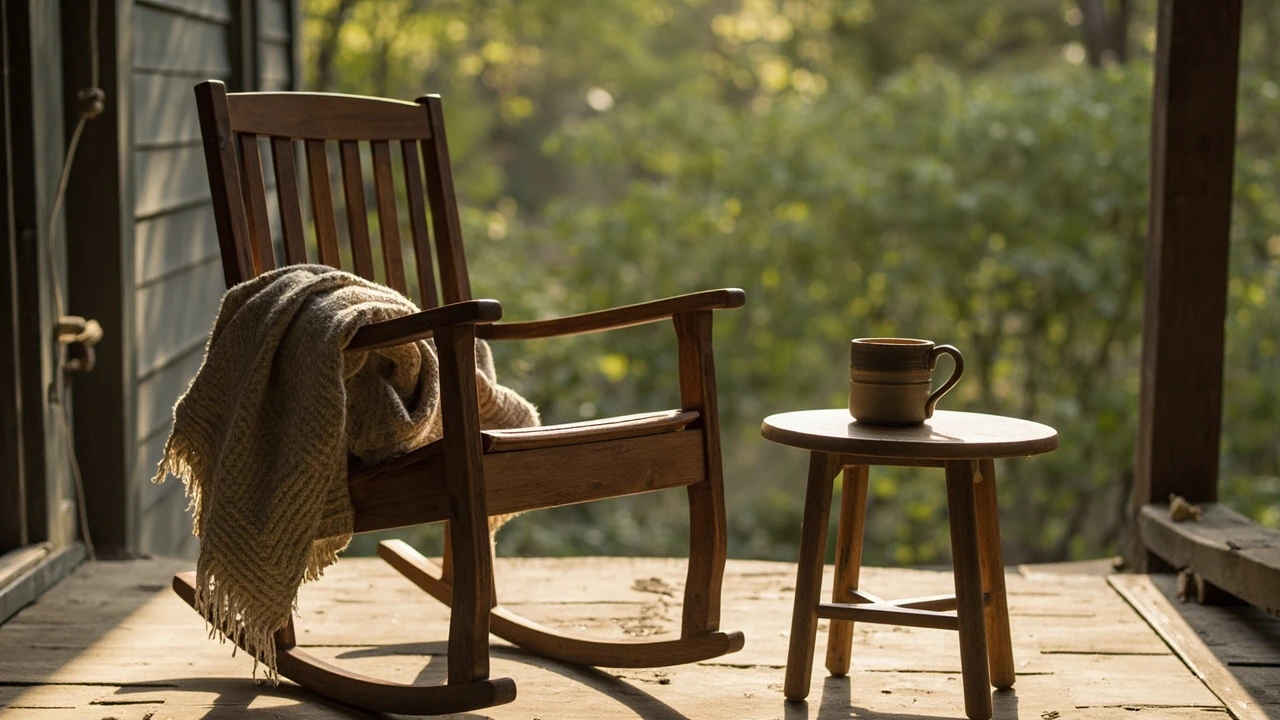
Two neighbours on the same street can buy the same outdoor rocking chair in the same spring, and within two years one is still solid while the other has loose armrests and peeling paint. The difference is rarely the price tag. It is the frame material, the joinery, where the chair actually lives, and how much weather it has to take. A buyer who sorts those four variables first usually ends up with a chair that is still pleasant to sit in a decade later.
This guide is written for people who want a single outdoor rocking chair they can use on a porch, patio, deck, or veranda, and who would rather pick once and pick well than replace a tired chair every few seasons. The advice is framed for the kind of covered and semi-covered outdoor spaces common around high ropes parks, cabins, and family gardens, and it links out to broader guides on outdoor gear and adventures where useful.
Outdoor rocking chair: what really decides if it lasts
An outdoor rocking chair is a piece of furniture that has to do three jobs at once. It has to carry an adult safely, survive weather, and stay comfortable for the kind of long, slow sitting that rockers are actually bought for. Most disappointments come from buyers focusing on the look and ignoring the mechanical side. The frame material, the joints, the finish, and the seat geometry are the four things that quietly decide whether the chair is still on the porch in year ten or in the skip by year three.
It also helps to separate “outdoor” from “occasional outdoor.” A chair that lives under a roof overhang all year is dealing with a very different environment from a chair that sits in an open garden through winter. Honest answers to a few simple questions about where the chair will sit and how often it will be used are worth more than a hundred product photos.
Define where the chair will actually live
Before comparing materials, name the spot. Covered porch, open patio, covered deck, exposed deck, or full garden. Each spot changes the answer.
- Covered porch with side walls: low rain, low direct sun, low wind. The easiest environment for almost any material.
- Covered deck, open sides: sideways rain and morning sun are common. Finishes matter more here.
- Open patio: full sun and full rain. Only the toughest materials and finishes will look good for long.
- Exposed garden or lawn: the chair needs to tolerate being soaked, dried, soaked again, and sat on by a wet dog.
Readers who plan to move the chair around between, say, a porch and a fire pit should treat the harsher of the two spots as the design condition. A chair that survives a covered porch will not necessarily survive an open lawn.
Match the chair to the user, not just the view
Weight capacity, back height, and seat depth decide whether a chair is actually used or quietly avoided. A tall person on a low-backed rocker will not relax, and a small person on a deep seat will not get foot support. The chair should fit the heaviest regular user and the most common sitter, not the average of the household.
For households that already spend a lot of time on the porch between adventures, a comfortable seat is the difference between a chair that becomes the favourite spot in the house and one that ends up storing a folded towel.
Frame materials compared for outdoor rocking chairs
Frame material is the single biggest decision. It sets the weight, the maintenance schedule, the look, and the realistic lifespan. The table below compares the most common options on the points that matter for outdoor use.
| Material | Typical weight | Weather tolerance | Maintenance effort | Realistic lifespan outdoors | Best fit |
|---|---|---|---|---|---|
| Solid teak or similar dense hardwood | Heavy | High when oiled or left to grey | Low to medium | 15+ years | Long-term covered or semi-covered spots |
| Cedar or cypress softwood | Light to medium | Medium | Medium | 7 to 12 years | Covered porches and budget builds |
| Pine, spruce, or fir (pressure-treated or untreated) | Light | Low to medium | High | 3 to 7 years | Short-term or sheltered spots only |
| Aluminium (powder-coated) | Light | High | Very low | 10 to 20 years | Open patios and coastal air |
| Wrought iron or steel | Very heavy | Medium if finish is intact | Medium to high | 10+ years with care | Classic looks, frost-free climates |
| Plastic, poly lumber, or resin | Light | High | Very low | 8 to 15 years | Low-maintenance family homes |
| Rattan, wicker, or rattan-look weave | Light | Low to medium | High | 2 to 5 years unless stored | Indoor-outdoor transition spaces only |
Two practical notes on this table. First, “lifespan” assumes the chair is matched to its environment, not abused. A teak chair left in a boggy corner will fail faster than aluminium placed sensibly. Second, the heaviest chair is not automatically the best. A heavy iron chair on a small balcony deck can be a real load problem, and a heavy chair that no one wants to move is a chair that gets neglected.
Why wood still wins for many buyers
Wood is the traditional choice for a reason. A solid hardwood rocker has a stiffness and a slight flex that metal and plastic struggle to match, and the sound of wood on a porch is part of the experience. The trade-off is real maintenance. Wood moves with humidity, and outdoor wood needs either a protective finish that is renewed every year or two, or an acceptance of silver-grey weathering. The properties of teak and similar oily hardwoods make them the rare woods that survive either path reasonably well.
Buyers who do not want to refinish wood every year should look at cedar, modern acetylated woods, or high-quality poly lumber that imitates wood grain. The look is close, the maintenance is much lower, and the lifespan outdoors is competitive.
When metal or poly is the smarter call
Powder-coated aluminium is the easiest real chair to live with. It does not rust in the same way steel does, it is light enough to move, and it tolerates being left out. Poly lumber, made from recycled plastics, is the easiest family chair. It tolerates spills, kids, dogs, and the kind of weather a real family porch sees in autumn. Both are reasonable answers for a buyer whose priority is time, not tradition.
Joinery, fasteners, and the parts that quietly fail
Most outdoor rocking chairs do not fail because the wood or metal gave up. They fail because a joint loosened or a fastener corroded. The fix is to look at how the chair is put together before buying.
What to look for in joinery
- Mortise and tenon or dowelled joints in wood: much longer lasting than simple screws into end grain.
- Through-bolts with lock nuts on metal frames: more durable than self-tapping screws into thin tubing.
- Stainless or coated fasteners: ordinary zinc screws corrode fast in outdoor humidity and stain the wood around them.
- Replaceable glides or feet: the wear point at the front of the rocker. If they are a separate part, they can be replaced. If they are part of the leg, the whole chair has to be repaired.
- Continuous rockers, not two separate arms: a single bent or solid wood rocker spreads load better than two short arms joined at the front.
What to avoid
Chairs that rely on glue for structural strength, particle board or MDF components anywhere load-bearing, and stamped sheet metal where a tube or solid member should be. Outdoor glue exists, but it is rarely the only thing holding a load-bearing joint in a rocker. A chair that arrives flat-packed with cam locks and dowels is a chair for a guest room, not a porch.
Fasteners worth paying extra for
Stainless steel, hot-dip galvanised, or marine-grade fasteners are a quiet upgrade that buyers rarely notice on day one and always appreciate in year five. A chair that uses the same fasteners you would use on a garden gate will outlast a chair that uses the cheapest available screw.
Comfort, fit, and the geometry of actually sitting
Rocking chairs are bought for sitting, and the wrong geometry will make a beautiful chair unused. Three numbers matter: seat height, seat depth, and back height. A useful test is to sit in the chair for at least a few minutes in the shop or to check the return policy carefully when buying online.
Seat height and getting in and out
Seat height should let the sitter place their feet flat on the ground with knees roughly at hip height. Too low and the sitter has to haul themselves up. Too high and the feet dangle, which gets uncomfortable within minutes. For most adults, a seat height in the range of about 40 to 48 cm works well. Taller users benefit from the upper end of that range.
Seat depth and back support
Seat depth controls how much of the thigh is supported. Too shallow and the sitter feels perched. Too deep and the sitter cannot use the backrest without sliding forward. A useful rule is that there should be a few centimetres of space between the front edge of the seat and the back of the knee when sitting upright. Back height matters for anyone who plans to sit for more than a few minutes; a low back is fine for a quick cup of coffee, less fine for a long evening.
The feel of the rock
The rocker curve and weight distribution decide whether the motion is gentle or aggressive. A long, gentle curve gives a slow, soothing arc. A short, tight curve gives a faster, more nervous motion. Anyone with balance concerns, or anyone sharing the chair with children, usually prefers the long, gentle curve. Standing in front of the chair and tipping it back and forth by hand is a useful test, and a good shop will not object.
Weather, finishes, and realistic maintenance
Maintenance is where most outdoor furniture plans fall apart. A chair that needs three hours of sanding and oiling every spring will not get that three hours. Buyers should match the finish plan to the amount of time they will actually spend on upkeep.
Wood finishes in plain language
| Finish type | What it does | How often to renew | Best on |
|---|---|---|---|
| Penetrating teak or hardwood oil | Feeds the wood and slows surface drying | Once or twice a year | Teak, eucalyptus, similar oily hardwoods |
| Spar urethane or exterior marine varnish | Builds a film that blocks water and UV | Every 1 to 3 years, with sanding | Softwoods and detail work |
| Exterior paint | Strong UV and weather barrier, hides grain | Every 3 to 5 years, with prep | Softwoods and porch-classic looks |
| No finish, allow to weather | Wood turns silver-grey, surface fibres roughen slightly | Annual clean only | Teak, cedar, cypress on covered spots |
| Factory powder coat on metal | Bonded colour layer, very low upkeep | Touch up chips promptly | Aluminium and steel frames |
For a buyer who wants the wood to stay close to its original colour, an annual light clean and a single coat of oil is usually the most realistic plan. For a buyer who is happy to let the chair silver off, the plan is even simpler. What does not work is to apply a heavy film finish once, ignore the chair for a decade, and expect the finish to still be doing its job.
Storage and the off-season
Storage is the single most effective maintenance task, and it is free. A chair that is moved under a real roof, or covered with a breathable furniture cover, for the wettest and snowiest months of the year will last years longer than a chair that is left in the same spot through everything. Breathable covers matter; airtight plastic covers trap moisture and often make the weathering problem worse.
For a buyer with limited storage, choosing a lighter chair that is easy to move is a real advantage. Aluminium and poly lumber both win here.
How to match the chair to the spot on the property
Most buyers have a specific spot in mind. The match between spot and chair matters more than the brand, and a good match turns a generic chair into a favourite place to sit.
Covered front porch
A covered front porch is the easiest spot. A traditional wooden rocker in cedar, pine, or painted hardwood fits the architecture and the use pattern. The porch roof protects the finish, and the chair becomes part of how the house is used. A pair of matching rockers on a deep porch is a classic for a reason.
Open patio or deck
An open patio or deck needs a chair that can take real weather. Powder-coated aluminium, poly lumber, or a high-quality hardwood with an annual oiling schedule are the realistic options. A cheap softwood chair will not last a single winter in this spot without constant attention.
Balcony or small terrace
Balconies and small terraces add two constraints: weight, because the structure underneath has limits, and space, because a full-sized rocker is large. A folding or scaled-down rocker in aluminium or poly lumber is often the best fit, and the chair can come inside for storage in the worst weather. Families planning balcony time as part of a weekend escape will appreciate a chair that does not block the whole space.
Garden, lawn, or by a fire pit
Open garden spots are the harshest. A chair that lives here should be aluminium, poly lumber, or a high-end hardwood, and the buyer should accept that finishes will be tested. A simple foam cushion stored indoors when not in use will keep the seat much more pleasant than any built-in cushion left to the weather.
Common mistakes when buying an outdoor rocking chair
Most disappointed buyers fall into one of a small number of traps. Spotting these in advance is easier than fixing them after delivery.
- Choosing the look, not the build. A pretty chair with thin walls, hollow legs, or stapled joints will look fine on day one and be loose by the second summer.
- Ignoring the weight. A chair that is too heavy to move will be left in the worst weather, and a chair that is too light will skate on a smooth deck.
- Underestimating the sun. UV breaks down finishes faster than rain. A south-facing open spot needs UV-tolerant materials and finishes.
- Buying a chair with built-in cushions that cannot be removed. Cushions left outdoors in rain are the fastest way to destroy an otherwise good chair.
- Skipping the sit test. A chair that does not fit the body is a chair that will not be used, no matter how well it is built.
- Treating “weatherproof” and “weather resistant” as the same thing. Weatherproof is a strong claim and rare in furniture. Weather resistant means it tolerates weather if the buyer also takes care of it.
A short checklist before you commit
Walking through this list before paying tends to sort good choices from bad ones in a few minutes.
- Name the spot, the weather, and the heaviest regular user.
- Pick a frame material that suits the spot, not the look.
- Check the joinery and the fasteners. Stainless or coated, no bare screws in load paths.
- Sit in the chair, or confirm a sensible return window.
- Plan the maintenance. Be honest about how much time you will give it each year.
- Decide on storage for the worst months of the year.
- Budget for a breathable cover if the chair will live outside full time.
Buyers who can tick all seven items usually end up with a chair that is still on the porch a decade later. Buyers who skip more than two items are usually the ones replacing a chair within three years.
How an outdoor rocking chair fits into a wider outdoor life
A good outdoor rocking chair is rarely just a chair. It becomes the spot where the day winds down after a long walk, a ropes course, or a trail day. For households that already plan a lot of time outside, choosing a chair that can be part of that routine is a way of protecting the investment in all the other outdoor gear. A chair that someone actually wants to sit in gets cleaned, oiled, and covered. A chair that no one uses gets ignored and falls apart.
For families who treat the porch as the end point of an outdoor day, a small cluster of a rocker, a side table, and a place to hang a hat is often more useful than a larger, more impressive single piece. The cluster invites use, and use is what keeps outdoor furniture alive.
Care and repair once the chair is home
Even a well-chosen chair needs a small amount of routine care. The good news is that the care is simple, and most of it is a five-minute job rather than a weekend project.
- Annual clean. A bucket of warm water, a soft brush, and a mild soap. No pressure washer on wood, and no harsh solvents on any finish.
- Tighten fasteners each spring. Wood moves over the winter. A single pass with a screwdriver or a spanner in spring keeps joints from drifting.
- Refresh finish on schedule. Oil once or twice a year on hardwood, repaint or revarnish on softwoods when the surface looks tired.
- Touch up chips fast. A small stone chip on a powder-coated frame is the start of a corrosion problem. A dab of matching touch-up paint in the same season prevents the larger repair later.
- Replace glides when worn. Felt or plastic glides under the front of the rocker are cheap, and replacing them protects the floor as well as the chair.
These five habits are the difference between a chair that is in good shape in year twelve and a chair that is in poor shape in year four. None of them take long, and they are well within the reach of a household that has time for any kind of outdoor hobby.
Safety notes for everyday use
An outdoor rocking chair is a moving object, and a few simple habits keep the chair a safe place to sit rather than a hazard.
- Place the chair on a level surface so the rockers sit flat.
- Keep the path in front of the chair clear so that a foot resting on the ground has somewhere to land.
- Avoid leaning back hard in a fresh chair until the joints have settled in.
- Do not stand on the chair or use it as a step. Rockers are not designed for that load pattern.
- For households with small children, choose a chair with a slow, gentle rock rather than an aggressive one.
Used with a little common sense, a solid outdoor rocking chair is one of the safest pieces of furniture on the property. Most accidents with rockers come from people using them as steps or as improvised ladders, not from the chair itself.
Final practical reminder
Pick the chair for the spot and the body, not for the photo. A simple hardwood or aluminium rocker in a sensible size, with stainless fasteners and a finish the buyer is willing to refresh, will outlast and out-perform a fancier chair that is the wrong match for its environment. Anyone who treats the chair as part of a wider outdoor routine rather than a standalone purchase will look after it more, enjoy it more, and replace it less.
For readers who are already planning a porch, cabin, or garden upgrade, the other guides on the site cover the wider picture, from packing for a wet trail day to finding a safe outdoor venue. The right outdoor rocking chair is the part of the routine that happens after the adventure, and it deserves the same care as the rest of the kit.
Frequently asked questions
What is the best material for an outdoor rocking chair?
For low-maintenance buyers, powder-coated aluminium or recycled poly lumber is the easiest. For traditional looks and long service life, dense hardwoods such as teak and eucalyptus are the most durable. The “best” material is the one that matches the spot on the property and the amount of upkeep the buyer is willing to do each year.
Can an outdoor rocking chair stay outside in winter?
Yes, if the chair is built from weather-tolerant materials such as aluminium, poly lumber, or dense hardwood, and if the finish is in good condition. A breathable cover and a spot out of standing water extend the life of any chair. A cheap softwood chair, or any chair with a soft fabric cushion, is better moved under cover for the worst months.
How long should an outdoor rocking chair last?
A well-chosen hardwood or aluminium rocker in a sensible spot should last at least 10 to 15 years, and often longer. A budget softwood rocker in an exposed spot can be tired within three to five years. Lifespan depends far more on material and placement than on brand.
What weight capacity should I look for?
For most adults, a capacity of at least 120 kg is a sensible minimum. For larger users, look for chairs rated at 150 kg or more, and pay extra attention to the joinery and the rocker thickness, since the rated load is only as good as the weakest joint.
Do I need to oil a wooden outdoor rocking chair?
If the wood is a dense hardwood such as teak and the buyer is happy with a silver-grey surface, oiling is optional. If the wood is a softwood, or if the buyer wants to keep the original colour, an annual coat of exterior wood oil is the simplest maintenance plan. Varnished or painted finishes need full sanding and recoating every few years.
Are plastic or poly lumber rockers any good?
Modern poly lumber rockers from reputable makers are excellent for outdoor use. They are stable in weather, easy to clean, and tolerate family use. The trade-off is that they do not have the same feel or sound as wood, and the very cheapest versions can flex or warp. A middle-of-the-range poly lumber chair is usually a strong choice for a working family porch.
Is a rocking chair safe on a wooden deck?
Yes, with two simple precautions. Place the chair so the rockers sit fully on deck boards rather than across a gap, and fit felt or rubber glides under the front of the rockers. Glides protect the deck, reduce noise, and make the chair easier to rock on a smooth surface.
Can I leave the cushions outside on an outdoor rocking chair?
It depends on the cushion. Quick-dry outdoor foam with a weather-resistant cover can survive a shower, but it should still be brought in or covered for sustained rain. Standard indoor cushions will absorb water, grow mildew, and damage the chair finish beneath them. For most buyers, the safest plan is a removable cushion that is stored indoors when not in use.
How do I stop a metal outdoor rocking chair from rusting?
Keep the powder coat intact, touch up chips as soon as they appear, and rinse off salt or fertiliser splash promptly. For coastal homes, aluminium is a safer choice than steel because it does not rust in the same way, even when the surface is scratched.
What is a fair price to pay for a good outdoor rocking chair?
Price varies widely by region, but as a rough guide, a solid hardwood or aluminium rocker from a reputable maker in a traditional style sits in the mid to upper hundreds. Cheaper chairs exist and can be a reasonable short-term choice for a covered porch, but they rarely match the lifespan of a better-built chair in a tougher spot. Spending more on joinery and fasteners usually pays back in years of extra service.
Related reading
Explore High Ropes Adventure
Trip tools
Essential adventure planning guides
Use these practical guides to compare rope park activities, prepare for a first high ropes day, check a booking, choose suitable footwear and contact the editorial team. Each page links to the relevant live tools and current planning sections.
Latest articles
- How to choose an outdoor rocking chair that actually lasts
- Indiana travel advisory map: how to read it before a day trip
- How to plan an outdoor day around a concert stop: a cardi b tickets field guide
- Outdoor sectional sofas: a practical buyer’s guide for patio living
- How amusement parks actually work: rides, safety, and what to expect
- Beis Travel: What the Bag Brand Offers for Outdoor Days
- Adventure park: what it is, what to expect, and how to plan a visit
- Indoor activities near me: practical options for rainy days and tight schedules
- Backrooms movie tickets: how screenings, formats, and seat tiers actually work
- Outdoor Christmas lights: a practical guide for gardens, trees and facades