Outdoor pillows: how to choose the right ones for a deck or trail rest stop
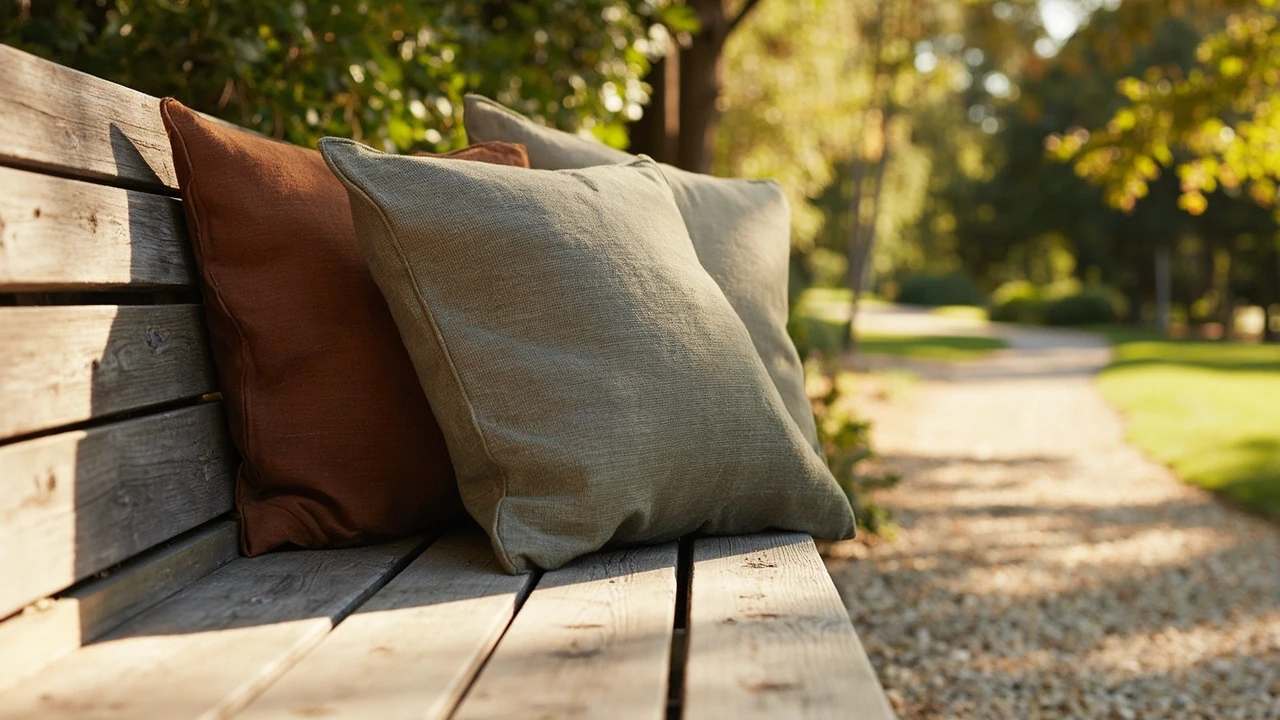
Outdoor pillows: how to choose the right ones for real weather
A wood-and-rope bench on a forest deck looked complete until the first damp morning, when a small throw pillow slumped flat and left a mildewy ring on the slats. The problem was not the bench, the rope, or the view. It was the pillow. Most indoor pillows fail outside within a single season because their fills absorb water, their fabrics fade unevenly, and their seams invite mildew. A pillow that lives on a deck, in a porch reading nook, or folded into a trail rest kit has to be designed for the conditions it will actually meet.
This guide focuses on what matters when you buy outdoor pillows for places connected to adventure parks, forest day trips, garden rest stops, and porches that face real sun and rain. It covers the materials, fills, sizes, hardware, and care habits that decide whether a pillow lasts one summer or five, and how to match the right pillow to the way you actually sit, lean, and rest outside.
Why a regular pillow fails in outdoor conditions
An indoor pillow is built for a stable, dry room. Outside, that pillow faces four problems at once: ultraviolet light, moisture, temperature swings, and abrasion. Understanding each one explains why the category exists at all.
- Ultraviolet light breaks down cotton and many synthetic fibers over time, fading color and weakening the weave.
- Moisture from dew, light rain, splashes, or damp air soaks into open-cell fills and into natural-fiber covers, then sits in the seams.
- Temperature swings between cool nights and hot afternoons stress the cover fabric and any glues or backing.
- Abrasion from wood, rope, webbing, and grit slowly shreds thin fabrics and exposed stitching.
Outdoor pillows address those four forces through a combination of solution-dyed fabric, quick-drying fill, sealed seams, and hardware that lets the pillow dry in place rather than trapping water against a surface. If you have ever pulled a flat, stained pillow off a chair in spring and wondered whether to keep or replace it, this is the issue to solve.
The two main types of outdoor pillows
Most people only think about one shape, but the category splits into two broad families that solve different problems. Picking the right family early prevents expensive mismatches later.
| Type | Where it is used | Best fill | Best cover | Care habit |
|---|---|---|---|---|
| Seating and bench pillow | Deep chairs, benches, dining seats, porch swings | Polyester fiberfill or shredded foam with drainage | Solution-dyed acrylic or polyester | Brush off debris, stand on edge to dry after rain |
| Throw, lumbar, or travel pillow | Reading nooks, hammocks, vehicle seats, trail rest stops | Polyester fiberfill, poly beads, or memory foam with a liner | Solution-dyed acrylic, polyester, or ripstop nylon | Shake out, air dry, store dry between uses |
| Floor and floor-cushion pillow | Decks, gazebos, low seating around a fire pit | Dense foam wrapped in a quick-dry sleeve | Heavy acrylic or marine vinyl | Wipe down, flip to dry, lift off the deck at night |
Seating and bench pillows are usually square or rectangular, sized to a chair or bench seat, and tied or looped to the frame. Throw and travel styles are smaller, often rectangular or bolster-shaped, and built to be carried. Floor and cushion styles are the thickest and heaviest because they have to support full body weight. The mistake most buyers make is choosing a soft throw shape for a deep chair and then feeling it collapse on the first damp evening, or choosing a heavy floor cushion for a hammock and watching the hammock sag.
Materials that actually last outside
The fabric on the outside and the fill on the inside do the work. Each choice has clear trade-offs, and the right answer depends on how much sun, water, and weight the pillow will see.
Cover fabrics
The cover is the layer that takes the beating. It needs to shed water, resist UV, breathe enough to dry, and feel acceptable against skin or thin clothing.
- Solution-dyed acrylic (often sold under familiar outdoor brand names) holds color well because the dye is added while the fiber is still liquid. It feels similar to a soft cotton canvas and breathes more than vinyl, so it dries faster after a shower.
- Solution-dyed polyester behaves like acrylic but tends to be slightly lighter and cooler to the touch. It is common on mid-priced outdoor pillows and holds shape well under repeated compression.
- Olefin (polypropylene) resists moisture, stains, and mildew at a lower price point. It is a common pick for cushions that live fully exposed on a deck.
- Marine vinyl and coated polyester are wipe-clean surfaces used on thick floor cushions or seating near food. They are easy to clean but can feel hot in direct sun and do not breathe.
- Ripstop nylon appears on small travel and packable styles. It is light and quick-drying but not as comfortable for long lounging, and it can feel slippery against skin.
A useful quick check: a fabric label that says “solution-dyed” will generally outlast a printed or piece-dyed cover of the same fiber. Printing adds pigments only on the surface, so UV reaches the dye directly.
Fills
The fill decides how the pillow feels and how it survives water. A pillow can have a great cover and still be ruined by a fill that holds moisture for days.
- Polyester fiberfill is the most common outdoor fill because it dries quickly, resists mildew when kept clean, and keeps its loft if fluffed regularly.
- Poly beads or pellets are common in travel and lumbar shapes. They move with the body and drain well, but they can feel firm and slightly noisy on a quiet porch.
- Open-cell reticulated foam is used in marine and high-end outdoor seating. The foam is engineered so water passes straight through it instead of pooling inside, which is why it is the standard on boat cushions.
- Closed-cell foam is firm and light, often used as a base layer under a softer topper. It floats and dries fast, but it does not feel plush on its own.
- Natural fills such as down, feathers, cotton batting, or wool are best kept off a deck. They absorb moisture, take a long time to dry, and can compress permanently if stored damp.
A good rule: if the pillow can be picked up and water runs straight out of it rather than soaking in, the fill is doing its job. If the pillow feels heavy after a rain, the fill is working against you.
Size, shape, and how a pillow sits on real furniture
Size is not only a comfort question. It is a drying question. A pillow that overhangs a bench seat by a wide margin can fold under the user’s weight and trap water in the fold. A pillow that is too small slides around and wears out the corners first.
| Furniture | Common pillow sizes | Shape | Notes |
|---|---|---|---|
| Standard outdoor dining chair | 16 x 16 in, 18 x 18 in | Square | Ties at the back keep the pillow from sliding on slick seats |
| Deep lounge chair | 20 x 20 in or 24 x 24 in | Square or deep seat | Choose a depth that matches the chair, not a generic 18 in square |
| Bench seat (3 to 5 ft) | Two to three 16 x 16 in pillows or one long bench pad | Square cluster or single bench pad | Long bench pads are easier to lift and dry than clusters of squares |
| Hammock or hanging chair | Bolster or small lumbar | Cylindrical or rectangular | Pair with a separate headrest; avoid deep squares that twist the spine |
| Floor seating, low deck, or reading nook | 24 x 24 in, 26 x 26 in, or larger | Large square or rectangle | Use a base of closed-cell foam with a softer topper for support |
| Vehicle seat, trail rest, or packable travel | 12 x 16 in or 14 x 18 in | Small rectangle or bolster | Look for a stow pocket or compression strap to keep it dry in a pack |
Shape matters as well. A lumbar rectangle supports the lower back on a deep chair but does not replace a full seat pad. A bolster works for hammocks and travel because it resists twisting. A long bench pad can replace two or three loose squares, which makes it easier to lift during a sudden shower and dry in one motion.
Hardware and details that decide whether a pillow stays put
The features most often skipped in product photos are the ones that decide how a pillow behaves in rain, wind, and use.
- Stitched or welded seams. A covered or bound seam keeps water from wicking through the stitch holes. Open, serged seams are a sign of an indoor cover used outside.
- Zipper covers. A hidden zipper under a flap lets you remove the cover for washing without exposing the fill to direct water. Plastic or nylon zippers resist corrosion better than metal ones.
- Ties, loops, and straps. Ties anchor seating pillows to a chair so wind does not flip them into a puddle. Look for fabric ties that can be tucked in, not loose strings that fray.
- Non-slip backing. A textured or silicone-dot underside on a bench pad stops the pad from sliding on smooth wood and reduces abrasion on the seat surface.
- Double-stitched edges and piped corners. Piping adds a finished edge that resists wear, especially on the corners that take the most stress when a pillow is dragged off a chair.
- Drainage grommets. Larger bench pads sometimes have a small grommet or mesh vent on a corner to let water escape. Useful on fully exposed decks.
If a pillow has none of these details, the cover is doing all the work and will fail first at the seam. A well-built pillow does not need to be precious about the weather; it just needs the right design.
Color, fade, and how a pillow ages
Color choice is partly taste and partly a maintenance decision. Lighter colors show dirt and pollen faster but reflect heat. Darker colors hide grime but absorb more heat in direct sun, which can shorten the life of the cover and the fill.
Patterned and textured weaves hide light staining better than flat, smooth fabrics, which is one reason jacquard and woven patterns are common on mid-range outdoor pillows. If you have a covered porch that gets afternoon sun, a mid-tone color usually ages more evenly than a bright white or a deep black. The pillow will still fade over several seasons, but the change will be less obvious.
A simple test: if a fabric sample feels plasticky and reflects light at a sharp angle, it has a surface coating that can wear off unevenly with UV. If it has a soft, cloth-like surface, the color is more likely to be solution-dyed and to fade more slowly and evenly.
Care habits that double a pillow’s life
Even the best pillow fails early if it sits damp in a corner. A small routine does most of the work.
- Brush off debris weekly. Pollen, leaves, and grit grind into the weave and slowly abrade it.
- Stand pillows on edge after rain. Standing a pillow on its side lets water drain and air reach both faces. Leaving a flat pillow on a wet seat is the single most common cause of mildew rings.
- Rotate the pile. If a bench has two or three pillows, swap their positions every few weeks so the same pillow does not take all the sun and all the body weight.
- Wash covers on a gentle cycle with mild soap. Avoid bleach and fabric softener. Bleach breaks down fibers, and softener leaves a film that traps dirt.
- Dry fully before storing. A pillow that goes into a shed or storage bin even slightly damp will smell of mildew within a week.
- Bring pillows in for winter. Even weatherproof fabric wears out faster when left to freeze and thaw repeatedly. A clean, dry pillow in a breathable bag will last several extra seasons.
These habits are simple, but they are the difference between a pillow that makes it through five summers and one that is ready for the bin after two.
Matching a pillow to the way you actually use it
Specifications only matter once you apply them to your real space. A few common situations show how the choices above play out.
- Covered porch reading nook: A medium-density polyester fill with a solution-dyed acrylic cover, a lumbar or square shape to match the chair, and ties at the back. Bring the pillow inside at night during wet weeks to keep the fill dry.
- Open deck facing afternoon sun: A bench pad with a non-slip base, olefin or acrylic cover, and a small drainage grommet. Choose a mid-tone color, and flip the pad weekly so one face does not bake.
- Forest day rest stop or vehicle seat: A small packable lumbar with ripstop nylon cover, poly-bead or quick-dry fiberfill, and a hidden zipper. Pair it with a sit pad for ground use and a dry bag for transport.
- Adventure park base camp or gazebo: A cluster of 18 x 18 in seating pillows with ties, plus one or two floor cushions for kids. Keep a crate or deck box nearby to lift everything off the ground at the end of the day.
- Travel or weekend cabin: Two or three neutral-tone squares that mix and match across rooms, in solution-dyed acrylic with removable covers. Wash between trips and store dry.
The same advice also works around a fire pit, on a porch swing, or in a kids’ reading tent. The key is to match the cover and fill to the most demanding moment: an afternoon downpour, full sun at noon, or a child jumping on the cushion.
Common mistakes when buying outdoor pillows
Most disappointing purchases come from a small set of recurring errors. A quick scan before you click buy saves a return or a bin trip later.
- Choosing by color only. A pretty fabric on a foam core that holds water will still be a problem after a year.
- Skipping the care tag. A pillow that cannot be spot-cleaned or that requires a dry cleaner is a poor fit for outdoor use.
- Ignoring weight. A pillow light enough to blow off a bench in a gust will spend more time on the ground than on the chair.
- Mixing indoor and outdoor fills in the same seat. An indoor back pillow on an outdoor chair will mold long before the seating pad fails, and that mold can spread.
- Leaving new pillows in the original plastic wrap. Wrapped pillows stored damp develop a smell before they are even used. Open and air them out the day they arrive.
How outdoor pillows connect to a broader outdoor setup
A pillow is one item in a wider comfort system that also includes a sit pad, a blanket, shade, and a place to put a drink. The same logic that drives the choice of pillow also drives the rest of the kit.
If you are planning a trail day that ends at a deck or a rest stop, the packing list matters as much as the pillow itself. A few practical notes on layering comfort and protection for a damp trail day appear in What to Pack for a Wet-Weather Trail Day. If you are instead setting up a base camp at an adventure park, a separate piece on how to find a safe adventure park near you covers the park-side decisions that make the rest of your gear, including your seating, easier to use.
Outdoor pillows also benefit from a small piece of routine thinking. Rotate them with the seasons, lift them off wet surfaces, and check the seams once a year. The cost of a quick check is much smaller than the cost of replacing the whole set.
A simple buying checklist
Before you commit, run through this short list. It catches most of the issues that show up a month after delivery.
- Cover is solution-dyed acrylic, polyester, or olefin, with a soft hand rather than a stiff coating.
- Fill is quick-drying polyester, poly beads, or open-cell foam. No natural fills on exposed seats.
- Seams are bound, covered, or welded. No exposed serging.
- Zippers are hidden or covered. Plastic or nylon preferred over bare metal.
- Ties, loops, or non-slip backing match the furniture where the pillow will live.
- Size matches the seat depth, not just the width, and overhang is small enough to avoid folding.
- Color is mid-tone if the pillow will sit in direct sun, lighter or patterned if it will sit under cover.
- Care tag allows spot cleaning and gentle machine washing of the cover.
Eight small checks, but each one removes a real failure mode. A pillow that passes all eight will hold up for several seasons with basic care.
Storage between seasons
Storage is where most outdoor pillows either survive or fail. A few minutes of care at the end of the season is the difference between pulling fresh-smelling pillows out next spring and replacing the whole set.
- Brush off debris and wash the cover before storage.
- Dry each pillow fully in the sun, flipping once.
- Store in a breathable bag, crate, or old pillowcase. Avoid sealed plastic bins, which trap any remaining moisture.
- Add a small cedar block or a sachet of dried lavender to discourage insects if the pillow will sit in a shed.
- Keep the bag off a concrete floor. A shelf or a wooden pallet keeps damp from wicking up.
Stored this way, a set of outdoor pillows will be ready the moment the weather turns and you want to sit outside again.
When to replace rather than repair
A pillow is not worth saving once the fill has lost its spring or the cover has started to delaminate. Common end-of-life signs include:
- Persistent mildew smell after a wash and full dry.
- Visible seam splitting or piping that has separated from the cover.
- Fill that stays lumpy, even after fluffing and rotation.
- Fading so uneven that the pillow looks dirty even when clean.
- A cover that feels sticky or leaves a residue on skin, which is a sign the surface coating has failed.
If two or three of these signs appear at once, replacement is usually cheaper than repair. The cover, fill, and time required to bring a damaged pillow back often cost as much as a new one with a better design.
Putting it together for a single deck or rest stop
A practical starter set for a covered deck or a forest rest stop might include two 18 x 18 in seating pillows with ties, one 24 x 24 in floor cushion for kids or for stretching out, and one small lumbar pillow that doubles as a vehicle cushion on the drive. All four can share a fabric and a color family, which keeps the look coherent and the care routine simple.
That set covers most situations, dries quickly after a shower if stood on edge, and costs less than replacing it every other season. Adding a dry bag and a sit pad extends the same logic to a trail day or a picnic table, which is the real test of an outdoor pillow: it should make the rest of your outdoor setup easier, not more complicated.
Final practical reminder
The best outdoor pillow is the one that fits the seat, the weather, and the way you actually use it. Start with a solution-dyed cover and a quick-drying fill, choose a size that matches the furniture, and add the small hardware details that make drying and storage easier. Treat the pillow as part of a wider outdoor kit, and the same five minutes of care that protects the rest of the kit will protect it too. If you do that, the next time you sit down on the deck after a long trail day, the pillow will be exactly where you left it, dry, soft, and ready.
Frequently asked questions
What makes a pillow truly “outdoor” instead of just water-resistant?
An outdoor pillow is built from the cover to the fill to survive sun, rain, and temperature swings. The cover is usually a solution-dyed acrylic, polyester, or olefin that resists fading, and the fill is a quick-drying polyester, poly beads, or open-cell foam that lets water pass through rather than soaking it up. Indoor pillows use cotton covers and foam or fiber that holds moisture, which is why they fail outside within a season.
Can outdoor pillows stay out in the rain?
Yes, most outdoor pillows can handle a normal shower if the cover is solution-dyed and the fill is quick-drying. The key step after the rain is to stand the pillow on edge so air reaches both faces and the water can drain. Leaving a wet pillow flat on a seat for hours is what causes mildew rings and odor.
How long should an outdoor pillow last?
A well-made outdoor pillow with a solution-dyed cover and a quick-dry fill should last between three and five seasons of regular use, and longer if it lives on a covered porch. The biggest factors are sun exposure, how often it is left wet, and whether it is stored dry between seasons.
Are outdoor pillows comfortable enough to sleep on?
Outdoor pillows are designed for sitting, leaning, and short rests, not overnight sleep. A deep chair or a hammock with a lumbar pillow and a small throw can be comfortable for an afternoon nap, but for overnight use a thicker mattress pad or a proper sleeping pad is a better choice because the fill is tuned for support rather than for a long, neutral sleep position.
What is the best fill for outdoor pillows?
For most seating, a quick-drying polyester fiberfill is the best balance of comfort, weight, and price. For travel or lumbar shapes, poly beads or shredded foam with a drainage path works well. For full-exposure deck or marine use, reticulated open-cell foam is the longest-lasting option because water passes through it instead of pooling.
How do I clean an outdoor pillow without damaging the fabric?
Brush off loose dirt first, then wash the cover on a gentle cycle with mild soap and cool water. Skip bleach and fabric softener, both of which shorten fabric life. Dry the pillow fully in the sun, flipping once, before putting it back on the chair or into storage. Spot-clean small stains instead of washing the whole cover whenever possible.
Do outdoor pillows need to be brought inside for winter?
It is a good idea. Even weatherproof fabric wears out faster when it goes through repeated freeze-thaw cycles, and snow sitting on a pillow for weeks adds unnecessary moisture. A clean, dry pillow stored in a breathable bag in a shed or garage will come back out in spring looking and smelling fresh.
Can I use outdoor pillows indoors as well?
Yes. Many people bring outdoor pillows inside for high-traffic seating, kids’ rooms, or pet areas because the covers resist stains and clean up easily. The trade-off is that the cover fabric is usually a little stiffer than a fine indoor cotton, so the feel is more casual than decorative.
What size outdoor pillow should I choose for a deep chair?
Measure the seat depth and width first. A common deep lounge chair takes a 20 x 20 in or 24 x 24 in pillow, while a standard dining chair takes a 16 x 16 in or 18 x 18 in pillow. The pillow should cover the seat without a large overhang, because folds trap water and wear out the seams faster.
Are expensive outdoor pillows worth the higher price?
Often yes, because the price usually reflects a better cover fabric, a better fill, and better hardware. A more expensive pillow that lasts four or five seasons is cheaper per year than a cheaper pillow that needs replacing after two. The clearest places to save are on color and pattern, where a mid-tone solution-dyed fabric from a less familiar maker performs as well as a premium one.
Related reading
Explore High Ropes Adventure
Trip tools
Essential adventure planning guides
Use these practical guides to compare rope park activities, prepare for a first high ropes day, check a booking, choose suitable footwear and contact the editorial team. Each page links to the relevant live tools and current planning sections.
Latest articles
- Outdoor pillows: how to choose the right ones for a deck or trail rest stop
- How to find Morgan Jay tickets without overpaying
- How to find national parks near me: a practical local search guide
- Paylater travel: how buy now, pay later works for trip bookings
- Bagsmart Blast Travel Backpack: A Practical Review for Day Trips and Adventure Days
- How to choose an outdoor rocking chair that actually lasts
- Indiana travel advisory map: how to read it before a day trip
- How to plan an outdoor day around a concert stop: a cardi b tickets field guide
- Outdoor sectional sofas: a practical buyer’s guide for patio living
- How amusement parks actually work: rides, safety, and what to expect