Rainy day activities for kids that turn a stuck-inside day into real fun
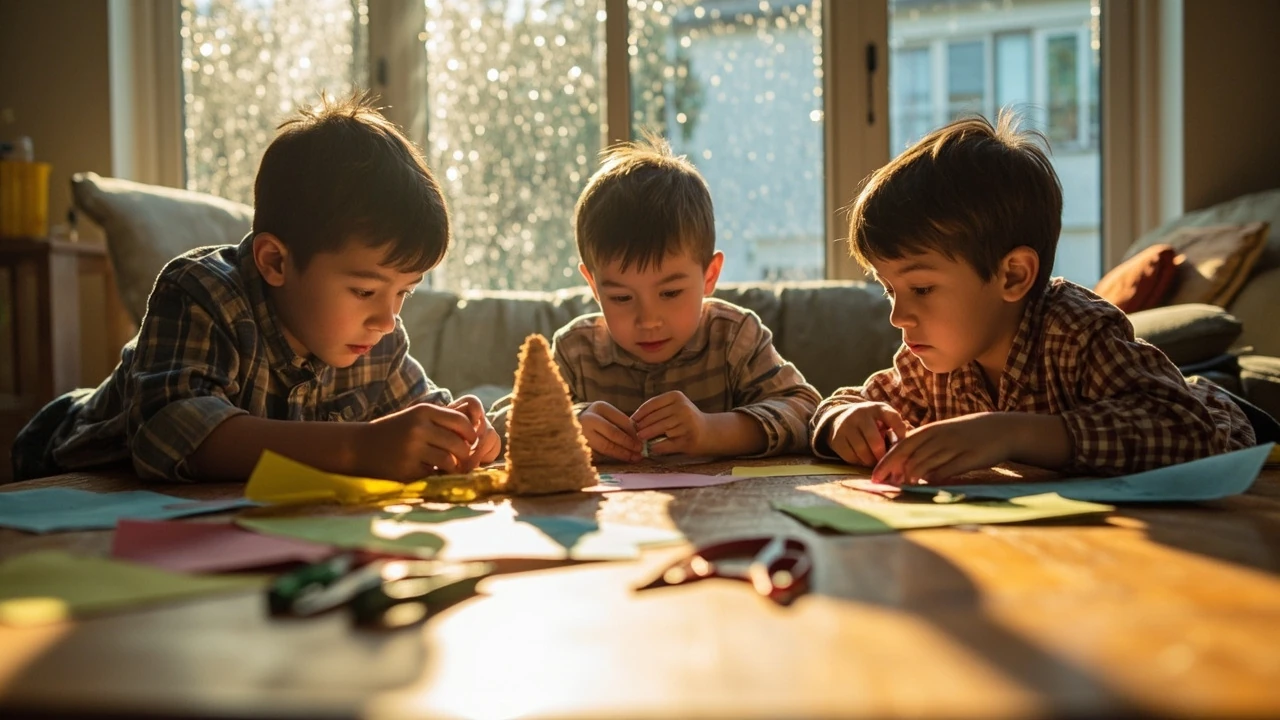
A forecast of grey skies and steady rain used to feel like a small parenting crisis in our house. The kids had pent-up energy, the toys were already boring, and the suggestion of “just read a book” lasted about nine minutes. The truth, learned the slow way over many wet Saturdays, is that the best rainy day activities for kids are not random activities at all. They are short, planned shifts between movement, focus, and rest, matched to the ages in the room and the space you actually have.
This guide collects the indoor games, craft ideas, screen-time plans, and outdoor-when-possible options that consistently work on long wet days. It also covers the parts parents usually forget: how to stop the day falling apart by 11 a.m., how to keep siblings from clashing, and how to plan around a real rain forecast rather than a vague “it might drizzle.” If you are weighing a ropes course, zipline, or adventure park visit that the rain has just disrupted, the same logic of “plan by energy, not by hour” still applies, and you can see how rope parks handle weather closures when planning a backup.
Rainy day activities for kids that actually hold attention
The reason most rainy day lists fall flat is that they treat every child the same. A six-year-old, a ten-year-old, and a teenager have very different attention spans, social needs, and tolerance for mess. The most useful approach is to plan a rainy day in three layers: anchor activities that the day is built around, rotation activities that fill gaps, and reset activities that bring the energy back down before lunch and dinner.
Build a three-layer plan, not a long to-do list
Anchor activities are the one or two events that give the day shape. These might be a baking project, a fort-building session, a board game tournament, or a movie afternoon. Rotation activities are short, 15-45 minute blocks you can swap in and out: puzzles, card games, drawing, audiobooks, simple science. Reset activities are quiet, low-stakes options that absorb friction when siblings start to bicker: a snack station, a coloring page, a sorting task, or ten minutes of solo reading on a beanbag.
You do not need a printed schedule. A simple list on a piece of paper stuck to the fridge works. The point is to have something to point at when a child asks, “What do we do now?” and you are mid-coffee.
Match activities to age, not to the internet’s idea of fun
Search results are full of suggestions that look great in photos but require a level of fine motor control, patience, or independent focus that many children simply do not have. Use the table below as a quick filter before you commit to an idea.
| Age band | Best at this age | Often frustrating | Watch out for |
|---|---|---|---|
| 2-4 | Sticker books, water-play trays, simple dough, hide and seek, dancing to music | Complex crafts with many small pieces, long board games, anything requiring precise cutting | Choking hazards with small parts, very wet or messy activities near carpet |
| 5-7 | Simple baking, scavenger hunts, basic board games, Lego challenges, audiobooks | Anything with long written instructions, multi-step science without adult help | Sugar-heavy baking leading to a sharp energy crash |
| 8-10 | Strategy board games, origami, model building, simple coding apps, kitchen independence | Activities pitched at teens, anything that feels “babyish” in front of older siblings | Frustration when a kit does not work as advertised |
| 11+ | Longer games, creative writing, video games with co-op, podcast listening, baking full meals | Forced “family fun” with no autonomy, crafts that look childish | Screen-time arguments if rules were not agreed in advance |
Indoor activities that burn energy without a yard
Rain does not cancel the need to move. Children who sit still for too long on a wet day almost always end up arguing, because restlessness comes out sideways. The trick is to think in terms of “body first, then brain.” Spend 20-30 minutes moving before you ask anyone to focus on a game or a craft.
Movement options for small spaces
- Hallway obstacle course. Use cushions, masking tape on the floor, a laundry basket to crawl through, and a chair to go around. Time each lap and let kids redesign the course once they get bored.
- Living room dance party. Three high-energy songs in a row is usually enough to reset mood. Pick a few fast tracks in advance rather than scrolling mid-dance.
- Indoor scavenger hunt. A list of 10-15 household items (something red, something that starts with B, something softer than a pillow) works for mixed ages if younger children team up with older ones.
- Pillow and blanket fort. Treat it as a construction project, not just a hideout. Allocate 30 minutes, hand over a torch, and let the fort become the day’s reading nook, ticket booth, or spaceship.
- Balloon volleyball. A blown-up balloon and a line of tape on the floor is enough for a 15-minute match that wears out small children surprisingly well.
For a family that usually spends weekends outdoors, the missing element on rainy days is often height, not movement. If you have a local high ropes or indoor climbing wall, a wet afternoon is a good time to research a future visit and read up on what to expect, similar to the way you would plan any other day out. Ropes courses explained covers the different formats so you can pick a good first outing once the weather clears.
Quiet activities for the middle of the day
After the first energy burst, the late morning is when focus is at its best. This is the window for crafts, baking, longer games, and any project that requires a bit of patience. The mistake is to start a craft at 8 a.m. when everyone is still sleepy, or to push through a complicated game right before lunch when blood sugar is dropping.
Craft projects that do not need a special trip to the store
- Cardboard city. Collect delivery boxes for a week and save them for a rainy day. Boxes become houses, parking garages, and robot bodies with paint, tape, and a few scraps of paper.
- Paper plate animals. A staple of primary school art for a reason: paper plates, paint or felt-tip pens, and glue produce recognizable creatures in 20 minutes.
- Salt dough ornaments. Two cups flour, one cup salt, one cup water. Bake at low heat for a couple of hours and you have a rainy afternoon’s worth of cutting, painting, and labeling.
- Sock puppets from odd socks. Buttons, fabric scraps, and wool hair turn the sock drawer into a small theatre company.
- Origami from printer paper. Start with simple cranes and boats, then move to modular pieces that link together.
Board and card games sorted by length and complexity
| Game | Players | Typical length | Best for |
|---|---|---|---|
| Uno | 2-8 | 20 min | Mixed ages, quick resets between activities |
| Sushi Go | 2-5 | 15 min | Early readers, first strategy game |
| Ticket to Ride (short version) | 2-5 | 30-60 min | Family play, geography and planning |
| Codenames | 2-8+ | 15-30 min | Older kids and adults, team play |
| Carcassonne | 2-5 | 30-45 min | Quiet focus, tile-laying calm |
| Monopoly (classic) | 2-6 | 60-180 min | Older kids only; plan a stopping point in advance |
If you do not own many games, a single deck of cards can fill hours. Snap, patience, simple rummy, and memory games all work for mixed ages, and you can teach older children a new game in the time it would take to set up a complicated board.
Screen-time plans that do not derail the day
Most families with school-age children have some kind of screen-time rule, and most rainy days are where those rules get tested. The goal is not to eliminate screens but to put them inside a structure so they do not expand to fill the whole day.
A simple screen-time frame
- Decide the windows in advance. One morning block and one afternoon block, for example, work better than “after each activity” because they remove constant negotiation.
- Pick the content before the day starts. A shortlist of two films, a couple of series, and one game each keeps children from drifting into endless autoplay.
- Pair screens with another activity. A movie with popcorn and blankets. A game with a friend on a video call. A show with a simple craft that ties to the story.
- Set a visible timer. A kitchen timer or a phone alarm children can see removes the surprise of “already?” when the screen goes off.
For families who want a screen-light day, a playlist of music, a stack of audiobooks, and a few podcasts can replace background noise without the same attention cost. Most public libraries now offer free audiobook and ebook lending through apps, and a quick sign-up the day before a forecast wet spell saves a lot of “I’m bored” by mid-morning.
Baking and kitchen projects that double as math and science
Baking on a rainy day is a cliché for a reason. It works because it hits several needs at once: a defined start and end, a tangible result, and a useful task that children can mostly run themselves with supervision. The educational value is real, too. Measuring, scaling, timing, and temperature all come up naturally.
Recipes that tolerate a child’s help
- No-yeast pizza dough. Quick to mix, hard to ruin, and toppings double as a salad bar that even picky eaters will build themselves.
- Banana or zucchini muffins. A good way to use up overripe produce, with simple mixing steps that suit small hands.
- Flour tortillas. A few minutes of kneading, a short rest, and the pan-frying is fast enough to keep attention. Children can roll and cook in batches.
- No-bake energy balls. Oats, peanut butter, honey, and mix-ins rolled into balls. No oven, almost no cleanup, good for older children to make largely alone.
- Homemade crackers or pretzels. Surprisingly simple dough, with a satisfying shape-and-bake step that holds attention longer than expected.
If you want to stretch the science side, a tray of three liquids with different viscosities (water, oil, honey) and a few small objects to drop in is a quietly absorbing experiment for the 5-10 age group. You do not need a kit; you need a flat tray and a willingness to wipe the floor afterwards.
Reading, audiobooks, and quiet time that does not feel like a punishment
Quiet time is the part of a rainy day that parents usually push for and children usually resist. The reason is that “go read” often means “go away and be quiet,” which feels like a punishment unless there is something worth reading. Stocking up before a forecast wet spell is the single highest-leverage thing a parent can do.
How to make quiet time feel like a choice
- Let children pick their own stack. A trip to the library or a small bookshop a day or two before forecasted rain gives children ownership over what they will read.
- Build a reading nest. Pillows, blankets, a torch, and a snack go further than the choice of book. The location signals that this is a treat, not a sentence.
- Read aloud together. A chapter book read over a few days works for mixed ages and turns into a small shared event on a long afternoon.
- Try audiobooks for reluctant readers. Following a story without decoding text is a different experience and often unlocks reading for children who struggle with pages.
For a wider list of low-cost, low-prep things to do at home, family activity planning uses the same idea of “match the activity to the people in the room,” which is the underlying logic of any good rainy day plan.
Outdoor-when-possible: still going out in light rain
Not every rainy day means total lockdown. A steady drizzle in mild temperatures is often perfectly manageable, and many children love jumping in puddles more than they love any board game. The decision comes down to three things: temperature, rain intensity, and the kind of clothing you have.
Wet-weather gear that actually keeps kids outside
Most family frustrations with rainy outings are not really about rain. They are about cold, wet feet and soaked trousers. A small set of decent waterproofs changes everything.
- One all-in-one suit per child. Easier than separate jackets and trousers, faster to put on, and harder for a child to peel off mid-walk.
- Welly boots with thick socks. A single pair per child is enough; do not overbuy. Make sure they can be pulled on without an adult, or the morning will stall.
- A dry bag for a change of clothes. Especially for younger children, because once the fun starts, someone will end up sitting in a puddle.
- A spare towel in the car. For the boot of the car and the back seat, not for the walk itself.
For a longer outdoor day that may run into rain, what to pack for a wet-weather trail day lays out a more thorough kit list that translates well to local walks and park visits in the rain.
Wet-weather outdoor ideas
- Puddle survey. Give children a list of puddle criteria: biggest, smallest, deepest, longest, most frog-friendly. They will walk for an hour without noticing the rain.
- Nature sketch in the rain. Waterproof sketchbooks and pencils are cheap, and drawing wet leaves, bark, and snails in real time is absorbing for older children.
- Letterboxing or simple geocaching. Many local parks have hidden caches that work in any weather and give a wet walk a clear purpose.
- Rain gauge and weather diary. A simple plastic cylinder and a chart on the fridge turn the rain itself into the day’s project.
Backup plans when the weather cancels your outing
Many families plan an outing days in advance, only to find the day itself is a washout. Cancelling entirely is fine, but a short list of backup options prevents the day from sliding into nothing.
Quick pivots when the plan changes
| Original plan | Wet-weather pivot at home | Wet-weather pivot out of the house |
|---|---|---|
| High ropes or zipline visit | Indoor obstacle course with cushions and tape | Local indoor climbing wall or trampoline park |
| Park picnic | Kitchen picnic on a blanket on the floor | Library or museum cafe |
| Beach or lake | Sand tray indoors or homemade playdough | Aquarium or covered harbour walk |
| Forest hike | Tree identification from a window or book | Covered nature centre or botanical glasshouse |
| Sports match or training | Living room skills practice or yoga video | Indoor sports hall or swimming pool |
For families whose main rainy day disappointment is an outdoor adventure venue closing for weather, it helps to know in advance how operators decide. Most rope parks and zipline sites close for lightning, high winds, or ice rather than ordinary rain, but policies vary, and the detail usually lives on the venue’s weather page. Zipline safety explains the rider side of those decisions.
How to keep siblings from clashing on a long wet day
Most rainy day disasters are not about activities. They are about friction between siblings who have spent too long in the same small space. A few structural choices reduce conflict before it starts.
Rules of thumb that hold up across ages
- Solo time every day. Even 30 minutes of separate space, ideally in different rooms, resets the social budget for the rest of the day.
- No shared screens without a turn rule. Agreed in advance, written down, and visible. Most sibling fights on rainy days are about whose turn it is on a console.
- Offer parallel activities. Two children doing different things in the same room often cooperate better than two children forced into the same activity.
- Use food as a buffer. A planned snack mid-morning and mid-afternoon prevents the hunger-driven arguments that are easy to mistake for behaviour problems.
- Keep bedtime honest. A late night on a rainy day makes the next day worse. Keep sleep on schedule even if the day felt lazy.
A one-page rainy day plan you can pin to the fridge
When the rain is hammering down at 7 a.m. and the children are already asking what is on, the following structure has worked in our house and in many others. It is intentionally simple. Adapt the timing to your own day.
Sample day, mixed ages, no outing
- 8.00-8.30 Breakfast and a short check-in: what is everyone in the mood for today.
- 8.30-9.00 Anchor activity one begins (baking, fort building, or a longer craft).
- 9.00-9.30 Movement block: obstacle course, dance, or scavenger hunt.
- 9.30-10.30 Anchor activity one continues, with screen-free quiet option available.
- 10.30-11.00 Snack and a reset activity: puzzle, drawing, audiobook.
- 11.00-12.00 Board or card game, plus solo reading for older children.
- 12.00-13.00 Lunch and a short film or audio drama.
- 13.00-14.00 Quiet hour: solo time, light reading, or a calm podcast.
- 14.00-15.00 Rotation block: Lego, model kit, drawing, or a second short game.
- 15.00-16.00 Wet-weather walk if the rain has eased, or a baking finish-off at home.
- 16.00 onwards Family film, dinner prep, and the wind-down to normal evening routine.
Notice what is not in this plan: a strict “no screens” rule, a packed schedule, or any requirement to be educational every minute. The plan is a frame, not a script. Skip blocks when energy is wrong, swap them around, and treat lunch as the pivot of the day rather than the end of the morning.
Cost and preparation: what to keep stocked
Most rainy day disasters are caused by the gap between the forecast and the cupboard. A small amount of preparation the day before a forecast wet spell changes the day’s options dramatically.
Low-cost basics to keep on hand
- A craft drawer. Paper, scissors, glue, tape, crayons, a few felt-tip pens, and a small pile of recycling: cardboard tubes, boxes, and clean food packaging.
- A baking shelf. Flour, sugar, salt, baking powder, oil, and a couple of long-life ingredients like oats and honey cover most simple recipes.
- A games shelf. Two or three board games, a deck of cards, and a small puzzle. Rotate them in and out of a cupboard so they feel “new” when they come out.
- A rainy day box. A single box that lives out of reach and contains a few “new” items: a new pack of stickers, a small Lego set, a notebook, or a puzzle that has not been opened yet.
- Two towels and a change of clothes per child. Optional for indoor days, essential if you are willing to go out in drizzle.
None of this needs to be expensive. The point is that when the rain starts on a Saturday morning, you are not improvising from an empty kitchen.
Special situations: toddlers, teens, and only children
Standard rainy day lists assume a mixed-age family with two or more children. Real families are not that tidy. A few adjustments help when the group is unusual.
Toddlers (under 3)
- Plan in 10-15 minute blocks. Attention is short, and the day should cycle through sensory, motor, and snack activities without long gaps.
- Use water play at the sink or in a tray on the floor. Towels down, no carpet, a change of clothes nearby.
- Stickers, stacking cups, and a small basket of “treasure” objects (wooden spoon, plastic cup, soft ball) cover a lot of ground.
Teens (13+)
- Offer autonomy, not just activities. Let them choose the film’s order, the meal plan, or one big block of the day.
- Co-op or online multiplayer games with friends count as social time, not isolation, when planned in.
- Invite a friend over if space allows. A teen with company is far easier to engage than a teen alone on a wet day.
Only children
- Schedule a video call with a friend mid-afternoon. Loneliness is the bigger problem than boredom.
- Lean on longer projects: a model, a recipe with many steps, a stop-motion film, a written story.
- Accept that the day will not feel like a “kids’ party” and that is fine. One child playing cards with a parent is still a good rainy day.
When to leave the house anyway
There is a real limit to how long a household can sustain a rainy day plan, especially in small flats or with very young children. Around late afternoon, even a well-planned day can curdle. A short, low-stakes outing often rescues the rest of the evening.
Short, easy outings that work in any weather
- Library. Free, warm, and reliably interesting. Many libraries run storytime or craft sessions on weekend mornings.
- Cafe with a kids’ corner. A hot drink for the adult, a pastry for the child, and a 45-minute change of scene.
- Indoor soft play. Not for everyone, but useful for burning off the last of the day’s energy.
- Supermarket with a mission. “Find three ingredients for dinner” turns a shop into a small game, especially with younger children.
- Public swimming pool or leisure centre. Warm, dry after the changing rooms, and a good reset for the whole family.
For families that usually plan bigger outdoor days, a useful rule of thumb is to keep one indoor option in reserve for any weekend that might turn wet. If the rain arrives, that option absorbs the disappointment without needing a fresh plan at 8 a.m. Resources like the one-day forest escape planner are written with weather flexibility in mind and can be inverted to a wet-day plan just as easily.
Frequently asked questions
What are the best rainy day activities for kids with no special equipment?
Stick to activities that use things already in the house: cushions and tape for an obstacle course, paper and crayons for drawing, a deck of cards, ingredients already in the cupboard for baking, and any audiobooks or music already on a phone. The best rainy day plans use what is at hand rather than what would be nice to have.
How do I keep my kids entertained on a rainy day without screens?
Build the day around one or two anchor activities such as a baking project or a long board game, with short rotation activities in between. Plan a 20-30 minute movement block in the morning and another after lunch, since most screen cravings come from restless bodies, not bored minds. Keep a “rainy day box” with a few new or rarely used items to bring out when the day drags.
How long should each activity be on a rainy day?
For mixed ages, 20-45 minutes per block is usually right, with a longer anchor activity in the late morning and a quiet hour after lunch. Children rarely sustain a single activity for more than an hour, and switching activities every 30-60 minutes is what keeps the day from feeling like one long, drawn-out complaint.
What are good rainy day activities for kids at home when space is limited?
Use vertical space. Pillow forts, hallway obstacle courses, balcony crafts, and “find the object” hunts work in flats. Bake at the kitchen table, build a city out of boxes, and use a small table or even a large baking tray as the day’s “workstation.” A small space is a constraint, but it also forces the kind of focused activity that big rooms often lack.
Are outdoor activities still possible in light rain?
Yes, with the right kit. A decent all-in-one waterproof suit, wellies, and a change of clothes turn a steady drizzle into a perfectly normal walk. The activities that work best in light rain are puddle surveys, nature sketches, and any short walk with a clear purpose, like a letterbox or geocache. Avoid long hikes in heavy rain, where the risk of cold and fatigue rises sharply.
How do I handle sibling arguments on a long wet day?
Plan a small amount of solo time into every block, agree turn rules for screens in advance, and use food as a buffer between activities. Parallel activities, where siblings do different things in the same room, often work better than forced shared activities. If arguments escalate, a short separation followed by a clear restart is usually more effective than a long lecture.
What rainy day activities work for a wide age range?
Baking, fort building, scavenger hunts, simple board games like Uno, and an audio drama played in the living room all work across ages. The trick is to let older children help younger ones, rather than expecting everyone to do the same task at the same level. Mixed-age success usually comes from a small number of flexible activities rather than a long list of age-specific ones.
How do I plan a rainy day when the forecast is uncertain?
Keep the day flexible. Prepare two or three indoor anchor activities in case the rain settles in, but also have a wet-weather kit ready so you can go out for a short walk between showers if the day allows. Decide in the morning which version of the day you are running, and tell the children, so they are not waiting for a decision all day.
What is a good rainy day routine that does not feel forced?
Anchor the day to meals and a single movement block, and let the rest be loose. A loose day with a clear structure feels relaxed, while a packed schedule on a rainy day usually ends in tears. The point of a routine is to remove the small daily decisions, not to replace them with a new set of decisions.
When should I just give up on the plan and let the day happen?
When the children are happier doing their own thing. Some of the best rainy days are the ones where parents stop running the schedule. If everyone has eaten, moved for at least 20 minutes, and has something to do, the day will usually look after itself. The plan is a safety net, not a contract.
Related reading
Explore High Ropes Adventure
Trip tools
Essential adventure planning guides
Use these practical guides to compare rope park activities, prepare for a first high ropes day, check a booking, choose suitable footwear and contact the editorial team. Each page links to the relevant live tools and current planning sections.
Latest articles
- Tame Impala tickets: how to find them, what they cost, and what to know before you buy
- Outdoor pillows: how to choose the right ones for a deck or trail rest stop
- How to find Morgan Jay tickets without overpaying
- How to find national parks near me: a practical local search guide
- Paylater travel: how buy now, pay later works for trip bookings
- Bagsmart Blast Travel Backpack: A Practical Review for Day Trips and Adventure Days
- How to choose an outdoor rocking chair that actually lasts
- Indiana travel advisory map: how to read it before a day trip
- How to plan an outdoor day around a concert stop: a cardi b tickets field guide
- Outdoor sectional sofas: a practical buyer’s guide for patio living