How to choose NBA tickets without overpaying
How to choose NBA tickets without overpaying
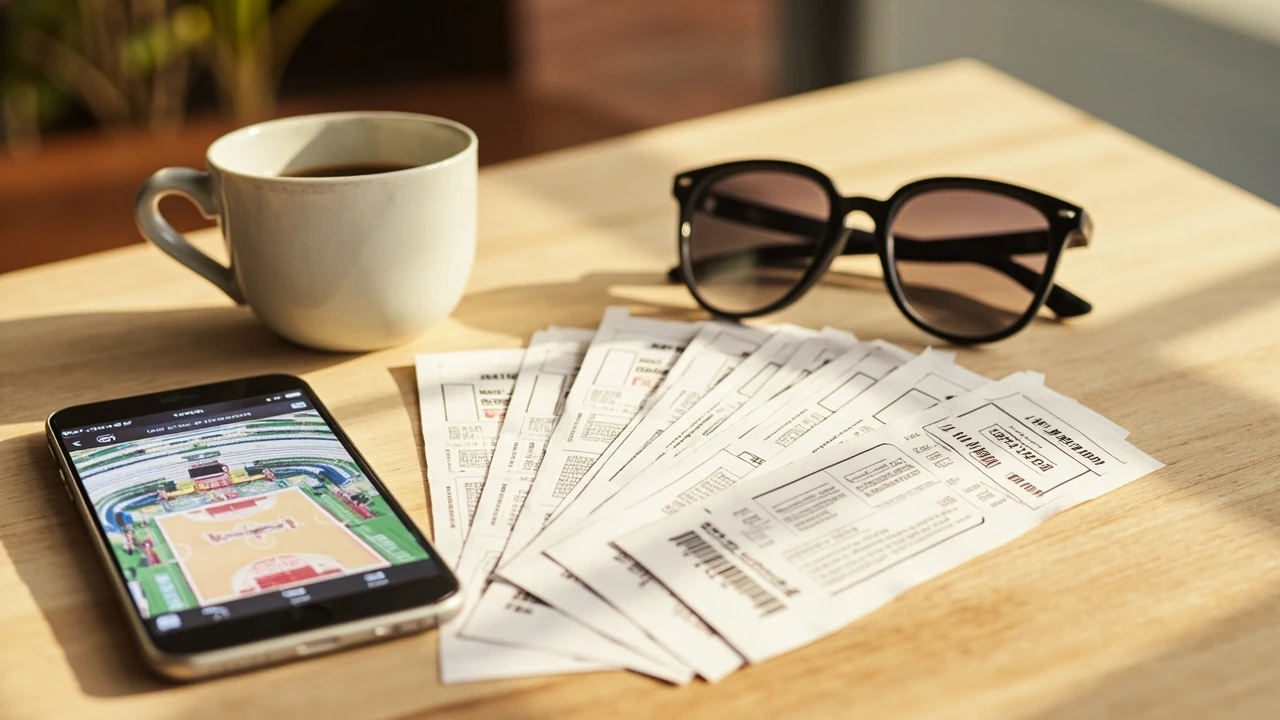
The first time a friend pulled a pair of NBA tickets out of a paper envelope, the seat location meant nothing to me. I had to look up the arena map on my phone before I knew whether the view was worth the drive. Most people who buy NBA tickets for the first time run into the same problem: the price is visible, the value of the seat is not. The work is in matching the ticket to the kind of night you actually want.
This guide walks through the practical decisions behind choosing NBA tickets: where the listed price comes from, how the secondary market behaves on game day, what seat locations actually deliver, and the small checks that prevent disappointment at the door. It is written for fans who would rather spend their money on a good seat than on a bad lesson.
What NBA tickets actually include
An NBA ticket is more than a seat number. It is a pass through several layers of access, each of which can change the night in ways that are not obvious from the listing.
- Seat location. Lower bowl, upper deck, club level, or courtside. Each tier has its own entry gate and concourse.
- Access level. Some arenas restrict certain restaurants, lounges, and bathrooms to specific ticket tiers.
- Mobile entry. Most teams now use a rotating barcode in a team app or wallet pass, which must be presented at the gate.
- Date and opponent. Marquee opponents and weekend games cost more because more fans want to be there.
- Resale rules. Secondary market tickets may carry restrictions on transfers, ID checks, or refund windows.
Before looking at price, decide which of these layers matters. A fan who wants to be close to the court has different needs than a family that wants a relaxed evening with easy access to concessions and restrooms.
Where NBA tickets are sold
Three channels dominate ticket sales for NBA games. Each one has strengths and pitfalls, and the cheapest option is rarely the safest one.
Official team and league channels
The NBA and each team sell tickets directly through their websites and apps. This is the only channel that guarantees the face value printed on the ticket and gives access to season-ticket-holder presales and verified fan registration. For high-demand games such as rivalry nights or opening week, this is often the only fair-priced option, because secondary prices rise quickly once the primary window closes.
Direct sales also give buyers a clear path to customer service. If a game is postponed or a seat has an obstructed view, the team’s box office is the first place to call.
Verified resale marketplaces
Resale platforms such as StubHub, SeatGeek, Vivid Seats, and Ticketmaster’s own resale section aggregate tickets from season-ticket holders, brokers, and individuals. The prices are set by supply and demand, so they swing sharply when a star player is announced as available or when weather is forecast for the arena city.
Most reputable resale sites offer a guarantee that the ticket will scan at the gate. That guarantee is what you are partly paying for, on top of the seat itself. Read the fine print on delivery method and transfer time. A ticket that arrives five minutes before tip-off is not as useful as one that arrived the day before.
Street sellers, social media, and scalpers
Some tickets are still sold by individuals near the arena or through fan forums and social media groups. Prices can be lower, but the risks are higher. The barcode may already be a duplicate, the transfer may be blocked by the team’s app, or the seller may not be the actual account holder. For first-time buyers, this channel is best avoided unless the seller is personally known.
Primary vs. secondary market: how pricing differs
The same seat in the same row can carry three different prices in a single day. Understanding why helps you decide when to buy.
| Channel | Who sets the price | Typical fee structure | Best moment to buy |
|---|---|---|---|
| Team or league direct | The team | Face value plus a small service fee | As soon as presale opens, especially for high-demand games |
| Verified resale platform | The seller, with platform caps | Market price plus 10 to 25 percent in service and delivery fees | One to three days before tip-off, when sellers start lowering prices to avoid a loss |
| Peer-to-peer or street | The individual seller | Negotiated, often cash | Only with known sellers and a working transfer |
The “right time to buy” rule has an exception: when a team’s star is injured late in the day, resale prices collapse, and a patient buyer can pick up a seat that would have cost twice as much twelve hours earlier. Following beat reporters and team injury reports on the morning of the game is often the single biggest factor in resale pricing.
How to read a seating chart before you buy
Arena maps are drawn for orientation, not for honest comparison. A section labeled “lower bowl” can be twenty rows back from the court, and a section labeled “club” can be on the opposite end of the building. The only way to compare is to translate the section into three numbers: distance to the court, angle relative to the basket, and the row within the section.
| Tier | Typical distance from court | What the view actually gives you | Trade-off to weigh |
|---|---|---|---|
| Courtside rows A to C | 0 to 10 feet | You hear sneakers and referees, but the far basket is hard to follow | Premium price, limited legroom, fans on camera |
| Lower bowl rows 1 to 10 | 15 to 40 feet | Best mix of proximity and full-court view | Most expensive non-courtside seats |
| Lower bowl rows 11 to 25 | 40 to 80 feet | Clean angle on the whole half-court | Player faces are hard to read |
| Upper deck lower rows | 100 to 150 feet | Best view of offensive sets and spacing | Sounds of the game feel distant |
| Upper deck upper rows | 150 feet and beyond | Useful for understanding team shape and flow | Atmosphere is muted, exits are slow |
If you are picking seats for a child or for someone who has not been to many NBA games, a lower bowl seat in rows 5 to 15 is usually the safest choice. It is close enough to feel the game and far enough back to see how plays develop. For a first-time fan, that is often worth more than a courtside seat behind the basket.
Mobile entry and transfer rules
Most NBA arenas no longer accept printed PDFs or screenshots. Tickets live inside the team’s app or a wallet pass, and the barcode refreshes every few seconds. This matters because the person whose name is on the account is often the only one who can transfer the ticket, and some teams block transfers within 24 or 48 hours of tip-off.
A short checklist before checkout reduces most entry-day stress:
- Confirm the ticket is delivered as a mobile transfer through the team app, not as a PDF or email attachment.
- Open the app the night before and make sure the ticket shows up under your account.
- Check the bag policy for the arena, including size limits for backpacks and clear bags.
- Add the ticket to your phone wallet so you can scan even if the arena has poor cell service.
- Plan the entry gate, because some premium sections use a separate entrance with shorter lines.
If a ticket is sold as a screenshot or a forwarded email, treat it as a red flag. Mobile-only transfer is now the standard for the league, and any seller offering an older format is either working outside the system or unaware of the rules.
Resale timing: when prices actually drop
Resale prices do not move randomly. They follow the calendar of the season and the news of the day. Three windows tend to produce lower prices for a given seat quality.
- Midweek games in November and December. Weekday games early in the season often sell below face value because demand is softer and weather complicates travel.
- The day of the game. Sellers who do not want to eat the loss lower prices in the final three hours before tip-off. Apps such as Gametime exist specifically for this window.
- After a star is ruled out. When a key player is announced as resting or injured a few hours before the game, prices can drop 20 to 40 percent within an hour.
The opposite also happens. When a rivalry game is announced for national television, when a player is chasing a record, or when a playoff spot is on the line, prices rise. The same seat that was 80 dollars in November can be 220 dollars in April against a divisional rival.
Game-day costs people forget to budget
The ticket is rarely the final number. Arena visits carry a stack of small costs that change the value calculation for a night out.
| Cost | Typical range per person | How to reduce it |
|---|---|---|
| Parking in team-operated lots | 20 to 60 dollars | Use nearby transit or reserve a third-party lot in advance |
| Rideshare at tip-off and end of game | 15 to 40 dollars | Walk a few blocks away from the arena before requesting |
| Food inside the arena | 15 to 40 dollars | Eat before arrival or choose water instead of soft drinks |
| Team merchandise at the venue | 25 to 120 dollars | Buy shirts and hats online before the trip if possible |
| Public transit to the arena | 2.50 to 10 dollars | Best value in cities with rail lines that drop at the arena |
For a family of four, the surrounding costs can easily add a hundred dollars to the evening. A realistic total helps you compare seats on equal terms. A 90-dollar upper-deck seat with a 40-dollar parking fee is not cheaper than a 110-dollar lower-bowl seat in a city with good transit.
Choosing seats for specific situations
The “best” seat depends on who is going and what they want from the night. Some common situations call for different choices.
For a first NBA game with a child
Choose a lower-bowl section between rows 5 and 15, on the sideline rather than behind the basket. The closer view keeps a child engaged, and the sideline angle avoids neck strain from watching the far hoop. Plan an exit near the family restroom and budget for one food stop rather than several small ones.
For a fan who watches a lot of basketball on television
An upper-deck lower row gives the closest match to a broadcast angle. Spacing, defensive rotations, and pick-and-roll reads are easier to see from a higher seat. The trade-off is atmosphere; the upper deck can feel far from the crowd noise during a comeback.
For a special occasion or gift
Courtside or lower-bowl row 1 to 5 seats are the obvious choice, but they are not always the best. A club-level seat that includes early entry and a quieter concourse can feel more relaxed for a long evening. The premium for club access is often smaller than the premium for the first five rows of the lower bowl.
For a group of friends on a tight budget
Upper-deck corner sections behind the basket are usually the cheapest section in the building. They are not glamorous, but they are loud, and the angle is honest. Pair them with public transit and a meal before arrival to keep the night affordable.
How to spot a risky listing
Most resale listings are legitimate, but a small share are not. A few patterns repeat when a ticket will not work on game day.
- Seller asks for payment outside the platform. Once payment leaves the platform’s guarantee, there is no protection if the ticket is fake.
- Section and row do not match the seat map. If the section exists but the row number is missing or described as “obstructed view,” ask for a screenshot of the actual seat view.
- Price is dramatically below the rest of the market. A seat priced far under similar listings is often a scam, a duplicate, or a ticket that the seller cannot transfer.
- Seller cannot or will not use the team’s official transfer tool. Real sellers use the official app. A seller who insists on a PDF or a screenshot is a warning sign.
The simplest test: ask the seller to transfer the ticket through the team’s app before you pay. A legitimate seller can do this in under a minute. A scammer cannot.
Comparing NBA tickets to other major sports
Fans who also follow the NFL, NHL, or Major League Soccer sometimes assume the ticket markets work the same way. They do not.
| Factor | NBA | NFL | NHL |
|---|---|---|---|
| Number of regular-season home games | 41 | 8 to 10 | 41 |
| Typical resale window before game | Hours to several days | Weeks | Hours to a few days |
| Average capacity of arenas | 18,000 to 20,000 | 60,000 to 80,000 | 17,000 to 22,000 |
| Star-player impact on price | Very high | High | Moderate |
The 41 home games and smaller arena capacity are why NBA tickets react quickly to news. A single injury update can move a secondary market by hundreds of dollars in an afternoon, while an NFL game absorbs the same news more slowly. The shorter season in the NFL also means each home game carries more weight, so prices stay higher for longer.
What to do if a game is postponed or cancelled
Postponements in the NBA are rare but not unheard of. Weather, arena issues, and league decisions can move a game to a later date. The ticket policy is set by the team and the platform that sold the seat.
- Direct purchases from the team are usually valid for the new date or refundable at the team’s option.
- Verified resale platforms typically issue a credit or refund if the game is not replayed within a set window, often 12 months.
- Peer-to-peer sales have no built-in protection, which is another reason to use a platform for anything you cannot afford to lose.
Keep the order confirmation and the original email until the game is played. If the team announces a reschedule, check your inbox before contacting customer service, because most platforms send an automatic update.
Checklist before clicking “buy”
- Decide whether you want proximity or a clean view of the whole court.
- Compare at least three sections in the same price band on the arena map.
- Check the time of the game against your travel plan, including transit at the end of the night.
- Read the transfer method and delivery window on the listing.
- Look at the total cost including fees, parking, and food, not just the face value.
- Confirm the refund and postponement policy before paying.
Six small steps, but they are the difference between a seat that looks good in a screenshot and one that feels right on game night. The ticket market rewards preparation, and the best deals usually go to fans who started looking a day or two earlier than everyone else.
Frequently asked questions
How early should I buy NBA tickets to get the best price?
For high-demand games, the best time to buy is during the team’s presale, which usually opens weeks before the season. For regular-season games against weaker opponents, prices tend to drop one to three days before tip-off, especially in the final few hours.
Are NBA tickets cheaper on game day?
Often, yes, on the resale market. Sellers who do not want to take a loss start lowering prices in the last three hours before the game. The risk is that the seat you want sells out before you buy it, so this strategy works best when you are flexible about location.
What is the safest way to buy resale NBA tickets?
Use a verified resale platform that guarantees the ticket will scan at the gate. Pay only inside the platform, never by direct transfer or gift card. Ask the seller to transfer the ticket through the team’s official app before payment.
Why are some NBA tickets so expensive on the secondary market?
Supply is fixed at the arena’s capacity, and demand rises for rivalry games, playoff implications, and visits from star players. When demand outstrips supply, prices climb. The price you see is the highest price someone was willing to pay recently, not a face value set by the team.
Do NBA tickets include access to food or lounges?
Only some tickets do. Club-level and courtside tickets often include access to specific lounges or include food and drink in the price. Standard seats include only the seat itself, and food and drink cost extra inside the arena.
Can I get a refund if my favorite player is not playing?
Usually not. Most tickets are sold regardless of which players are available, and a late scratch is treated as a normal part of the game. Some premium ticket tiers offer partial credits, but standard seats do not.
What is the difference between lower bowl and upper deck seats?
Lower bowl seats are closer to the court, usually between rows 1 and 25, and give a stronger sense of the players and the noise of the game. Upper deck seats are higher up and farther from the court, but they often give a better view of offensive sets and team spacing.
Are courtside NBA tickets worth the price?
For most fans, no. Courtside tickets cost several times the price of a lower-bowl seat, the view of the far basket is limited, and the legroom is tight. They are worth it for special occasions or for fans who want the closest possible experience, but they are not the best value for a first game.
How do I know if a resale seller is legitimate?
Check the seller’s rating and the number of past sales on the platform. Ask for a transfer through the team’s official app before paying. If a seller refuses to use the app, pushes for off-platform payment, or offers a price well below market, treat the listing as a risk.
What should I do with my NBA tickets after the game?
Most tickets live in the team app, so there is no physical stub to keep. Screenshots of the seat and the game result make a good memory, and season-ticket holders often pass on their seats to friends or family. If you bought printed tickets from a collector, store them flat and away from sunlight.
Related reading
Explore High Ropes Adventure
Trip tools
Essential adventure planning guides
Use these practical guides to compare rope park activities, prepare for a first high ropes day, check a booking, choose suitable footwear and contact the editorial team. Each page links to the relevant live tools and current planning sections.
Latest articles
- How to choose NBA tickets without overpaying
- Time travel movies worth watching on a slow weekend
- Overseas adventure travel: how to plan a trip that actually works
- Choosing an outdoor bench that actually lasts
- Lows adventure: how low-ropes courses work and who they suit
- outdoor couch
- United travel bank: how prepaid travel money cards actually work
- National parks in California: a practical guide to choosing your trip
- How to buy chris brown usher tickets without overpaying
- Ariana Grande tickets: how to find real seats, avoid resale traps, and plan the day around the show