outdoor couch
outdoor couch
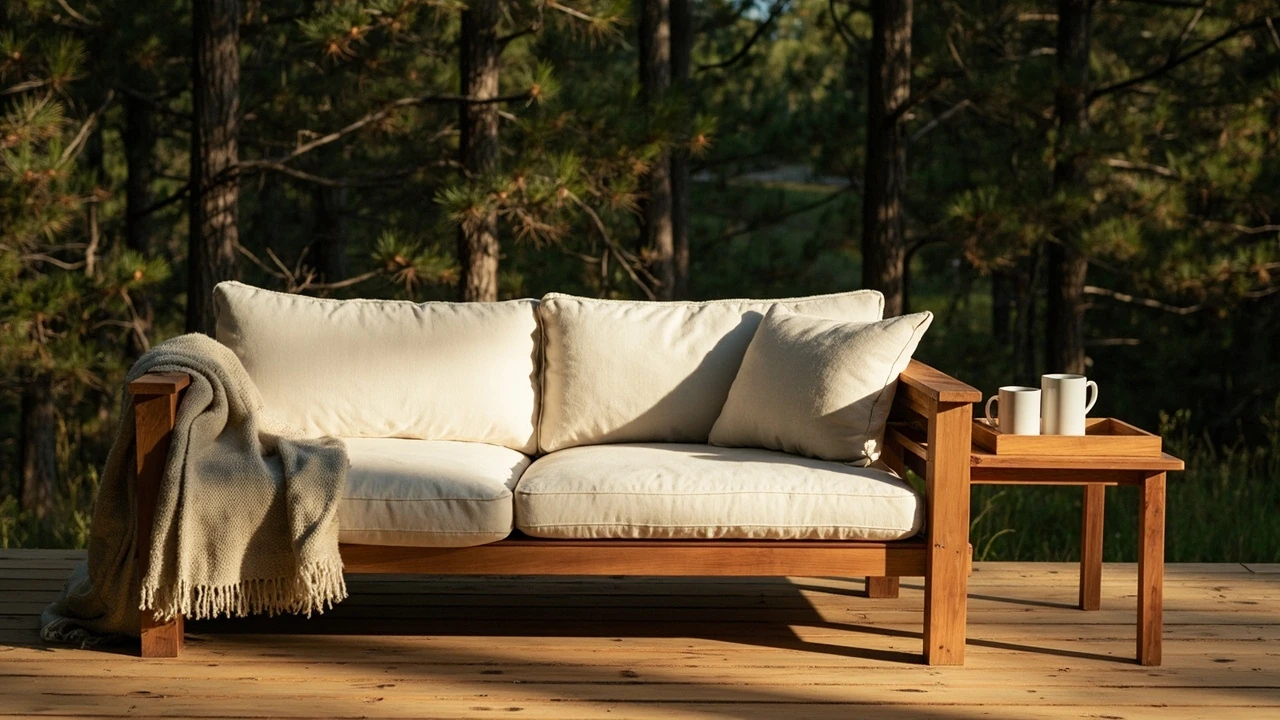
A wooden outdoor couch with quick-dry foam cushions sits on a timber deck at the edge of a pine forest, two enamel mugs resting on a side table, and a folded wool throw over the arm. The setting looks inviting, but the couch behind it has survived four summers, two wet winters, and a high ropes season of muddy boots, sandy children, and the occasional forgotten energy bar. That is the bar an outdoor couch has to clear to actually earn its place on a deck, patio, or covered porch.
An outdoor couch is a sofa engineered to live outside. The frame, the joinery, the cushion fill, the fabric, and the way water leaves the structure all have to work together. The buying decision is really a small system: where the couch will live, who will use it, how much weather it has to take, and how much care the owner is willing to give it. This guide walks through that system so the choice is easier and the result lasts longer.
Outdoor couch: what sets it apart from an indoor sofa
The difference between an indoor sofa and an outdoor couch comes down to what each one is engineered to survive. An indoor sofa is built for stable temperature, low humidity, and a dry seat. An outdoor couch is built for the opposite: rain, sun, frost, dust, pollen, salt spray near the coast, and the slow but relentless work of ultraviolet light on fabric and finish.
Three engineering choices separate the two:
- Frame materials that resist corrosion, rot, and insect attack instead of softwoods and plywood.
- Joinery and fasteners that tolerate repeated swelling and shrinking as humidity changes through the year.
- Cushion fill and fabric that drain water, dry fast, and shrug off mildew instead of absorbing it.
A piece of furniture does not need to be marketed as outdoor to qualify. What matters is whether the materials and construction are suited to the climate it will actually live in. A powder-coated aluminium lounge sofa on a covered porch can outperform a garden set made from untreated softwood left in the open.
Where an outdoor couch actually makes sense
An outdoor couch is most useful in three settings, and the right specification changes with each one.
Covered porches, pergolas, and verandas
These are the easiest spots. A roof keeps direct rain off, so the main threats are morning dew, splash-back from the floor, and UV that sneaks in from the sides. A wide, deep outdoor couch with a fully waterproof base and a quick-dry cushion works well here, and the cover does not need to be heavy duty.
Open decks and patios
Open decks take whatever the sky delivers. An outdoor couch here needs a frame that can sit through a storm, cushions that drain from underneath, and a cover the owner is willing to fit and remove every week during the wet season. Weight also matters: a windy site calls for a heavier frame or a fixing point so the couch does not migrate.
Poolside, beach house, and coastal sites
Salt air and chlorinated splash are the hard cases. An outdoor couch near a pool or the coast needs marine-grade stainless or aluminium fixings, fabrics that release chlorine and salt in a rinse, and a frame finish that tolerates being wet most mornings. Teak and high-grade aluminium dominate this segment for good reason.
Frame materials compared
Frame choice is the single biggest decision, because the frame decides how long the couch will last and how it feels to sit in it. The table below compares the most common options a buyer will meet.
| Frame material | Typical weight | Weather behavior | Maintenance | Best suited to |
|---|---|---|---|---|
| Teak hardwood | Heavy | Excellent; natural oils resist rot and insects; greys if left untreated | Annual clean, optional oil to keep golden tone | Coastal, premium decks, long service life |
| Powder-coated aluminium | Light to medium | Very good; rust-proof if coating is intact; can dent on impact | Wipe clean, touch up chips to prevent undercoat corrosion | Covered porches, windy sites where weight is a concern |
| Stainless steel (304 / 316) | Heavy | Excellent; 316 grade handles coastal salt | Rinse near the sea, occasional polish | Modern designs, coastal and poolside |
| Wrought iron | Very heavy | Strong but prone to rust if coating fails | Annual inspection, repaint chips quickly | Traditional gardens, sheltered patios |
| Synthetic rattan over aluminium | Light to medium | Good; weave can fade and sag under sustained sun | Brush debris from weave, cover or store in winter | Casual lounging, covered porches |
| Recycled plastic / composite | Heavy | Very good; immune to rot, fade over years | Wash with soapy water | Family gardens, rental properties |
| Untreated softwood (pine, spruce) | Light | Poor; swells, cracks, and rots within seasons | Heavy sealing and frequent recoating | Sheltered, temporary setups only |
For a family setting where a couch will be used daily and not pampered, teak, powder-coated aluminium, marine-grade stainless, and good composite all hold up. Softwoods and basic steel should be avoided unless the budget is tight and the plan is to replace the piece in a few years.
Fabrics and cushion fills that survive outside
Fabric choice is the second biggest decision, and the place where indoor-sofa instincts go wrong most often. Cotton and linen look great on a sales floor and behave badly outdoors: they absorb water, hold mildew, and fade fast. Outdoor-grade fabrics are engineered to do the opposite.
What to look for in an outdoor fabric
- Solution-dyed acrylic such as the well-known outdoor textile ranges. The colour is built into the fibre, so UV resistance is high and stains sit on the surface rather than soaking in.
- Polyester with a waterproof backing and taped seams. Cheaper and reasonably durable, but tends to feel stiffer and can hold water in the seams if the stitching fails.
- Marine-grade vinyl or coated mesh. Easy to wipe clean and very water-resistant, but hotter to sit on in direct sun and less breathable.
Cushion fill options
| Fill type | Drainage | Drying time after rain | Comfort | Care notes |
|---|---|---|---|---|
| Quick-dry reticulated foam | Excellent; channels water through | Hours | Firm, supportive | Stand cushions on edge after rain |
| Polyester fibre wrapped around a foam core | Good if the cover is vented | Several hours to a day | Soft, sofa-like | Unzip and stand to dry when soaked |
| Standard indoor foam | Poor; soaks and holds water | Days, often with mildew | Soft at first, then degraded | Not recommended for outdoor use |
| Closed-cell EVA foam | Excellent; water cannot enter | Minutes | Firm, less sofa-like | Can feel hot in direct sun |
The cushion core is the part most buyers forget to check. A beautiful cover on a slow-draining foam core is the usual cause of the musty smell that puts people off outdoor seating after the first winter.
Sizing, layout, and how a couch actually gets used
Before choosing a specific model, it helps to think about how the outdoor couch will be used day to day. The same three-metre wall space can host very different layouts.
- Lounge orientation: a long, low couch facing a single focal point such as a fire pit, a view, or a television on a covered porch. Depth matters more than length here, and a 90 to 100 cm seat depth is comfortable for adults who like to sit cross-legged or with feet up.
- Conversation layout: an outdoor couch paired with two facing armchairs around a central table. Seat height around 40 to 45 cm matches most outdoor dining and coffee tables.
- Family daybed style: a deep modular outdoor couch with a chaise end, used for reading, post-adventure recovery, and afternoon naps. Module weight matters, because the owner has to be willing to move pieces.
For families using the deck as a recovery zone after a high ropes session or a long hike, a modular outdoor couch with a washable cover and removable cushions is far easier to live with than a fixed, fully upholstered piece. Mud, grass, and snack crumbs are easier to deal with when a cover can go in the washing machine and a cushion can be stood on its edge to dry.
Where an outdoor couch fits on a family adventure day
A deck with a comfortable outdoor couch often becomes the social centre of a family day outdoors. After a morning on a ropes course, an hour on a zipline, or a long forest walk, the deck is where muddy shoes come off, where jackets get hung, and where people sit still long enough to talk about what they just did. That matters for planning a family day, and it ties into the wider question of how to design a restful space at the end of an active outing. For families working out timing and break points around a ropes day, the planning notes in High Ropes Belay Systems Explained for First-Time Visitors sit alongside the kind of decisions a deck setup has to absorb. And for anyone weighing whether to drive or take the train to a forest day out, the trade-offs in Train or Car for an Outdoor Day Trip? A Practical Comparison help frame the rest of the plan.
What a deck setup really needs
An outdoor couch works best when a few supporting choices are in place:
- A small covered area or a freestanding cantilever umbrella so the fabric is not in direct sun all afternoon.
- A deck surface that drains, or simple feet that lift the frame off the timber so water does not sit underneath.
- A covered storage box or shed within a few steps, so covers, throws, and spare cushions have a home when the weather turns.
- An outdoor rug that breathes. Foam-backed mats trap water and stain timber; open-weave rugs dry fast.
These choices sound small, but they decide whether the outdoor couch is something the family actually uses in October, or only in July.
Care routines that add years to an outdoor couch
Outdoor furniture is not zero-maintenance, but it is much less work than people expect if a simple routine is in place. The list below is the minimum that keeps a quality piece in good condition through several seasons.
- Weekly during the wet season: brush leaves and debris off the frame and out of weave, stand cushions on edge so both sides dry.
- Monthly: wipe the frame with a mild soapy solution, rinse, and let it dry fully before replacing cushions.
- After storms: remove standing water from seat pans, unzip cushion covers if possible, and let the cores breathe before the covers go back on.
- Twice a year: inspect fixings, tighten any loose bolts, and check for coating chips on metal frames. Small chips grow into big corrosion if they are left.
- Annually: deep clean fabric covers, refresh teak oil if a golden tone is wanted, and apply a fabric protector if the maker recommends one.
Most premature failures on an outdoor couch come from two causes: cushions left flat after a soaking, and metal frames left with a small chip of coating missing for a full winter. Both are ten-minute fixes if caught early.
Common buying mistakes to avoid
A few patterns come up again and again when outdoor couches disappoint. None of them are obvious from a showroom photo.
- Buying on fabric alone. The cover can be replaced; the cushion core and frame usually cannot. A good cover on a poor core is a slow disappointment.
- Ignoring the feet. Flat plastic feet on timber trap water and stain the deck. Felt or rubber feet wear out, and many owners never replace them. Nylon glides that can be swapped cost very little and save the deck.
- Underestimating wind. A light aluminium frame on an exposed deck becomes a sail in a storm. A heavy frame, a fixing point, or a stored position in winter is a real choice, not a sales line.
- Choosing a fixed upholstery in a family setting. Fixed, sewn-in covers look neat in a brochure and soak in one grape juice incident. Removable, washable covers are far easier to live with.
- Skipping the cover. Even the best outdoor fabric lasts longer under a breathable cover. The cover does not need to be waterproof, but it does need to breathe so trapped moisture can escape.
Budget and what the extra money actually buys
Price differences in the outdoor couch market are real, and they usually track to a few specific things. Knowing which of those things matters for a given site makes it easier to decide where to spend and where to save.
| Price tier | What you usually get | What you usually do not get | Realistic service life with care |
|---|---|---|---|
| Entry level | Light aluminium or steel frame, thin fabric, basic foam | Replaceable covers, marine-grade fixings, weatherproof storage | 2 to 4 seasons |
| Mid range | Heavier aluminium or good hardwood, solution-dyed fabric, quick-dry foam | Modular flexibility, premium weave, deep seat depth | 5 to 8 seasons |
| Premium | Teak or marine-grade stainless, replaceable covers, considered ergonomics | Lower weight, lower price | 10 to 15 seasons and beyond |
For most family decks, the mid range is the sweet spot. The frame is heavy enough to feel solid, the fabric is genuinely outdoor-grade, and the cushion fill is usually quick-dry. The premium tier is worth the money when the couch lives near the coast, sees daily sun, or is part of a longer-term outdoor room.
Quick checklist before clicking buy
Running through a short list before purchase tends to save returns and disappointment later.
- Frame material rated for the local climate, not just for a showroom photo.
- Cushion covers that unzip, with care instructions that match a real routine.
- Cushion cores that drain and dry within hours, not days.
- Feet or glides that will not stain or scratch the deck surface.
- Dimensions measured against the actual deck, including walking space behind the couch.
- A cover that fits the assembled piece, not a generic universal cover.
- Spare covers, bolts, and glides available from the maker, even if they cost extra now.
If seven out of seven are realistic, the outdoor couch is likely to do its job for years. If three or more are missing, the price is the wrong price, no matter how attractive the listing looks.
Frequently asked questions
What is the best material for an outdoor couch in a rainy climate?
For a genuinely rainy site, a powder-coated aluminium or stainless steel frame with quick-dry reticulated foam cushions and solution-dyed acrylic covers is the most forgiving combination. Teak also performs well, but it is heavier and benefits from a covered position so cushions do not sit wet for long.
Can a regular indoor sofa be used outside with a cover?
It is rarely a good idea. Indoor frames and foams absorb moisture, hold mildew, and fail quickly even under a cover. The cover keeps rain off the top, but humidity still moves through the fabric and condensation forms on cool nights. An outdoor couch is built to manage that humidity; an indoor sofa is not.
How long should an outdoor couch last?
A mid-range outdoor couch in a temperate climate with reasonable care should give five to eight seasons of regular use. A premium teak or marine-grade stainless piece with replaceable covers can last well over a decade, especially if it spends part of the year under cover.
Is an outdoor couch worth it for a small balcony?
It can be, if the balcony holds a useful footprint. A two-seat outdoor couch around 150 to 170 cm long is often a better use of a small balcony than a chair-and-table set, because it gives a real seat to read or rest on. Weight and wind exposure matter more on a balcony, so a heavier frame or a fixing point should be part of the plan.
Do outdoor couches need to be covered in winter?
They should be covered or stored in any season when they are not in regular use, including winter, late autumn, and the wettest weeks of the year. A breathable cover keeps debris, sap, and bird mess off the fabric and protects metal frames from constant wet-dry cycles. Non-breathable covers trap condensation and can do more harm than good.
How do you clean mould off an outdoor couch?
Brush off dry mould first, then wash the affected area with a diluted mild detergent or a dedicated outdoor-fabric cleaner. For stubborn spots, a dilute white vinegar solution helps, but the cover should be rinsed and dried fully afterwards. Standing the cushion on edge in sun and breeze for a few hours finishes the job.
Are modular outdoor couches a good idea for families?
Modular outdoor couches are usually a good fit for families. The pieces can be moved for a group, separated for solo use, and the covers are often removable for washing. The trade-off is module weight: heavier modules are more stable in wind but harder to shift for cleaning or for a different layout.
What should an outdoor couch cost?
It depends on frame, fabric, and size, but as a rough guide, a useful mid-range two-seat outdoor couch starts in the low hundreds and rises with size and material. Premium teak or stainless-steel pieces are several times that. The cheapest end of the market tends to last only a few seasons, so the cost per year often works out higher than a mid-range purchase.
Can an outdoor couch be left out all year?
It depends on the specific piece and the climate. Premium teak, marine-grade stainless, and quality aluminium frames can stay out year-round if cushions are stored and covers fitted during the worst weather. Lower-spec frames and any fabric should be protected or stored in the harshest months, even if the frame itself can stay out.
How do you keep cushions from going mouldy?
The single most useful habit is standing cushions on edge after rain so air moves through both sides. Covers should be removable and washed at least once a season. A breathable cover over the whole couch between uses also helps, because it keeps debris off the fabric and slows the wet-dry cycle that feeds mildew.
Where this leaves the decision
An outdoor couch is a small but meaningful investment in how a deck, porch, or patio is used across the year. The right choice comes down to matching frame, fabric, and cushion fill to the climate the piece will actually live in, then committing to a simple care routine so the materials do what they were designed to do. Spend the money on the frame and the cushion core, save where possible on the cosmetic extras, and treat a cover and a dry weekend afternoon as part of the purchase. The result is a piece of furniture that turns the end of a forest walk, a high ropes session, or a long family day into a proper moment of rest, instead of an excuse to go back inside.
Related reading
Explore High Ropes Adventure
Trip tools
Essential adventure planning guides
Use these practical guides to compare rope park activities, prepare for a first high ropes day, check a booking, choose suitable footwear and contact the editorial team. Each page links to the relevant live tools and current planning sections.
Latest articles
- How to find national parks near me: a practical local search guide
- Paylater travel: how buy now, pay later works for trip bookings
- Bagsmart Blast Travel Backpack: A Practical Review for Day Trips and Adventure Days
- How to choose an outdoor rocking chair that actually lasts
- Indiana travel advisory map: how to read it before a day trip
- How to plan an outdoor day around a concert stop: a cardi b tickets field guide
- Outdoor sectional sofas: a practical buyer’s guide for patio living
- How amusement parks actually work: rides, safety, and what to expect
- Beis Travel: What the Bag Brand Offers for Outdoor Days
- Adventure park: what it is, what to expect, and how to plan a visit