How to find national parks near me: a practical local search guide
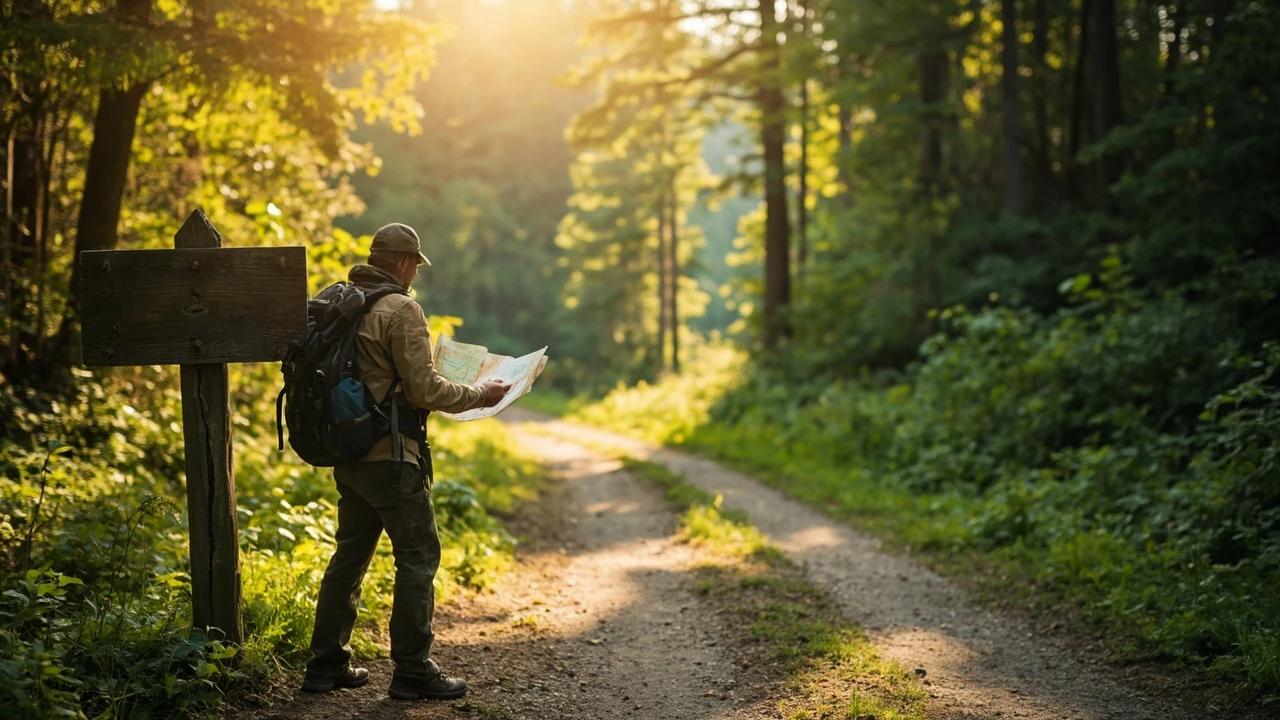
You pull out your phone on a Saturday morning, type “national parks near me” into a search bar, and immediately get a confusing wall of state parks, national forests, regional reserves, private preserves, and paid attraction listings. Some results are an hour away, others across a state line, and a few are simply places that bought a good SEO position. The challenge is not the lack of options; it is filtering them quickly enough to plan a real day out.
This guide walks through a method for finding national parks near me that actually matches what you want, whether that is a half-day hike, a family picnic, a quiet photography spot, or a base camp for a longer weekend. The approach uses official government tools first, then layers in practical checks for drive time, access, fees, and on-the-day conditions so the result is a short list of real places rather than a long list of possibilities.
How to search for national parks near me that are actually worth visiting
The phrase “national parks near me” is doing a lot of work. In some countries it strictly means federally managed national parks. In the United States, the term often gets mixed up with state parks, national forests, national monuments, wildlife refuges, and local conservation areas. In the United Kingdom it might mean National Parks like the Peak District or Snowdonia, while in Australia it points to parks run by state agencies that share a national branding. Before you commit to a destination, it helps to be clear which tier you are actually after, because each one is managed differently, has its own rules, and uses its own booking system.
A reliable search starts with an official source, not a generic map result. Government park services publish authoritative lists, alerts, and contact details, and they tend to appear in the top results for any genuine search for national parks near me. The U.S. National Park Service maintains the comprehensive list of national parks of the United States as a baseline. From there, the practical method is the same regardless of the country you are in: define a search radius, use an official finder, then verify the park on a map.
Define what “near me” really means in distance and time
Most people searching for national parks near me are not looking for a precise kilometre count. They are looking for a park they can realistically reach on a day trip or a short weekend. The honest answer to “near” depends on three things: your starting point, your transport, and how much of the day you are willing to spend driving. A two-hour drive can be “near” for a weekend with an early start, and very far for a casual Saturday with kids in the car.
Translate the feeling of “near me” into numbers before you search. A useful working definition is:
- Under 1 hour each way: realistic for a half-day visit with one short walk.
- 1 to 2 hours each way: realistic for a full day with a main hike or activity.
- 2 to 3 hours each way: better treated as a weekend, or a long one-day push with an early start.
- Over 3 hours each way: only worth it for a multi-day trip or a park that genuinely cannot be found closer.
Once the radius is fixed, a search for national parks near me becomes a filter rather than an open question. Instead of scrolling through every park in the region, you are only checking which of the parks that already exist within your radius match your day plan.
Use an official park finder instead of a generic search
Open a search engine with the country, state, or region in the query. For example, “national parks near me California”, “national parks near me UK”, or “national parks NSW”. That small addition usually shifts the result list toward government domains, conservation charities, and tourism boards rather than ticket-reselling sites or SEO listicles. The first few official links almost always have a park locator, a filter by activity, and a status indicator for closures.
In the United States, the National Park Service’s “Find a Park” tool lets you search by state, activity, and topic, and lists each park with its official page. The U.S. Forest Service has a similar finder for national forests and grasslands. In the UK, the National Parks website lists the fifteen protected landscapes and provides direct access to each authority. In Australia, state agencies such as NSW National Parks and Wildlife Service maintain the canonical list. Treat these official finders as the source of truth and use everything else to cross-check.
Confirm the park on a satellite map before you commit
Once a name looks promising, drop it into a satellite-view map. A surprising number of search results for national parks near me turn out to be small roadside reserves, picnic areas inside a larger national forest, or a viewpoint that is technically inside a park boundary but several hours from a real trailhead. A two-minute satellite check answers three useful questions: is there a road to the trailhead, does the area have actual walking terrain, and is the spot isolated or crowded against a town?
Look for visible trail loops, parking areas, a marked visitor centre, or named lookouts. If the satellite view shows only fields or a single road with no infrastructure, the “park” may be a name applied to a piece of public land rather than a managed site with services.
What counts as a national park, and why it matters
Not every green space that shows up under “national parks near me” carries the same legal status. In the United States, a National Park is a specific designation under federal law, separate from a National Forest, a National Monument, a National Wildlife Refuge, or a National Seashore. Each designation has its own managing agency and its own rule book, which affects entry fees, dog policies, backcountry permits, hunting rules, and campground booking systems. Conflating them is one of the most common planning mistakes.
The table below shows the main categories you are likely to encounter and what each one actually offers in practice.
| Designation | Managed by | Typical use | Access and fees | Common confusions |
|---|---|---|---|---|
| National Park | National park service or equivalent national agency | Scenic protection, hiking, wildlife, education | Often a day-use fee or annual pass; timed entry at busy sites | Sometimes confused with state or regional parks of the same name |
| National Forest | Forest service or equivalent | Multi-use: hiking, camping, logging zones, off-road trails | Usually free day-use; campgrounds often paid | Logging and hunting may be allowed in parts of the forest |
| National Monument | National park service or similar | Specific geological or historic feature | Often free, sometimes combined with a national park entry fee | Smaller footprint than a full national park, sometimes inside a state line |
| State or Provincial Park | State or provincial agency | Recreation, swimming, picnics, family camping | State-specific day fee, often an annual plate or pass | Rules, fees, and reservation systems differ from national parks |
| Regional or County Park | Local council or county | Short walks, playgrounds, local recreation | Often free, parking may be limited | Limited facilities, may close at dusk |
| Private Nature Reserve | Private owner or NGO | Conservation, paid experiences, sometimes lodging | Entry fee, often booking required | Different rules from public parks, may not allow dogs or picnics |
Knowing which tier a result belongs to changes the planning steps. A For additional context, national forest in the United States may be free to enter but still require a campfire permit and have seasonal road closures. A national monument may share an entry station with a nearby national park, so the same pass covers both. A regional park may be perfect for a dog walk but unsuitable for a long hike. Search results for national parks near me rarely make these distinctions clear, which is why checking the official managing agency is part of the workflow rather than an optional extra.
Build a short list of candidates before you pick one
Once you understand the landscape, the next step is to turn a long list of results into a short list of realistic options. A useful rule of thumb is to aim for three to five candidates and then make a final pick from those. Fewer than that and you risk forcing a bad day out; more than that and you spend the whole morning comparing websites instead of walking.
For each candidate, capture the same five pieces of information. A simple note in your phone is enough, no spreadsheet required.
- Distance and drive time from your start point, based on a real map service at the time you plan to leave, not a flat distance number.
- The main activity the park supports: a single iconic hike, a scenic drive, a lake, a viewpoint, a wildlife area, or a combination.
- Entry fees, parking, and any timed-entry or permit requirement for the date you want to visit.
- Current conditions: closures, weather alerts, fire restrictions, or seasonal road closures listed on the official page.
- Family fit: dogs allowed, kid-friendly trails, stroller access, or specific age and height rules that might apply at any commercial activities inside the park.
That last point is the one most search results ignore. National parks are public, but many have commercial operators inside them, including guided climbs, boat tours, and high-ropes or zipline courses. If you are visiting with younger children, the same family fit checks that apply to a dedicated rope park, like the planning notes in this family rope park age and height guide, often apply to in-park activities as well. Skipping that step is how families end up at a trailhead that is perfect for adults but hours of complaint for a tired seven-year-old.
Plan the day, not just the destination
Finding a national park near you is only half the work. The other half is making sure the day around it works. A common mistake is to pick a park purely on distance and then discover that the only good trail is a four-hour drive inside the park on a dirt road, or that the visitor centre closes at lunchtime, or that there is no food, water, or phone signal once you leave the entrance.
Think about the day in three blocks: arrival, the main activity, and exit. A simple table can help you sanity-check a plan before you load the car.
| Block | What to confirm | Why it matters |
|---|---|---|
| Arrival | Opening hours, parking, entrance station wait, gate closure times | Many parks close gates at dusk and will not let late arrivals in |
| Main activity | Trail length, elevation, water sources, shade, and exit time | Drives the realistic start time, not the optimistic one |
| Exit | Return drive, dinner options, fuel, last services | Rural parks can be far from the nearest petrol station or restaurant |
Two practical habits make this much easier. First, always check the official park page the day before, even if you have been there before, because alerts change and seasonal closures are not always obvious from a generic search. Second, give yourself a buffer. National parks near me are popular for a reason, and the most obvious choice is also the busiest. Building a 30-minute buffer into arrival and exit turns a tight plan into a comfortable one.
Decide how you are getting there
Transport shapes the whole day. The same national park can feel close when you have a car and remote when you are relying on public transport, even if the line distance is identical. A quick comparison of the two main options is worth doing once, because it changes which parks make the short list.
Car travel is the default for most people searching for national parks near me, and it offers the most flexibility on timing. Public transport, where it exists, removes the stress of parking and the cost of fuel but pins you to a fixed schedule. A practical side-by-side looks roughly like this.
| Factor | By car | By train or bus |
|---|---|---|
| Flexibility on arrival and departure | High, you control the clock | Low, you work around a published timetable |
| Access to remote trailheads | Usually possible on paved or gravel roads | Limited to stops near towns and main entrances |
| Cost | Fuel, parking, sometimes entry fees | Ticket, often a connecting local bus or taxi from the station |
| Stress | Driving fatigue, parking search at busy parks | Carrying gear, last-mile transfer, weather exposure |
| Best for | Families with kids, photographers with heavy gear, multi-stop days | Solo walkers, light packers, parks with a station within walking distance |
If you are weighing train against car for a day that includes an adventure activity, the comparison in this train or car outdoor day trip guide goes deeper into the trade-offs and the typical pain points of each option.
Match the park to your reason for going
Once you have a short list, choose based on why you are going in the first place. A common trap is to pick the closest national park near me without asking what kind of day you actually want. The closest option might be a flat lakeside loop, which is perfect for a recovery weekend and terrible for someone who wanted a real climb.
Below are some typical reasons people search for national parks near me, paired with the park features that best serve them.
- Quiet photography: choose a less famous park with a single iconic viewpoint, plan for early morning or late afternoon, and check sun direction for that viewpoint.
- Family picnic and short walk: choose a park with a marked easy loop, toilets, picnic tables, and shaded parking, and avoid a park whose main trail is a long ridge walk.
- First long hike of the season: choose a park with a popular moderate trail, clear signage, and a bail-out option if the weather turns.
- Wildlife watching: choose a park known for a specific species, and time the visit to dawn or dusk when animals are most active.
- Adventure activities in nature: choose a park with a reputable commercial operator inside or near it, and check their booking and safety pages in advance, much as you would for a high-ropes course or a zipline.
The last point is worth expanding. National parks are not only about self-guided walking. Many contain licensed operators offering guided climbs, water sports, and aerial courses, and these often have their own safety standards. The general approach to checking an aerial activity is similar to the one in this zipline safety overview: confirm the operator’s certification, ask about their harness and braking system, check their staff-to-participant ratio, and read recent reviews rather than relying on a single old recommendation.
Check the day-of conditions before you leave
Even a perfectly planned national park day can fall apart if you skip a quick morning check. Conditions in a national park can change overnight, and a search result from a week ago will not warn you about a road washout, a sudden wildfire closure, or a trail that has been rerouted for nesting birds.
A short pre-departure checklist keeps things honest without becoming a chore.
- Open the official park page and read the alerts section, not just the homepage headline.
- Check the local weather forecast for the park’s coordinates, not for the nearest city.
- Look at a recent satellite or street-view image of the trailhead to confirm the access road is open.
- Check sunrise and sunset times, and plan to be off the main trails well before dark.
- Confirm the entrance fee and accepted payment methods, since some rural parks still prefer cash or a specific pass.
This kind of pre-departure check is also the moment to think about what to pack. Mountain weather is not the same as forecast weather for a city an hour away, and rain in a national park is rarely just a minor inconvenience. A practical packing list for a wet-weather trail day, which doubles as a good default for any national park visit, is laid out in this wet-weather trail packing list. Treat the suggestions there as a baseline rather than an optional extra, especially for shoulder seasons.
Common mistakes when searching for national parks near me
Most bad national park days come from a small set of recurring mistakes, and they are worth naming because they are easy to avoid once you see them.
- Confusing a state park with a national park and then being surprised by different rules, fees, or dog policies.
- Trusting a listicle that ranks parks by affiliate revenue rather than by the quality of the experience.
- Driving to a trailhead that turns out to be at the end of a long unpaved road, unsuitable for a low-clearance car.
- Ignoring timed-entry requirements and arriving at a full parking lot, then losing the morning to a Plan B.
- Underestimating the walk from the car park to the actual attraction, especially in large parks with a single central parking area.
- Forgetting that many national parks have limited or no phone signal, so offline maps and a paper backup are worth carrying.
If you avoid these, the search for national parks near me stops being a long scrolling exercise and starts being a quick filtering process.
Make the most of the park once you arrive
The final piece of the puzzle is using the park well once you are inside. A surprising amount of the value at a national park is hidden in the small things: the visitor centre map, the ranger-led walk, the short side trail marked on the official brochure. These are the bits that turn a generic scenic stop into a real day out.
A few habits help.
- Stop at the visitor centre or entrance station first, even if you think you know the park. Staff and posted bulletins reflect the conditions of the day you are actually there.
- Pick one main objective and one backup. A clear plan prevents the day from drifting into a long drive with no real walk.
- Walk the short trails as well as the famous ones. Many national parks protect their headline view behind a long hike, but the real texture of the place is in the ten-minute loops near the entrance.
- Leave the park as you found it. Stick to marked paths, take all rubbish with you, and keep a respectful distance from wildlife.
These are not grand principles. They are small habits that compound across a season, and they are the difference between someone who visits a national park and someone who knows how to use one.
Frequently asked questions
What is the fastest way to find national parks near me?
Use the official park service finder for your country, search by state or region, then check the results on a satellite map. The official finder removes the noise from generic search results, and the satellite view confirms the park actually has trails, parking, and access roads before you commit to driving there.
How do I tell a national park apart from a state park in search results?
Look at the managing agency. National parks are run by a federal or national agency, while state parks are run by a state or provincial authority. The official domain usually makes this clear, and the entry fee, permit system, and rules differ between the two. The table earlier in this article summarises the main differences.
Are national parks free to enter?
It depends on the country and the specific park. In the United States, many national parks charge a per-vehicle entry fee, and the most popular parks also have a timed-entry reservation. In the UK, National Parks are free to enter but individual car parks and attractions may charge. In Australia, national parks often have a per-day entry fee per vehicle. Always check the official page for the specific park before you go.
How far in advance should I book a national park visit?
For popular parks with timed entry, book as soon as the reservation window opens, which can be several months ahead. For less busy parks, a few days is usually enough for parking, although campgrounds and in-park lodges may need longer. If you are visiting in peak season or on a public holiday, treat booking the same way you would a hotel: earlier is safer.
Can I take my dog to a national park?
Rules vary widely. In the U.S. National Park System, dogs are usually restricted to roads, parking areas, and a small number of designated pet-friendly trails, and they are often not allowed on backcountry trails or in the backcountry at all. In other countries, rules differ again. The official park page is the only reliable source, and it should be checked before you load the car.
What should I do if a national park near me is fully booked or closed?
Look for the next-closest national park of the same type, or for an adjacent tier, such as a national forest or state park, while accepting that the rules will differ. Many national parks also have shoulder seasons and weekday windows that are far quieter than weekends. A park that is impossible in August is often pleasant in late September.
Are national parks safe for a first-time solo visitor?
Most national parks are well managed and have clear signage, marked trails, and visible staff in the busier areas. Solo visitors should still tell someone their plan, carry a paper map and a charged phone, start with a shorter and more popular trail, and avoid hiking alone in remote areas near dusk. The same basic safety habits that apply to any outdoor day out apply here.
Do I need a special pass for multiple national parks in one trip?
In the United States, the “America the Beautiful” pass covers entry to all national parks and many other federal recreation sites for a year. Other countries have similar annual passes, such as the England Coast Path or the NSW National Parks annual pass. If your trip includes more than two or three paid parks, an annual pass usually pays for itself and removes one small bit of friction at each entrance station.
How do I check trail conditions inside a national park?
Use the official park page for alerts and closures, then check ranger or visitor centre social channels for the most up-to-date reports. Trail conditions can change within a day after heavy rain, snow, or fire, and a recent post from the park is more reliable than any older review or blog summary.
Can I combine a national park visit with a paid activity like a high ropes course?
Yes, and many national parks sit close to commercial outdoor operators. Treat the operator with the same checks you would apply to any adventure activity, including confirmation of staff training, equipment standards, age and height rules, and recent reviews. Planning the activity for late morning or early afternoon usually leaves time for a short walk in the park first.
Related reading
Explore High Ropes Adventure
Trip tools
Essential adventure planning guides
Use these practical guides to compare rope park activities, prepare for a first high ropes day, check a booking, choose suitable footwear and contact the editorial team. Each page links to the relevant live tools and current planning sections.
Latest articles
- How to find national parks near me: a practical local search guide
- Paylater travel: how buy now, pay later works for trip bookings
- Bagsmart Blast Travel Backpack: A Practical Review for Day Trips and Adventure Days
- How to choose an outdoor rocking chair that actually lasts
- Indiana travel advisory map: how to read it before a day trip
- How to plan an outdoor day around a concert stop: a cardi b tickets field guide
- Outdoor sectional sofas: a practical buyer’s guide for patio living
- How amusement parks actually work: rides, safety, and what to expect
- Beis Travel: What the Bag Brand Offers for Outdoor Days
- Adventure park: what it is, what to expect, and how to plan a visit