Dog Parks Near Me: How to Pick the Right One
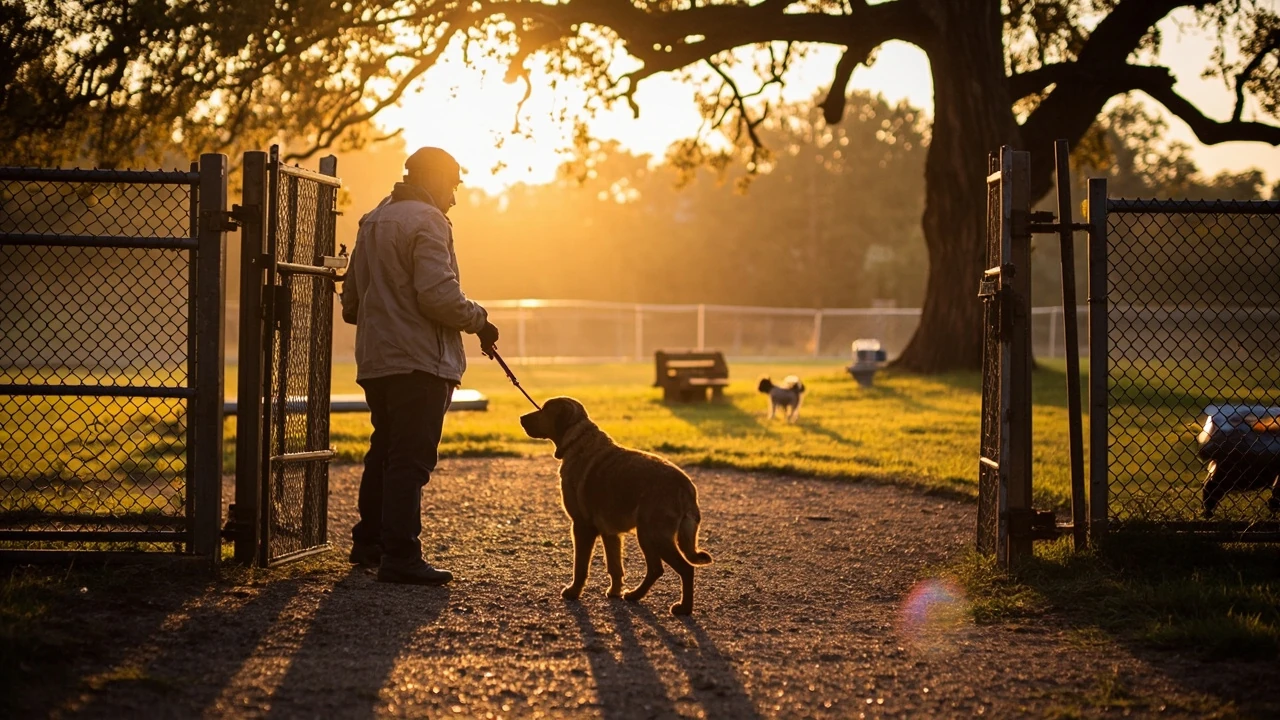
How to find good dog parks near me without wasting a Saturday
You typed “dog parks near me” because you want a fenced place where your dog can run, not a list of every patch of grass with a gate. The closest option is rarely the best one. Some local parks have worn fencing, broken taps, unclear small-dog rules, and a regular crowd that nobody supervises. Other parks look unremarkable on a map but are quietly well run, with a double-gate entry, shade, and owners who watch their dogs.
This guide turns a vague search into a short checklist you can run before you leave the house. You will learn how to read a map listing, what to check on arrival, which questions to ask regulars, and how to avoid the mistakes that turn a quick outing into a stressful afternoon. The same approach works in a dense city, a small town, or anywhere in between.
What “dog parks near me” actually means in a search
When people search for dog parks near me, they usually want one of three things: a fully fenced off-leash area where dogs run free, a public park that allows leashed dogs, or a private membership-based park. Each format has different costs, crowd levels, and rule enforcement, so knowing which one you want narrows the results a lot.
Search engines mix all three together, so it helps to add a qualifier. Try “off-leash dog park”, “fenced dog run”, or “dog beach” if you want a specific style. A dog run is usually a small fenced area inside a larger public park. A dog beach is a stretch of shoreline where dogs are allowed off leash, with its own tide, water-quality, and seasonal rules.
The most reliable ways to find good dog parks near me
No single source has a complete list. The best approach is to cross-check two or three methods before you commit to a new park.
- Google Maps with recent reviews. Search “dog park” and zoom in. Read the most recent reviews, not just the star rating, because a single incident with an aggressive dog usually shows up quickly in the comments.
- Local council or city websites. Many municipal sites publish an official list of designated off-leash areas, including hours, seasonal closures, and rules. These lists are usually the most accurate for legality and hours.
- Dog-friendly apps and directories. Apps like BringFido, AllTrails, and Sniffspot focus on dog-friendly places. Sniffspot is useful because it lists private fenced yards you can book by the hour.
- Local Facebook groups and subreddits. A search for “[your town] dog owners” usually surfaces a community group where regulars share which parks are calm and which have had recent problems.
- Walking the neighbourhood. If you already walk nearby, you have probably noticed fenced fields, sports ovals, or school grounds. Check the signage, because some are off-leash only at certain times.
- Asking your vet or groomer. Front-desk staff hear which parks cause injuries and which ones run smoothly. It is an underrated source.
For a broader day out, you can pair a park visit with a longer walk or a stop at a nearby attraction. If you are building a wider outdoor day, our one-day forest escape planner walks through how to stack activities without overdoing it.
How to judge a dog park before your dog steps inside
Once you have two or three candidates, run a quick evaluation. The best parks share a few features you can check in five minutes from the gate.
Fencing and gates
The fence should be solid, with no gaps at the bottom, no loose panels, and a double-gate entry where possible. A double gate creates a small vestibule between the street and the off-leash area, which prevents a door-dashing dog from running into traffic. For medium dogs, four feet of fence height is the minimum. For dogs that jump well, taller is better. If the park is unfenced, your dog needs reliable voice control, which is a different skill set.
Ground surface and drainage
Grass is gentle on joints but gets torn up quickly in popular parks. Many well-used parks mix grass, wood chips, gravel, and dirt paths. After heavy rain, muddy parks turn into a cleanup headache and a hygiene problem. A park with a slight slope or visible drainage channels is usually dry within a day of rain.
Size relative to the crowd
A park that feels comfortable with ten dogs can feel dangerous with thirty. Many behaviourists use a rough rule of about 100 square metres per dog for a calm environment. That number is not exact, but if you arrive and every dog is on top of each other, the space is over capacity for that hour.
Separate areas for small or shy dogs
Small-dog zones protect more than chihuahuas. They give senior dogs, puppies still building confidence, and any dog that gets overwhelmed by large play a safer space. A park that bothers to separate groups is usually run by people who pay attention.
Shade, water, and seating
Look for mature trees, shaded benches, and a working tap or water bowl station. A park with no water source in summer is a red flag. Seating matters more than it sounds: it is much easier to supervise your dog when you are not standing the whole time.
Cleanliness and maintenance
Are bags available, or do you need to bring your own? Is the bin empty or overflowing? Are there visible piles of waste that nobody has picked up? A park that is clean on a Saturday morning was almost certainly clean on a Tuesday too, which usually means someone is paying attention.
Rules worth reading before you enter
Most dog parks post rules at the gate, and most people walk past them. The rules that matter most are the ones that determine whether your visit is safe and legal. To place this section in context, the Dog overview offers a concise background reference.
- Leash rules inside the park. Some parks require leashes until you are past the gate, others require leashes at all times, and a few allow off-leash only in a marked section.
- Hours of off-leash access. Many public parks are off-leash only before 9 a.m. and after 5 p.m. Outside those hours, your dog must be leashed even inside the fenced area.
- Maximum dogs per person. A common limit is two or three dogs per handler. Bringing four untrained dogs to a busy park is a fast way to cause problems.
- Children and other animals. Some parks ban young children or other pets like cats. A few ban food and treats because resource-guarding incidents are common.
- Vaccination and licence requirements. Officially, most councils require proof of vaccination, although enforcement is rare. Keep the certificate handy anyway.
- Cleanup expectations. Bag waste even if the park is empty when you arrive. Diseases like parvovirus spread through contaminated soil, and a quiet park this week is a busy park next week.
What the first five minutes inside a new park tell you
You learn more from the first five minutes inside a park than from any review. Watch before you unleash your dog.
- Count the dogs. If there are more than you expected and most are off leash, take a moment before opening the gate.
- Read the body language. Loose wagging tails, play bows, and easy movement are good signs. Stiff posture, hard stares, and dogs standing over others are warning signs.
- Check the owners. Are people watching their dogs, or scrolling their phones? A park full of attentive owners is a much safer park.
- Look for an exit path. Identify the nearest gate so you can leave quickly if your dog is overwhelmed or another dog is causing problems.
- Watch for resource guarding. If owners are clumping around the water bowl, there is usually a reason.
If anything feels off, leave. Most dogs do better in quieter parks, and there is no rule that says you have to stay.
Common dog park problems and how to handle them
Even the best park has an occasional bad day. Knowing how to respond keeps small issues from becoming real ones.
An overly excited greeter
Some dogs rush every newcomer. The fix is not to yell or scold the other dog, but to walk past calmly, body-block with your leg, or step behind a tree. Ask the other owner to call their dog, and if nothing changes after two polite requests, leave for ten minutes.
Resource guarding around toys
If a dog stiffens or snaps when another dog approaches a ball or stick, do not intervene physically. Clap once, call your dog away, and let the owner manage their own dog. Skip high-value toys on your first visit to a busy park.
A small scuffle
Most scuffles are noise, not injury. Stay calm, do not grab either dog by the collar, and let them disengage. If the noise continues for more than a few seconds, the owners can use wheelbarrow-style separation: each person lifts their dog’s back legs and walks backwards.
Your own dog is overwhelmed
Panting, tucked tail, ears back, lip-licking, and trying to hide behind you are signs your dog has had enough. Leave early, even if the visit felt too short. A short, positive visit beats a long, stressful one every time.
How to plan your first visit to a new dog park
A first visit is easier when you treat it like a small event, not a casual walk. The table below breaks a typical first visit into stages, with the time and goal for each.
| Stage | Time | Goal | What to bring |
|---|---|---|---|
| Research | 1-2 days before | Pick 2-3 candidate parks and check recent reviews | Phone, council website |
| Reconnaissance | 10 minutes, no dog | Walk the perimeter, read the rules, check the gate | Just yourself |
| First visit | 20-30 minutes, off-peak | Short, positive session with a calm dog crowd | Leash, water, treats, bags |
| Evaluation | Same evening | Note how your dog behaved and felt afterwards | Notes app |
| Second visit | Within a week | Confirm pattern: was the first visit typical or unusually quiet? | Same kit as first visit |
Off-peak matters more than people think. Weekday mornings and late afternoons are usually calmer than Saturday afternoons. If your dog is reactive, shy, or in training, an early-morning visit with two or three other dogs is a much better learning environment than a packed weekend crowd.
Off-leash parks versus on-leash parks versus private rentals
Once you have a few options, the real choice is between three formats. Each has clear strengths and weaknesses.
| Format | Typical cost | Best for | Main trade-off |
|---|---|---|---|
| Public off-leash fenced park | Free | Regular socialisation, energetic play | Crowd levels vary, rules not always enforced |
| Public on-leash park or trail | Free | Training, quiet walks, reactive dogs | No off-leash freedom, more interruptions from cyclists and runners |
| Private fenced yard (e.g. Sniffspot) | About 8-25 USD per hour, varies by region | Reactive dogs, nervous dogs, training in a controlled space | Cost adds up, and the dog does not learn to handle other dogs |
| Membership dog park | Monthly or annual fee | Reliable, well-maintained space, vetted community | Higher cost, less convenient in some areas |
| Dog beach or designated shoreline | Free or small parking fee | Swimming, water play, long runs | Water quality, tide times, sand cleanup |
If you are weighing two or three local options and want a wider framework for evaluating outdoor spaces, our guide to finding a safe adventure park applies the same kind of safety and quality checklist. Another relevant reference is the dog care, which adds context without changing the practical guidance here.
What to pack for a dog park visit
A small kit makes any visit easier, and it is especially useful for a first visit to a new park.
- A standard four to six foot leash, not a retractable one, which is hard to control if another dog charges.
- A water bottle and a collapsible bowl, because shared bowls can spread illness.
- Two or three high-value treats, kept in a pocket rather than waved in the air.
- Two or three waste bags per dog, because one always seems to spring a leak.
- A small towel for muddy paws or a wet dog on the way home.
- A copy of your vaccination record, especially if the park asks for it.
- A simple first-aid kit: saline wash, a tick remover, a gauze pad, and a small pair of scissors.
How to read reviews of a dog park
Reviews are useful, but they are skewed. People with a bad experience are more likely to leave a review than people who had an average visit. Read with that in mind.
Look for repeated specific details. If three different reviews mention that small dogs get chased, that is a real pattern. If one review mentions a single aggressive dog from two years ago, treat it as background, not a current issue. Reviews that mention the layout, shade, water, and maintenance are more useful than reviews that only talk about the dog crowd, because you can manage a crowd by choosing your time.
Be cautious of reviews with a lot of superlatives and no specifics, like “best park ever” or “terrible place”. Those tell you about the reviewer’s mood, not the park.
Seasonal considerations for dog parks near me
A park that is perfect in May can be miserable in August. The same location changes a lot through the year.
- Summer. Pavement and artificial turf can burn paw pads. Try to visit in the early morning or after sunset, and put your hand on the ground for seven seconds to test the surface before letting your dog walk on it.
- Winter. Salt and chemical de-icers are toxic to dogs. Wipe paws after every walk, and consider dog boots if your local paths are heavily treated.
- Spring. More dogs, more puppies, more muddy ground. A calm morning visit still works, but the after-work window is often chaotic.
- Autumn. Often the best season. Cooler weather, fewer crowds, and drier ground. A good time to introduce your dog to a new park.
Special cases that change your search
Some situations call for a different kind of “dog parks near me” result.
Reactive or anxious dogs
A busy public park is the wrong place to desensitise a reactive dog. Look for private rentals, quiet rural trails, or small fenced community areas that are lightly used. Early-morning visits, when there are one or two other dogs, are far more productive than crowded peak hours.
Senior dogs and puppies
Senior dogs often do best in smaller, calmer parks where they can move at their own pace. Puppies who have not finished their vaccination series should stay away from public dog areas entirely, and use private yards or your own fenced garden until the course is complete.
Small-breed dogs
A small-dog area is a real safety feature, not a luxury. It removes the risk of a single large dog accidentally injuring a small dog during play. If your local park does not have a separate area, choose off-peak times when fewer large dogs are around.
Multi-dog households
Most parks cap the number of dogs per person. If you have three or more dogs, look for less crowded parks, or split the visit across two handlers. The goal is to be able to intervene quickly, and that becomes harder with every extra dog.
Dog park etiquette that keeps the peace
Etiquette is what makes a park pleasant for everyone.
- Pick up after your dog, every time, without exception.
- Do not bring a dog that is sick, in heat, or unvaccinated.
- Watch your dog, not your phone. You are your dog’s advocate.
- Ask before letting your dog greet another dog. “Is your dog friendly?” is a reasonable question.
- Leave if your dog is clearly overwhelmed, even if the hour is early.
- Fill any hole your dog digs, especially in shared grass areas.
- Keep high-value treats and toys out of sight if your dog guards resources.
When to skip the dog park entirely
Sometimes the right answer is to not go. Skip the park if:
- Your dog has just eaten, especially before vigorous exercise in deep-chested breeds, which are at higher risk of bloat.
- The weather is extreme, including heat above about 28 degrees Celsius or icy conditions with chemical de-icers.
- Your dog is recovering from an injury or surgery.
- The park has had a recent outbreak of kennel cough or parvovirus. Local groups will usually mention this.
- You have not had time to do a quick reconnaissance, and the park is unfamiliar.
If you would rather have a calm, structured outing away from crowds, a quieter trail or a fenced garden can do the same job for a tired dog.
Frequently asked questions
How do I find dog parks near me that are actually safe?
Cross-check Google Maps reviews with your local council’s official list of off-leash areas, then visit the park without your dog for ten minutes. Read the rules, look at the fencing, and check whether bags and water are available. A safe park is usually a well-maintained one, because maintenance is a proxy for attention.
Are dog parks free, or do I have to pay?
Most public dog parks are free. Membership-based parks and private rentals, such as Sniffspot, charge a fee. Private rentals usually cost between 8 and 25 USD per hour, depending on the region and the size of the yard. Membership parks charge monthly or annual fees that vary widely by city.
What is the best time of day to visit a dog park?
Early morning and late afternoon are usually the calmest, especially on weekdays. Avoid the first hour after work on weekdays, and avoid Saturday and Sunday afternoons if your dog is shy or in training.
Should I bring my puppy to a dog park?
Not until the puppy’s vaccination series is complete, which usually means around 16 weeks depending on your vet. Before then, use a private yard or carry the puppy in a bag to a quiet area. Early socialisation is important, but it does not have to happen in a public dog park.
What do I do if another dog is aggressive at the park?
Leave calmly, do not yell, and put your body between the two dogs if needed. Cross to the other side of the park first, then head for the gate. Report the incident to the park operator or your council if it is a public park, because repeat incidents usually get logged.
How do I know if my dog is having fun at the park?
Look for loose body language, play bows, easy movement, and brief pauses. If your dog is panting heavily, hiding, yawning repeatedly, or snapping, they are probably stressed. Leave early and try a quieter park next time.
Are small-dog areas really necessary?
Yes, for safety and confidence. Even friendly large dogs can injure a small dog by accident during rough play, and a dedicated area lets small dogs move at their own pace without constant avoidance.
Can I bring more than one dog at a time?
Most parks cap the number of dogs per person at two or three. If you have more, bring a second handler. Solo handling of four or more dogs in a busy park is the most common cause of scuffles that owners did not see coming.
What should I do if my dog gets injured at the park?
For a minor cut, clean with saline, apply gentle pressure, and contact your vet. For a bite that breaks the skin, get the other owner’s contact details, photograph the wound, and see your vet the same day, because bite wounds often need antibiotics. For a suspected broken bone or a dog that has been attacked and is in shock, go to an emergency vet immediately.
How often should I visit the same dog park?
Two to four times a week is a healthy rhythm for most dogs. Daily visits can lead to overstimulation or repetitive strain injuries in very active dogs. Vary the route and the park occasionally so your dog learns to handle different environments, not just one familiar one.
A short checklist before you head out
Before you load your dog into the car, run through this list. It is the same one experienced dog owners use, and it shortens the decision from an hour to a few minutes.
- Pick the park: closest, calmest, or best-reviewed, in that order for a first visit.
- Check the weather and the ground temperature.
- Pack leash, water, bowl, treats, bags, towel, vaccination record.
- Read the rules posted at the gate, especially hours and small-dog areas.
- Watch the park for two minutes before opening the gate.
- Keep the first visit short, around 20 to 30 minutes.
- Note how your dog behaved afterwards, and adjust next time.
With that routine, the phrase “dog parks near me” stops being a generic search and becomes a short, repeatable process. You will end up with one or two reliable parks, a clear sense of when to go, and a dog that enjoys the outing instead of just tolerating it.
Related reading
Explore High Ropes Adventure
Trip tools
Essential adventure planning guides
Use these practical guides to compare rope park activities, prepare for a first high ropes day, check a booking, choose suitable footwear and contact the editorial team. Each page links to the relevant live tools and current planning sections.
Latest articles
- Sweet tart ropes: what the flavour means in a ropes course
- Demon Slayer movie tickets: how to find a screening and prepare for a day out
- How to choose NBA tickets without overpaying
- Time travel movies worth watching on a slow weekend
- Overseas adventure travel: how to plan a trip that actually works
- Choosing an outdoor bench that actually lasts
- Lows adventure: how low-ropes courses work and who they suit
- outdoor couch
- United travel bank: how prepaid travel money cards actually work
- National parks in California: a practical guide to choosing your trip