Outdoor chairs: how to choose the right seat for trails, parks and rope-course days
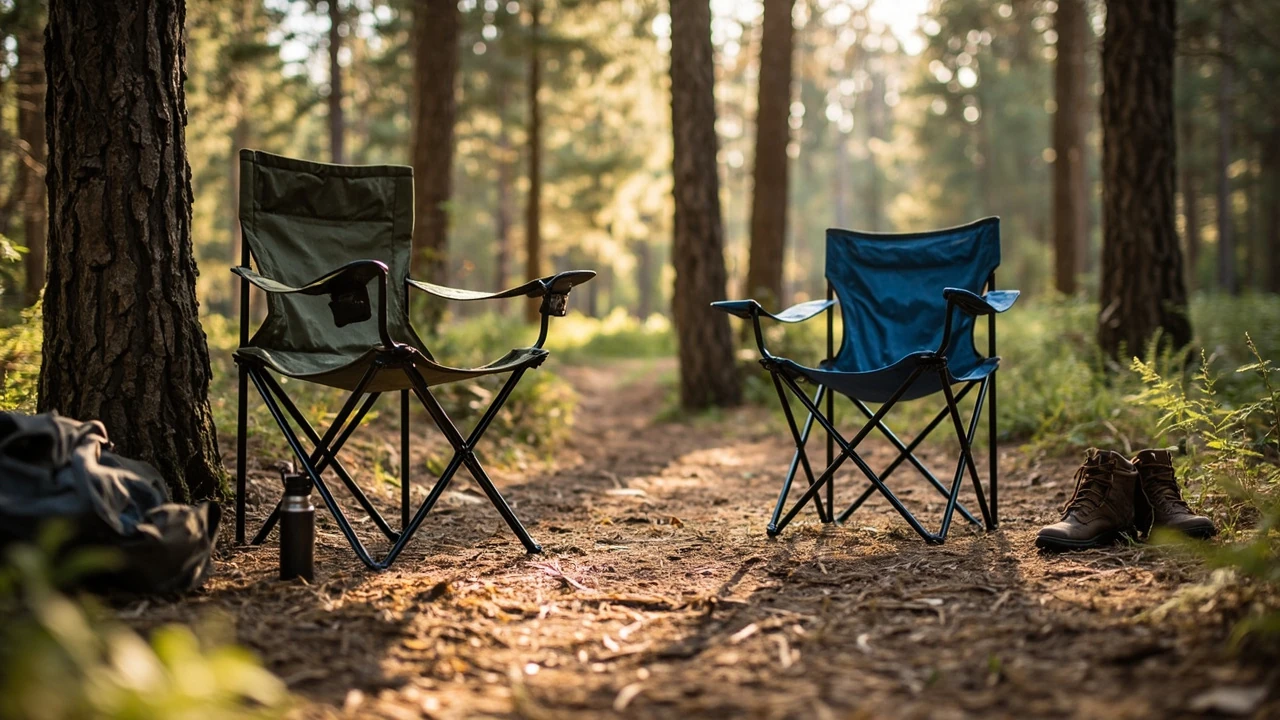
Outdoor chairs: how to choose the right seat for trails, parks and rope-course days
A long day at an adventure park rarely ends when the last course closes. After two or three hours of climbing, belaying and walking between platforms, most visitors want a stable place to sit while they pull off harnesses, tie wet shoes, eat a packed lunch or wait for the rest of their group. The outdoor chair you carry, or simply set out on the grass, changes how that whole rest period feels. Pick something too low and stiff, and even short breaks become a chore. Pick something too heavy, and you stop bringing it at all.
This guide focuses on one decision: which outdoor chair actually suits the kind of day someone booking a rope-course visit, a forest trail walk or a casual event is likely to have. It looks at frame types, seating positions, pack-down sizes, ground conditions and the small details that decide whether a chair is useful or just extra weight.
What counts as an outdoor chair
In common English usage, an outdoor chair is any portable seat designed to be used outside on variable ground. The category covers three broad groups:
- Camp and festival chairs that fold into a carry bag and use a fabric sling over a metal or composite frame.
- Backpacking and stool-style chairs that prioritise a small packed size and a light carry weight.
- Reclining and lounger chairs with multiple positions, padding, side tables or cup holders, usually kept at a single site such as a garden, campsite or event lawn.
Most rope-course and adventure-park visitors fall into the first two groups, because gear has to be carried or stowed in a car for a single day. The third group matters mostly when a chair stays at home and is used during warm-ups, recovery days or post-event gatherings.
Within those groups, the practical differences come down to how the chair folds, what it is made of, how it handles uneven ground, and how stable it feels once a tired adult sits down in it. Those are the questions this article works through.
Why chair choice matters at an adventure park
A rope-course or high-ropes day is harder on the body than it looks. Harnesses press on the hips and thighs, shoulders work hard during pulls, and ankles are under constant load on ladders and moving elements. The National Health Service notes that muscle stiffness and fatigue often peak 24 to 48 hours after unfamiliar activity, which is why many parks now build rest areas into their layouts and encourage groups to sit between sessions.
For those rest areas, a chair does three jobs:
- It removes the need to sit directly on damp grass, pine needles or gravel.
- It supports a relaxed posture that helps the lower back and hips recover between climbs.
- It gives a stable base for tasks like unbuckling a harness, dealing with shoes or sharing food.
If a chair is too low, too soft, or wobbles on soft soil, it can make harness removal awkward and even unsafe, because people tend to twist rather than bend properly. A simple, stable outdoor chair with a sensible seat height reduces that risk and keeps the rest break genuinely restful.
Main types of outdoor chairs, compared
The table below compares the formats that most visitors will actually consider. Values reflect typical ranges rather than a specific brand; always check the maker’s own data before buying.
| Type | Typical packed weight | Typical seat height | Best for | Main limitation |
|---|---|---|---|---|
| Classic quad-fold camp chair | 2.5 to 4.5 kg | 40 to 50 cm from ground | Events, car camping, rest areas near a car park | Bulky when folded; awkward to carry far |
| Director’s chair (wood or aluminium frame) | 3 to 5 kg | 45 to 50 cm | Stable seating on hard ground, events, base camps | Heavier; fabric can sag over time |
| Low backpacking / hiking chair | 0.5 to 1.2 kg | 10 to 25 cm | Trail rests, ultralight day packs, uneven ground | Very low; harder to get in and out of |
| Three-leg tripod stool | 0.3 to 0.8 kg | 40 to 50 cm | Quick sit-downs on a level patch, fishing, sketching | Less stable on soft or sloped ground |
| Reclining lounger / quad chair with padding | 5 to 9 kg | 30 to 50 cm depending on recline | Car-based days, gardens, longer static breaks | Heavy and large; rarely worth carrying on a trail |
| Inflatable chair or air seat | 0.4 to 0.8 kg (without pump) | 15 to 25 cm once inflated | Light pack, casual rest, soft ground | Susceptible to punctures; lower support |
The right type depends on how far the chair travels and how long someone sits in it. A day that starts with a walk from a remote car park to a picnic spot points toward a backpacking chair. A day spent mostly at a base camp near the car park works well with a classic quad-fold.
Frame materials and what they change
The frame decides most of the chair’s behaviour: weight, strength, corrosion resistance and price.
- Steel: Strong and usually the cheapest option, but heavy. It is best for chairs that stay in one place, such as a garden or a permanent event base. Steel rusts if stored damp, so drying the frame after a wet day matters.
- Aluminium alloy: The most common choice for portable outdoor chairs. Lighter than steel, still strong enough for most adults, and reasonably corrosion resistant. Aircraft-grade 7075 alloy is lighter and stronger than standard 6063, but more expensive.
- Composite and reinforced plastic: Used in some ultralight designs and in arm rests. These keep weight down but can become brittle after long UV exposure.
- Hardwood (in director’s chairs): Comfortable, absorbs shock and feels stable, but adds weight and needs occasional oiling to stay in good condition.
For a rope-course or family adventure day, aluminium is usually the sensible trade-off. It carries enough load for adults, packs small and survives being left in a wet car boot overnight.
Fabric and seat construction
The fabric does as much work as the frame. Common choices include:
- 600D polyester: Tough, abrasion resistant and easy to clean, which suits families with small children. Slightly heavier than thinner weaves.
- Canvas and cotton blends: Comfortable against bare skin in warm weather, but heavier and slower to dry after rain.
- Mesh panels: Improve airflow on hot days and dry quickly, but offer less insulation when it is cool.
- Ripstop nylon: Used in ultralight chairs, light and packable, but more easily snagged on rough bark or stone.
Double-stitched seams, reinforced stress points at the corners and bar-tacked webbing loops are the small construction details that determine whether a chair survives a season or two of regular use. Single-row stitching and thin webbing are the first parts to fail.
Weight limits and what they really mean
Manufacturers state a maximum load, often between 100 and 160 kg for portable chairs. That figure is a static load on level ground, not a safety margin for bouncing or for uneven terrain. For a chair used by a family with teenagers and adults, picking a model rated well above the heaviest user is wise. A chair that is “just enough” for one adult will creak, sag and eventually fail when the same user shifts weight while leaning forward.
For mixed groups, look for models that list a clear static load in the specifications, not only a vague “suitable for adults” line. The Outdoor Industry Association and similar trade bodies encourage transparent test data, and reputable makers publish it.
Seat height and getting in and out
Seat height is the most underrated specification. It controls how easy it is to stand up, which matters more after a tiring rope-course session than it does at a normal picnic.
- High seats (around 45 to 50 cm) are easier on the knees and hips and work well for older visitors and anyone stiff from harnesses.
- Mid seats (around 35 to 45 cm) are a common compromise and feel stable for most adults.
- Low seats (under 25 cm) put more strain on the knees and hips but lower the chair’s centre of gravity, which can help on very uneven ground.
If a chair is used by grandparents or by anyone recovering from a lower-back issue, a higher seat with armrests is worth the extra weight.
Ground conditions: grass, gravel, sand and forest floor
Outdoor chairs behave very differently depending on what is under them.
| Surface | Chair type that performs best | Issues to watch |
|---|---|---|
| Flat, mown grass | Any portable chair with flat feet | Wet grass can stain fabric; keep a plastic sheet under the chair |
| Forest floor with roots and pine needles | Low-profile chair or stool with wide feet | Legs can punch through soft soil; place on a groundsheet or flat stone |
| Gravel or hard-packed earth | Quad-fold camp chair with plastic or rubber feet | Metal feet sink on soft spots; a small board can help distribute load |
| Sand | Wide-footed lounger or low chair | Narrow feet dig in; avoid lightweight stools that tip sideways |
| Sloped ground | Tripod stool on gentle slope; recliner on very slight slope only | Stability drops fast; never use on slopes steeper than about 10 degrees |
Most adventure-park base areas sit on grass or a forest floor, which is friendly to most chair designs. The main practical step is to keep legs off soft soil, because a leg that sinks a few centimetres turns a stable chair into a wobbling one.
Portability: how the chair moves with you
Portability is not only about weight. It also includes packed size, carry method and how fast the chair can be deployed when the group finally stops.
- Carry bag: Most quad-fold chairs slip into a matching bag with a shoulder strap. The bag often becomes the only handle, so a single weak seam can ruin a chair.
- Packed length: Long quad-fold chairs can be awkward to fit into small car boots alongside harnesses, helmets and picnic gear. Some backpacking chairs pack to about 35 cm, similar to a 1-litre water bottle.
- Set-up time: Snap-frame quad chairs open in under a minute. Director’s chairs and stools are similar. Inflatable chairs take longer because of inflation time.
- Carry weight: For any walk over about 1 km, total chair weight under 1.5 kg is far easier to manage. Above 3 kg, most people stop carrying the chair after the first 500 m.
For visitors who arrive on foot, by train or by bus, a backpacking chair or stool is the more honest answer than a full camp chair. For visitors who drive to a site and stay near the car, the heavier quad chair is the better rest spot.
Comfort over a long sit
Comfort is a sum of small details, not a single feature.
- Seat depth: A seat that is too shallow pushes the back of the knees against the front edge and cuts off circulation within 15 to 20 minutes.
- Back height: A full back supports the shoulder blades and helps tired visitors lean back properly. A low back gives more freedom of movement but less rest.
- Armrests: They help people stand up and give a place to rest forearms while reading or checking phones. Hard armrests can be uncomfortable in cool weather; padded or wooden armrests are kinder.
- Padding: Useful on lounger chairs used for long static sits, less important on quick-rest chairs.
For an adventure-park rest, a 10 to 20 minute sit is typical. A medium-depth seat, a full back and a sensible arm height cover most needs. The kind of chair a person picks for a 4-hour concert is usually more than required.
Durability, weather and care
An outdoor chair lives a tough life. UV light, rain, mud, accidental drops and being left in a car through a cold night all take a toll. A few simple habits extend the life of any chair:
- Dry the chair fully before putting it back in its bag. Damp fabric stored in a closed bag develops mould quickly.
- Wipe the frame after coastal or muddy days. Salt and grit speed up corrosion on steel.
- Store the chair indoors or under a cover between events. UV breaks down polyester and nylon over time.
- Check stitching and rivets once a season. A small repair now avoids a sudden failure on a busy day.
Brands that publish spare parts, such as replacement feet or fabric slings, are usually a safer long-term buy than cheaper models with no support.
Safety notes for rope-course and adventure-park settings
Outdoor chairs are simple objects, but they are used by people who are often tired and sometimes damp from a wet course. A few points are worth flagging.
- Set chairs on level ground, away from the path of moving equipment, harnesses or loose ropes. A chair near a belay station can become a trip hazard.
- Keep chairs away from the base of tall structures. A falling carabiner or small part is unlikely, but a clear footprint reduces any risk.
- Discourage children from standing or rocking on chairs. Quad chairs in particular are not designed as play equipment and can tip.
- If the ground is wet, dry the feet and frame before packing. Wet aluminium against a dry car boot can leave marks and, over time, corrosion.
These points are not specific to one park; they are sensible habits for any chair used in a busy outdoor setting. A quick look at the area before sitting down is usually enough to spot a problem.
How a chair fits into a rope-course day plan
Thinking about the chair as part of the whole day, rather than as a separate purchase, often leads to a better outcome. A simple worked example shows how the pieces fit together.
- Morning: Drive to the park, park near the base, unload chairs and picnic gear. Two quad-fold chairs go next to a flat spot under a tree, just outside the harness area.
- Midday: After the first two-hour session, the group returns to the chairs for lunch. Removing harnesses while seated is much easier than on the ground.
- Afternoon: One member of the group stays with smaller children. The chair becomes a base for snacks, water bottles and a small first-aid kit.
- End of day: Wet gear is laid over the chairs for a few minutes to drip dry before being packed into the car. The chairs go back into their bag last.
This pattern is common at many adventure parks and is one reason a stable, slightly larger chair is more useful than an ultralight model on a family day. The chair is a piece of day infrastructure, not just a seat.
How to match the chair to the visitor
The same chair rarely suits everyone in a group. A small amount of planning helps.
- Solo traveller on foot: A backpacking chair or tripod stool. Weight and pack size matter more than padding.
- Couple arriving by car: A pair of quad-fold chairs with cup holders and side pockets.
- Family with children: One larger quad chair for adults, plus a small stool or a director’s chair for older children. A second small chair lets a tired child sit at the right height.
- Older visitors: A high-seat quad chair with armrests and a full back. Avoid low chairs that make standing up difficult.
- Event or festival helper: A padded recliner for the base camp, kept for the end of the day when there is finally time to sit properly.
Treating the chair as part of the group, rather than a personal item, avoids the common problem of one person carrying a chair that nobody else is comfortable in.
Common mistakes when choosing outdoor chairs
Most regrets come from a small set of predictable errors.
- Picking the lightest option without checking seat height. A 600 g chair that sits 12 cm off the ground is harder to use than a 3 kg chair that sits 45 cm high.
- Ignoring packed size. A chair that fits in a 70 cm bag is much easier to live with than one that needs a 90 cm bag, especially in a small car.
- Trusting only the marketing image. Photos show chairs on flat, dry ground. Real days include roots, mud and slopes.
- Skipping the foot design. Wide plastic feet are far better on soft ground than narrow metal tubes.
- Overlooking fabric thickness. Very thin fabric feels fine in a shop and then sags after a season.
A short, honest check of these five points before buying catches most of the common problems.
Price and value: what you actually pay for
Outdoor chairs span a wide price range, from low-cost festival chairs under 25 GBP/USD/EUR to premium ultralight designs at the high end of the market. Price usually tracks three things: material quality, weight and design refinement. A simple steel-frame quad chair at the low end is a fair tool for occasional use, while a higher-end aluminium model is justified when weight and pack size matter and the chair will be used weekly.
For a rope-course or adventure-park visitor who uses a chair a few times a year, the sensible mid-range usually offers the best value. Spending more mainly pays for lighter materials, better stitching and longer warranties, which matter more for regular users.
Environmental and storage notes
Chairs with replaceable parts last longer and create less waste. Hard plastic feet, standard webbing and common rivet sizes are easier to repair than one-piece moulded frames. Storing the chair under cover, ideally indoors between events, slows down fabric UV damage and frame corrosion. A small bag of silica gel tucked into the carry bag keeps the inside dry through winter storage.
When a chair finally reaches the end of its life, metal frames are widely recyclable, and fabric slings can sometimes be reused as repair patches for other outdoor gear. A short note on the chair’s materials helps at disposal time.
Quick decision checklist
Before choosing an outdoor chair for a rope-course or trail day, run through this short list:
- How will the chair reach the site: car, train or on foot?
- What is the heaviest person who will use it, and is the rated load clearly higher than that?
- What is the ground likely to be: grass, forest floor, gravel, sand or a mix?
- How long are the rest periods: quick sit-downs or longer lunches?
- Does anyone in the group need a higher seat, a full back or armrests?
- How and where will the chair be stored between events?
Most of the time, this list is enough to narrow the choice to one or two specific models. The remaining decision is mostly about colour, cup holders and carry-bag design.
A note on seating etiquette at busy parks
Adventure parks often share rest areas between groups, especially during peak times. A few habits make shared seating easier for everyone.
- Keep chairs close to your own group, not in the middle of a path.
- Wipe down the chair before packing it if the ground was wet or muddy.
- Move the chair slightly when you leave so the next group can set up without asking.
- Take all litter, including small fabric offcuts from any repairs, back to a bin.
These small actions keep rest areas pleasant for the next family or group and reduce the workload on park staff.
Where outdoor chairs fit into a wider day
A good chair is one part of a comfortable outdoor day. It works best alongside a sensible packing list, a realistic plan for food and water, and a realistic view of the weather. The chair is rarely the most important item, but a poor one can quietly make a long day longer.
For visitors planning a day that includes travel, multiple activities and a packed lunch, the chair is the small object that decides whether the rest stops feel like recovery or like just another task. Spending ten minutes on the choice is usually time well spent.
Related reading from our site
Frequently asked questions
What is the best outdoor chair for a rope-course day?
For most visitors, a quad-fold camp chair with an aluminium frame, a 600D polyester seat and a rated load well above the heaviest user is the most practical choice. It is stable, quick to open and works on grass or forest floor. Visitors who arrive on foot should look at a lighter backpacking chair instead.
Are expensive outdoor chairs worth the extra cost?
For occasional use, mid-priced chairs offer the best value. More expensive chairs tend to use lighter alloys, stronger stitching and more refined frames, which matters for regular users and anyone carrying the chair long distances. For a once-a-season visitor, the extra cost is harder to justify.
How do I stop my outdoor chair sinking into soft ground?
Place a flat board, a tough plastic sheet or a large flat stone under the chair’s feet. Wide plastic or rubber feet also help spread the load. Avoid using a chair on very soft soil after heavy rain, because the legs can sink unevenly and the chair will wobble.
What seat height is easiest for older visitors?
A seat height of about 45 to 50 cm with armrests is the easiest for most older visitors to get in and out of. Lower seats force a deeper knee bend, which is harder on stiff joints. A full back also helps tired visitors lean back properly between climbs.
Can outdoor chairs be used on a rope-course platform?
No. Platforms are designed for movement, not for furniture, and chairs can become a trip hazard in a belay area. Outdoor chairs are for ground-level rest areas only, set on a stable, level patch away from active climbing routes.
How should I clean and store an outdoor chair?
Wipe the frame with a dry cloth after muddy or coastal days, brush loose dirt from the fabric and let the chair dry fully before putting it back in its bag. Store the chair indoors or under cover between events. A small sachet of silica gel in the carry bag helps during long storage.
What weight rating should I look for?
Pick a chair with a rated static load well above the heaviest person who will use it. A 100 to 120 kg rated chair is suitable for most adults in normal use; for heavier users, look for models rated to 150 kg or more, and check that the rating is for static load rather than a vague “user” figure.
Is a backpacking chair comfortable enough for a long lunch?
For a 30 to 60 minute lunch, a good backpacking chair is usually comfortable enough. For longer, more relaxed sits, a chair with a higher back, a deeper seat and some padding is kinder. A simple test is to sit in the chair at home for ten minutes: if the front edge presses into the back of the knees, the seat is too shallow.
Do outdoor chairs need to be weatherproofed?
Most modern outdoor fabrics are water resistant rather than fully waterproof, which is enough for a brief shower. For longer wet weather, a small tarp or a chair with a fitted rain cover is a better answer. Avoid leaving any chair in standing water, which can damage fabric and accelerate frame corrosion.
How do I choose between a quad chair, a director’s chair and a stool?
Match the chair to how it will be used. A quad chair is the all-round choice for events and family days. A director’s chair feels more solid and has a flat seat, which suits people who prefer a structured sitting position. A stool is the lightest, smallest option and works well for quick sit-downs and for visitors carrying their gear on foot.
Related reading
Explore High Ropes Adventure
Trip tools
Essential adventure planning guides
Use these practical guides to compare rope park activities, prepare for a first high ropes day, check a booking, choose suitable footwear and contact the editorial team. Each page links to the relevant live tools and current planning sections.
Latest articles
- High ropes course weather cancellation questions answered
- Outdoor chairs: how to choose the right seat for trails, parks and rope-course days
- Travel agent vs. booking yourself: when a planner still pays off
- What Happens If You Freeze on a Ropes Course: A Practical Guide
- Rainy day activities for kids that turn a stuck-inside day into real fun
- All trails at a high ropes or adventure park: a complete visitor guide
- How long does a high ropes course usually take? A practical timing guide
- Urban air adventure park: what it is and how to plan a visit
- Best stroller travel systems for active families
- High ropes course glove requirements explained