Adventure of the seas: what the phrase means and how to plan a sea-based adventure day
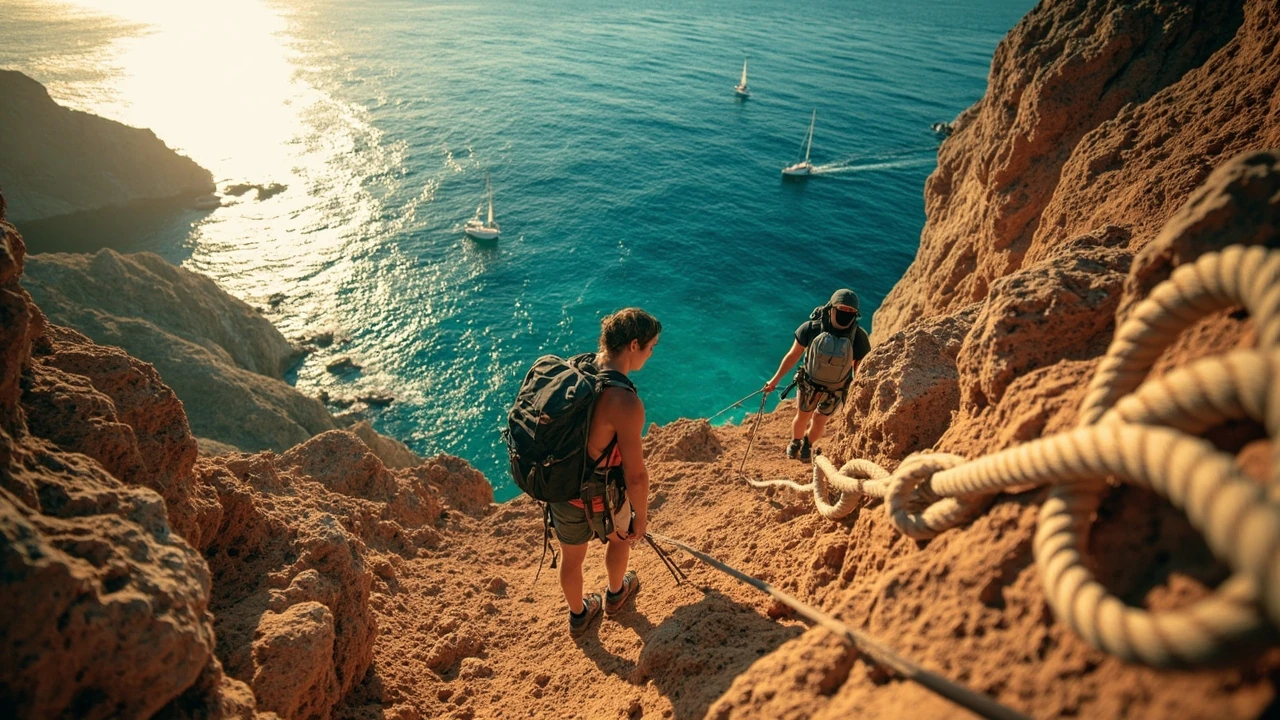
A phrase like adventure of the seas sounds like a cruise brochure, but most readers typing it into a search box are not actually booking a Royal Caribbean sailing. They are looking for a way to spend a day, a weekend, or a longer trip on or near the sea that feels genuinely adventurous, without committing to a two-week voyage or an open-water qualification. This guide treats the phrase as a planning problem rather than a product name. It explains what kinds of activity sit under the umbrella, how to match them to your experience and the local conditions, what to check before you book, and how to turn a coastal weekend into a structured adventure of the seas day that you can actually repeat at different ages and fitness levels.
Sea-based adventure is unusual among outdoor activities because the environment changes faster than the land does. Tides, swell, wind and weather windows compress the useful time on the water, and the margin for poor planning is smaller than it is on a forest rope course or a marked hiking trail. The rest of this article works through the choices, the safety checks, and the practical structure that makes a coastal adventure day feel planned rather than improvised.
Adventure of the seas: what the phrase really covers
The phrase adventure of the seas is loose, and that is part of its appeal. It is not a regulated activity, a single product, or a recognised qualification. In everyday search behaviour it spans three overlapping layers, and the right interpretation depends on what kind of experience you are actually trying to build.
The three layers most readers mean
- Coastal and shoreline adventure: cliff walks, coasteering, sea kayak day trips, tidal-causeway crossings, beach rock-pool days and stand-up paddleboard sessions in sheltered bays. No boat is involved, but the sea is the focus.
- Small-craft sea adventure: day sails, skippered charter trips, sea kayak expeditions, guided rib-ride tours, fishing trips and small-group island hops. A boat is central, but the trip is measured in hours or a single day rather than weeks.
- Multi-day sea voyage: liveaboard sailing, ferry-based island-hopping itineraries, ocean rowing challenges, and cruise-based adventure programmes with shore excursions. This is the layer where the phrase is closest to its original Royal Caribbean marketing meaning, and where the budget and time commitment climb quickly.
Most readers fall into the first two layers, because those are the experiences a working week, a family schedule and a moderate budget can absorb. Multi-day sea voyages are a separate planning problem, and they overlap heavily with general cruise decision-making rather than the kind of day-out planning that brings people to an outdoor-adventure site like this one.
How this guide uses the phrase
For the rest of the article, adventure of the seas refers to coastal and small-craft experiences that can be planned as a single day or a long weekend, with a clear emphasis on the reader who is weighing options, comparing providers, and trying to understand what the day will actually feel like before they book or drive to the coast. Where a multi-day voyage is genuinely the better answer, the article will say so explicitly and explain the trade-off.
Matching the experience to your group, your budget and your coastline
The single most common mistake in coastal adventure planning is choosing an activity first and then trying to fit people, fitness and weather around it. The more reliable sequence is to fix the constraints, narrow the activity set, and only then compare providers.
Start with three constraints, not three activities
Before you compare coasteering, sea kayaking and a rib-ride tour, write down three honest answers:
- Group composition. Are you planning for adults only, mixed-age family, children under a specific height or weight limit, or a group with mixed swimming confidence? Coastal activities are unusually sensitive to the least confident swimmer in the group.
- Time and travel budget. A day trip from an inland home region uses most of the available time on the road. A coastal base opens up half-day sessions and a wider menu of providers.
- Sea experience. If the group has never been in a small craft or a tidal area before, a guided session in a sheltered bay is a different commitment from a half-day open-water paddle or a swell-exposed coasteering slot.
Once those answers are written down, the shortlist of coastal adventures will narrow itself. A family with young children and a two-hour drive to the coast is realistically choosing between a sheltered sea kayak taster, a paddleboard hire in a cove, and a guided rock-pool walk. An adult group with sea experience and a coastal base can credibly compare coasteering, day sailing and a longer kayak crossing. To place this section in context, the Seas overview offers a concise background reference.
Reading the local sea like a local
Coastal conditions are governed by tide, swell, wind and water temperature, and they change faster than inland weather. The same beach can be calm, ankle-deep and inviting at low spring tide and a metre deeper with a strong shore break on the next visit. Local providers plan their sessions around these windows, and visitors should plan around them as well.
For most of the British and northern European coast, the practical rule of thumb is that morning sessions are usually calmer, especially in summer when thermal winds build through the afternoon. Tidal sea kayak trips that look identical in a brochure can be very different in feel depending on whether you are paddling with or against the stream. A short call or email to a provider asking what the day’s plan is, and what the conditions are expected to be, is often the single highest-value piece of planning you can do.
Choosing between the main sea-adventure activities
There is no single best coastal activity. Each one rewards a different temperament, and a well-planned day is often a short stack of two compatible sessions rather than one long block. The table below compares the most common options in the order most readers consider them.
| Activity | Typical duration | Best for | Key physical demand | Main safety system |
|---|---|---|---|---|
| Guided sea kayak taster | 2 to 3 hours | First-time paddlers, mixed groups, families with older children | Moderate upper-body work, sustained seated balance | Buoyancy aid, spray deck, supervised group |
| Half-day sea kayak tour | 3 to 5 hours | Active adults with some paddle experience | Steady aerobic load, longer periods in the cockpit | Buoyancy aid, paddle float self-rescue practice, group cover |
| Coasteering session | 2 to 3 hours | Confident swimmers who want a wet, vertical session | Climbing, jumping, swimming in moving water | Helmet, buoyancy aid, wetsuit, qualified guide |
| Stand-up paddleboard (SUP) hire or lesson | 1 to 2 hours | Calm-water beginners, photography days, relaxed groups | Balance, light core work, low impact | Leash, buoyancy aid in cooler water, flat-water site |
| Skippered day sail | 4 to 8 hours | Non-sailors who want the experience without the qualification | Low physical demand, high commitment to being on a boat | Crew briefing, lifejackets, qualified skipper |
| Rib-ride or small-craft coastal tour | 1 to 3 hours | Groups that want maximum scenery in minimum time | Low physical demand, exposure to spray and motion | Seated, lifejackets, licensed operator |
| Multi-day sea kayak expedition | 2 to 5 days | Experienced paddlers with expedition skills | Sustained aerobic load, multi-day fatigue, navigation | Group expedition kit, VHF, capsize drills, weather window plan |
The table is a starting filter, not a ranking. A good rule is to pick the row whose key safety system you are happy to rely on the provider for, and whose key physical demand matches the least-fit member of the group. If that combination only leaves one or two activities, the shortlist is already honest.
What a realistic sea-adventure day actually looks like
Coastal days go wrong less often because of bad luck and more often because of bad sequencing. A reliable day plan for a coastal adventure has a slow start, a water-led middle, and a flexible end that absorbs any time slippage from the tide or the wind. Readers can also consult the royal caribbean press center for an independent source related to this section.
A pattern that works for most coastal regions
- Arrive early and eat on land. Aim to be at the meeting point 30 to 45 minutes before the activity starts. Coastal car parks fill quickly in summer, and a calm breakfast at a café near the harbour sets the day’s pace.
- Brief thoroughly. Reputable providers spend 20 to 30 minutes on a safety and equipment brief. This is the most useful 20 minutes of the day, because the guide will usually explain what the conditions are doing, what the group plan is, and how to signal if something feels wrong.
- Water session in the calmest window. The water session sits in the middle of the day for a reason. It is the highest-stakes block, and it benefits from the most settled conditions and the most energy from the group.
- Land-based recovery. After the water session, a coastal walk, a harbour town, or a cliff-top viewpoint gives the group time to warm up, change, and reflect. This is also the natural slot for a short conversation with a local guide about other options for next time.
- Optional second water slot. For confident groups, a low-effort second water block (a short paddle, a calmer cove swim, a rib ride) closes the day. For mixed groups, this is usually where the day ends instead.
This pattern is deliberately conservative. It builds slack into the day, which is what coastal conditions tend to consume first. The day still feels full, but it does not collapse if a session is shortened or a meeting time shifts.
Safety checks that actually matter at the coast
Coastal safety is often presented as a long list of rules. In practice, a small number of checks will catch the overwhelming majority of avoidable problems, and they are the same checks that good providers run every session.
The four checks worth memorising
- Conditions match the activity. A paddle in a sheltered bay is not the same session as a paddle along an exposed headland in a force-four wind. Look for an explicit match between the forecast, the tide, the group experience and the planned route.
- Briefing is real, not paperwork. A good briefing covers the specific site, the specific hazards of the day, and the specific signals the guide will use. If the brief is only about waivers and kit, ask follow-up questions before the session starts.
- Kit is appropriate for the water temperature. Wetsuit thickness and windproof layers are not optional. The sea is colder than the air for most of the year on the Atlantic coasts of the UK and Ireland, and the people who get cold fastest are usually the ones who were persuaded to skip the thicker suit.
- Group has a clear weakest link plan. The provider should be able to explain, in plain language, what happens if one member of the group struggles, wants to stop, or cannot keep up. The honest answer is usually a shorter loop, a waiting point, or a move to a calmer bay. If the answer is vague, that is information.
These checks matter even more in the context of a broader outdoor-adventure habit, because the same habits transfer directly to zipline safety days and to ropes courses at inland centres. The discipline of matching conditions, briefing properly and planning a weakest-link route is a transferable skill, not a coastal-only one.
Budgeting a sea-adventure day without surprises
Coastal days tend to drift in cost because the headline ticket price is only one line item. A realistic budget covers activity, kit, food, parking and a small contingency. The figures below are planning tiers rather than current prices, and they are meant to be replaced with local quotes at the time of booking.
| Cost line | Lowest realistic | Typical | Why it varies |
|---|---|---|---|
| Main activity (per person) | Modest half-day session | Mid-range guided session | Duration, group size, peak season, instructor-to-client ratio |
| Wetsuit and buoyancy aid hire | Often included | Sometimes included | Some providers bundle kit, others price separately |
| Food and drink | Brought from home | Two café stops | Coastal café prices run higher than inland equivalents |
| Parking | Free rural car park | Pay-and-display near the harbour | Popular harbours charge a premium in summer |
| Contingency | Small buffer for a second activity or a replacement | Larger buffer for weather-driven rebooking | Coastal weather can force a same-day change of plan |
For most readers, a more disciplined approach is to set a per-person ceiling, decide which two activities are non-negotiable, and treat the rest as optional. This is the same logic used in a general day trip budget, but with a stronger line for contingency because coastal weather shifts more quickly than inland weather.
Working the coast into a longer outdoor-adventure habit
A single sea day is a good start, but the more useful framing is to think of coastal adventure as a layer in a year-round outdoor habit, sitting next to forest rope courses, inland hiking and family park days. The seasons do not have to compete. They can be sequenced.
A realistic four-season pattern
- Spring: sheltered-bay sea kayak or paddleboard taster days, often the first calm-water sessions of the year and a good reintroduction to cold water.
- Summer: longer coastal days combining two water blocks, a coastal walk and a harbour evening, with more tolerance for the higher summer demand on popular sites.
- Autumn: skippered day sails and rib-ride tours, which are less physically demanding and a better match for shortening daylight and cooler water.
- Winter: a small number of high-quality sessions, often coasteering with thicker suits, plus planning time for next year’s sea kayak expedition or expedition-grade trip.
Within that pattern, coastal days also pair well with inland adventure park visits, and the same group will often book a family rope park day on the drive back from a coastal weekend, turning two single days into a single mixed terrain break.
Frequently asked questions
Is “adventure of the seas” the name of a specific cruise ship?
Yes, it is the name of a Royal Caribbean cruise ship, and the phrase is widely associated with that product. In everyday search behaviour, however, most people using the phrase are not booking that ship. They are looking for coastal or sea-based adventure experiences more generally, which is the framing this article is built around.
What is the easiest sea adventure for a first-timer?
A guided sea kayak taster or a stand-up paddleboard lesson in a sheltered bay. Both run in shallow water, use stable equipment, and are supervised by a qualified instructor for the full session.
How fit do I need to be for a coastal adventure day?
For a sheltered-bay session, a basic level of comfort in the water and a willingness to be active for two to three hours is enough. For coasteering, day sailing or longer paddles, expect a higher aerobic load and a longer commitment to being on or near the water.
Can children take part in sea adventures?
Often yes, but with provider-specific minimum ages and weight limits. Many UK sea kayak centres work with children from around eight upwards in a double kayak with a parent, and older children in their own craft. Coasteering and rib rides have stricter limits because of the physical demands and the exposure to moving water.
What should I bring to a sea adventure day?
Quick-dry layers, a windproof shell, swimwear, old trainers or water shoes, a towel, water and a snack. Leave jewellery, watches and non-waterproof phones in the car. Most providers will brief you on a more specific kit list when you book.
How do I know if conditions are safe on the day?
Look for an explicit, written cancellation or rescheduling policy from the provider, a clear briefing on the day, and a willingness to answer your questions about the wind, the tide and the route. If the provider cannot explain the conditions in plain language, that is itself a signal.
What is the difference between coasteering and sea kayaking?
Coasteering is a vertical, wet activity that combines swimming, climbing and jumping along a rocky coastline. Sea kayaking is a seated paddle activity, usually in a stable sit-on-top or sit-in kayak, along a chosen stretch of coast. The safety systems and the physical demand are different, even though the environment is similar.
Are sea adventure days suitable in winter?
Some are, with the right kit. Coasteering and certain guided sea kayak sessions run year-round in milder regions, using thicker wetsuits and shorter sessions. Day sailing and rib rides are also viable in winter, but with smaller group sizes and stricter weather limits. Always check the provider’s winter policy before booking.
How do sea adventure days compare to inland adventure parks?
Sea days are more weather-dependent, more tide-dependent and more time-bound than inland adventure park visits. Inland parks are a more controllable all-weather option. Many people combine the two across a weekend, with a coastal day on the better weather day and an inland rope park or high ropes session as a backup.
What is a sensible first step if I have never done any of this before?
Book one guided session in a sheltered bay, with a reputable local provider, on a calm-weather day. Treat the first session as a calibration day, not a performance day. Use it to find out what you actually enjoy, then plan the rest of the year around that answer.
Putting it into practice
Build your sea-adventure year around one question: which two experiences do you want to be able to do confidently by this time next year? Most readers will arrive at a short list that combines a sheltered-bay water session with something slightly more demanding, such as a coasteering slot, a longer kayak crossing or a skippered day sail. Choose the providers first, then plan the dates around the best tidal and weather windows they offer. Coastal adventure rewards repetition and local knowledge far more than it rewards chasing a new headline activity every season.
Related reading
Explore High Ropes Adventure
Trip tools
Essential adventure planning guides
Use these practical guides to compare rope park activities, prepare for a first high ropes day, check a booking, choose suitable footwear and contact the editorial team. Each page links to the relevant live tools and current planning sections.
Latest articles
- Adventure of the seas: what the phrase means and how to plan a sea-based adventure day
- How harness fit checks work for children on ropes courses
- Demon Slayer Infinity Castle tickets: how to buy, prices, and screening tips
- Fora Travel: How to Plan an Adventure Park Trip Like a Traveller
- Zipline braking systems explained for beginners: how they actually work
- Outdoor voices: how to use the sounds around you on a rope park day
- Govee permanent outdoor lights: a practical buyer’s guide
- How children can practice clipping before a ropes course
- Best travel exercises portable: how to stay strong on the road
- Kids activities near me: a practical guide for parents