Outdoor sectional sofas: a practical buyer’s guide for patio living
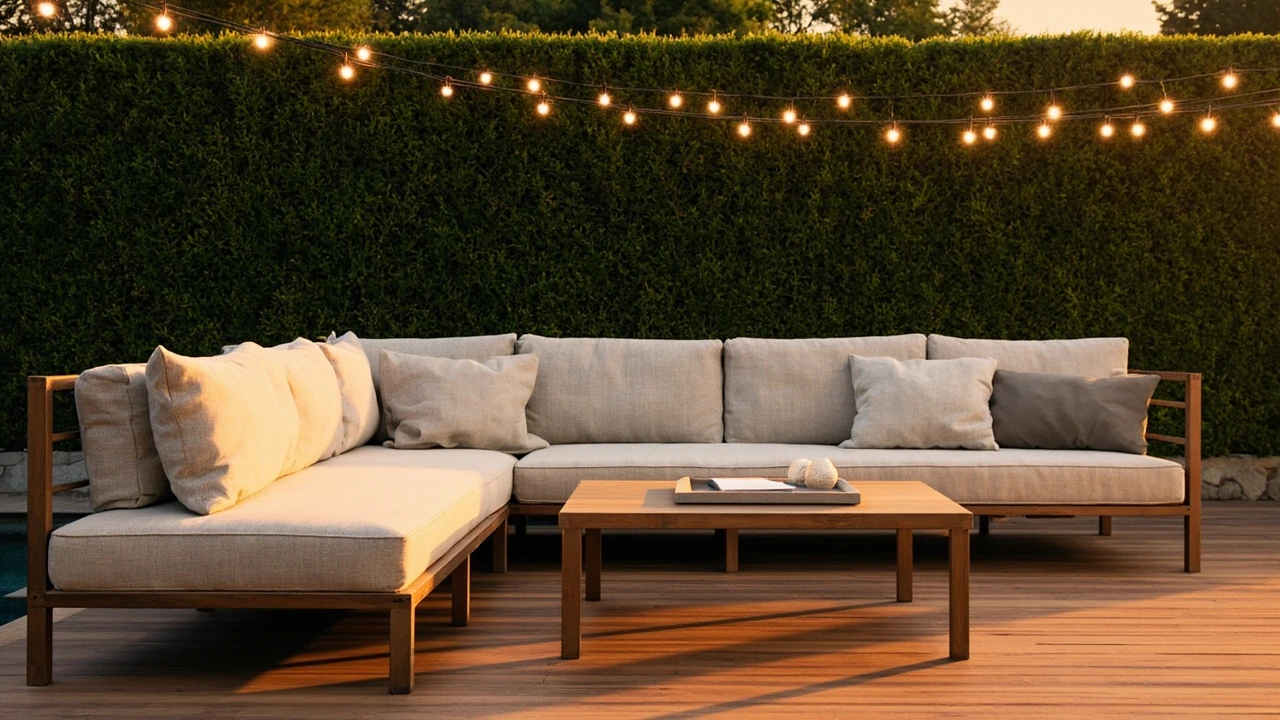
Picture a warm Saturday evening. Friends arrive, kids trail in with wet towels, and everyone migrates toward the same corner of the deck because the seating there actually fits the group. A good outdoor sectional turns that corner into the social center of the yard, and a poor one makes the same evening feel cramped, saggy, or sun-bleached after a single season.
An outdoor sectional is a multi-piece patio sofa, usually arranged in an L, U, or straight run, that lets you configure seating to match a deck, patio, or pool surround. Because the modules are separate, you can add or remove pieces over time, swap a chaise to the other side, or break the set into two smaller sofas if the layout changes. The decisions that matter most happen before you click “buy”: the frame material, the cushion fill, the fabric, the layout, and how the piece will be cared for through rain, sun, pollen, and storage.
This guide walks through each of those decisions in the order a careful buyer tends to make them, with a focus on what holds up outdoors and what tends to disappoint. By the end, you should be able to read a product page the way a designer reads a spec sheet, and you should have a short list of the specific things to check before committing to a set that may live on your patio for the next decade.
Outdoor sectional: what it is and how it differs from indoor sectionals
An outdoor sectional is built specifically to live outside for at least part of the year. That sounds obvious, but the difference between a piece marketed as “outdoor” and one engineered for the elements is significant. Indoor sectionals use plywood frames, standard polyurethane foam, and decorative upholstery. Move that sofa onto a covered patio and within a year the frame swells, the foam holds water after every storm, and the fabric fades unevenly.
A genuine outdoor sectional is built from materials chosen because they tolerate moisture, UV, and temperature swings. Frames are typically powder-coated aluminum, kiln-dried teak, shorea, poly lumber, or all-weather wicker woven around an aluminum skeleton. Cushion cores use quick-drying foam, wrapped foam, or reticulated foam that drains instead of pooling water. Fabrics are solution-dyed acrylics, polyolefins, or high-grade olefins rated for 500 to 2,000+ hours of UV exposure.
You will also notice that outdoor sectionals are usually modular rather than one solid piece. Modules connect with plastic clips, metal brackets, or hidden latches underneath, so the set can be reconfigured or moved without dismantling the frame. This modularity is one of the strongest reasons to choose an outdoor sectional over a single large patio sofa: it adapts as the family grows, as the deck gets a makeover, or as the household downsizes.
Frame materials compared
The frame is the skeleton of the set, and it does most of the long-term work. A weak frame turns a great-looking set into a wobbly, sagging one after a few seasons. The four frame materials you will see most often each have a clear personality.
| Frame material | Weight | Weather behavior | Maintenance | Typical price tier |
|---|---|---|---|---|
| Powder-coated aluminum | Light to medium | Will not rust, can dent, may oxidize if coating is scratched | Rinse occasionally, touch up chips | Mid to high |
| Teak or shorea hardwood | Heavy | Develops silver-gray patina; very stable if kiln-dried | Oil annually to keep color, or leave to weather | High |
| High-density poly lumber (HDPE) | Heavy | Will not crack, splinter, rot, or absorb water | Wash with soap and water | Mid to high |
| All-weather wicker over aluminum | Medium | Resin wicker resists fade; frame must still be aluminum | Wipe down, keep debris out of weave | Mid |
Aluminum is the workhorse. It is light enough to move during a storm, strong enough for daily use, and powder coating gives it color that lasts. Hardwood is the most traditional choice and ages beautifully if you accept the patina, or stays honey-brown with a once-a-year oiling. Poly lumber is the easiest to live with, particularly in climates that swing from humid summers to freezing winters, and it is increasingly common in family-friendly designs. Wicker gives you the woven look that many patios still favor, but the long-term story is about the aluminum frame inside, not the weave outside.
A practical rule: lift a chair or test it in the store. A lightweight frame is not automatically a bad frame, but a frame that flexes when you sit at the corner of a seat is a frame that will loosen within a season. Solid corner blocks, welded or bolted joints, and a clearly defined weight capacity above 250 lb per seat are good signs.
Cushion fill: where comfort meets weather resistance
Cushion fill is the part of an outdoor sectional buyers underestimate. The cover fabric can be the best on the market, but if the foam inside acts like a sponge, every rain shower will leave you sitting on a damp cushion for two days. The right fill drains fast, dries fast, and still feels supportive after years of use.
| Fill type | Feel | Water behavior | Best for |
|---|---|---|---|
| Standard polyurethane foam | Firm, supportive | Absorbs water, dries slowly, can mildew | Covered porches only |
| Quick-dry foam (open-cell) | Slightly softer than standard foam | Drains quickly, resists mildew | Most patios and decks |
| Wrapped foam (foam core with fiber wrap) | Plush, pillow-like | Wraps drain slowly; covers should be removed for storage | Covered patios, low-rain climates |
| Reticulated foam | Medium firmness, very airy | Drains and dries the fastest | Poolside, full exposure |
For a sectional that will sit in direct weather, quick-dry foam is the most balanced choice. Reticulated foam is even better in performance but a little firmer, which not everyone finds comfortable for long evenings. Wrapped foam is the most luxurious when new, but the fiber wrap holds moisture, so it is better suited to covered outdoor rooms. Standard foam should be reserved for fully covered porches or for sets that will be brought inside every night.
Seat depth is part of cushion comfort. Many outdoor sectionals ship with seat depths around 24 to 26 inches, which is fine for upright conversation. If you like to curl up or stretch out, look for chaise modules or sets that include a deeper lounger end at 30 inches or more. The chaise question alone tends to be the difference between a set that is used and one that is avoided.
Fabric: the most tested part of the set
Fabric is the part of an outdoor sectional that gets the most direct sun, the most spilled drinks, and the most sunscreen. It is also the part that fades first if the wrong material is chosen. The fabric world is dominated by three families, and the differences are worth understanding before you choose a color.
- Solution-dyed acrylic (e.g., Sunbrella, Outdura): Color is added to the fiber before it is spun, which makes the fabric highly fade-resistant. It feels like a soft indoor textile, breathes well, and cleans with mild soap and water. This is the most common premium choice and the safest for full sun.
- Polypropylene / olefin (e.g., some lines under Cushion, Revolution): Lightweight, water-resistant, often more affordable. Holds color well, but some lower-grade olefins break down faster in strong UV. Useful for shaded patios or buyers on a budget.
- Polyester with outdoor treatment: Often used on value-priced sets. Less UV-stable, more prone to pilling and mildew. Acceptable for shaded or seasonal use, less so for permanent patio furniture.
The single most useful number on a fabric spec sheet is the UV or lightfastness rating, usually given in hours. A fabric rated to 1,500 hours is appropriate for a sunny patio; 500 hours is appropriate for a fully shaded porch. Fabric weight, often quoted in denier, is a secondary signal of durability. Heavier weights resist abrasion from kids, pets, and moving cushions around.
Cleaning matters more than most buyers expect. Outdoor fabrics shed most stains if you blot rather than rub, rinse with a hose, and let them air dry. The covers should be unzipped for cleaning. A set of cushion covers that come off easily is a set that stays clean; covers that fight you on the way to the washer rarely get washed.
Laying out the set: L-shape, U-shape, and straight runs
The shape of the set is the most visible decision and the one that has to fit the space first. Measure the deck or patio, mark the largest piece you might add, and account for walking paths, door swings, and any nearby grill or fire feature.
- L-shaped outdoor sectional: The most common layout. Two arms meet at a corner, with a longer leg along one side of the deck. Works well in rectangular spaces and against a house wall. Easy to extend by adding a matching loveseat on the open end.
- U-shaped outdoor sectional: A long run with two perpendicular returns. Best for large rectangular patios and for households that entertain in groups. Needs at least 10 by 12 feet of clear space to feel proportional.
- Straight sectional: A long sofa made of two or three identical modules. Fits narrow decks and balconies, and can later be broken into two smaller sofas if needed.
- Curved or round modular set: Designed for conversation around a fire pit or central coffee table. Visually softer but harder to rearrange and harder to add to later.
Talk through one practical test: can you walk from the door to the grill, or to the trash bin, without stepping over a seat or a chaise? Outdoor kitchens and sectionals compete for the same square footage, and the set that looked great in the showroom can quickly block traffic in a real yard. Leave at least 30 inches of walkway around any permanent feature.
If the deck is on a slope, lean toward modular aluminum rather than heavy hardwood. A heavy hardwood set on a soft surface will sink unevenly. Use furniture glides under the legs, and check the deck after a month to see whether the set needs to be repositioned.
How an outdoor sectional connects to a broader outdoor plan
An outdoor sectional rarely lives alone. It anchors a space that also includes a dining set, a fire feature, shade, and a path to the rest of the yard. Buying the sectional first and then fitting everything around it can work, but a more reliable approach is to sketch the space as one project and then choose pieces that respect the same traffic and sight lines.
For households that already spend a lot of time outdoors, the sectional often replaces a dining set as the social center, especially in homes where adults eat in shifts and kids graze. A table that nests against the sectional, or an ottoman that doubles as a tray, tends to work better than a separate dining set in the same footprint. If the household still needs a dining area, leave room for one rather than letting the sectional claim every square foot.
Shade and protection also matter. An outdoor sectional that sits in full afternoon sun will fade faster, dry slower after rain, and feel uncomfortable on summer days. A simple solution is a patio umbrella off one corner of the set or a pergola with retractable shade. For a family that wants the set to last more than a few seasons, planning for some form of overhead cover is one of the cheapest upgrades available.
Visitors planning a larger outdoor day often find it useful to think of the sectional as the destination piece, and the rest of the trip as a way to make the time on that set more enjoyable. A practical companion read is the family day trip budget guide, which pairs naturally with the cost of building out a patio over time, and the one-day forest escape planner, which helps if the household likes to alternate between quiet outdoor time and more active outings.
Care, cleaning, and seasonal storage
An outdoor sectional that is cared for will outlast a neglected one by many years. None of the work is hard, but it is consistent: rinse, dry, cover, and store.
- Weekly in season: Brush off debris, rinse with a garden hose, dry cushions standing on edge so air moves through both sides.
- Monthly: Wash cushion covers according to the manufacturer’s instructions, usually with mild soap and water. Wipe the frame with a damp cloth. Check the connecting hardware between modules.
- After storms: Remove standing water from cushion seats, prop cushions up, and clear any debris from inside the frame weave if you have a wicker set.
- End of season: Decide whether to leave the set out under covers or to store the cushions indoors. Storing cushions is the single most protective step you can take.
Cover quality is a small but important detail. A breathable outdoor furniture cover is far better than a plastic tarp. Plastic traps moisture, which causes mildew and frame corrosion even on materials that should not care. Look for covers with ventilation panels, elastic hems, and a fabric weight that feels substantial rather than filmy.
For households that winterize the patio, a good routine is to bring cushions inside, cover the frames, and stack any lightweight chairs on top of the sectional so a winter wind does not rearrange the set. A set that lives outside year-round in a freezing climate should ideally be hardwood, HDPE, or powder-coated aluminum, and even then a cover extends its life.
Common mistakes when buying an outdoor sectional
Most regret around outdoor sectionals comes from a small set of predictable mistakes. Naming them out loud makes them easier to avoid.
- Choosing frame over fill. A heavy hardwood frame with low-grade foam will feel disappointing in a year. Foam and fabric are the parts you actually feel every time you sit down.
- Underestimating the space. A set that fits the deck in a drawing can dominate it in reality. Tape out the footprint with cardboard before ordering.
- Ignoring drainage. A sectional that sits in a low spot will collect water. Either raise the legs with glides, choose a layout that avoids pooling, or move the set to higher ground.
- Skipping the cover plan. Many buyers intend to buy a cover “later” and never do. Plan for the cover at the same time as the set.
- Buying a set that cannot be added to. Modular sets that can be extended later are more forgiving than fixed configurations. If the family may grow or the deck may be expanded, plan for that growth now.
How to compare two outdoor sectionals side by side
When the choice comes down to two specific sets, a side-by-side comparison is more useful than brand reputation. The table below shows the categories a careful buyer asks about in a showroom or on a product page. Use the same questions on every set you consider, and the differences become obvious quickly.
| Spec or feature | Set A | Set B |
|---|---|---|
| Frame material and joint construction | ||
| Cushion fill type and seat depth | ||
| Fabric family, weight, UV rating | ||
| Number of modules and included pieces | ||
| Ability to add pieces later | ||
| Cushion cover removable and washable | ||
| Weight capacity per seat | ||
| Warranty length on frame and fabric | ||
| Available protective cover | ||
| Total price including any add-ons |
Filling the table forces the comparison to come down to the same ten questions for every set, which is far more useful than deciding based on the first swatch you like. The empty cells also reveal what the manufacturer has not told you, and a salesperson who can fill them in is a salesperson worth listening to.
Price ranges and what they actually buy
Outdoor sectionals span a wide range of prices, and the gap between tiers is mostly about frame material, fabric grade, and design origin rather than size. A reasonable way to think about price is by the use case it is built for, not by the sticker alone.
- Budget tier (under roughly $1,500 for a 4-piece set): Usually aluminum or steel frames with value-grade olefin or polyester cushions. Acceptable for covered porches, rentals, or households that will replace the set in a few years. Watch for thin cushion cores and light fabric weights.
- Mid tier (roughly $1,500 to $4,000 for a 4-piece set): Powder-coated aluminum or HDPE frames with solution-dyed acrylic cushions. This is the sweet spot for most family patios, and where the best balance of durability and price lives.
- Premium tier (above roughly $4,000 for a 4-piece set): Hardwood frames, designer fabrics, and modular systems from established outdoor brands. The jump in price is real, but so is the gap in finish, hardware, and warranty.
A practical way to read those tiers is to think in seasons of use. A budget set may give three to five comfortable seasons; a mid-tier set often gives eight to twelve; a premium set can give fifteen or more, particularly if the cushions are stored and the frame is covered. The total cost per year is often similar across tiers once the set is cared for, which is a more useful comparison than the price tag on the day of purchase.
Working an outdoor sectional into a busy household
An outdoor sectional earns its keep by becoming the default gathering spot, which means it has to keep up with real family life. That includes snack time, homework on a laptop, a dog that thinks every cushion is its own, and the occasional rainstorm caught mid-conversation.
A few small design choices help. A set with a washable cushion cover, or one where the cover zips off in a minute, will get washed more often. A ottoman that doubles as a tray table gives kids a place to draw or eat without bringing the activity onto the seats. A coffee table at the right height, around 16 to 18 inches, is more useful than a tall dining table next to a low sectional.
For households that entertain other families, the modular nature of an outdoor sectional is the real advantage. A set that can be split into two smaller sofas for a birthday party, or extended with a matching loveseat for the in-laws, is a set that adapts to life rather than the other way around. Combined with a fire pit in the cooler months, the same set becomes the year-round living room that simply happens to be outside.
If the broader weekend plan includes a day out at a rope course or a forest escape, the sectional plays a quiet role on the way back: it is the place where the group sits, the towels land, and the day is replayed over cold drinks. That is the real test of an outdoor sectional, and the reason the decisions about frame, fill, fabric, and layout matter in the first place.
Frequently asked questions
What is an outdoor sectional?
An outdoor sectional is a modular patio sofa, usually arranged in an L, U, or straight run, that is built from weather-resistant materials such as powder-coated aluminum, hardwood, HDPE poly lumber, or all-weather wicker. Each piece is a separate module that can be reconfigured, extended, or split into smaller sofas as the space changes.
How long does an outdoor sectional last?
A well-built outdoor sectional typically lasts 8 to 15 years, and premium hardwood or HDPE sets can last longer. Lifespan depends mostly on the frame material, the fabric’s UV rating, whether the cushions are stored in the off-season, and whether the set is covered when not in use.
What is the best frame material for an outdoor sectional?
For most households, powder-coated aluminum offers the best balance of weight, durability, and price. Teak and shorea are excellent if a hardwood look is desired and the set can be oiled or allowed to weather. HDPE poly lumber is the lowest-maintenance option and tolerates wet and freezing conditions very well.
What fabric should I choose for outdoor sectional cushions?
Solution-dyed acrylic fabric is the most reliable choice for full-sun patios because the color is locked into the fiber and resists fading. Look for a UV or lightfastness rating of at least 1,500 hours for sunny locations. Polypropylene and treated polyester are acceptable for shaded or seasonal use.
Can an outdoor sectional stay outside in the rain?
Yes, if the frame is aluminum, HDPE, or properly finished hardwood, and the cushions use quick-dry or reticulated foam. Standing water should still be shaken off the cushions after heavy rain, and a breathable cover will dramatically extend the life of the set.
Should I store outdoor sectional cushions in the winter?
Storing cushions indoors or in a dry shed over winter is the single most effective step to extend their life. Covers protect the frame, but the foam and fabric last much longer when they are not exposed to repeated freeze-thaw cycles and trapped moisture under a cover.
How do I measure my patio for an outdoor sectional?
Measure the deck or patio in both directions, mark the doorways, grill, and any traffic paths, and leave at least 30 inches of walking space around the set. Tape out the footprint of each module on the deck before ordering, since outdoor sectionals tend to look smaller in photos than they do in a real space.
What is the difference between quick-dry foam and regular foam?
Quick-dry foam is an open-cell foam that allows water to pass through and air to circulate, so cushions dry within hours rather than days. Regular closed-cell foam absorbs water like a sponge and is far more likely to develop mildew, odors, and permanent sagging when used outdoors.
How many pieces do I need in an outdoor sectional?
For a family of four that entertains occasionally, a 4- to 5-piece L-shaped set with a corner seat, two armless middle seats, and a chaise or ottoman is a comfortable starting point. For larger groups or rectangular patios, a 6- to 7-piece U-shaped configuration provides more seating but requires a larger footprint.
Is it worth paying more for a premium outdoor sectional?
For households that use the patio often, store the cushions properly, and want a set to last 10 years or more, the upgrade to a premium set is usually worth it. The jump pays for itself in better fabric, more accurate joinery, longer warranties, and cushions that hold their shape rather than flatten after two seasons.
Related reading
Explore High Ropes Adventure
Trip tools
Essential adventure planning guides
Use these practical guides to compare rope park activities, prepare for a first high ropes day, check a booking, choose suitable footwear and contact the editorial team. Each page links to the relevant live tools and current planning sections.
Latest articles
- How to plan an outdoor day around a concert stop: a cardi b tickets field guide
- Outdoor sectional sofas: a practical buyer’s guide for patio living
- How amusement parks actually work: rides, safety, and what to expect
- Beis Travel: What the Bag Brand Offers for Outdoor Days
- Adventure park: what it is, what to expect, and how to plan a visit
- Indoor activities near me: practical options for rainy days and tight schedules
- Backrooms movie tickets: how screenings, formats, and seat tiers actually work
- Outdoor Christmas lights: a practical guide for gardens, trees and facades
- Asap tickets: what they are and how to use them for last-minute day trips
- Outdoor shower ideas, plumbing and etiquette for adventure parks and cabins