Plan an outdoor day trip: timing, weather and ropes-course bookings
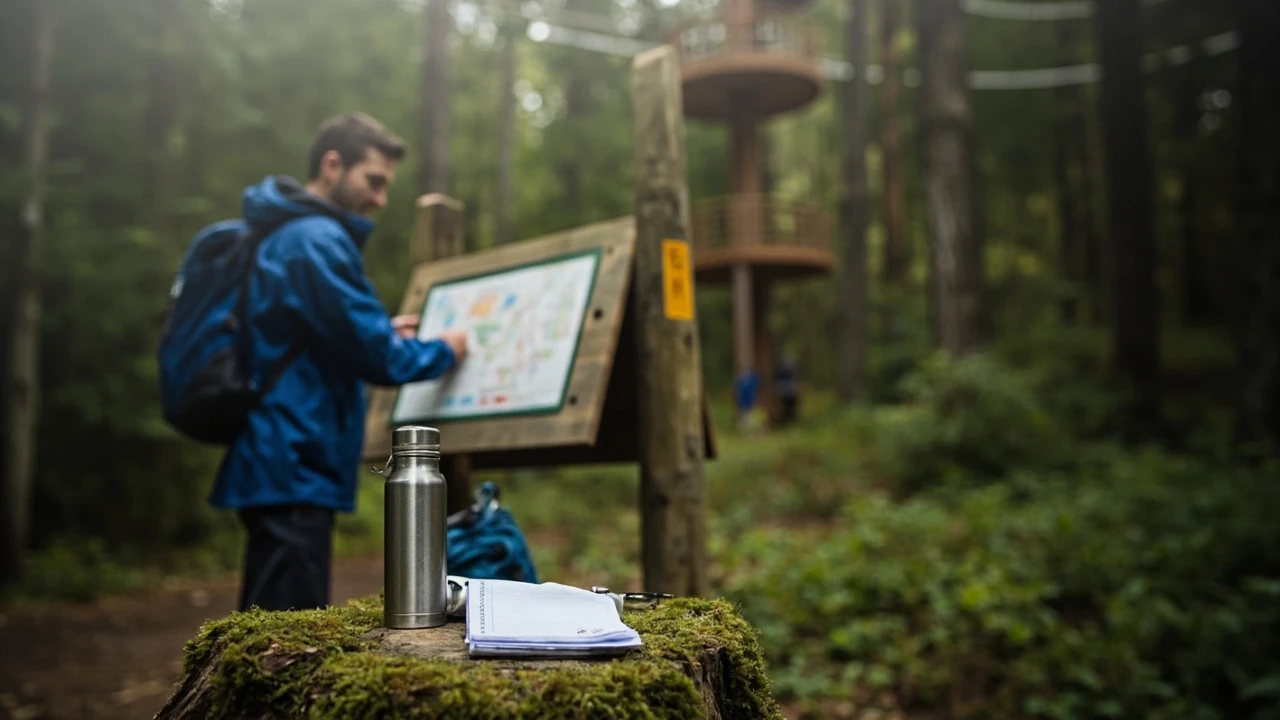
A useful outdoor day trip starts with one decision: what do you most want to do when you get there? Book a ropes session, choose a manageable walk or arrange a picnic somewhere you can comfortably reach. Build the journey around that choice, then leave room for food, check-in and the trip home.
You do not need a long drive to make the day worthwhile. A nearby park may suit your group better than a famous destination that takes most of the day to reach. Look at the whole journey, including parking or the walk from a bus stop, before paying for an activity.
Choose an activity the whole group can take part in
Ask who is coming and what each person wants from the day. A long woodland walk, a high ropes course and an afternoon at an accessible visitor attraction have different demands. Check the route surface, distance, facilities and participation requirements rather than assuming one option works for everyone.
| Plan | What to check first | What to leave flexible |
|---|---|---|
| A woodland walk | Route condition, elevation, access, toilets and a sensible way to shorten it | Distance and picnic stop |
| A booked ropes session | Participant requirements, supervision, check-in, session length and cancellation terms | Anything after the session |
| A walk and a ropes session | Whether the group has time and energy for both | Make the walk optional |
| A visitor attraction with a short walk | Opening hours, admission and accessibility of the actual route | Time spent outdoors if conditions change |
If some adults want to climb and others do not, agree on supervision before booking. Do not assume adults can simply swap places while children wait elsewhere. Every child needs the supervision required for their activity, including children who are not taking part.
Work back from the booking and forward to the return
Use the operator’s check-in instructions, not just the activity start time. Add the journey, parking and the walk to reception. If an unfamiliar site has several entrances, save the directions for the correct one.
For an unbooked walk, choose a start window and a turn-back time. Include breaks and the time needed to reach the exit, station or car park. Check local daylight for the date and location. A summer timetable should not be reused unchanged in winter.
The example below assumes a 75-minute journey each way and a two-hour booked activity. It is an illustration, not a real venue’s timetable. Replace the travel and activity durations with your own information.
| Time | Plan |
|---|---|
| 08:00 to 09:15 | Travel to the venue |
| 09:15 to 10:00 | Parking, toilets, check-in and the required preparation |
| 10:00 to 12:00 | Main activity, if that is the booked session length |
| 12:00 to 13:00 | Lunch and a rest |
| 13:00 to 13:45 | Optional short walk, only if conditions and the group allow |
| 13:45 to 14:00 | Change, pack up and leave |
| 14:00 to 15:15 | Travel home |
| 15:15 to 15:45 | Unallocated margin for a delay |
That is seven hours and fifteen minutes from departure to the planned return, or seven hours and forty-five minutes including the margin. Travel accounts for two and a half hours. The optional walk is the easiest part to drop if check-in runs late or someone is tired.
There is no useful universal rule that every day trip must last eight hours or that the drive must take a fixed percentage of it. A shorter day can be a good day out. If your plan only works when every connection and activity finishes exactly on time, revise it.
Compare the actual transport options
For a car journey, include fuel, parking, tolls where relevant and the final approach to the site. Check whether the car park closes at a particular time. Plan the return around a driver who is fit to drive, rather than adding another activity simply because it is nearby.
For public transport, look up the service on the date you will travel. Check the walk from the stop, changes, the return timetable and what happens if you miss a connection. A station near the edge of a large park may still be a long way from the ropes-course reception.
Compare the total price for your group. Four return tickets are not automatically cheaper or dearer than driving. Children, discounts, parking charges and ticket restrictions can change the result. Save the route and booking information somewhere you can open without a mobile signal.
Check the ropes-course rules before paying
Read the requirements for the particular activity and location. Age, height, weight, equipment fit, footwear and adult supervision can all matter. Meeting one condition does not mean the others can be ignored. Ask the venue how it measures height if someone is close to a limit.
One operator’s Go Ape booking terms, for example, state that participation requirements vary by activity and that guests must follow the safety instruction and supervision rules. Treat that as an example of why you need the actual venue’s rules, not as a universal policy for every park.
Contact the operator in advance about access needs, equipment fit or participation questions. Seek appropriate medical advice if you have a health concern affecting participation. A general travel article cannot determine whether a particular person can safely complete a course.
On arrival, attend the briefing and ask about anything you do not understand. Use the equipment as instructed. A description of a belay system online does not replace training or permission to adjust it yourself.
Pack for the route and the conditions
The National Park Service’s Ten Essentials is a useful preparation reference for outdoor trips. Its systems include navigation, clothing for changing conditions, lighting, food, water and first-aid supplies. What you carry still needs to fit the activity and location.
- Bring route information you know how to use, with an offline or physical backup.
- Carry suitable clothing, sun protection and footwear for the conditions.
- Plan enough drinking water for the duration, activity and weather, and check dependable refill options.
- Take food, personal medication and first-aid supplies appropriate to the trip.
- Keep a charged phone and a light available in case the return is delayed.
- Tell a reliable person where you are going and when you expect to return.
Do not assume a single one-litre bottle covers every person’s needs for an active day. A woodland stream is not automatically a drinking-water supply. Check what is available rather than relying on a map symbol alone.
A bag suitable for the walk may be unsuitable on a ropes course. Ask where belongings can be stored and follow the operator’s instructions about loose items, gloves and clothing. Leave space to carry your rubbish out.
Make the weather backup genuinely different
Read the local forecast, alerts and venue updates before travelling, and keep checking for changes. There is no fixed forecast lead time that guarantees a safe session. The operator may pause an activity because of conditions at the course even when your weather app looks reassuring.
A short walk through the same trees is not a suitable thunderstorm backup for a closed ropes course. The National Weather Service’s lightning guidance calls for moving to a safe building or vehicle rather than remaining outdoors. Its guidance also says to wait at least 30 minutes after the last thunder before resuming outdoor activity. A tree or open-sided shelter is not equivalent to a substantial building or enclosed hard-topped vehicle.
Choose a backup that avoids the relevant hazard: an indoor attraction, a change of destination or postponing the trip. Check its opening hours and cost too. Our rope-park weather and closure guide explains useful questions to ask before you leave.
A weather closure does not always mean a cash refund
Check what happens when you cancel, when the operator cancels before you start and when a session ends early. These can have different outcomes. Keep the terms supplied with your booking, particularly for a group booking or third-party ticket.
For example, Go Ape’s booking terms distinguish cancellation before participation from an interruption after it has begun. The stated options are different. Do not assume another venue follows the same policy, or that travel, parking and food costs will be repaid.
Ask any unresolved question before purchasing. A description on a general FAQ page may not include every condition in the booking terms. If weather is uncertain on the day, contact the venue through the details in your confirmation rather than relying on an old search listing.
Keep the budget and the second activity flexible
Write down transport, admission, parking, food and any extra equipment costs. Check which items are included in the booking price. Then decide what you can remove if the total is more than you want to spend.
Bring lunch if it is permitted and practical, or check the food options before travelling. Do not build the whole plan around a café that may be closed. For a mixed-age group, a rest after the main activity may be more useful than a second paid session.
If the journey leaves too little time for the activity and a comfortable return, choose somewhere nearer or plan a separate overnight trip. Extending the day requires its own transport, accommodation and supervision arrangements; it is not simply spare time added to the same booking.
A short plan to save on your phone
- Destination, correct entrance and contact details.
- Journey out and return, including walking and connections.
- Check-in instructions and main activity time.
- Participation and supervision arrangements for everyone.
- Food, water, equipment and storage.
- Weather decision, safe backup and the time to head home.
After the trip, note what took longer than expected and what you did not need. Those details will be more useful next time than a timetable copied unchanged for another group, location or season.
More route and timing ideas are in the High Ropes Adventure blog.
Explore High Ropes Adventure
Trip tools
Essential adventure planning guides
Use these practical guides to compare rope park activities, prepare for a first high ropes day, check a booking, choose suitable footwear and contact the editorial team. Each page links to the relevant live tools and current planning sections.
Latest articles
- Plan an outdoor day trip: timing, weather and ropes-course bookings
- Evenflo Pivot Modular Travel System: A Practical Guide for Active Families
- What a travel guard does on a high ropes course and why it matters
- Choosing an outdoor heater for patio evenings and trail-side stops
- Travel quotes that actually help you plan the next trip
- Ring outdoor camera placement and setup for adventure parks
- Blink outdoor camera: a practical guide for property monitoring
- Outdoor bar ideas: design, layout, and practical choices
- Tate McRae tickets: how to find, compare, and buy seats without the stress
- Tame Impala tickets: how to find them, what they cost, and what to know before you buy