Adventure parks explained: what they are, how they work, and what to expect
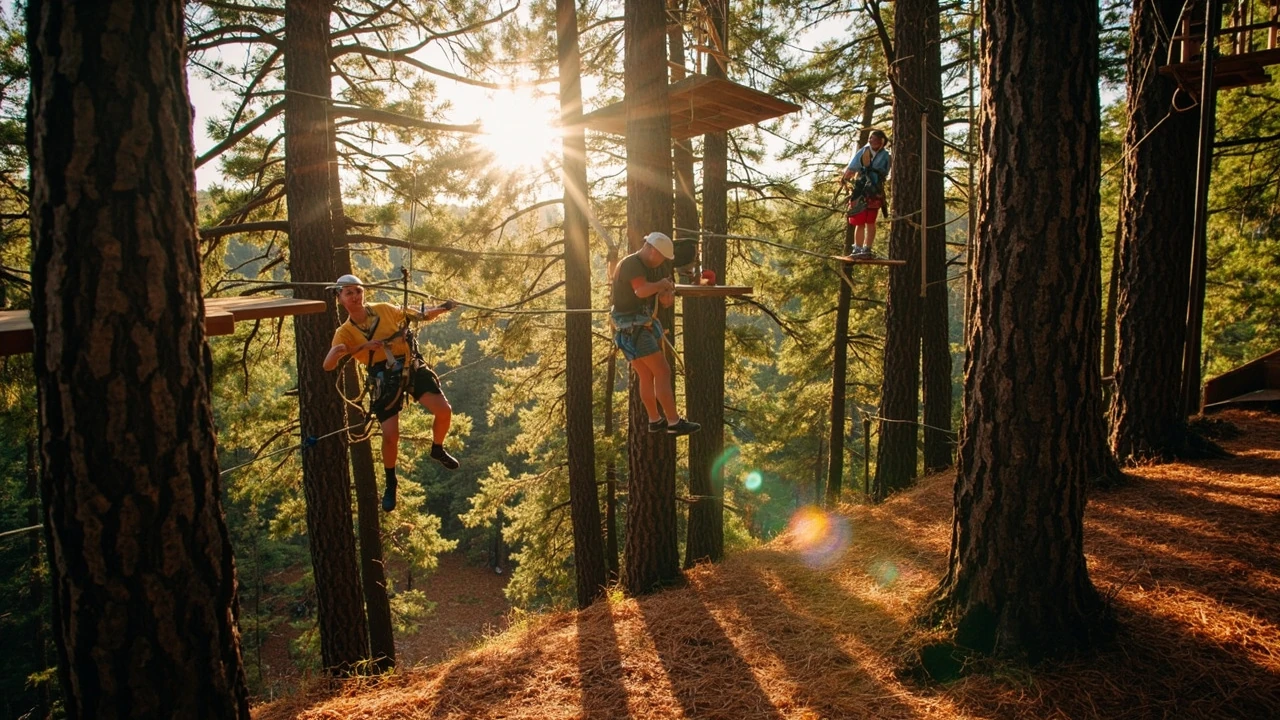
Adventure parks explained: what they are and how they actually work
A first-time visitor at a forest rope course almost always asks the same question in the first five minutes: is this safe, and am I going to fall? The honest answer is that modern adventure parks are built around layered safety systems, controlled fall distances, and trained supervisors, but the experience still feels physical because the design is meant to. This guide explains what counts as an adventure park, how the main attraction types differ, who they are realistically built for, what they cost, and how to choose one that fits your group without overspending or under-preparing.
The term “adventure park” is used loosely in tourism marketing. Some operators use it for zip-line tours, some for treetop obstacle courses, some for fixed climbing towers, and some for inflatable or urban trampoline venues. If you are planning a day out, the label alone tells you very little. The most useful first step is to read past the name and look at the activity type, the height profile, and the safety system in use, because those three details determine almost everything else about your day.
What counts as an adventure park
An adventure park is a commercial outdoor (or sometimes indoor) site that combines physical challenge, height, and a managed safety system. The category usually includes high ropes courses, treetop obstacle routes, zip-line circuits, aerial adventure trails, and fixed climbing or via ferrata structures. It does not usually include ordinary theme parks, water parks, or trampoline centres, even though those venues sometimes borrow the word “adventure” in their branding.
A useful working definition is: a site where guests are physically off the ground for at least part of the experience, and where the operator runs a structured safety system rather than letting participants self-manage their own risk. That distinction matters because the legal and insurance framework for staffed aerial courses is different from what covers a self-led walking trail or a playground.
The main types you will actually find
Although layouts vary, most adventure parks in Europe and North America run some combination of the formats below. They often sit on the same site, with different age or height bands assigned to each.
- High ropes courses, with platforms and obstacles fixed in trees or on poles, ranging from a few metres to over fifteen metres above the ground.
- Zip-line tours, which can be a single line or a connected series running between platforms or hillsides.
- Via ferrata and fixed climbing walls, where guests follow an assisted climbing route using a steel cable and fixed anchors.
- Aerial adventure trails, which combine lower obstacles, nets, and bridges in a continuous loop, often designed for younger visitors or families.
- Free-fall or “drop” attractions, where the harness is anchored but the platform is designed to release so the guest is briefly caught by the line.
How safety systems actually work on a high ropes course
The single biggest difference between a well-run adventure park and a poorly run one is the safety system. Two broad families dominate the industry, and they produce very different experiences.
Continuous belay systems
A continuous belay keeps the guest connected to the safety line at all times. The carabiner or trolley cannot be detached from the cable while the guest is on the course. The most common versions are the “smart belay” trolley and the “Cliffhanger” or “Bornack” style system. Guests clip in once at the start, then the trolley travels with them through every obstacle, and they only unclip at the end of the course.
The practical effect is that a guest who slips off a platform is caught almost immediately, and there is no chance of being unclipped from the line at the wrong moment. For first-time visitors, this is the gentlest way to experience height.
Traditional double-clip systems
Some parks use a traditional setup in which the guest manually moves two carabiners from one anchor to the next, keeping at least one carabiner attached to the safety line at all times. This requires a brief but real focus from the participant, because the moment of transfer is the one window where a mistake can matter.
These systems are common on older or larger courses. They are not inherently less safe, but they place more responsibility on the guest, which is why many parks now use continuous belays for beginners and reserve traditional systems for more experienced or trained users.
Both systems are described in more practical detail in our High Ropes Belay Systems Explained for First-Time Visitors guide, which walks through the clip-and-transfer sequence in plain terms.
Who adventure parks are realistically built for
Most operators publish minimum and maximum height, weight, and age thresholds, and those numbers are not arbitrary. They reflect the working range of the harness, the spacing of the obstacles, and the strength required to clip and unclip. Ignoring them is the single most common cause of disappointment on the day, because the guest is turned away at the harness check.
| Group type | Typical age range | Minimum height | Maximum weight | Realistic best fit |
|---|---|---|---|---|
| Toddler / early primary | 3 to 6 | 95 to 110 cm | Around 40 to 45 kg | Low aerial trail with parents, harness adapted for small bodies |
| Primary school child | 7 to 10 | 120 to 130 cm | Around 50 to 60 kg | Junior high ropes course, often continuous belay |
| Teenager | 11 to 17 | 140 cm or above | Up to around 120 kg | Full adult course, often on par with adult difficulty |
| Adult beginner | 18 and over | 140 to 150 cm | Usually 100 to 130 kg | Continuous belay course, lower height options available |
| Older adult or less mobile guest | Any age, with limits | 140 to 150 cm | Within harness range | Lower altitude course, ground-based or zip-line options |
These numbers are typical, not universal. The exact thresholds are set by the operator, the harness manufacturer, and the local safety standard, so always check the park’s own published limits before you book.
How a typical day at an adventure park unfolds
Most parks follow a similar rhythm, and knowing the sequence in advance removes most of the friction. A typical visit looks like this:
- Arrive fifteen to twenty minutes before your booked slot to allow for parking, sign-in, and harness fitting.
- Receive a safety briefing, usually around ten to fifteen minutes, covering the clip system, the course rules, and the hand signals used by ground staff.
- Do a short practice loop on a low course so the harness and the belay system feel familiar before the main course begins.
- Complete the main course at your own pace, with staff on the ground watching and assisting with transfers if needed.
- Return the harness and any rented gear, then leave. Most parks do not require a debrief, but the operator may record any incidents for internal review.
The duration of the main course varies sharply. A short family course might take forty-five minutes; a full adult high ropes circuit with many obstacles can take two hours or more, especially on the first visit, when the pace is slower.
What adventure parks actually cost
Price is one of the most variable parts of the experience, and it is driven by course length, location, season, and whether the operator is bundling extras. The numbers below are typical ranges, not quotes, and you should always check the specific park for current pricing.
| Experience | Typical adult price | Typical child price | What is usually included |
|---|---|---|---|
| Single entry-level course | €20 to €35 | €15 to €25 | Harness, briefing, one course |
| Full adult high ropes circuit | €35 to €55 | €25 to €40 | Harness, briefing, multiple courses, sometimes zip-line |
| Family pass (two adults, two children) | €90 to €140 total | Included | All-day access, harness, briefing |
| Add-on zip-line or via ferrata | €10 to €25 extra | €8 to €20 extra | Additional equipment and brief training |
| Group or school booking | €15 to €30 per person | €15 to €30 per person | Dedicated supervisor, reserved slot, sometimes food |
Hidden costs to watch for include parking, gloves, lockers, photos taken by staff, and any food or drink on site. A realistic day-trip budget is laid out in our How to Build a Realistic Day Trip Budget guide, which includes the items that most visitors forget to factor in.
How to pick the right adventure park for your group
Choosing a park is less about star ratings and more about matching the site to the people on the day. Three filters are enough to narrow a long list down to one or two serious candidates.
Filter by age and ability, not by excitement
The most common booking mistake is choosing a park that is “the best in the region” without checking whether it is built for the youngest or oldest member of the group. A site that is excellent for fit adults in their twenties can be a poor choice for a mixed-age family group. The single most useful question to ask before booking is: what is the lowest age, height, or weight threshold, and which course on the site is designed for it?
Our guide on how to plan a family rope park day around age and height rules goes through the practical steps of matching a course to a mixed group, and the questions to ask the operator before you commit.
Filter by safety system
For first-timers, a continuous belay system is usually the better default. It removes the most common clip-and-transfer mistakes and lets the guest focus on the experience rather than on remembering the sequence. If a park only runs a traditional double-clip course, that is not a reason to avoid it, but it does mean a longer briefing and a slower first loop.
Filter by what happens in bad weather
Outdoor courses close in high winds, thunderstorms, and occasionally in heavy rain. Before you book, check how the operator communicates closures, whether the slot can be rescheduled, and what happens if you arrive and the course is closed. The questions that experienced visitors actually ask are listed in our Rope Park Weather: Rain, Wind and Closure Questions to Ask article, which is worth reading even on a sunny forecast.
What to wear and what to bring
Adventure parks are physical, outdoor, and usually in the trees, so the right clothing makes the day noticeably easier. The list below is the minimum that experienced visitors carry.
- Closed-toe shoes with grip. Trainers or light hiking shoes work well; sandals, flip-flops, and most climbing shoes are not allowed.
- Long trousers or leggings, to protect against harness rubbing on the upper thigh during long descents.
- A fitted long-sleeve top, especially in cooler weather. Loose sleeves catch on clips.
- A small backpack with water, a light snack, and a spare hair tie if needed.
- Sunglasses or a cap for the ground-based parts of the day.
- Optional fingerless gloves, especially for longer courses, since the cable can bite bare hands on repeated transfers.
Most parks provide a small locker, but they do not always have space for large bags, so travelling light is the simpler approach.
How to read an adventure park’s safety standards without being an engineer
Visitors are not expected to audit the engineering of a course, but there are a few surface-level signals that correlate strongly with a well-run operation.
| What to look at | What a well-run park does | What to be cautious about |
|---|---|---|
| Briefing room | Covers the system, the rules, and the hand signals in plain language, and asks guests to repeat the key steps. | Rushes through in two minutes, or relies on a printed card. |
| Equipment | Harnesses in good condition, lanyards dated, and visible inspection tags. | Worn stitching, frayed webbing, or gear stored in damp conditions. |
| Course signage | Clear difficulty rating, height information, and any hazards called out at the entry platform. | No rating at all, or signs only in a language the guest does not read. |
| Staff presence | At least one supervisor per course, with at least one ground-based rescuer trained in evacuation. | One staff member covering several courses from a central office. |
| Rescue plan | Posted or available, with a clear protocol for a guest who is stuck or injured on the course. | No visible plan, or a vague “we’ll call someone” answer. |
For general background on the wider industry, the Wikipedia overview of adventure parks is a reasonable starting point, though it does not replace the operator’s own published safety information. For a more technical view of how the European voluntary standard for rope courses is structured, the EN 15567 standard summary on the Climbing Wall Industry site is a useful reference.
Common mistakes first-time visitors make
Most disappointing adventure park days are caused by the same handful of avoidable mistakes, and they are easier to dodge once you know what they are.
Booking without checking the height and weight limits
This is the single most common reason a guest is turned away at the harness check. The published limits are not negotiable, because the harness and the carabiner are designed to work within a specific range. The fix is simple: measure the shortest and heaviest members of the group before you book, and compare those numbers to the park’s published limits.
Arriving late
Briefings run on a fixed schedule, and most parks will not start a second briefing for late arrivals, because the next group is already waiting. Arriving fifteen to twenty minutes early is the difference between a relaxed day and a rushed one.
Wearing the wrong clothes
Loose clothing, open shoes, and dangling items are the next most common reasons for a slow start. A course marshall will usually ask a guest to remove or change an item before they can clip on, which burns ten to fifteen minutes of valuable course time.
Skipping the practice loop
Even guests with previous climbing or zip-line experience benefit from doing the short practice loop, because the clip system is specific to the park. Skipping it is the most common cause of mid-course hesitation, which slows the group and increases the chance of a brief stall on a transfer.
Underestimating the physical demand
A full adult course is genuinely tiring. Guests should expect grip fatigue in the hands and arms, mild soreness in the shoulders and core, and a few minutes of recovery time after the final descent. Going in expecting a gentle walk is the fastest way to feel caught out.
How adventure parks fit into a wider outdoor day
For visitors planning more than a course, a forest-based adventure park is often the centrepiece of a day that includes a short walk, a packed lunch, and a slower activity such as a zip-line or a low aerial trail. The combination works particularly well for mixed-age groups, because the slower guests can stay on the lower course while the more confident ones complete the higher one, and everyone meets for lunch.
For ideas on how to build that kind of day, our One-Day Forest Escape Planner lays out a realistic schedule from morning arrival to late afternoon, and our guide to outdoor events worth travelling for is a useful way to think about the trip beyond the course itself.
Special situations worth thinking about before you book
Most adventure parks can accommodate common accessibility and health situations, but they need advance notice. A quick call to the operator is usually enough to confirm whether the visit will work for the people in your group.
- Pregnancy. Most parks decline guests who are pregnant, because the harness and the catch force are not designed for the change in body shape. Check before booking.
- Recent injuries or surgery. A shoulder, back, or wrist injury within the past six months is usually a reason to skip the high course and stay on the ground-based or low course.
- Heart and circulation conditions. Any condition that limits strenuous activity should be discussed with a doctor before the visit, and disclosed to the operator in confidence.
- Fear of heights. A short, continuous-belay lower course is a reasonable way to start, but the higher courses are genuinely high, and there is no way to predict the reaction before the first platform.
- Accessibility. A few parks now run adapted courses with wheelchair-friendly platforms, but they are still the exception, and a phone call is essential.
What the experience actually feels like
It is hard to describe the sensation of a high ropes course without sounding either underwhelming or overblown, so the practical version is this. The first platform feels higher than it is. The first transfer between obstacles feels slow. By the third or fourth obstacle, the clip-and-transfer sequence has become routine, and the height stops being the main thing you notice. By the second half of the course, most guests are starting to enjoy the obstacles themselves rather than just surviving them. By the end, the dominant feeling is usually a quiet, slightly tired satisfaction, and a sense that the rest of the day looks easier than it did in the morning.
That arc is part of the design. A well-built course is paced so the difficulty rises slowly, the obstacles repeat in pattern, and the height is constant rather than escalating. The hardest moment is almost always the first one, not the last one.
Frequently asked questions
What is the difference between an adventure park and a theme park?
An adventure park is built around physical, height-based activities that the guest actively does, with a managed safety system. A theme park is built around rides that the guest sits in or on, with a mechanical restraint system. The two share a word (“park”) but operate under different safety standards and have very different physical demands.
Are adventure parks safe for children?
For children who meet the published height, weight, and age limits, yes. The harness, the continuous belay, and the on-course supervisors are all designed around smaller bodies, and many parks run a separate junior course with obstacles scaled to a child’s reach and grip. For children below the published thresholds, the harness does not fit safely, and the operator will turn them away at the fitting.
How scary is a high ropes course for someone afraid of heights?
The honest answer is that it depends on the course and the person. A low, continuous-belay course is a reasonable starting point and many guests with a mild fear of heights complete it without trouble. The higher courses, especially those above twelve metres, are genuinely high, and there is no way to predict the reaction in advance. The lower course is always available as a fallback.
What happens if it rains on the day of my visit?
Most parks run in light rain but close in heavy rain, high winds, or thunderstorms. The decision is made by the operator on the day, not in advance, and the usual process is to pause the course and either wait for the weather to pass or reschedule. Checking the park’s weather policy before you book is the simplest way to avoid a wasted trip.
Do I need any experience to go on a high ropes course?
No. Almost every adventure park is built around first-time visitors, and the safety briefing and practice loop exist to bring a complete beginner to a competent level in under thirty minutes. The only prerequisites are the published height, weight, and age limits, and the ability to follow a short set of safety instructions.
How long does a full adventure park visit take?
For a single course, allow around two hours from arrival to departure, including the briefing, the practice loop, the course itself, and the harness return. For a longer visit with two or more courses, a zip-line, and lunch on site, allow three to four hours. Group bookings and school sessions often run to a fixed timetable and finish on the minute.
Can I go on a high ropes course if I am on my own?
Yes, though some parks charge a small “solo supplement” because they have to pair you with a ground supervisor. The experience is the same, and many first-time visitors prefer to start alone before bringing a group.
What should I do if I freeze on a platform?
It is more common than the marketing photos suggest, and the staff are trained for it. The right move is to stop, hold the safety line with both hands, and call a supervisor. They will talk you through the next move, and in most cases a short pause is all it takes to finish the obstacle. No course is designed so that a frozen guest is left to work it out alone.
Is it worth booking in advance?
Yes, especially in summer, on weekends, and during school holidays. Most parks run a fixed number of briefing slots per day, and the morning slots often sell out first. Booking a week or two ahead is the difference between a relaxed choice of times and a much narrower list of what is left.
Are adventure parks suitable for a first date or a team-building day?
Both, with the same caveat. The shared physical experience works well as a conversation starter and a low-pressure way to spend a few hours together, and many parks run dedicated team-building packages. The only thing to check in advance is the group minimum and the ratio of supervisors to guests, because that affects how the day feels as much as the course itself does.
Related reading
Explore High Ropes Adventure
Trip tools
Essential adventure planning guides
Use these practical guides to compare rope park activities, prepare for a first high ropes day, check a booking, choose suitable footwear and contact the editorial team. Each page links to the relevant live tools and current planning sections.
Latest articles
- Costco Disneyland tickets: how members really save and what to watch
- High ropes course waiver questions to read before you sign
- Extracurricular activities: how to choose the right fit for kids and teens
- Shibuya Sky tickets: how to choose the right time, deck, and pass
- How adventure park staff perform pre opening checks
- adventure time characters
- Finding the best dog parks near me: a practical local search guide
- Can glasses be worn on a zipline safely?
- Monterey Bay Aquarium tickets: types, prices, and how to plan your visit
- Outdoor Christmas decorations that survive weather and storage