Forest escapes: how to plan a focused day out in the woods
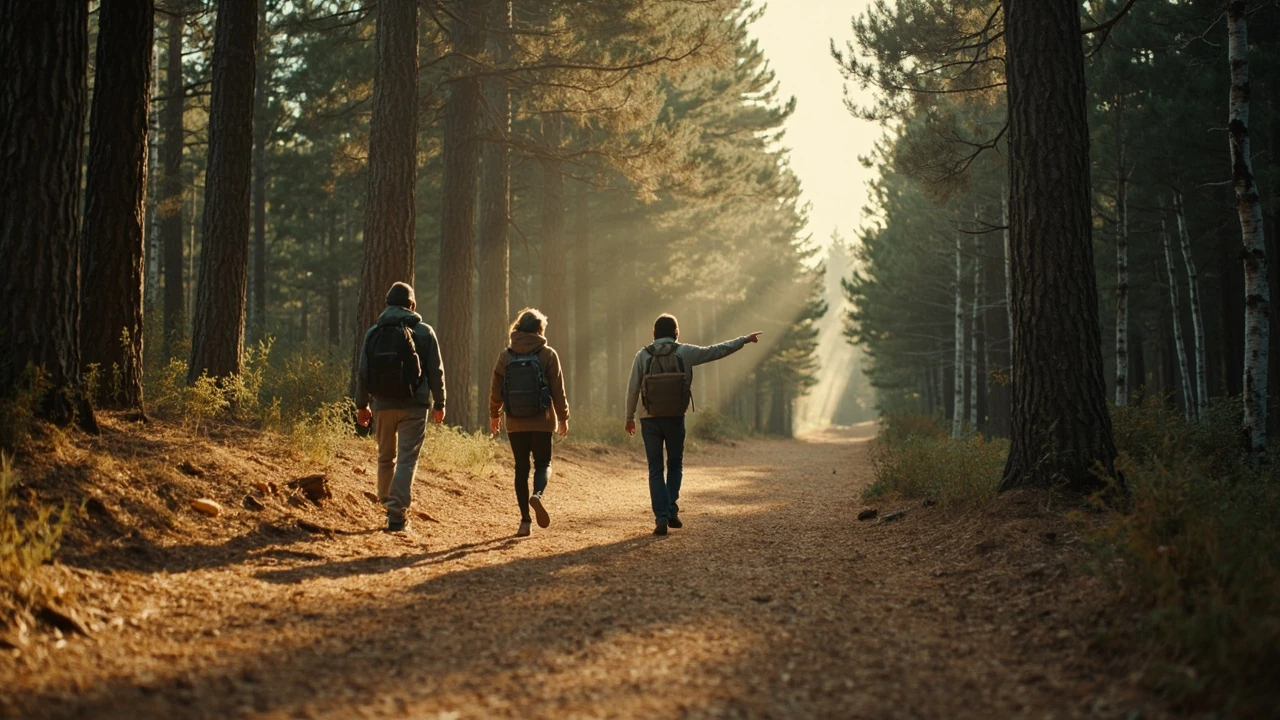
A good forest escape starts with a quiet decision: which woods, which hours, and which trade-offs. People who plan those three things tend to come back from a day out feeling restored, not just tired, while people who wing it often return with wet socks, missed trains, or a child who melted down at the worst possible moment. The difference is rarely the budget or the destination. It is the structure of the day, and the small choices made the night before.
This guide is built for readers who want one full, well-organised article on planning forest escapes, whether the goal is a half-day reset, a full day with the family, or a long weekend with a rope park in the middle of it. It works through the decisions in the order they actually matter, and it uses the same kind of questions an experienced trip planner would ask before sending a group out for the day.
Forest escapes: what the term actually covers and why it matters
In everyday English, forest escapes usually means short, intentional trips into wooded areas with the goal of rest, change of pace, or active time outdoors. The phrase covers a wide range of formats, from a two-hour walk near a city to a two-night cabin stay, and from a solo reset to a family outing with ten people of mixed ages. The common thread is the canopy overhead and the absence of a typical indoor schedule.
That definition matters because the planning checklist changes depending on which version of a forest escape you are running. A four-hour urban woods visit has almost no overlap with a multi-day backcountry stay, and most of the failed day trips I have heard about fail for the same reason: the planner used the wrong template. The rest of this article treats forest escapes as a planning problem first and a destination problem second.
Decide what kind of forest escape you actually need
Before you pick a location, decide what success looks like. A clear goal removes most of the downstream decisions, because it tells you how long the trip should be, how far you can travel, what kind of terrain you need, and how much gear is worth carrying. Use the categories below as a quick filter, not as a final answer.
- Reset escape. Two to four hours near home. The goal is a change of scenery, light movement, and a low-stress return. Public transport and a small backpack are enough.
- Active day escape. A full day with a defined activity, such as a marked trail, a rope park, or a guided nature session. You will want a proper plan for arrival, food, and the return leg.
- Family escape. A full day with children or mixed-age adults. The route, pace, and breaks need to be designed around the slowest and youngest member, not the fittest adult.
- Weekend escape. One or two nights, often with a base camp such as a cabin, a campsite, or a small inn. Packing, food, and a backup plan for bad weather all matter more here.
If you cannot pick one of these, your trip is probably trying to do too much. Most of the worst forest escapes in casual conversation are the ones that started as a “relaxing” walk and ended as a forced march because no one defined the upper time limit.
How to choose a forest location that fits the goal
Once the goal is fixed, the location is mostly a filtering exercise. The point is to find a forest that matches the goal on terrain, travel time, and amenities, not to find the most photogenic one. Three filters are usually enough.
Travel time and arrival friction
Travel time is the single biggest predictor of whether a day trip feels like an escape or like a commute. A general rule used by outdoor planners is that door-to-trail time above ninety minutes starts to cancel out the rest effect of a short visit, because fatigue, traffic, and parking all eat into the hours you actually have outside. The same forest at forty minutes away usually feels better than the more famous one at two hours away, unless the two-hour option offers something the nearer one does not, such as a longer trail network or a specific activity you cannot get locally.
Terrain and effort
Match terrain to the group. A forest with long, gentle grades and a wide path is the right choice for a reset or a family trip. Steep, root-heavy, narrow paths are better saved for groups that specifically want physical effort. Picking the wrong terrain is one of the most common ways a forest escape goes wrong: the group is technically in the woods, but no one is enjoying it because the path is fighting them the whole time.
Amenities and escape from routine
Amenities matter, but not always in the direction people expect. A site with toilets, marked parking, a small café, and clear waymarking usually makes for a more relaxing visit than a “wild” forest that is harder to reach and has no facilities. For a reset escape or a family escape, amenities usually add to the quality. For a weekend escape with a base camp, less infrastructure is fine, as long as you have planned for water, waste, and shelter.
Build the day around timing, not the other way around
Forest escapes fail less often because of bad weather than because of bad timing. Most outdoor groups underestimate how long it takes to leave the house, drive, park, gear up, walk in, eat, and get back. A good planner builds the day backwards from the time the group needs to be home, then checks whether anything is left for the woods.
| Phase of the day | Realistic time for a half-day trip | Realistic time for a full-day trip | What usually gets underestimated |
|---|---|---|---|
| Leave the house | 15 to 30 minutes | 15 to 30 minutes | Searching for keys, wallets, and forgotten items |
| Drive or train | 30 to 90 minutes | 60 to 150 minutes | Weekend traffic, last-leg parking |
| Park and gear up | 10 to 20 minutes | 15 to 30 minutes | Layering, sunscreen, snacks, bathroom |
| Walk in to the start point | 10 to 20 minutes | 20 to 45 minutes | Trail head confusion, photo stops |
| Main time in the forest | 90 to 150 minutes | 180 to 300 minutes | Eating, resting, getting lost, helping kids |
| Return and drive home | 40 to 100 minutes | 60 to 150 minutes | End-of-day tiredness, evening traffic |
If the table shows that you only have 90 minutes of real forest time on a half-day plan, it is worth asking whether the trip is worth doing at all. A short visit is fine, but it should be a deliberate short visit, with a short trail, a small driving distance, and a small goal. Pretending a long drive plus a rushed walk is “a day in the woods” is how people end up describing a forest escape as exhausting.
Pack for a forest escape without overpacking
The point of packing for a forest escape is to remove problems, not to feel prepared. A small list done well beats a long list done carelessly, because the weight and bulk of an overstuffed bag will shape the day more than the items inside it. A useful trick is to think in three layers: what you wear, what you carry, and what stays in the car.
What you wear
Clothing is the highest-leverage decision in the whole packing list, because a wrong layer choice affects comfort for the entire visit. The standard is a synthetic or merino base layer, a mid-layer that can come off easily, and a shell that blocks wind and light rain. Cotton is comfortable at the car and miserable an hour into a wet walk, because it holds water and dries slowly. Footwear should be broken in, with grippy soles and decent support, regardless of how short the trail is. The forest is where you find out that the new shoes were not ready.
What you carry
A small daypack with water, snacks, a simple first-aid kit, a power bank, a headlamp, a map or downloaded route, and a light rain layer is enough for almost every forest escape under a full day. Bringing more than this usually means you are carrying solutions for problems you will not have. A useful packing exercise is to lay out everything, then remove any item that does not solve a specific, named problem.
What stays in the car
Spare socks, a dry T-shirt, a larger first-aid kit, a folding chair, and a small towel are worth keeping in the car even if they do not go on the trail. They turn a wet, tired, or unexpectedly long day into a manageable one. They also turn a missed train or a flat tyre from a disaster into an inconvenience.
Food and water decisions that change the whole day
Food is one of the most underestimated parts of a forest escape. A group with steady snacks and a real lunch can stay out for hours; a group that planned to “grab something on the way” usually hits a wall in the middle of the trail. The fix is not fancy food. It is reliable, easy-to-eat food, with a backup.
- Carry at least 500 ml of water per person per two hours of activity, plus extra in the car.
- Pack snacks that do not melt, crush, or require a fork: trail mix, fruit, bars, hard bread, cheese.
- Plan a real lunch stop with seating, not a moving picnic while walking.
- Keep one extra meal in the car in case the day runs long.
For full-day or weekend forest escapes, a small stove and a simple hot drink are often the single highest-comfort item people bring, more than any gadget. A hot drink at the halfway point of a cold, damp walk does more for morale than any other piece of gear.
Weather, risk, and the honest questions to ask
Forest escapes run in real weather, which means rain, wind, and sudden temperature changes are part of the plan, not a deviation from it. Good trip planners ask the same set of questions before every visit, because the answers change the gear list, the route, and sometimes the decision to go at all. The post Rope Park Weather: Rain, Wind and Closure Questions to Ask is written for a specific activity, but the same logic applies: most weather problems are decision problems, not weather problems.
The questions worth asking before you leave
- What is the actual forecast for the forest, not for the nearest city?
- What is the wind direction, and which side of the ridge is sheltered?
- How recent was the rain, and are the lower paths likely to be muddy or flooded?
- What is the temperature drop expected between midday and the return time?
- What is the daylight situation, and when does the trail get dark under the canopy?
For forest escapes that include an activity like a rope park, the weather questions become more specific, because operators close courses for lightning, sustained high wind, or icy conditions. Always check the activity provider’s own status page or message channel on the morning of the visit, rather than relying on a generic forecast.
Forest escapes with kids: design the day around the slowest walker
Family forest escapes work when the day is designed around the youngest or slowest member, not the fittest adult. That means shorter main loops, more breaks, and at least one thing on the route that holds a child’s attention: a stream crossing, a viewpoint, a rope park, a simple scavenger hunt. It also means an honest assessment of age and height rules before booking any ticketed activity. The piece on How to Plan a Family Rope Park Day Around Age and Height Rules covers the specific rules you will hit at a rope park, which is a useful preview before you commit to a day that includes one.
Combine a forest escape with a rope park or outdoor event
One of the easiest ways to turn a flat forest walk into a memorable day is to anchor it with a single ticketed activity, such as a rope park, a guided foraging session, or an outdoor event. Anchoring the day around one activity gives the rest of the visit a clear shape: you arrive, do the activity, eat, walk, and head home. Without an anchor, the day tends to drift, and people leave feeling as if nothing really happened.
If the anchor is a rope park, the planning order matters: confirm the booking and the arrival window first, then plan the walk, food, and return leg around it, not the other way around. The post Your First High Ropes Course: What to Expect is a useful read for any adult who has never done a rope course and is considering one as the centrepiece of a forest escape.
Forest escapes for a single day: a sample plan
The following plan is a generic template for a single-day forest escape with two adults and two children, anchored by a rope park. Adjust the times for your own location, but keep the structure: anchor activity first, food in the middle, walk at the end.
| Time | Activity | Notes |
|---|---|---|
| 08:00 | Leave home with packed daypack and a small cooler | Check the rope park’s status page the night before |
| 09:00 | Arrive at the forest site, park, use the facilities | Apply sunscreen, refill water, fit any hired harnesses early |
| 09:30 | Anchor activity: rope park or guided session | Adults take turns on the course if needed; one stays with non-participants |
| 12:00 | Late lunch at a picnic spot or on-site café | Avoid the 13:00 to 14:00 rush; early or late is calmer |
| 13:00 | Forest walk on a short, easy loop | Pick a loop under 4 km with one point of interest |
| 15:00 | Snack stop, optional stream play for children | Spare socks and a small towel live in the car for this |
| 16:00 | Head home with a buffer for traffic | Build in a 30-minute buffer; the day is over when you are home, not when you leave |
The buffer at the end is not optional. Most family forest escapes do not fail in the woods; they fail in the car on the way back, when tired children, missed trains, or a sudden traffic jam undo the good feeling of the day.
Weekend forest escapes: when one day is not enough
When the plan stretches to a weekend, the same logic applies, but a few new decisions show up: where to sleep, how to handle food without a kitchen, and what to do if the weather turns. A simple way to keep the weekend from sliding into logistics is to pick one anchor activity per day, with a slow morning and a slow evening around it. The article The One-Day Forest Escape Planner covers the single-day version in more detail and is a useful base for the weekend plan.
For longer stays, also think about the unscheduled hours. A weekend forest escape with no plan for the morning coffee, the late-afternoon slump, or the post-dinner dark tends to feel oddly busy. A small kit of books, a deck of cards, a thermos, and a headlamp usually does more for the mood than another piece of equipment.
Cost and budget trade-offs
Forest escapes are usually cheaper than people expect, but the cost shape is uneven. The main expenses, in rough order of size, are transport, food, anchor activities, and accommodation. Transport is often the largest single line, especially for weekend trips, which is one reason the best forest escapes for most people are within 90 minutes of home. The post How to Build a Realistic Day Trip Budget walks through the same numbers in more detail.
Anchor activities such as a rope park or a guided session can dominate the budget on a single day, but they also do the most to make the day feel different from a regular walk. A reasonable rule of thumb is to spend the largest discretionary line on the thing that defines the day, and to keep the rest modest, because the forest itself is doing most of the work.
Common mistakes that ruin otherwise good forest escapes
Most failed forest escapes share a small number of causes. Naming them out loud is useful, because they are all avoidable with a small amount of pre-planning.
- Driving too far for a short visit. Two hours of driving for 90 minutes in the woods usually feels like a commute, not an escape.
- Choosing the wrong terrain. A steep, narrow path is the wrong call for a reset or a family day, even if the photos are good.
- Skipping the food plan. “We will figure it out when we are hungry” is a recipe for a hungry, grumpy group by mid-afternoon.
- Underestimating the return leg. The day is over when the group is home, fed, and changed, not when the car starts.
- Treating the weather as a surprise. Rain, wind, and temperature drops are predictable. The trip should be designed for the forecast, not against it.
- Over-scheduling. Three anchor activities in one day usually means none of them gets the attention it deserves.
Making forest escapes a regular habit
The difference between people who talk about forest escapes as a one-off and people who treat them as a regular part of the year is mostly habit, not budget. A few small routines help. Keep a small “go bag” packed with the basics, so leaving the house is the easiest part. Pick two or three nearby forests and learn them well, so you do not spend every trip researching the route. Rotate companions, so the same group is not always the one that has to plan. The result is that forest escapes stop being events and start being a default option for a free weekend, which is usually the point.
If you only do one forest escape a year, the marginal return on planning is high, because the format is new. If you start doing one a month, the marginal return on planning drops, and the return on small habits rises. The same packing list, the same parking spot, and the same anchor activity will produce a more reliable day than a constantly refreshed plan, because the small surprises are the ones that exhaust you.
A short checklist before you leave the house
This is the smallest useful list for a single-day forest escape. It is not a substitute for real planning, but it will catch the most common omissions in under a minute.
- Water for everyone, plus a spare bottle in the car.
- Real snacks, not just “we will buy something”.
- Layers for the temperature drop after lunch.
- A simple first-aid kit and any personal medication.
- A charged phone with the route downloaded, and a paper backup if you have one.
- A buffer in the schedule for the return leg.
Frequently asked questions
What is the best length for a first forest escape?
For most adults and families, a half-day visit of three to four hours total, including travel, is the easiest format to get right. It is short enough that the planning is simple, but long enough to feel like a real change of pace. Once the format works, longer days and weekend trips are easy to add.
How far should a forest escape be from home?
For a single-day escape, aim for under 90 minutes of door-to-door travel. Beyond that, the driving begins to cancel out the rest effect of a short visit, and the day starts to feel like a commute. For a weekend escape, you can go further, because the longer stay justifies the longer drive.
What is the best season for forest escapes?
Spring and autumn tend to give the best mix of mild temperatures, stable weather, and active forest life. Summer works well for water-based or shaded routes, but it can be hot and buggy in low-elevation forests. Winter forest escapes are possible with the right gear, but the planning load increases sharply because of ice, short daylight, and cold rain.
How do I keep children engaged during a forest escape?
Engagement usually comes from one or two anchor points on the route, not from the route itself. A stream crossing, a viewpoint, a small scavenger hunt, or a ticketed activity such as a rope park will hold attention far better than a long, featureless loop. Build the day around the anchor, not around the distance.
Are forest escapes safe during bad weather?
Light rain and cool wind are usually fine with the right layers. The conditions that require a rethink are lightning, sustained high wind, icy paths, and recent heavy rain that has flooded low ground. In any of those cases, it is usually better to postpone, switch to a more sheltered route, or replace the outdoor time with a shorter, easier visit.
What food should I pack for a forest escape?
Reliable, easy-to-eat food. A useful baseline is water, trail snacks, a proper lunch, and one spare meal in the car. Avoid anything that melts, crushes, or requires a fork. A hot drink from a small stove is often the single most appreciated item on a cold, damp day.
How can I include a rope park in a forest escape without overplanning?
Book the rope park first, then build the rest of the day around the time window of the activity. Treat the rope park as the anchor of the day, and keep the rest of the plan simple: one short walk, one proper meal, and a buffer for the return. The post on planning a first rope course visit is a useful read for any adult who has not done one before.
Do forest escapes need any special permits or fees?
Most public forests in Europe and North America do not require a permit for day visits on marked trails. Some protected areas, nature reserves, and private forests do charge a small entry fee or require a permit for larger groups. It is worth checking the local rules for the specific forest, especially if you are bringing a group of more than ten people.
What is the single biggest mistake people make on forest escapes?
Underestimating the return leg. Most forest escapes do not fail in the woods; they fail in the car on the way home, when tired children, missed trains, or evening traffic undo the good feeling of the day. Building a 30 to 60 minute buffer into the return is the simplest fix.
How do I turn a single forest escape into a regular habit?
Keep a small “go bag” packed, learn two or three nearby forests well, and pick one anchor activity to repeat. The marginal return on a constantly refreshed plan is low; the return on small habits, the same parking spot, and the same packing list is high. Forest escapes work best as a default option, not as a special event.
Related reading
Explore High Ropes Adventure
Trip tools
Essential adventure planning guides
Use these practical guides to compare rope park activities, prepare for a first high ropes day, check a booking, choose suitable footwear and contact the editorial team. Each page links to the relevant live tools and current planning sections.
Latest articles
- How high ropes course difficulty ratings work
- Thousand Trails: How the Membership Works and What to Check Before You Join
- Turners Outdoor: A Practical Guide for Adventure Day Visitors
- Low ropes vs high ropes team building activities: how to choose
- Space Needle tickets: a practical guide to choosing, booking, and timing your visit
- Outdoor sauna: how it works, what it costs, and how to plan a safe setup
- What to pack for a family ropes course day
- Best mountain biking trails: how to choose, where to ride, and what to check
- Costco Disneyland tickets: how members really save and what to watch
- High ropes course waiver questions to read before you sign