Best stroller travel systems for active families
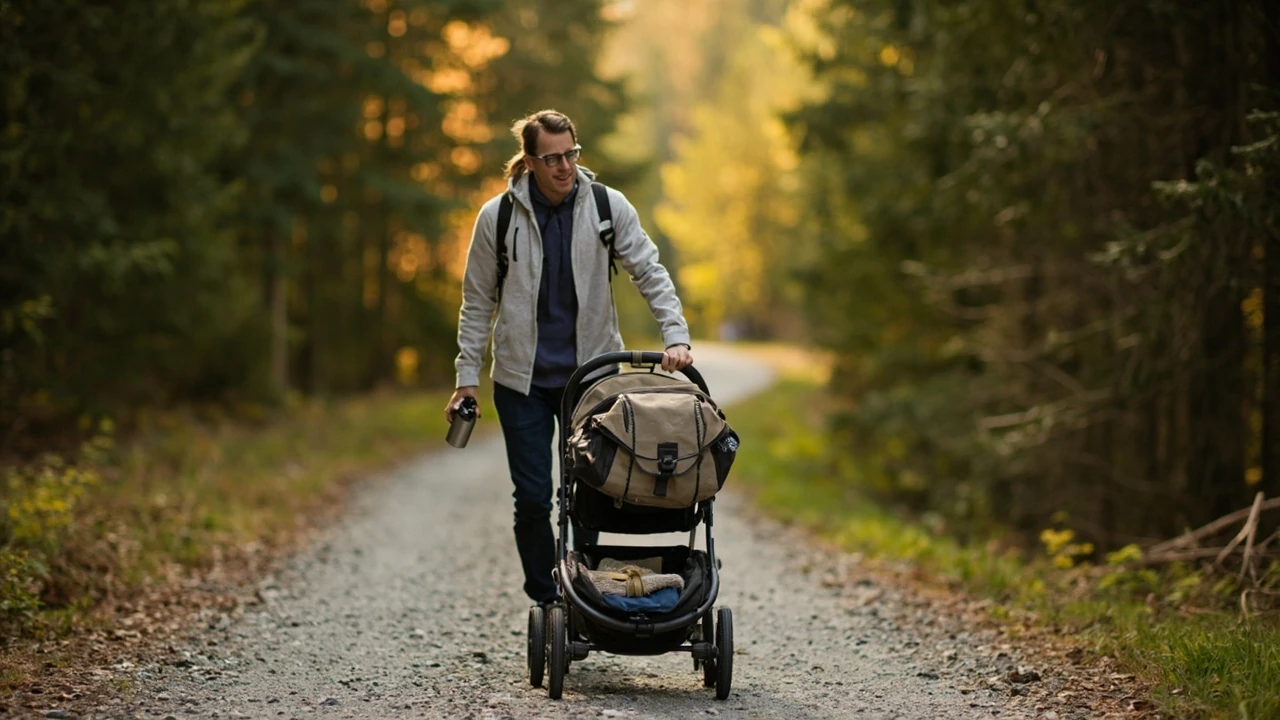
Best stroller travel systems
A two-hour walk from the car to a trailhead with a sleeping infant on your chest sounds relaxing until you try to navigate a turnstile, a low café table, or a gravel path in a downpour. The right stroller travel system quietly removes those small frictions, and the wrong one amplifies every one of them. For active families who actually leave the house with a baby, a travel system is not a registry indulgence; it is the load-bearing piece of equipment that decides whether a day trip feels manageable or exhausting.
A stroller travel system pairs an infant car seat with a compatible stroller frame, usually with a click-in adapter, so the same carrier moves from the car to the stroller to the park bench without waking the baby. Some systems add a bassinet or a toddler seat on the same frame. The term gets used loosely, so the practical question for most parents is simpler: which combinations are genuinely good at carrying a small child through real life, not just the first eight weeks home from the hospital.
This guide compares the best stroller travel systems for families who treat a stroller as part of a wider kit for getting outside. The focus is on what matters for day trips, weekends, and the everyday shuffle between car, café, and trail: weight, fold, car seat pairing, basket capacity, and how the system behaves on uneven ground. Several of the trade-offs below also show up in other gear decisions, so it links to the broader process of choosing safe, well-run family venues where similar priorities apply.
What a stroller travel system actually does
A travel system is built around one principle: the car seat should not have to be unbuckled and re-buckled every time the family changes vehicles, rooms, or modes of transport. The car seat clicks into a base that stays in the car, and the same car seat clicks into a stroller frame using an adapter. The parent lifts one piece, the child, and the system follows.
For newborns, the American Academy of Pediatrics and most car seat manufacturers recommend rear-facing travel in an infant car seat that is correctly installed. That is why the seat, not the stroller, is the heart of the system. The stroller is the part that has to handle grocery runs, nap-friendly strolls, and the occasional dirt path.
Once a child outgrows the infant seat, the travel system usually becomes a regular stroller with a toddler seat, and the car seat transitions to a convertible model. The frame often stays useful for years. That lifespan is part of why shopping for a system is more deliberate than buying a single stroller.
How to compare the best stroller travel systems
Marketing pages tend to list every feature at once, which makes real differences hard to spot. A useful comparison groups the things that change how a system actually feels day to day, and ignores the things that only matter on a spec sheet.
| Comparison angle | What to look for | Why it matters for active families |
|---|---|---|
| Total system weight | Combined weight of frame, seat, and car seat with child | Lifting into a trunk, up stairs, or onto a train matters more than pushing on flat ground |
| Fold and stand | One-handed fold, self-standing, compact when folded | A system that falls over in a café corner or blocks a train aisle gets left at home |
| Car seat pairing | Same-brand click or a tested third-party adapter | Loose adapters rattle, click badly, and fail crash safety tests |
| Wheel size and type | Rubber tires, at least 7 inches up front for mixed terrain | Small hard plastic wheels lock up on gravel, grass, and cobbles |
| Basket capacity and access | Large, top-accessible basket that holds a day pack | For day trips, the basket often replaces a separate stroller bag |
| Newborn to toddler range | Infant car seat, bassinet option, and reversible toddler seat | Fewer pieces to store, sell, and re-learn over three to four years |
These six angles also line up with how families actually shop. A system that wins on paper but fails at the trunk lip is the system that ends up on a marketplace six months later.
Common stroller travel system configurations
Travel systems fall into a few recognizable shapes, and each has a different sweet spot. The trick is matching the configuration to how the family actually moves, not to the photo on the box.
- Single frame with infant car seat adapter. The most common layout. A light or mid-weight stroller frame accepts a brand-specific infant car seat. Best for one child, urban and suburban use, and parents who want the simplest possible setup.
- Modular frame with bassinet and toddler seat. The frame accepts a flat bassinet for newborns, an infant car seat, and a reversible toddler seat. Heavier, but flexible through the first three to four years.
- All-in-one stroller and car seat bundle. The manufacturer sells a matched car seat and stroller in one box, usually at a lower price than buying separately. The seats and frames are tuned to each other, which removes adapter guesswork.
- Double or convertible travel system. A frame that accepts two infant seats, or one infant and one toddler seat, side by side or in line. Heavier, wider, and more expensive, but practical for twins or a toddler plus a newborn.
- Lightweight umbrella-style travel system. A compact stroller paired with a small infant seat. Designed for travel and tight city use rather than long walks or trails.
For a family whose main weekend activity is a mix of driving, walking, and an occasional gravel trail, the modular single frame tends to be the most useful starting point. For a family that flies often or uses rideshares, the lightweight travel system usually fits better, even if it is rougher on uneven ground.
Key features that separate strong systems from average ones
Several features show up again and again on shortlists of the best stroller travel systems. None of them is decisive on its own, but together they predict whether a system will still feel right a year in.
Suspension and wheel design
Suspension is the single biggest predictor of how a stroller feels on anything rougher than a shopping mall floor. Systems with rubber tires and at least basic suspension on all four wheels roll smoothly over brick, grass, and the kind of uneven path that leads to a one-day forest escape. Hard plastic wheels with no suspension feel fine on a sidewalk and punishing on a curb cut.
Fold mechanism and trunk footprint
A one-handed fold sounds like a small thing until a parent is holding a baby and a diaper bag at the same time. The best stroller travel systems fold with a single trigger and stand on their own when folded, so the parent is not chasing a collapsing frame across a parking lot. A compact folded size also matters for smaller cars and for fitting the system next to a backpack or a picnic bag.
Car seat installation feedback
Modern car seats use either a European-style belt path or, more commonly in North America, the LATCH system and a top tether. A travel system is only as safe as the car seat is correctly installed, so look for a seat with clear bubble levels, a tight belt path, and audible click indicators. The infant car seat overview on Wikipedia describes the general engineering and crash test logic that all of these seats share.
Basket access and real storage
Manufacturer photos usually show a basket full of neatly folded blankets. In practice, the basket has to hold a diaper bag, a jacket, snacks, and whatever the family picked up on the way home. Top access beats rear access for a day out, because parents do not have to crouch to reach the basket while keeping a hand on the handle.
Reversible seat and adjustability
A reversible seat lets the baby face the parent for the early months and face forward as the child grows curious. Reversing the seat should not require tools or a service manual, and the seat should recline almost flat for newborns and upright for older toddlers. A good adjustable handlebar also matters when two parents of different heights share the same stroller.
Practical scenarios and what they demand
The same stroller behaves very differently depending on the day. A shortlist that ignores the actual use cases tends to overvalue features that look good in a showroom and undervalue the boring, structural things that make a system reliable.
Daily errands and short walks
For grocery runs, café stops, and short walks around the neighborhood, weight matters less than maneuverability. A mid-weight system with a tight turning radius and a one-handed fold is more useful than a light frame with tiny wheels. The basket should be large enough to skip a separate diaper bag on quick trips.
Longer day trips and trailheads
For day trips that end at a park, a viewpoint, or a paved trail loop, the priorities shift. Suspension, wheel size, and basket capacity start to matter more than a light fold. A heavier system that rolls smoothly over rough paths often feels easier to use all day than a light system that fights every crack in the pavement. A guide on what to pack for a wet-weather trail day covers the kind of layering and supplies that usually end up in the stroller basket for these trips.
Travel by car, train, and plane
Travel adds a third layer of constraints. A car-friendly system should fit in the trunk with room for luggage. A train-friendly system should fold quickly and stand in an aisle or vestibule. A plane-friendly system has to be gate-checkable, ideally in a bag, and the car seat has to be FAA-approved for use on the aircraft if the family plans to bring it on board. The trade-off is real: the lightest, most compact systems usually have the smallest wheels and the roughest ride, which is fine at an airport and miserable on a forest path.
Wet weather and muddy seasons
Rain covers and mudguards are not optional in many regions. Look for a system with a fitted rain cover for the infant car seat and toddler seat, and for fabrics that wipe clean rather than absorb. A parent who plans to keep using the system through a wet winter is essentially choosing a piece of outdoor gear, and the same logic that applies to how operators decide on closures in poor weather applies at a smaller scale to stroller use: pick equipment that handles the conditions you actually have, not the conditions you wish you had.
Weight, fold, and trunk space in real numbers
Spec sheets list dry weights, which ignore the baby, the diaper bag, and the snacks. A useful comparison is closer to what a parent actually lifts and stores, with rough ranges that match the main system categories.
| System type | Typical frame plus car seat weight | Folded footprint | Best trunk size |
|---|---|---|---|
| Lightweight umbrella-style | 11 to 16 pounds total | Small, narrow, often not self-standing | Compact cars, rideshares, overhead bins |
| Standard single frame travel system | 20 to 28 pounds total | Medium, self-standing in most models | Sedans, hatchbacks, small SUVs |
| Modular full-size system | 25 to 35 pounds total | Larger, often two-piece fold | Mid-size SUVs, minivans, wagons |
| Convertible double system | 30 to 45 pounds total | Wide, sometimes longer than the trunk floor | Large SUVs, minivans only |
These are ranges, not specifications for any particular brand. A heavy frame with a well-tuned fold and a self-standing design can be easier to live with than a light frame that needs two hands and a wall to collapse. Weight matters, but it is only one part of how a system feels at the trunk of a car.
Car seat compatibility and adapter safety
Every crash-tested car seat is approved for use with specific stroller frames, either directly through a same-brand click system or through a tested adapter. Aftermarket adapters are common, and many are perfectly safe, but a mismatch between adapter, seat, and frame is one of the more common sources of rattles, misclicks, and safety concerns.
When comparing the best stroller travel systems, it helps to look at three things in the car seat category. First, the seat’s weight limit and height limit, since that decides how long the infant stage actually lasts. Second, the installation system, because a poorly installed seat is unsafe regardless of brand. Third, the availability of a tested infant insert for preemie and small newborns, since the wrong insert can affect the harness geometry.
Consumer Reports and the National Highway Traffic Safety Administration publish updated guidance on car seat installation and use, including which seats fit which vehicles and which frames. A parent who wants a deeper review of car seat safety basics can find the current federal guidance there.
Accessories that earn their place, and ones that don’t
Accessories are where travel system bills grow quietly. A few are genuinely useful for active families, and many are not. The list below is a starting point, not a shopping list.
- Worth considering: fitted rain cover, mosquito net, parent console, cup holder, and a sturdy footmuff for cold climates. Each of these solves a specific problem a parent will actually meet.
- Useful in narrow cases: bassinet stand for at-home naps, second car seat base for a two-car family, and a travel bag for gate-checking on flights.
- Often skipped: snack trays for the first year, decorative seat liners that fight with the harness, and most stroller toys that the child outgrows in a month.
The same logic shows up in other family gear decisions. A practical day trip budget breakdown makes a similar point: spend on the items that show up every time, and skip the rest.
Common mistakes when shopping for a travel system
Most regret with travel systems comes from a small set of predictable mistakes. Catching them at the shopping stage is easier than correcting them after a few months of use.
- Choosing for the first eight weeks only. The infant car seat stage is short, often four to seven months. The stroller frame will be in use for three or four years, so it deserves more of the decision weight.
- Trusting brand-matched bundles without checking the adapter. A “travel system” bundle usually means a frame and a seat in the same box, but the click interface is what makes the system safe and quiet. Verify the click sound, the tightness, and the removal force before committing.
- Ignoring the basket. A small or hard-to-reach basket turns into daily annoyance. Check it with a real diaper bag, not a folded blanket.
- Skipping the fold test in a real parking lot. Folding a stroller in a store aisle is one thing. Folding it next to a car, on a curb, in the rain, while holding a baby is another. If possible, practice with the actual unit before purchase.
- Underestimating trunk fit. Measure the trunk with the seats up, then again with the seats folded. A frame that just barely fits with the seats up will not fit with a diaper bag next to it.
How long a good travel system should last
A well-chosen system should serve a family from newborn through toddler, often through a second child. The infant car seat typically has a six- to ten-year expiration, but the child outgrows it long before that. The stroller frame usually outlasts the car seat by several years, and the frame’s lifespan is set more by wheels, fabric, and suspension than by the original sticker date.
Two practical tests help predict longevity. First, check that spare parts are available for the model: wheels, harness clips, fabric sets, and adapter arms. A frame with no available spares is a frame that ends up in landfill after a single broken part. Second, look at the warranty and the manufacturer’s service network. A brand that ships parts quickly is a brand that supports a system for the long term.
Matching a travel system to a family travel style
The best stroller travel systems for one family are not the best for another. A quick way to narrow the shortlist is to map the family’s actual travel style against the system configuration.
- Mostly home, daily walks, occasional road trips. A standard single frame travel system with a same-brand infant car seat is usually the right size. Look for suspension, a one-handed fold, and a roomy basket.
- Urban apartment, public transport, frequent cafés. A lightweight travel system with a small folded footprint fits better, even if the wheels are smaller. Pay attention to the fold, the stand-ability, and the aisle width on a bus or tram.
- Suburban with driveway, weekend trailheads. A modular full-size system earns its weight. Suspension, larger wheels, and a generous basket matter more than a quick fold.
- Frequent flying, family abroad. A lightweight system plus a gate-check bag, with a car seat approved for aircraft use, is the most practical combination. Accept that the system will be rougher on rough ground.
- Two children close in age. A convertible double system avoids buying a second stroller within a year, but only if the family has the trunk space and the budget to absorb the extra weight.
How this fits with a wider family kit
A travel system rarely lives alone. Parents who use it heavily end up with a small ecosystem of gear that works together: a car seat base in each family car, a footmuff for winter, a rain cover, a backpack that clips to the handle, and a small first-aid kit that travels with the basket. Treating the stroller as one piece of a wider kit, rather than a single product, is the most reliable way to keep the kit consistent across seasons.
The same mindset shows up in choices about whether to take the train or the car for an outdoor day trip. The decision is rarely about the single piece of equipment in front of you. It is about how the whole set of gear fits together for the day.
Frequently asked questions
What makes a stroller travel system worth the higher price?
A travel system costs more than a standalone stroller because it includes an infant car seat and a tested click interface, and because the frame is built to last through several stages. The premium is usually recovered in convenience, in resale value, and in the time saved by clicking a sleeping baby from car to stroller without unbuckling.
How long can a baby use the infant car seat in the travel system?
Most infant car seats are rated from about 4 pounds up to 30 to 35 pounds, depending on the model, and up to a specific height. Babies usually outgrow the infant seat between nine and fifteen months. The exact limit is on the seat label, and it is the height limit, not the weight limit, that ends the infant stage for many children.
Do I need a bassinet if I have an infant car seat?
Not necessarily. An infant car seat is sufficient for the first months, and pediatricians recommend limiting time in any seated carrier. A bassinet is useful for at-home naps and for walks on days when the parent wants the baby flat. For families who walk a lot, a bassinet attachment is a real upgrade, not just a registry extra.
Are third-party adapters safe with the best stroller travel systems?
Reputable third-party adapters are engineered and tested for specific seat and frame combinations. The risk comes from unbranded adapters sold outside the manufacturer’s ecosystem. A safe adapter is clearly listed for the exact seat model and the exact frame model, and it is installed exactly as the instructions describe.
Can I take a stroller travel system on a plane?
Most strollers can be gate-checked, and many airlines provide a bag at the gate. A travel system with a detachable car seat can be checked separately. The car seat itself can be used on the aircraft if it is FAA-approved and the family has bought a seat for the child. Lightweight systems pack more easily, but the gate-check process is similar across system types.
How do I clean a stroller travel system?
Fabrics are usually machine-washable on a cold, gentle cycle after removing the frame. The frame wipes down with mild soap and water. Harness straps should not be machine-washed or treated with harsh cleaners, since chemicals can weaken the webbing. Always air-dry fabric parts to avoid shrinkage.
Is a double travel system worth it for a toddler and a newborn?
For families with a toddler under three and a new baby, a convertible double system removes the need to buy a second stroller within months. The trade-off is weight, width, and trunk space. For a family that does not need a double setup every day, a single frame with a standing platform for an older toddler is often the better compromise.
What is the best way to test a stroller travel system before buying?
Fold and unfold the frame, click the car seat in and out, push it with the same weight a baby would add, and lift the folded unit into a real trunk. Stores that allow a short outdoor test are especially useful, because the feel of a stroller on pavement and grass is hard to judge indoors.
When should a family replace a stroller travel system?
Replace a car seat after a crash, after the expiration date on the label, or if it has been recalled. Replace the stroller frame when the suspension, wheels, or harness are no longer reliable, or when the family outgrows its capacity. A well-maintained frame can stay in use for multiple children over five to seven years.
A practical next step
Before choosing from any shortlist of the best stroller travel systems, do three things in this order. First, measure the trunk with the rear seats up and folded, and write down both numbers. Second, list the three most common trips in a typical week, including the roughest surface on each trip, and check that the system being considered handles all three. Third, fold and lift a real unit, not a showroom floor model, and time the process. The system that passes those three checks is almost always the one that still feels right six months later, regardless of how the marketing pages rank it.
Related reading
Explore High Ropes Adventure
Trip tools
Essential adventure planning guides
Use these practical guides to compare rope park activities, prepare for a first high ropes day, check a booking, choose suitable footwear and contact the editorial team. Each page links to the relevant live tools and current planning sections.
Latest articles
- Tame Impala tickets: how to find them, what they cost, and what to know before you buy
- Outdoor pillows: how to choose the right ones for a deck or trail rest stop
- How to find Morgan Jay tickets without overpaying
- How to find national parks near me: a practical local search guide
- Paylater travel: how buy now, pay later works for trip bookings
- Bagsmart Blast Travel Backpack: A Practical Review for Day Trips and Adventure Days
- How to choose an outdoor rocking chair that actually lasts
- Indiana travel advisory map: how to read it before a day trip
- How to plan an outdoor day around a concert stop: a cardi b tickets field guide
- Outdoor sectional sofas: a practical buyer’s guide for patio living