Outdoor Christmas decorations that survive weather and storage
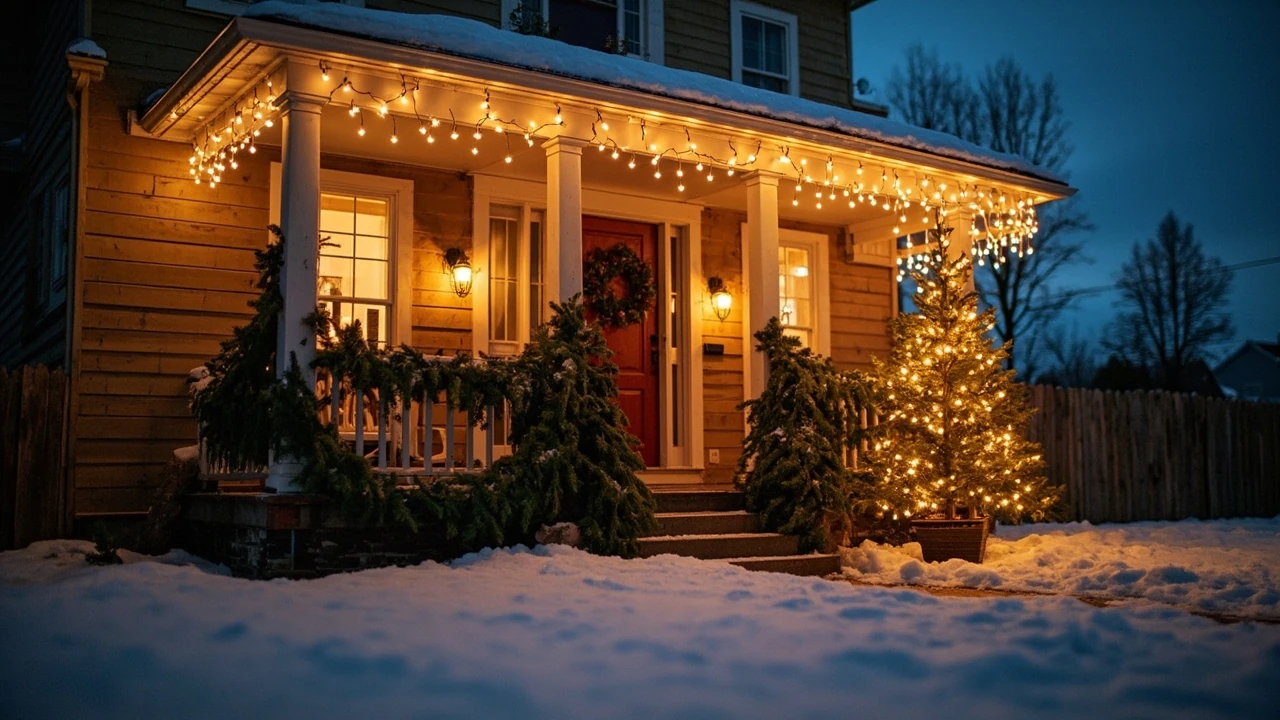
Outdoor Christmas decorations that actually survive a season outside
A string of lights that worked in the living room stops working in the second week of December, a inflatable Santa deflates in a rainstorm, and a wooden reindeer fades to grey by New Year. None of those failures are surprising once you know what the manufacturer assumes about your weather. The label usually says “for outdoor use” because the wiring is sealed, not because the print or the fabric can handle a wet British December or a warm Australian December. Choosing outdoor Christmas decorations gets easier when you separate three things: the electrical rating, the material, and the way you anchor it.
This article focuses on practical decisions for anyone decorating a home, garden, shopfront, or event space. It draws on the same logic we use for outdoor gear: a list of features means nothing until you match it to the climate, the surface, and the time you are willing to spend on setup and storage. If you also plan outdoor events over the festive period, the same anchoring, power, and lighting principles apply to a market stall, a pop-up bar, or a rope park reception desk.
Start with the climate, not the catalogue
Before looking at styles, write down what your decorations will actually face between late November and early January. The most useful climate notes are not the average temperature but the extremes.
- Lowest overnight temperature and how long it lasts (matters for plastic and inflatable seams).
- Average rainfall per week and whether it falls as driving rain or persistent drizzle.
- Average wind speed, peak gusts, and the direction your facade faces.
- How many hours of direct sun the spot gets, since UV fades colour and weakens glue.
- Whether the area is sheltered by trees, which drop sap and litter onto fabric and lights.
A coastal cottage in Cornwall and a suburban house in Bavaria share a label but face different problems. Salt air attacks metal clips and unpainted iron. Inland frost cracks rigid plastic if a decoration was designed for a mild climate. Once you know your own worst week, you can read product descriptions with the right filter and stop buying the same string of lights twice.
Electrical ratings: what “IP44” really means
Any decoration that plugs into mains power and sits outside needs an IP rating, short for Ingress Protection. The two digits describe resistance to solid objects and to water. For most garden and facade work, IP44 is the practical minimum: protected against splashes from any direction and against objects larger than 1 mm. IP65 adds protection against low-pressure jets of water, which matters for ground-level spotlights and any decoration that sits in a puddle path.
Ratings above IP65 exist, but they are usually overkill for a domestic setup and drive the price up. What actually matters more is where the joins sit. Every plug, transformer, and extension joint needs to be off the ground, or at least lifted above the level water can pool to during a storm. A IP67 connector lying in a puddle is still going to fail.
| IP rating | What it covers | Typical use |
|---|---|---|
| IP20 | No water protection | Indoor only, never outside |
| IP44 | Splashes from any direction | Wall lights, string lights under an eave |
| IP65 | Low-pressure water jets | Garden spike lights, exposed inflatables |
| IP67 | Temporary immersion | Borders and ground recessed lights |
| IP68 | Continuous immersion | Pond lighting, not relevant for most homes |
If you cannot find an IP rating on the packaging, treat the product as indoor only. No label, no clearance, no shortcuts.
Materials that hold up: a realistic comparison
Most outdoor Christmas decorations are made from one of four material families. Each has a clear weakness, and the weakness usually decides whether the piece lasts one season or five.
| Material | Strength | Main weakness | Best for |
|---|---|---|---|
| Powder-coated steel or aluminium | Stable shape, holds weight | Scratches expose metal to rust | Reindeer frames, tree stakes, brackets |
| Acrylic fabric and polyester ribbon | Light, packs flat, accepts print | UV fade, seam failure after 2-3 years | Banners, fabric reindeer, garlands |
| Polyresin and resin composites | Detailed moulds, paint holds well | Brittle in deep cold, can crack if dropped | Light-up village houses, statues |
| Thick PVC and nylon (inflatables) | Quick setup, high visual impact | Fan motors, glue seams, topple in wind | Roof Santa, large lawn pieces |
For a home that only decorates one year in three, mid-weight polyester and basic LED string lights give the best balance of cost and durability. For a venue that decorates every year and stores the same pieces for months, powder-coated frames and warm-white LED string lights are usually worth the higher initial spend because the per-year cost drops quickly.
Lighting choices without the marketing haze
String lights now come in dozens of names: fairy lights, icicle lights, curtain lights, festoon lights, cluster lights. The names describe shape, not quality. The two specifications that actually matter are the LED colour temperature and whether the bulbs are replaceable.
Warm white at 2200 to 2700 Kelvin reads as the classic candle tone and looks flattering on brick and timber. Cool white around 4000 K reads as winter daylight and suits modern facades. Mixing the two on the same house is the most common reason a display looks “off”. Pick one temperature per zone and stick to it.
Replaceable bulbs sound old-fashioned, but they are the difference between replacing a 200-bulb string because two LEDs failed and replacing two bulbs. For larger installations, choose strings where the bulbs are clearly socketed rather than sealed into the wire.
- Warm white 2200-2700 K for traditional brick, stone, and timber facades.
- Cool white 4000 K for contemporary render, metal cladding, and glass.
- Choose one temperature per visible zone; mixing reads as accidental.
- Prefer replaceable bulbs for any string over 100 bulbs.
- Solar and low-voltage systems suit fences and paths; mains is more reliable on facades.
Anchoring, wind, and the physics of a 1.5 m reindeer
The single biggest cause of damage to outdoor Christmas decorations is not rain or cold. It is a moderate wind catching a flat surface that was not anchored for it. A 1.5 m acrylic reindeer presents roughly 1 square metre of sail area. In a 50 km/h gust, that is enough force to topple the figure and drag its ground stake across a lawn. Two simple rules prevent most incidents.
First, anchor every freestanding piece with at least two fixing points and an angle. A single straight ground stake pulls straight out. Two angled stakes or one stake plus a sandbag resists the sideways pull that wind actually creates. Second, place tall or sail-like pieces in the lee of the house rather than at the end of an exposed lawn. A sheltered corner 2 m from a wall is far safer than an open spot 5 m from the house.
| Decoration type | Wind exposure | Anchoring method |
|---|---|---|
| Wall-mounted wreath, 40-60 cm | Low | Two exterior screws into brick or timber, not adhesive hooks alone |
| Reindeer figure, 1-1.5 m | Medium | Two angled ground stakes plus guy line to a wall point |
| Inflatable, 1.8-2.4 m | High | Manufacturer stakes plus two guy lines, fan sheltered from direct rain |
| String lights on gutter | Medium | Gutter clips every 30-40 cm, not hooks over tiles |
| Tree lights, 2-3 m | Medium | Trunk wrap plus two guy lines to ground anchors if exposed |
Power, timers, and the load you can actually draw
Strings of LED lights are far kinder to circuits than the old tungsten sets, but a full house display can still add up. A typical domestic ring main in the UK and many European countries is rated at 32 A, which sounds like a lot until you add outdoor heaters, a kitchen, and a living room to the same circuit. For Christmas, the practical steps are simple.
- Use one outdoor-rated RCD-protected socket per zone of the garden.
- Connect lights through an outdoor timer or smart plug so the display is not drawing power for 16 hours a day.
- Count the wattage on each transformer before daisy-chaining. Most LED strings allow 3-5 connections per plug, not unlimited.
- Keep all plug joints off the ground, ideally clipped to a wall or fence post.
- Do not run extension cables under doormats; they trap water and wear through unnoticed.
If you decorate a commercial space, a cafe terrace, or a small event venue, the same rules apply with one extra step: check the load on the circuit with a qualified electrician before adding a big lit feature. A festive pop-up bar that trips a breaker on a busy Saturday night is not a memory customers want to take home.
Storage: the season that decides how long things last
Most outdoor Christmas decorations do not fail during the season. They fail in the plastic tub in the garage. A piece stored wet, tangled, or compressed loses one to two years of life every cycle. A small investment of time when you take the display down pays back in the decorations you do not have to replace.
- Wipe each piece dry before packing, even if the weather was mild.
- Wind string lights around a flat piece of cardboard cut to size, not a finger or a bottle.
- Store inflatables partially inflated if your storage space allows, so seams do not fold.
- Keep metal pieces in a dry, breathable bag. A sealed plastic bag traps moisture and causes white oxidation.
- Label the tub by zone of the house so setup is faster next year.
Buying checklist for outdoor Christmas decorations
A short, focused checklist is more useful than a long essay at the point of purchase. Use this when you are standing in a garden centre, scrolling an online shop, or comparing two similar inflatables.
- Is the IP rating clearly stated, and does it match where I plan to put it?
- Is the material UV-stable, or will the colour fade in one season on a south-facing wall?
- Are the bulbs replaceable on long string lights, or is the whole string scrap when two fail?
- What anchoring hardware is included, and is it strong enough for my wind exposure?
- Is the transformer indoors, in a weatherproof box, or sealed to the plug?
- How heavy is the piece, and can I lift it safely onto a roof or up a ladder?
- Does the retailer publish a clear warranty and a UK or EU contact for replacements?
Common mistakes that are easy to avoid
Most outdoor Christmas decoration problems are repeats of the same handful of mistakes. Recognising them in advance saves both money and the awkward conversation with a neighbour whose hedge your inflatable landed in.
- Mixing warm and cool white on the same wall so the facade looks patchy in photos.
- Running extension cables across paths where they become a trip hazard in frost.
- Using indoor-only lights on a porch “just for one season”. The first wet week ends that plan.
- Anchoring tall inflatables with a single stake and expecting it to hold in a coastal gust.
- Storing a wet wreath in a sealed bag, which grows mould and stains the leaves.
Each of these is a five-minute fix when planned for, and a half-day repair when not. The first year of a new display is also the cheapest year to upgrade. Replacing a weak string of lights before it fails, rather than after, is what keeps a December stress-free.
How outdoor Christmas decorations connect to other outdoor events
Decorating a home and running a small outdoor event share a surprising amount of kit: power distribution, anchoring, weatherproof lighting, and storage. If you plan a festive market stall, a winter birthday, or a community light switch-on, the same attention to wind, IP rating, and circuit load applies. Planning a day around an outdoor event also means thinking about the rest of the guest experience, from what people wear to how they get home, which is where the rest of our planning guides can help.
For more practical advice, see our guide to what makes an outdoor event worth travelling for and our step-by-step one-day forest escape planner.
Frequently asked questions
What IP rating do I need for outdoor Christmas decorations?
IP44 is the practical minimum for most wall and eave installations, covering splashes from any direction. For ground-level lights or any decoration that could sit in a puddle path, IP65 is a safer choice. The rating only describes the sealed unit, so plug joints still need to be lifted off the ground.
Can I use indoor string lights outside if they are under a porch?
No. Indoor string lights are not sealed against moisture, and even a covered porch sees wind-driven rain and condensation. The risk is not just the lights failing; it is the plug and transformer, which can become a real electrical hazard in damp conditions. Use outdoor-rated strings for any outdoor socket, even sheltered ones.
How do I stop inflatables from blowing over?
Use the manufacturer ground stakes, then add two guy lines tied to fixed points such as fence posts or ground anchors. Place the inflatable in the lee of the house rather than on an exposed lawn, and keep the fan motor sheltered from direct rain with a small hood.
Are solar outdoor Christmas decorations bright enough?
Modern solar LED string lights are bright enough for fences, paths, and small trees, but rarely match mains-powered lights on a tall facade. Solar panels also need a clear view of the sky and several hours of daylight to charge fully in midwinter, which is the worst time of year for sun angle.
What is the best colour temperature for a traditional house?
Warm white at 2200 to 2700 Kelvin suits most brick, stone, and timber homes and reads as the classic candle tone. Cool white at 4000 K looks crisper but can feel harsh on older facades. Pick one temperature per visible zone and avoid mixing the two on the same wall.
How long do outdoor Christmas decorations typically last?
Budget polyester and basic LED string lights usually last two to three seasons of regular use. Powder-coated metal frames, polyresin figures, and higher-end LED strings can last five seasons or more, especially when stored dry. The shortest-lived parts are inflatable fans and inexpensive plug transformers, which often fail in the second or third year.
Is it safe to leave outdoor Christmas decorations plugged in overnight?
Modern LED decorations on an RCD-protected circuit are designed to run for many hours, and a timer is the most practical way to control that. Avoid running them 24 hours a day, as this shortens LED life and wastes energy. Check plugs, cables, and transformers once a week during the season for any sign of heat damage or water ingress.
What is the safest way to put lights on a tall tree?
Use a stable ladder on level ground, work with a second person on the ground, and never overreach. Clip lights to the trunk and main branches rather than wrapping them tight around small twigs, which can break under snow load. If the tree is taller than 4 m or close to power lines, hire a qualified installer.
Can I run my whole display from one outdoor socket?
Often yes, because LED loads are low, but you need to check the total wattage of the transformers, not the bulbs. Most domestic circuits can comfortably handle 2000 to 3000 W of mixed LED lighting, but sharing that socket with a patio heater or kitchen appliances can push the circuit close to its limit.
How do I store outdoor Christmas decorations so they last longer?
Wipe each piece dry, wind string lights onto a flat cardboard frame, store inflatables loosely rather than compressed, and keep metal pieces in a breathable bag. Label the storage container by zone of the house so next year’s setup is faster and less frustrating.
Related reading
Explore High Ropes Adventure
Trip tools
Essential adventure planning guides
Use these practical guides to compare rope park activities, prepare for a first high ropes day, check a booking, choose suitable footwear and contact the editorial team. Each page links to the relevant live tools and current planning sections.
Latest articles
- Viator travel agent: how the booking platform actually works
- Sweet tart ropes: what the flavour means in a ropes course
- Demon Slayer movie tickets: how to find a screening and prepare for a day out
- How to choose NBA tickets without overpaying
- Time travel movies worth watching on a slow weekend
- Overseas adventure travel: how to plan a trip that actually works
- Choosing an outdoor bench that actually lasts
- Lows adventure: how low-ropes courses work and who they suit
- outdoor couch
- United travel bank: how prepaid travel money cards actually work