Outdoor fireplace ideas, fuel choices, and safety for a back-garden build
Outdoor fireplace: ideas, fuel choices, and safety for a back-garden build
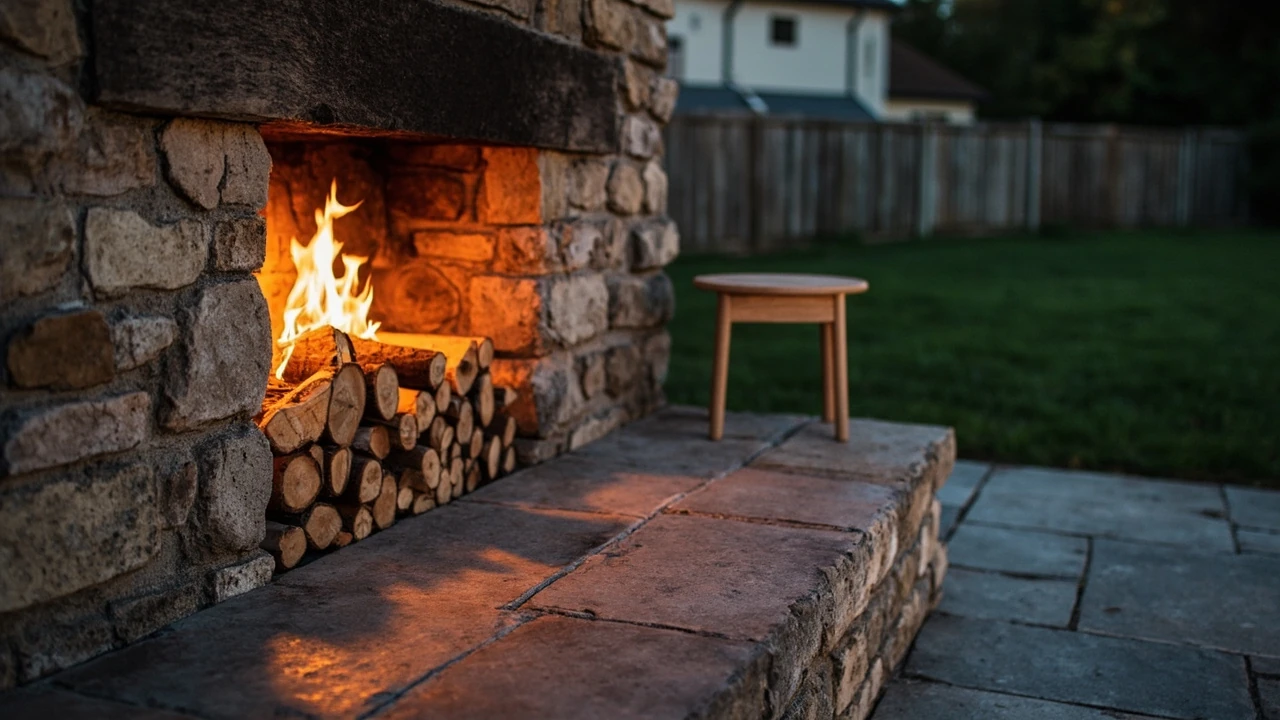
A real outdoor fireplace changes how a garden is used. On a cool evening in early autumn, a masonry hearth holds heat long after the sun drops, and the layout that felt empty at four in the afternoon suddenly becomes the room people drift toward. Most builds fail for boring reasons: the hearth sits in the wrong corner relative to the prevailing wind, the chimney is undersized, the base is laid on soft topsoil, or the fuel was never matched to the design. Treat the project as a small piece of light construction rather than a decorative prop, and the result lasts decades.
This guide walks through the choices a first-time builder faces: where the structure makes sense on a typical plot, which fuel suits the way the space will actually be used, how to compare a wood-burning hearth with a gas unit before committing, and the safety checks that protect a timber fence, a neighbour’s hedge, and a roof overhang. The aim is a practical brief, not a product catalogue. By the end you should know what to ask a builder, what to skip, and which decisions are worth a small extra cost.
What counts as an outdoor fireplace
The term covers a wider range of structures than many first-time buyers realise. A traditional masonry outdoor fireplace is a permanent brick or stone build with a firebox, a smoke chamber, and a chimney, designed in the same family as an indoor fireplace but rated for external use. A chiminea is a freestanding clay or cast-iron vessel with a vertical flue, popular on patios because it can be moved. A fire pit is lower and usually open, with no chimney at all. A fire table is a gas-powered cousin of the fire pit, often finished to look like a low table. The same phrase is sometimes applied to pizza ovens and to built-in barbecue islands, but those have very different air-flow and insulation needs and are best treated as separate projects.
For this article the focus is on solid-fuel and gas hearths intended for occasional evening use in a residential garden. The two are different enough on airflow, siting, and local rules that mixing them up leads to expensive re-work.
Where an outdoor fireplace actually works on a plot
Siting decides more about whether the project succeeds than the choice of stone. A hearth needs room to breathe, a stable base, and a clear path for smoke to leave the garden. Three checks cover most failures.
Distance from buildings, fences, and trees
Solid-fuel units throw sparks and radiate strong heat. A masonry outdoor fireplace should sit well clear of any timber structure, including fences, sheds, and overhanging branches. A common minimum is 3 m of clearance from combustible materials in every direction, with more for a tall flame. Gas units run cooler and cleaner, but the radiant heat from a glass-fronted gas fire can still scorch a fence, so the same clearances are a sensible starting point. If the only usable corner of the garden is closer than this, a chiminea or a small gas fire table on a non-combustible pad is often the right answer rather than a smaller masonry build.
Wind and smoke direction
The prevailing wind sets the smoke path for most of the year. A hearth placed upwind of a seating area sends smoke straight across the people using it. A simple test is to stand in the proposed seating spot on a typical evening, light a small pile of dry paper, and watch which way the smoke travels. If it blows directly into the seats, change either the seat position or the hearth position before pouring a base. Local topography matters too: a hearth at the bottom of a slope can pool smoke in cold air, and a hearth too close to a wall can create a downdraft that pushes smoke back into the firebox.
Ground conditions and the base
A masonry outdoor fireplace is heavy, often over a tonne once the chimney is included. It needs a footing that reaches below the frost line for the local climate, otherwise freeze-thaw movement cracks the masonry within a few winters. A poured concrete footing tied to a brick or stone base is the usual answer. A chiminea or a gas fire table can sit on a flagstone pad or even on a strong patio, but check the manufacturer’s weight and heat-clearance guidance. Soil that holds water is a warning sign; a soggy base will shift, and a wood-burning unit standing in standing water will spall and crack in a single winter.
Fuel choices: wood, gas, and the in-between
Fuel choice sets the cost of use, the kind of heat delivered, the level of maintenance, and the rules the build has to follow. The table below compares the practical differences for a back-garden setting.
| Aspect | Wood-burning masonry outdoor fireplace | Gas fire pit or gas log set |
|---|---|---|
| Flame character | Crackling, irregular, aromatic, with visible embers | Steady, controllable, easy to light and stop |
| Heat output | High radiant heat, mostly in front of the opening | Lower radiant heat, more even across a wider arc |
| Fuel storage on site | Seasoned wood pile, kept dry and off the ground | Propane tank or natural gas line |
| Operating cost per evening | Moderate, depends on local firewood price | Low for natural gas, higher for bottled propane |
| Smoke and smell | Visible smoke, wood aroma, fine ash to clean | Almost no smoke, no ash, faint gas scent at start-up |
| Permit and inspection needs | Often requires a building permit and a flue inspection | Usually needs a gas fitter and a pressure test, simpler approval in many areas |
| Local air-quality rules | Some councils restrict wood smoke on poor air days | Usually exempt from smoke-control rules |
For builders who care about the look and feel of a real fire and have space for a firewood store, wood is the default. For builders in a terraced garden, a smoke-control zone, or a tightly built courtyard, gas is usually the right answer because the rules around solid-fuel smoke are not optional and the fines for ignoring them are real.
Wood, gas, or a chiminea: matching the unit to the garden
A short decision walk-through is more useful than a long feature list. Answer these in order before settling on a unit.
- If the garden is large, the neighbours are far enough away that smoke is not a complaint risk, and at least one wall of the house is more than 5 m away, a full masonry outdoor fireplace is worth the cost.
- If the garden is small but the household wants flame and the budget is modest, a heavy cast-iron or steel chiminea on a stone pad gives much of the same atmosphere for a fraction of the build work.
- If the household wants controllable heat, no ash, and quick start-up, and the gas supply is straightforward, a gas fire pit or a built-in gas log set inside a masonry surround is a strong compromise.
- If the household is renting, or expects to move within a few years, a portable gas fire table is the only unit worth considering; the rest leave fixtures behind.
The point is not to pick the most expensive option. It is to pick the option whose maintenance, fuel, and rule profile matches the way the household will actually use the garden.
Anatomy of a working outdoor fireplace
Every functional build, wood or gas, is built from the same five components. Skipping one is the most common reason a new build smokes back, runs too cool, or fails inspection.
- Foundation and base. A reinforced concrete footing below the frost line, finished level and dry. A masonry base rises from this footing.
- Firebox. The chamber that holds the fuel. For wood, the back wall should slope forward slightly to improve draw, and the floor should be a non-combustible material rated for high heat.
- Smoke chamber and damper. The narrowing section above the firebox that speeds up the gases before they enter the chimney. A metal damper lets a cold flue be closed between uses, which keeps rain and animals out.
- Chimney and flue liner. A vertical flue that exits well above the roofline of any nearby structure. For wood, a clay or stainless liner is standard. For gas, a direct-vent or B-vent system is fitted by a certified installer.
- Cap and spark arrestor. A chimney cap keeps rain out and stops embers. In areas with local spark-arrestor rules, a mesh cap is required.
A common shortcut is to use an unlined chimney, which is cheaper but allows combustion gases to attack the mortar from inside. A lined chimney costs more at build time and saves the structure from early failure.
Building it: choices that decide how long it lasts
Three decisions during construction drive the lifespan of a masonry outdoor fireplace: the materials, the mortar, and the air path.
Materials
For the visible shell, dense brick and natural stone are the standard choices. Concrete block is sometimes used as a structural core behind a brick or stone face because it is cheaper and easier to lay square. The face material should be rated for exterior use, and any stone near the firebox should be a hard, non-flammable variety such as granite or dense limestone. Soft sandstone near the firebox will spall, flake, and eventually crack. For the firebox itself, firebrick is the right lining material, not standard brick, because it tolerates repeated direct flame.
Mortar
Standard masonry mortar is not designed for the inside of a firebox. Refractory mortar, mixed and cured to the maker’s instructions, holds the firebrick joints through years of heat cycles. Outside the firebox, a high-quality Type N or Type S mortar is fine for the visible shell. Skipping the refractory mortar inside the firebox is one of the most common shortcuts on amateur builds, and it shows up as cracked joints after the first winter of use.
Air path and flue sizing
A fireplace draws well when the flue area is roughly one-twelfth to one-tenth of the firebox opening, and when the chimney is tall enough to stay above the pressure zone created by nearby trees, fences, or rooflines. A common amateur mistake is to use a chimney that is too short or too narrow, which produces a lazy fire and a smoky seating area. The rule of thumb is a flue at least 4 m tall, and the top of the chimney at least 600 mm above anything within a 3 m radius.
Running it well: lighting, refuelling, and clean shutdown
How the fireplace is used matters as much as how it is built. A few habits keep the fire clean, the chimney clear, and the air around the seating pleasant.
- Burn only seasoned wood, ideally air-dried for 12 months or kiln-dried. Fresh wood smokes heavily, throws less heat, and coats the flue with creosote.
- Open the damper before lighting and leave it open until the coals are fully out. Closing a damper over a live fire is the fastest way to fill the room with smoke.
- Build the fire from the top down on a bed of ash, rather than lighting kindling under a tall stack. A top-down fire reaches a clean, hot burn faster and produces less smoke during start-up.
- Keep the fire small and hot rather than large and lazy. A small, intense fire draws well and leaves very little residue in the flue.
- Let the ash cool for 24 hours before disposal, and never put hot ash into a bin or a bag.
For a gas unit, the habit list is shorter but worth following. Run the unit for a few minutes on its highest setting before turning it down, so any debris in the burner burns off cleanly. Check the gas connection once a year, and ask a fitter to inspect the burner and ignition if the flame starts to look lazy or yellow.
Safety checks that belong on the pre-use list
Before the first fire of the season, a short checklist catches the issues that turn an evening into an insurance claim.
- Sweep the chimney at least once a year for wood units, more often if the fireplace is used weekly. A 3 mm layer of creosote is enough to ignite.
- Confirm the spark arrestor is in place and free of rust holes or bird nests.
- Check that the hearth extends at least 500 mm in front of the opening and 300 mm to each side, so stray embers cannot reach the deck or the lawn.
- Keep a metal ash bucket with a tight-fitting lid on the patio. Plastic buckets and bags melt.
- Store firewood well away from the hearth, ideally against an outside wall of a shed rather than against the house.
- Confirm there is a working smoke alarm inside the house and a carbon-monoxide alarm in any room that shares a wall with the hearth.
- Review the local rules on outdoor burning before each season, since councils update smoke-control and fire-risk notices through the year.
For households with children or pets, a fixed metal screen in front of the firebox is worth the small cost. Sparks are part of a wood fire, and a screen keeps them inside the hearth where they belong.
Cost ranges and where the money actually goes
A clear-eyed view of cost prevents overspend on the visible parts of the build and underspend on the parts that decide whether it lasts. The table below sketches a typical split for a UK or northern-European residential build in mid-2026 prices; actual figures vary by region and by finish choice.
| Item | Typical share of total project cost | Notes |
|---|---|---|
| Footing and base | Around 15-20% | Often the easiest place to cut, and the most expensive to fix later |
| Firebox, firebrick, and refractory mortar | Around 10-15% | Worth buying from a specialist supplier, not a general builder’s merchant |
| Chimney, liner, and cap | Around 15-25% | Drives the draw, so skimping shows up as a smoky seating area |
| Outer shell (brick or stone) | Around 25-35% | The largest single line on the invoice, and the most visible |
| Labour, design, and permits | Around 15-25% | Often the deciding factor between a DIY build and a hired one |
A useful budgeting rule is to fix the base, the firebox, and the chimney first, then spend whatever remains on the visible stonework. The reverse order produces a beautiful outdoor fireplace that smokes back into the garden.
Common mistakes and how to avoid them
Most failed builds share a small number of avoidable errors. Working through this list before signing off on a design saves both money and patience.
- Placing the hearth under a tree or beside a fence. A clear sky above the chimney is not optional; a tree canopy traps smoke and a timber fence will eventually char.
- Using a chimney that is too short. The draw depends on height and on clearance from surrounding structures, not on the size of the firebox.
- Skipping the flue liner. Unlined chimneys look traditional and fail in a decade. A stainless or clay liner adds years of life for a modest cost.
- Building on a thin patio slab. A slab on sand is not a foundation. The footing has to reach below the frost line, and the slab has to be tied to it.
- Burning waste, painted wood, or treated timber. These fuels release chemicals that corrode the flue, set off neighbour complaints, and are usually illegal under local rules.
- Ignoring permits. In most regions, a permanent masonry outdoor fireplace needs a building permit. A gas unit needs a certified installer. Skipping either is a problem at sale time, not just at build time.
Looking after it across the seasons
A small annual routine keeps the build in good shape without turning it into a maintenance project.
- In late spring, sweep the chimney and inspect the firebrick joints for cracks. Small cracks can be filled with refractory cement; large cracks mean a section of firebrick needs replacement.
- Check the crown of the chimney and the cap for cracks and rust. Water that gets into the chimney is the leading cause of long-term mortar failure.
- Brush the outer shell with a soft brush to remove soot and cobwebs, and rinse with a low-pressure hose. High-pressure washers damage softer stone and erode pointing.
- Inspect the hearth and the surrounding patio for ash damage, and repoint any loose mortar in the shell before autumn rain finds it.
- For gas units, ask a fitter to do an annual service: check the burner, the ignition, the gas pressure, and the flue or direct-vent termination.
A build that receives this level of attention once a year will outlast several changes of garden furniture and will still draw cleanly a decade later.
Planning the layout around the hearth
Once the fireplace is in place, the seating layout matters more than the choice of stone. Smoke drifts in a predictable arc on a still evening, and the seats should sit on the upwind side, at least 2 m from the opening, and within the radiant heat arc without being directly in the line of any flame. A simple way to plan this is to mark the firebox opening on the ground with tape, set a chair at each candidate position, and look down on the layout from a first-floor window. If a chair sits in the smoke path, move it. If a chair is well outside the heat arc, move it closer.
For more ambitious projects, a low stone or brick seat wall on three sides creates a sheltered outdoor room that works even on a breezy evening, and it keeps furniture from being dragged in and out of storage each time the fire is lit.
Frequently asked questions
Do I need a building permit for an outdoor fireplace?
In most regions, a permanent masonry outdoor fireplace counts as light construction and needs a building permit, especially if the chimney rises above a certain height or sits within a set distance of a boundary. A portable chiminea or a gas fire table on an existing patio usually does not. The exact threshold varies by council, so the first call should be to the local building-control office before the design is finalised.
How far should an outdoor fireplace sit from the house?
A practical minimum for a wood-burning masonry hearth is around 5 m from any combustible wall, with the chimney top at least 600 mm above anything within a 3 m radius. Gas units can sit closer because the radiant heat is lower, but the manufacturer’s clearance guidance still applies, and most spec sheets ask for at least 1 m from a wall.
Can I build an outdoor fireplace on a wooden deck?
It is not advisable. A wood-burning hearth throws embers and radiates strong heat, both of which damage timber decking and create a fire risk. A heavy stone or concrete patio is the correct base. If the only outdoor surface is a deck, a small chiminea on a stone paver, used carefully and moved off the deck when not in use, is a safer compromise.
Is a chiminea better than a built-in outdoor fireplace?
For renters, small gardens, or households that want flame without construction, a heavy cast-iron or ceramic chiminea is often the right choice. It costs less, can be moved, and creates a similar atmosphere. A built-in masonry outdoor fireplace is worth the cost when the garden is large, the household plans to use the space for years, and the budget allows a permanent feature.
How often does the chimney need sweeping?
For a wood-burning unit used most weeks in the cooler half of the year, sweeping once a year is the minimum and twice a year is sensible during heavy use. For occasional weekend use, a single annual sweep at the end of the season is usually enough. Gas units have no chimney sweep in the traditional sense but should be inspected by a gas fitter once a year.
What wood should I burn, and what should I avoid?
Burn seasoned hardwood such as oak, ash, or beech that has been air-dried for at least a year. Avoid softwoods with heavy resin, painted or treated timber, driftwood, and any wood that has been in contact with chemicals. These fuels smoke heavily, coat the flue with creosote, and can release toxic gases when burnt.
Can an outdoor fireplace be used in a smoke-control zone?
Some councils allow only exempt appliances, which are typically gas units or specially tested wood-burning stoves, in smoke-control areas. A standard open-front masonry outdoor fireplace is usually not exempt. The simplest path is to check the local smoke-control map and either pick a gas unit or apply for an exempt appliance before committing to a design.
Is an outdoor fireplace safe near children and pets?
It can be, with a fixed metal screen across the opening, a hearth that extends well past the flame on every side, and a clear rule that no one approaches the hearth without an adult. A low stone or brick seat wall at the perimeter of the seating area adds a second line of separation. The risk is highest during the first five minutes of lighting and the last few minutes of burning down, so adult supervision during those windows is worth keeping.
How long does a masonry outdoor fireplace last?
A well-built masonry outdoor fireplace with a lined chimney and a sensible annual routine can easily last 25-40 years before the firebrick or the chimney liner needs partial replacement. The outer stonework often lasts much longer. The lifespan falls sharply if the footing is shallow, the flue is unlined, or wood is burnt before it is dry enough.
What is the difference between an outdoor fireplace and a fire pit?
A fire pit is a low, open bowl or ring with no chimney. It produces more smoke in the seating area and is less efficient at radiating heat upward. An outdoor fireplace is a vertical structure with a firebox and a chimney, so smoke is drawn up and away, the radiant heat is more directional, and the unit is more comfortable to sit near on a still evening. Fire pits suit wide-open spaces; fireplaces suit enclosed gardens.
Related reading
Explore High Ropes Adventure
Trip tools
Essential adventure planning guides
Use these practical guides to compare rope park activities, prepare for a first high ropes day, check a booking, choose suitable footwear and contact the editorial team. Each page links to the relevant live tools and current planning sections.
Latest articles
- How to find national parks near me: a practical local search guide
- Paylater travel: how buy now, pay later works for trip bookings
- Bagsmart Blast Travel Backpack: A Practical Review for Day Trips and Adventure Days
- How to choose an outdoor rocking chair that actually lasts
- Indiana travel advisory map: how to read it before a day trip
- How to plan an outdoor day around a concert stop: a cardi b tickets field guide
- Outdoor sectional sofas: a practical buyer’s guide for patio living
- How amusement parks actually work: rides, safety, and what to expect
- Beis Travel: What the Bag Brand Offers for Outdoor Days
- Adventure park: what it is, what to expect, and how to plan a visit