Outdoor storage box: how to choose the right one for your garden
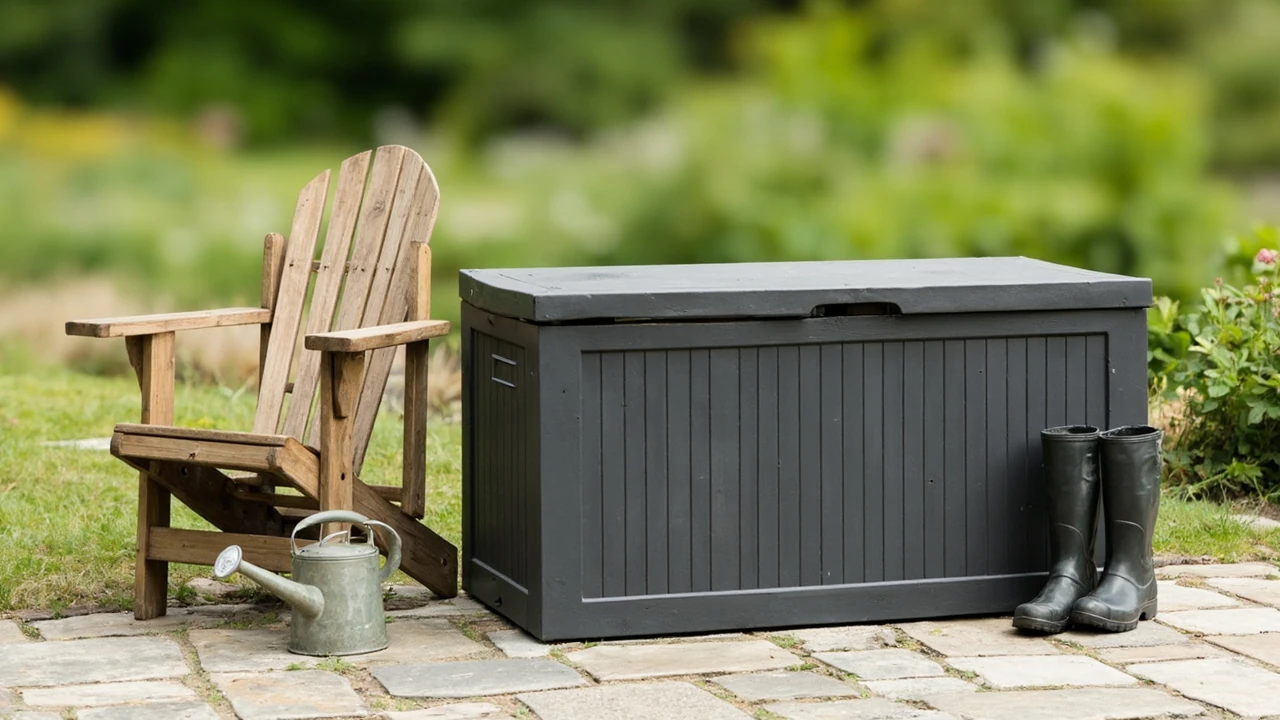
A backyard patio that doubles as a workshop, a cycle store, and a place to dry the kids’ boots can run out of space surprisingly fast. The fastest way to recover that space is usually a single large outdoor storage box, but choosing the wrong one turns a useful piece of garden kit into a soggy, cracked, or rusty liability within a year or two.
This guide focuses on the practical decisions behind buying an outdoor storage box for a UK-style garden, allotment, courtyard, or small business yard. It walks through the most common types, the materials that actually hold up outdoors, the sizing rules that prevent buyer’s remorse, and the maintenance and security checks that matter in real use. The aim is to leave you with a short list of clear criteria you can apply in any shop or product listing.
What is an outdoor storage box and what is it used for
An outdoor storage box is a weather-resistant container designed to sit outside year-round, usually on a patio, deck, balcony, or hardstanding area. Compared with a typical shed, it is shorter in height, has a hinged or lift-up lid, and is built to be moved by one or two people. Most are designed to hold items that would otherwise clutter a porch, garage, or garden corner.
Common things people keep in an outdoor storage box include:
- Cushions, throws, and outdoor textiles
- Children’s outdoor toys, sandpit tools, and paddling pool inflatables
- Wellies, work boots, dog leads, and gardening gloves
- Hand tools, small power tools, and batteries for cordless equipment
- Plant pots, compost bags, and seasonal bulbs
- Sports gear such as footballs, cricket bats, and tennis rackets
- Cycle accessories, including helmets, locks, and waterproof covers
For a family heading out to a local rope park or adventure course, the same box can also serve as a drop point for muddy boots and damp jackets on the way back in. It is not a replacement for a shed when you need to store a sit-on mower, ladders, or paint tins. For that scale of kit, a more solid outdoor storage shed or a small workshop is the right call.
Outdoor storage box vs shed: which one do you actually need
The line between a large outdoor storage box and a small garden shed is blurrier than most product pages admit. The decision comes down to what you are storing, how often you need it, and how visible the unit will be from the house.
| Feature | Outdoor storage box | Garden shed |
|---|---|---|
| Typical height | 50 to 90 cm, sometimes up to 100 cm | 180 to 210 cm at the ridge |
| Footprint | Small to medium, usually under 2 m long | Medium to large, often 1.8 x 2.4 m or bigger |
| Best for | Soft goods, toys, small tools, cushions, footwear | Mowers, bikes, ladders, paint, power tools, bulky kit |
| Access | Top-opening lid, sometimes front flaps | Door plus optional windows |
| Planning rules (UK) | Usually considered a portable container | May be a structure under permitted development rules |
| Security | Padlock loops or built-in locks on premium models | Locks, hinges, and window protection |
| Price band | Lower, mid-range, and premium tiers | Mid-range to high, plus base prep costs |
If you can kneel down and reach the contents comfortably from the top, an outdoor storage box is almost always enough. If you have to climb in or stand inside the unit to get to the back, you are really shopping for a shed.
Materials that actually survive outside
Material choice is the single biggest factor in how long an outdoor storage box lasts. Cheap plastic can warp in the first summer of strong sun, while untreated metal can start showing surface rust within months if it sits on damp ground.
Resin, plastic, and moulded polymers
Most modern boxes labelled as weatherproof are made from moulded polypropylene, polyethylene, or similar resins. The benefits are clear: they do not rust, they do not need painting, and they are light enough to reposition around a patio. The drawbacks appear when the resin is thin, brittle, or made from recycled material of inconsistent quality.
Useful checks when reading a product page:
- Wall thickness, even if only described in qualitative terms such as double-walled or reinforced
- UV stabilisation, often mentioned as UV-protected or fade-resistant
- Whether the lid is a single moulding or a separate piece clipped into place
- Hinge type, because plastic hinges are the first thing to snap on cheaper boxes
Wood and timber-composite boxes
Wooden storage boxes look more at home next to a rustic dining set, but they need a different maintenance plan. Softwood boxes are usually the cheapest, but they only last outdoors if they are either pre-treated or regularly oiled. Hardwood boxes such as acacia, eucalyptus, or teak handle the weather much better, although they still benefit from an annual coat of protective oil to keep the colour.
Wood-composite boxes blend wood fibres with plastic resin to give a wood-like look with less maintenance. They tend to be heavier than pure plastic and may still fade slowly in strong sun.
Metal boxes, including steel and galvanised options
Metal outdoor storage boxes are less common, but they exist in two main forms. Powder-coated steel is reasonably rust-resistant as long as the coating is not scratched through. Galvanised or zinc-plated steel can take knocks better, but the protective layer eventually wears, and any standing water left in the base will shorten the life of the unit. Metal boxes are often chosen for security and for matching modern garden designs, but they can get hot in direct sun and are the heaviest option.
Rattan-style and woven resin
Boxes with a flat-weave or rattan-style finish are usually built around an internal metal or plastic frame, with a woven resin outer skin. They are popular for sitting on a patio next to a matching lounge set. The weave itself is weatherproof, but the internal frame can corrode if water gets in through the base or around the feet.
Sizing your outdoor storage box correctly
Size is the second most common reason an outdoor storage box ends up unused. People either buy one that is too small and overflow within a season, or they buy one that is so large it swallows the patio.
Measure twice, think about the lid arc
The internal volume of an outdoor storage box is usually smaller than the external measurements suggest. Foam padding, moulded seats on top, and built-in trays all eat into the space. Before ordering, work out the rough size of the items you want to store when laid flat, and add at least 20 percent headroom. Also think about the lid: a top-opening box needs clearance above it to open fully, which matters if it is going under a window or next to a wall.
Common capacity bands
| Capacity band | Rough external size | Realistic uses |
|---|---|---|
| Small (around 150 to 300 L) | About 120 x 60 x 60 cm | Two sets of standard patio cushions, wellies, dog leads |
| Medium (around 300 to 500 L) | About 140 x 70 x 70 cm | Cushions plus children’s toys, small hand tools, sports balls |
| Large (around 500 to 900 L) | About 150 x 80 x 80 cm | Cushions, two adult bikes’ worth of accessories, large tools |
| Extra large (over 900 L) | About 180 x 100 x 90 cm or bigger | Multiple outdoor seating sets, large power tools, bulk gardening kit |
For family gardens that double as a launchpad for days out, a medium box in the 300 to 500 L range is usually the sweet spot. It holds the everyday clutter without dominating the patio.
Weight and mobility
Most resin boxes in the medium range weigh between 8 and 15 kg empty, which is manageable for one adult. Extra-large models can reach 25 to 35 kg empty, and wooden or metal boxes are often heavier still. If you might want to move the box for cleaning or to chase the shade, look for a model with moulded handles, side grips, or even built-in wheels on one end.
Weatherproofing, drainage, and what to put under the box
Outdoor storage boxes are weather-resistant, not waterproof. Even premium models will let in some water through the lid seam during a driving rain, and any box sitting directly on wet ground will wick moisture up through the base. A few simple habits make a real difference.
Get the base off the ground
Place the box on a paving slab, concrete pad, decking, or a purpose-made plastic or composite base. This keeps the underside dry and stops the box from sinking into soft soil. For grass or gravel spots, lay a weed membrane first, then a level layer of compacted hardcore, and finish with paving slabs.
Check the seals and ventilation
Look for a rubber or foam seal around the lid, and small ventilation holes or gaps. Seals keep rain out, ventilation stops condensation from building up inside. A box that is completely airtight is more likely to develop mildew on stored textiles than one with a small amount of airflow.
Drainage and sloped lids
Lids that are slightly domed or angled shed water rather than pooling it. Some boxes have small drainage channels around the lid edge. Avoid designs that sit completely flat, especially if they are in an exposed position.
Plan for frost and sun
Cold alone does not usually damage a quality resin box, but freeze-thaw cycles can exploit any small crack. Direct sun over several years is more aggressive: it can fade colour and embrittle thin plastic. If your box is in full sun for most of the day, consider a partially shaded spot or a box with a UV-stabilised body.
Security: when a padlock actually matters
Not every garden needs a lockable outdoor storage box, but there are a few cases where it is worth checking before you buy.
- The box is visible from a public footpath or alley
- It will store valuable items such as power tools, sports gear, or cycles
- You have had shed or garage break-ins in your area
- Children might otherwise open the box unsupervised and access sharp tools or chemicals
Look for boxes that accept a padlock through a metal hasp, rather than a plastic loop that can be cut with household scissors. Some premium models include a built-in combination lock or a key lock, although most leave the choice of padlock to you. A simple closed-shackle padlock rated for outdoor use is enough for most situations. If the box will be opened by children, also check whether the lid has a soft-close or hold-open feature to avoid trapped fingers.
Maintenance that actually extends the life of the box
Outdoor storage boxes do not need a lot of care, but the few minutes spent twice a year are what separate a five-year box from a fifteen-year one.
- Empty the box completely in late spring and again in early autumn.
- Wipe down the inside with a cloth and a mild detergent solution, then let it dry fully before refilling.
- Check the hinges, lid stay, and any gas struts for signs of wear or corrosion. Tighten loose screws and replace any fasteners that have rusted through.
- For wooden boxes, sand back any rough patches and reapply a suitable outdoor oil or stain.
- For resin boxes, wash the outside with soapy water and a soft brush to remove algae and bird droppings, which can stain over time.
- Inspect the seal around the lid, and replace it if it has shrunk, cracked, or pulled away from the frame.
If you spot mildew on stored cushions, it usually means the box was sealed up while still damp. Let everything dry out in the sun before returning it, and consider adding a small breathable sack of silica gel or a similar moisture absorber to the box.
Where to place the box in your garden
The position of an outdoor storage box is as important as the box itself. The aim is to balance easy access, protection from the worst weather, and a sensible distance from the house.
- Close to where the items are most often used, so a dropped cushion or a wet pair of wellies does not have to be carried far
- On a flat, hard surface that does not flood in heavy rain
- Away from overhanging trees, which drop sap, leaves, and bird mess onto the lid
- Not directly against a fence or wall, which traps moisture and can cause staining
- Considerate of neighbours if the box is large, since it can block light or sightlines
For families who treat the garden as a base for active days out, a box by the back door often makes more sense than one at the end of the lawn. It keeps wet gear out of the kitchen, and you are more likely to use it if it is a one-step drop rather than a ten-step walk.
Common mistakes when buying an outdoor storage box
Most unhappy reviews come down to a small set of predictable issues. Avoiding them is mostly a matter of knowing what to look at before you click buy.
- Choosing by external dimensions and not checking internal volume or usable height
- Ignoring the lid opening direction and putting the box in a corner where the lid will not open fully
- Buying a thin-walled box to save money, then finding it cracks after the first cold winter
- Placing a wooden box on bare soil and watching the base rot within a couple of seasons
- Assuming a metal box is automatically more secure, when in fact the lock or hinge is often the weak point
- Forgetting to factor in delivery access, since some large boxes are awkward to carry through a side gate or narrow hallway
Cost, value, and when to spend more
Price alone is not a good guide. A very cheap box can be fine for a couple of summers of light use, while an expensive box can still fail early if it is the wrong size or the wrong material for the spot. The trick is to match the spend to the use case.
| Tier | Typical price band (UK, single box) | What you usually get |
|---|---|---|
| Budget | Low entry level | Thin resin, basic hinges, no lock point, limited colour choice, shorter warranty |
| Mid-range | Middle of the market | Thicker walls, gas struts or lid stays, padlock points, several years of warranty |
| Premium | Top of the category | Double-walled construction, integrated locks, UV-stable colours, long warranties, matching furniture ranges |
For most homes, a mid-range box is the most sensible spend. Premium models earn their keep when the box is in a very visible spot, when it stores valuable tools, or when it is used daily as a seat or a side table.
Quick checklist before you buy
Running through this short list before checkout will catch most of the common problems.
- Confirm the internal dimensions, not just the external ones
- Check the lid opening height against any wall, window, or fence above the box
- Check that the base size fits the prepared spot, with a little clearance around the edges
- Look for a padlock point or built-in lock if security matters
- Confirm the material, wall thickness, and warranty in writing
- Plan the base surface, whether that is a slab, deck, or purpose-made plastic base
- Think about access for delivery, especially for larger boxes
Frequently asked questions
How long does an outdoor storage box usually last?
A mid-range resin box from a known brand typically lasts between five and ten years with light care. Premium boxes with double-walled construction and UV protection can last longer, while budget models sometimes start to fade or crack within three to four years. Wooden boxes can last well over a decade if they are oiled or stained regularly, but they need more ongoing work.
Are outdoor storage boxes waterproof or only water-resistant?
Most are water-resistant, meaning they can handle typical rain but will let in some water during a long downpour or if water pools on the lid. Truly waterproof boxes are rare and tend to be small, hard-shell cases. For full protection, store items in plastic bins inside the box, and make sure the box itself is on a raised, dry surface.
Can I leave an outdoor storage box out in winter?
Yes, most quality boxes are designed to stay outside through the winter. Resin and metal boxes handle frost well, while wooden boxes need a check on the base and any joints before the cold sets in. It is worth emptying the box once a year to let it dry out and to check the hinges and seals.
What should I put under an outdoor storage box?
A flat, hard surface is best, such as paving slabs, a concrete pad, or a deck. For grass or soil, lay a weed membrane, then compacted hardcore, and finish with slabs so the base does not sit in water. A purpose-made plastic or composite base is a quick alternative for a resin box on a patio.
How do I stop my outdoor storage box from going mouldy inside?
Make sure items are dry before you put them away, and avoid sealing the box completely shut while anything is damp. Ventilation gaps and a small moisture absorber help. Twice a year, empty the box, wipe it down, and let it air out in the sun before refilling.
Is a wooden or resin outdoor storage box better?
Neither is universally better. Resin boxes need less maintenance, are lighter, and are easier to move. Wooden boxes look more natural, are heavier and more stable, and can be repaired or repainted rather than replaced. For a low-maintenance family garden, resin is usually the easier choice. For a more traditional garden where appearance matters, wood is hard to beat if you are happy with the upkeep.
Can I use an outdoor storage box as a seat?
Many medium and large boxes are rated to take the weight of one or two adults and are designed to double as garden seating. Check the product listing for a load rating before sitting on it, and avoid sitting on the lid edge, which puts extra stress on the hinges.
Do I need planning permission for an outdoor storage box?
In the UK, most small outdoor storage boxes are treated as portable containers rather than buildings, so they do not need planning permission. Larger structures, fixed bases, or boxes in front gardens can fall under different rules. If the box is unusually large or sits in a sensitive location, it is worth checking with your local planning authority before installing it.
What is the best way to lock an outdoor storage box?
Look for a box with a metal hasp rather than a plastic loop, and pair it with a closed-shackle padlock rated for outdoor use. For higher security, a box with a built-in combination or key lock is a good option, although you should still anchor it to a solid base so it cannot simply be carried away.
How do I clean an outdoor storage box without damaging it?
Use warm water with a mild detergent and a soft cloth or brush. Avoid abrasive pads, which scratch resin and remove the finish on wood or metal. For stubborn algae, a diluted outdoor cleaning solution is usually enough. Rinse with clean water and let the box dry before refilling it.
Related reading
Explore High Ropes Adventure
Trip tools
Essential adventure planning guides
Use these practical guides to compare rope park activities, prepare for a first high ropes day, check a booking, choose suitable footwear and contact the editorial team. Each page links to the relevant live tools and current planning sections.
Latest articles
- How to find national parks near me: a practical local search guide
- Paylater travel: how buy now, pay later works for trip bookings
- Bagsmart Blast Travel Backpack: A Practical Review for Day Trips and Adventure Days
- How to choose an outdoor rocking chair that actually lasts
- Indiana travel advisory map: how to read it before a day trip
- How to plan an outdoor day around a concert stop: a cardi b tickets field guide
- Outdoor sectional sofas: a practical buyer’s guide for patio living
- How amusement parks actually work: rides, safety, and what to expect
- Beis Travel: What the Bag Brand Offers for Outdoor Days
- Adventure park: what it is, what to expect, and how to plan a visit