Outdoor voices: how to use the sounds around you on a rope park day
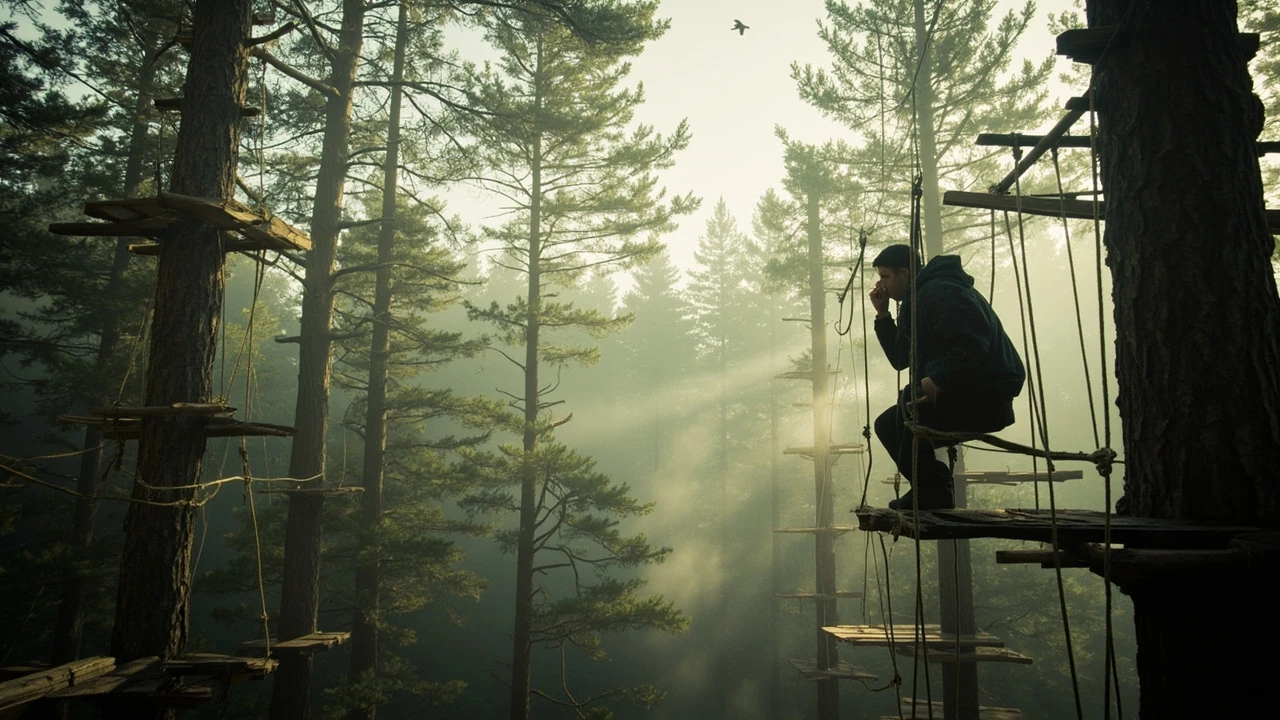
Outdoor voices: what you actually hear on a rope park day
A platform creaks under a boot, a guide calls a count from below, a thrush drops a few phrases from the canopy, and the wind moves through the cables in long slow tones. Within the first minute on a high ropes course, a visitor is hit with more layered sound than most people hear in a week indoors. Those layers are what experienced instructors mean when they talk about the outdoor voices of a forest adventure site, and they matter more for safety, comfort, and learning than many first-time visitors realize.
This guide looks at the idea of outdoor voices in the specific context of a rope park day. It covers which sounds to listen for, which to filter out, how wind and weather change the acoustic picture, and how a group can plan ahead so the most useful voices are easy to hear when they need to be. It is written for families, school groups, and first-time visitors who want to get more out of a high ropes course by paying attention to the environment around them, not just the equipment on them.
What “outdoor voices” means in a rope park setting
The phrase outdoor voices is shorthand for the mix of human, animal, mechanical, and natural sounds that fill any outdoor space. On a rope park site, that mix is unusually dense because the activity concentrates people, equipment, trees, and weather into a small area. Understanding that mix is useful before anyone clips in.
Most of the sounds a visitor hears can be sorted into four groups:
- Operator voices, the instructors, belayers, and guides who give instructions, count climbs, and call warnings.
- Participant voices, the climbers themselves, including the person on the course, their friends, family, and other groups on nearby elements.
- Animal voices, the birds, insects, and small mammals that live in or pass through the forest, which can be surprisingly loud during dawn and dusk.
- Environmental voices, wind in the trees and cables, rain on leaves, creaking wood, distant traffic, and aircraft overhead.
Each layer carries information. The first time a guide says “one, two, three” on a belay line, the count is a clear instruction. A woodpecker drumming on a dead trunk might be a useful sign of mature forest, or a distraction when someone is trying to hear a safety call. The trick is to know which voice is speaking at which moment, and to position yourself so the right ones are easy to pick out.
Why listening matters more on a high ropes course
Most leisure activities allow visitors to ignore the sounds around them. A rope park does not. Once a climber leaves the ground, several things change at once. Eye contact with the ground becomes harder. The body is focused on grip, balance, and harness checks. Visual cues, the easiest sense to rely on for reassurance, are limited by the height and by the structure of the course. Sound becomes a primary channel for safety information, encouragement, and orientation.
Operators plan around this. A good briefing covers not just how to clip in, but how to listen. Participants are usually told to stay quiet when the guide is talking, to repeat counts aloud so the belayer hears them, and to call out before a tricky transition. Those habits depend on the climber being able to tell operator voices apart from everything else, which is harder than it sounds in a busy forest with wind in the pines.
For families, the acoustic element is also emotional. A child who is nervous on a high element will often calm down faster when they can hear a familiar voice giving clear steps, rather than only seeing a hand signal from 20 meters away. That is part of why many rope parks encourage one designated cheerleader on the ground for younger climbers.
The four layers of outdoor voices, side by side
The table below sets out the four main voice layers, the kind of information each one carries, and the practical response that helps the day go smoothly. It is a useful reference for first-time visitors who want a simple mental model before they arrive.
| Layer | Typical sources | What it usually signals | Practical response |
|---|---|---|---|
| Operator voices | Briefings, belay counts, course announcements, safety calls | Instructions, hazards, group timing | Stop moving, face the speaker, repeat the count aloud when asked |
| Participant voices | Family, friends, other groups, the climber themselves | Encouragement, frustration, sometimes distraction | Lower volume between elements, save conversation for pauses |
| Animal voices | Birds, insects, squirrels, occasional larger wildlife | Time of day, season, forest health | Enjoy the soundtrack; pause if a guide flags a wildlife issue |
| Environmental voices | Wind in trees, rain, creaking wood, cables, distant traffic, aircraft | Weather change, course condition, exposure | Track wind shift across the visit, raise concerns at the briefing desk |
This is not a perfect taxonomy. A loud gust can be the most important safety voice on the site, and a quiet family member can carry the most emotional weight. The point is to recognize that not all sound is the same kind of information, and to give the operator voice the most consistent priority during a climb.
How weather changes the outdoor voices you hear
Weather has a louder effect on what you hear than almost any other factor. A calm morning sounds nothing like a breezy afternoon, and a wet morning in autumn sounds nothing like a dry morning in the same season. Knowing what to expect makes the day feel less unpredictable and helps with safety decisions. Readers who want more background can use the Voices overview as a reference while reviewing this point.
Wind and the voice mix
Wind is the single most disruptive outdoor voice on a rope park. As it rises, it covers the high frequencies that make speech intelligible, and it adds its own tones through the cables and the trees. Once a steady breeze passes about 25 km/h, most guides will either pause high elements or move the group to lower, more sheltered circuits. Asking about the site’s specific wind policy before booking is fair and expected.
Rain and the voice mix
Light rain usually adds a soft hiss that makes quiet voices easier to hear but lowers the overall comfort level on the course. Heavy rain reverses that picture: it masks speech, makes metal fittings slippery, and shifts the operator’s priorities toward closure rather than active climbing. Many sites keep a small covered briefing area for exactly this reason, and good operators will move the safety conversation under cover as soon as rain starts in earnest.
Temperature and the voice mix
Cold air carries sound further and changes the tone of voices on the course. On bright, cold mornings, animal calls travel further and the forest feels acoustically larger. In humid summer air, sound feels closer and softer. Neither is better, but both change how easy it is to hear the belayer from a high element. Visitors who know they have mild hearing loss should mention it at check-in so a guide can be aware.
How to plan your day around the outdoor voices
Most people plan a rope park visit around height, age, and fitness rules, which is correct. A second pass through the plan with sound in mind makes the day run more smoothly, especially for groups with mixed ages or nervous members. The list below is a practical pre-visit checklist that takes about two minutes and prevents most of the common acoustic problems visitors run into.
- Check the weather, then check it again. Wind and rain forecasts change within an hour, and rope park closures often follow wind shifts more than rain totals.
- Arrive 20 to 30 minutes early. Rushed briefings are the main reason first-time climbers miss the operator’s first safety calls.
- Identify one ground voice per climber. Pick the person whose voice will be the calm anchor during a hard element, and tell the guide who that is.
- Leave phones on silent. A surprise ringtone in the canopy is louder than people expect and tends to startle other climbers.
- Carry water in soft bottles. Hard bottles clink against helmets and harnesses, and the noise can be distracting on a quiet element.
- Brief children in advance. Explain that the guide’s voice is more important than their own when they are on a high element, and that shouting for fun should wait for the ground.
- Ask about the site’s quiet windows. Many parks schedule a calmer first hour in the morning, which is useful for nervous first-timers or sensory-sensitive visitors.
This is not a strict rule set. The point is to give the group a few shared habits so the operator’s voice stays the loudest one in the picture when it needs to be.
Reading the operator voice during a climb
Once a climber is on a high ropes course, the operator’s voice becomes a live instrument. The same words can mean different things depending on tone, timing, and which microphone the guide is using. Visitors who are new to the activity often miss this, and then feel lost on the first few elements.
Tone, pace, and repetition
A calm, slow voice usually signals a standard instruction that has been given many times. A faster, sharper voice usually signals a safety call, a real-time correction, or a change in plan. When a guide repeats a number, especially a belay count, that is not filler. It is the belayer checking that the rope and carabiner are doing what they should be doing, and the climber repeating it back closes the loop.
Position and direction
Sound behaves differently on a rope course than on the ground. Cables and wooden platforms reflect it, and tall trees can block parts of a phrase. Turning toward the voice, rather than away, usually makes a meaningful difference. Climbers who find themselves saying “what?” several times in a row should pause, look at the guide, and listen again before they move.
When the voice changes
A change in the operator’s tone is often the earliest signal of a real shift, for example an incoming weather front or a course that has just been closed for safety. Visitors should treat a clearly different vocal style as a prompt to stop moving, secure their position, and wait for the next instruction. This is one of the most reliable habits to build across a rope park day.
Common acoustic problems on a rope park day
Even well-planned visits run into predictable sound issues. The table below lists the ones operators see most often, along with the small adjustment that usually solves them. Another relevant reference is the voices founder tyler haney says adios, which adds context without changing the practical guidance here.
| Common acoustic problem | What it sounds like | Why it happens | Simple fix |
|---|---|---|---|
| Belay count lost | Climber keeps asking “what number” | Wind or distance covers the belayer’s voice | Climber turns to face the belayer and repeats numbers aloud |
| Briefing missed | Group unsure where to go first | Late arrival or noisy arrival area | Arrive 20 to 30 minutes early and stay near the briefing zone |
| Group overlap | Two groups giving each other instructions at once | Adjacent elements close in space | Wait for the louder group to finish, then use short, clear phrases |
| Phone ringtone | Sudden loud tone from a pocket or bag | Phone not on silent before clipping in | Switch to silent or leave the phone with a non-climbing family member |
| Hard bottle clink | Sharp metallic sound on a high element | Drinking from a metal bottle while clipped in | Drink only on the ground or at platform stops |
| Helmet chatter | Continuous tapping from chin strap | Loose helmet strap against the shell | Tighten the strap so it sits flush under the chin |
None of these are safety emergencies on their own, but together they are the most common reason a first-time visitor leaves a rope park feeling that the day was chaotic. A small amount of attention before and during the visit removes most of them.
Outdoor voices for different visitor groups
The same forest sounds are useful, distracting, or overwhelming depending on the visitor. A brief look at a few common groups helps to set expectations.
Families with younger children
Children under about eight often respond more strongly to voices than to visual instructions. Naming the operator at the start, pointing out which voice is the guide’s, and assigning a single ground voice for the child makes the climb feel safer. Parents who are also climbing should be aware that their own voice, encouraging as it is, can drown out the guide if they call up while the belayer is mid-count.
School and youth groups
Larger groups bring a different acoustic challenge. The right move is to split the group into smaller pods of about six to eight, each with a clear ground leader, and to agree on a quiet signal that means “stop and listen.” Many schools use a simple raised hand, which works well across wind and distance because it adds a visual cue to a voice cue.
Sensory-sensitive visitors
For visitors with sensory processing differences, the layering of voices on a busy rope park can be intense. Most operators are happy to schedule a quieter first hour, to assign a guide to that visitor’s element only, and to lower background music. Asking at booking is the simplest path to a calmer day.
Visitors with hearing differences
Many rope parks work with visitors who are hard of hearing or deaf. The standard accommodation is a short visual signal system, agreed at the briefing, so the guide can communicate “stop,” “go,” and “lower” with hand signs rather than voice. It is worth raising this at booking so the operator can plan a small adjustment to the briefing style.
Field notes: what a calm hour on a rope course actually sounds like
It helps to picture the acoustic picture of a well-run morning. Before the first group arrives, the forest carries the early bird chorus, light wind in the canopy, and the slow creak of empty platforms as they cool in the morning air. As the first group approaches, the human layer enters: the receptionist’s voice at the desk, the rustle of harness webbing, the click of carabiners being checked, and the briefing itself, usually about 10 to 15 minutes of focused speech that sets the rhythm of the day.
Once climbing starts, the operator voice narrows to short calls and counts. The animal voice is still there, but the birdsong often moves earlier in the morning, so by mid-morning the human layer dominates. The environmental voice changes with each weather shift, and the guide’s tone usually predicts the change before the cloud arrives. By the end of a session, the visitor has heard a complete acoustic day, and most will be surprised at how much they picked up without trying.
How this fits into a wider rope park plan
Outdoor voices are one of several environmental factors worth thinking about on a rope park day. The list below links this idea to the other common decisions families and groups face, so the plan feels joined up rather than scattered.
- Use the site’s age and height rules to pick the right circuit, then check which element is quietest at the time you want to climb.
- Cross-check the plan against the site’s rain, wind, and closure policy, because those weather factors will change the voice mix on the day.
- For first-timers, read the first-time ropes course guide so the briefing language is familiar before you arrive.
- Build the day trip with a one-day forest escape plan so travel, meal, and rest breaks do not push the rope park into a windier, busier late slot.
Together with the rest of the site, these pages give a complete picture of what a rope park day feels like before the harness goes on.
Frequently asked questions
What does “outdoor voices” mean on a rope park day?
It refers to the mix of sounds you hear outdoors: operator voices, the people you are with, animals in the forest, and natural sounds like wind and rain. On a rope park, that mix carries a lot of safety and emotional information, which is why it is worth paying attention to.
Why do guides keep telling climbers to be quiet?
Because a calm course is a safer course. When climbers are quiet, the belayer can hear the climber’s calls, the guide can give clear instructions, and the climber can hear the count that confirms the rope is working. The rule is not about fun, it is about being able to hear the next important instruction.
How loud does wind have to be to close a rope park?
There is no single rule across all sites. Many close high elements above about 40 to 50 km/h sustained wind, and pause earlier for gusts. Always check the specific site’s policy before you book, because wind can change within an hour.
Are birds and other animal sounds useful on a rope park?
Indirectly, yes. Bird activity tells you the time of day, the season, and whether the forest is calm. A sudden silence from the canopy can also be a useful cue that something has changed, and a guide will often use that as a signal to check the group.
Can I bring a portable speaker onto the course?
Most rope parks do not allow it, because the music competes with the operator’s voice. Headphones are usually a worse idea, since they block safety calls. A quiet day is a safer day, and most visitors are surprised how much they enjoy the forest without the extra sound.
What if a member of my group is hard of hearing?
Tell the operator at booking. Most parks will set up a small visual signal system at the briefing, so the guide can communicate with hand signs instead of voice. It is a small adjustment, and most operators are used to it.
How early should we arrive for the briefing?
About 20 to 30 minutes before your booked slot is a safe target. The briefing is short, but it is the moment when the operator’s voice sets the tone for the whole day, and being late is the most common reason visitors miss the most important safety information.
Is a rope park a good activity for sensory-sensitive visitors?
It can be, with a small amount of planning. Ask the operator about quieter time slots, ask for a guide assigned to your group, and ask them to lower any background music at the briefing. Many sites are happy to make these adjustments when asked in advance.
What is the most common acoustic mistake visitors make?
Talking through the belay count. The count is a live check that the rope is doing its job, and missing it is a real safety risk. A simple habit of going quiet when the count starts removes most of the risk.
Does the time of day change the outdoor voices we will hear?
Yes. Early morning is the loudest natural window, with strong bird activity and low wind. Late afternoon is the opposite, with calmer animal voices and often stronger wind. Most operators find mid-morning the easiest time to run a safe, clear briefing, which is one reason it is a popular slot for first-time groups.
Related reading
Explore High Ropes Adventure
Trip tools
Essential adventure planning guides
Use these practical guides to compare rope park activities, prepare for a first high ropes day, check a booking, choose suitable footwear and contact the editorial team. Each page links to the relevant live tools and current planning sections.
Latest articles
- Tame Impala tickets: how to find them, what they cost, and what to know before you buy
- Outdoor pillows: how to choose the right ones for a deck or trail rest stop
- How to find Morgan Jay tickets without overpaying
- How to find national parks near me: a practical local search guide
- Paylater travel: how buy now, pay later works for trip bookings
- Bagsmart Blast Travel Backpack: A Practical Review for Day Trips and Adventure Days
- How to choose an outdoor rocking chair that actually lasts
- Indiana travel advisory map: how to read it before a day trip
- How to plan an outdoor day around a concert stop: a cardi b tickets field guide
- Outdoor sectional sofas: a practical buyer’s guide for patio living