Thousand Trails: How the Membership Works and What to Check Before You Join
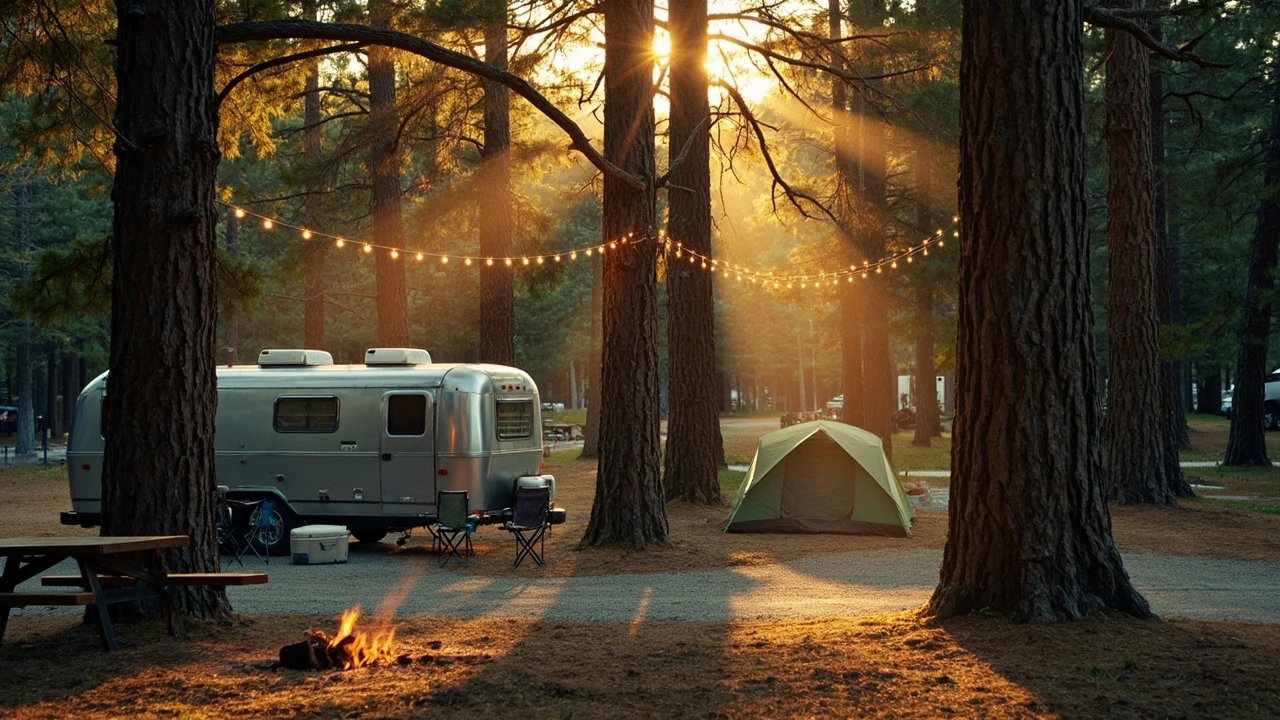
Thousand Trails: how the membership actually works for campers and weekend travellers
A couple parks their RV at a wooded Thousand Trails campground on a Friday evening, plugs in at the site, and uses the included utilities without thinking twice about a separate nightly fee. Two states over, another family is comparing the same brand against an independent state-park stay and trying to decide whether the annual dues actually pay off. Both situations are common because Thousand Trails operates on a membership model that looks familiar on the surface but behaves very differently from a traditional pay-per-night campground chain.
Thousand Trails is a network of private membership campgrounds spread across the United States and a small number of Canadian locations, with the brand now operating under the broader Outdoor Resorts umbrella alongside resorts such as Outdoor World. Members pay a one-time joining fee and ongoing dues in exchange for the right to stay at participating campgrounds, often for little or no nightly cost beyond a small site fee, and within rules that govern how long they can stay, where they can go, and when they can book. The idea is appealing to anyone who travels in an RV, owns a travel trailer, or simply wants a predictable place to camp several weekends a year, but the structure rewards careful readers and frustrates people who buy in without reading the membership documents.
This guide walks through how the Thousand Trails membership actually works, what it costs in real terms, what the network includes, where the model tends to disappoint, and the practical checks worth doing before you commit. It is written for someone comparing Thousand Trails against other ways of camping, not for a person who has already decided to join and is looking for validation.
How the Thousand Trails membership is structured
Thousand Trails sells access to its campground network through a tiered membership rather than a single flat subscription. Each tier controls how many days per year you can stay, which regions you can use, and how far ahead you can reserve. The brand’s structure has changed over the years, including the introduction of separate “zones” that bundle specific campgrounds together, so the precise rules depend on the contract and zone package you sign at the time of joining.
At the centre of the model is a distinction between a Trail Pass (sometimes called a zone pass or basic membership) and an Adventure Package or upgraded tier. A Trail Pass usually grants access to campgrounds in a single zone for a limited number of nights per year and a set number of days in any single visit. An Adventure Package adds reciprocal access to other zones and to affiliated networks, such as the Outdoor Resorts family of resorts, often with longer stay windows or fewer blackout rules.
Members also receive what is typically called a “free nights” allotment, with the exact number depending on tier. Free nights can be used at participating campgrounds, with a modest site fee charged per night. After the free nights are used, additional nights within the same visit may be available at a reduced member rate, and beyond that a published nightly rate applies. The structure rewards planning, because the best sites, the longest stays, and the cleanest pricing are almost always the ones booked well ahead of arrival.
What a Thousand Trails campground typically includes
Thousand Trails campgrounds are full-service RV and tent resorts rather than minimal public campgrounds. The exact amenities depend on the location, but the brand tends to standardise a core set of features that members can expect when they arrive.
- Hookups for RVs, including water, electric, and in many cases sewer at individual sites
- Heated or unheated swimming pools depending on the region and season
- Restroom and shower facilities kept for member use
- Playgrounds, sports courts, and dog-friendly walking areas
- Community halls, activity centres, and planned social events in peak season
- Wi-Fi, with the speed and reliability varying by park and often improving in recent renovations
- Laundry facilities and a small camp store at larger properties
Some Thousand Trails properties sit on lakes or near hiking trails, while others function as quiet rural stops along long-haul routes. A small number are positioned close enough to major attractions to serve as a base for theme-park or national-park trips, but most are designed for guests who plan to spend at least a couple of days on site rather than just one overnight pass-through.
Where the campgrounds are located
Thousand Trails divides its properties into regional zones, and the number and shape of those zones have shifted as the company has been acquired and reorganised. Members generally see the network described in terms of a Northeast zone, a Southeast zone, a Central zone, and a Western zone, with each zone containing a mix of full-service resorts, preserve properties, and smaller member-only campgrounds.
Some of the better-known Thousand Trails properties include resorts in Pennsylvania, Virginia, the Carolinas, Georgia, Florida, Texas, the Ozarks, the upper Midwest, and the Pacific Northwest. Several locations sit within driving distance of major national parks, which is part of the brand’s appeal to retirees and travelling families who want a “home base” near outdoor destinations. The brand also offers reciprocal access through partner networks, which is where the Adventure Packages and upgraded tiers start to add real flexibility.
For members, the practical question is not just how many campgrounds the network has but how those campgrounds line up with the routes you actually drive. A membership that includes a great campground two hours off your usual path is far less useful than a smaller network that aligns with your normal travel corridor.
What it costs to join and stay
The price of joining Thousand Trails varies by promotion, season, and which zone or Adventure Package is being sold. Recent public pricing has generally placed a basic zone membership in the low to mid four figures as a one-time joining fee, with annual dues on top, and Adventure Packages costing considerably more. Promotional offers are common, often including reduced joining fees, waived first-year dues, or bundled free-night credits, but the trade-off is usually a longer commitment term or a more restrictive zone choice.
Beyond the membership dues, members typically pay a small site fee per night, which the brand advertises as covering utilities and park maintenance. The site fee is separate from any RV site rental an outside visitor would pay at the same park, and it is the figure worth tracking if you are trying to calculate annual value. In practice, the per-night cost for an active member who uses their free nights aggressively can fall to a small fraction of what a non-member would pay at a comparable private resort, but only if the member travels often enough to use the included nights each year.
Members should also budget for:
- Annual dues, which can rise modestly at renewal
- A possible trailering or RV storage fee if the member keeps a unit at a park
- Optional upgrades such as a higher-tier Adventure Package for cross-zone access
- Pet fees where applicable, particularly at pet-friendly resort properties
- Visitor or guest fees when non-members stay overnight in a member’s RV
Realistic comparison: Thousand Trails versus pay-per-night camping
The clearest way to evaluate the Thousand Trails value proposition is to compare the annual membership cost plus site fees against the cost of booking comparable private RV resorts a la carte for the same number of nights. The table below uses conservative public nightly rates for full-hookup RV sites at private resorts in 2024 and 2025, recognising that actual prices vary by region and season.
| Traveller pattern | Estimated a la carte cost per year | Typical Thousand Trails annual cost (dues + site fees) | Notes |
|---|---|---|---|
| 15 nights per year, mostly weekends, single zone | US$1,500 to US$2,400 | US$700 to US$1,000 after joining fee is amortised | Break-even usually appears around 10 to 12 nights for active members |
| 30 nights per year, multi-zone, full hookups | US$3,000 to US$5,000 | US$1,200 to US$2,000 with an Adventure Package | Where an Adventure Package starts to make financial sense |
| 50+ nights per year, full-time or near-full-time RV use | US$5,000 to US$9,000 | US$2,000 to US$3,500 with the right combination of passes | Highest savings, but only if sites are available where you want them |
| Occasional week-long trips, low annual usage | US$800 to US$1,500 | Often higher than a la carte | Membership rarely pays off for users who travel fewer than 7 to 10 nights a year |
These figures are illustrative rather than guaranteed, and the brand frequently runs promotions that change the calculation. The larger point is that the value of a Thousand Trails membership scales with how often you actually camp in the network, and members who treat it like a year-round plan will see very different economics from members who only travel a few weekends a year.
The stay rules that shape the experience
Most Thousand Trails memberships include stay limits designed to keep sites moving and to balance access across a large member base. Common rules to look for in the membership contract include:
- A maximum number of nights in any single visit, often around 14 to 21 nights depending on tier and season
- A required number of nights out of the network between visits to the same campground
- Blackout dates around major holidays, especially at the most popular resorts
- Reservation windows that may open weeks or months in advance, with longer windows for higher tiers
- Limits on the number of consecutive nights during peak summer weeks
These rules are not a hidden trap, but they do change how you plan. A member who enjoys settling into a single park for a month will be frustrated by a 14-night cap, while a member who rotates between three or four favourite parks on long weekends will barely notice the limit. Before joining, it is worth asking the sales representative for the exact stay rules in writing and checking how those rules interact with any reciprocal access included in the package.
Who tends to benefit most from Thousand Trails
The Thousand Trails model fits a fairly specific type of traveller. It is not a universal discount card, and members who do well with the brand usually share a few traits. The membership is well suited to:
- Retirees or near-retirees who travel by RV for several months a year and want predictable base costs
- Families with a camper or travel trailer who take regular weekend trips within driving distance of a network property
- Work-from-RV travellers who need reliable hookups and quiet surroundings for stretches at a time
- Snowbirds who split their year between a warm-weather Thousand Trails property and a cooler northern campground
- People who already plan to camp in the network’s footprint and just need a lower nightly cost
The model is a poor fit for tent campers who prefer dispersed public-land camping, for owners of small vans who do not need full hookups, for travellers who want to chase last-minute reservations at premium destinations, and for anyone who treats camping as a once-a-year holiday rather than a regular habit. Members who sign up expecting unlimited flexibility often feel the rules most harshly.
Practical checks to do before you join
Thousand Trails offers a Discovery or preview program at many of its resorts, which lets a prospective member stay a night or two and tour the property before committing. Anyone seriously considering the membership should take advantage of this, and should go in with a checklist rather than a hopeful attitude. Useful checks include:
- Visit at least one Thousand Trails campground in person, ideally during the season you actually plan to travel
- Confirm the exact list of campgrounds included in the zone or package you are buying
- Ask for the current stay rules, blackout dates, and reservation window in writing
- Compare the published member site fee with the public nightly rate for the same dates
- Read the cancellation and refund policy before paying the joining fee
- Ask about transferability if there is any chance you will sell the membership in future
- Check the annual dues schedule for the first three to five years, not just the promotional first year
These checks take a little effort, but they are the difference between a membership that fits your travel pattern and one that quietly wastes money for years.
How Thousand Trails compares with other RV memberships
Thousand Trails is not the only membership-based RV network in North America. Brands such as KOA, Good Sam, and a number of smaller regional clubs offer their own versions of member pricing, discount cards, and reciprocal networks. The table below summarises the main differences at a high level.
| Feature | Thousand Trails | KOA | Good Sam | Independent state parks |
|---|---|---|---|---|
| Primary model | Annual membership with free-night allotment | Pay-per-night with a discount card | Discount club plus paid campgrounds | Public pay-per-night with no membership |
| Best for | Frequent RV travellers in the network footprint | Families who want predictable quality and amenities | General RV owners who want fuel and camping discounts | Budget campers who want flexibility and lower nightly rates |
| Site availability | Limited by member rules and reservation windows | Wide, with first-come-first-served and reservations | Depends on the campground operator | Often books out months in advance at popular parks |
| Typical annual cost | Moderate to high, with joining fee | Low for the discount card, higher for stays | Low annual fee for discounts | Only the nightly rate |
| Flexibility outside the network | Limited unless you add an Adventure Package | Strong, since most KOA parks accept non-members | Strong, since Good Sam discounts apply broadly | Total, since you can camp anywhere |
For RV owners who mostly camp at branded full-hookup resorts, Thousand Trails is competitive on price. For travellers who mix private resorts with state and national park stays, a broader discount card plus a few pay-as-you-go nights is often simpler and cheaper. The right answer depends less on which brand is “best” and more on where you actually want to camp.
Common mistakes new Thousand Trails members make
Most negative reviews of Thousand Trails share a small number of root causes, and almost all of them are avoidable. The first mistake is buying the largest package on the first sales call without comparing it to the basic zone membership. A second, related mistake is overestimating how many nights you will actually use. A third is ignoring the reservation window and then being surprised when peak-season sites are taken. A fourth is treating the membership as a one-time purchase rather than an ongoing annual expense, which is what the dues structure is designed to be.
The most expensive mistake is buying a Thousand Trails membership as a gift or as a retirement plan without checking whether the recipient actually travels in a way that benefits from the network. A membership that is perfect for a snowbird who spends winters in the southern United States is wasted on someone who takes one summer road trip a year. If you are buying for someone else, involve them in the decision and budget for a Discovery stay before any money changes hands.
How to get the most out of a Thousand Trails membership
Members who consistently report a positive experience tend to share a few habits. They plan stays several months in advance, especially for peak summer weeks and holiday weekends. They learn the difference between their free nights, their discounted member rate, and the published nightly rate, and they book the most expensive weeks against the free-night allotment. They rotate between several favourite parks rather than fighting for the same resort at the same time of year. And they keep their annual dues and site fees in a dedicated travel budget so the cost stays visible.
Members also tend to use the network’s reciprocal partnerships strategically. If your Adventure Package grants access to additional zones or partner networks, map those parks against your normal travel plans before your first big trip, not after. The partnerships can be the single biggest factor in whether a higher-tier membership is worth the upgrade fee.
Frequently asked questions
What exactly is Thousand Trails?
Thousand Trails is a private membership network of RV resorts and campgrounds across the United States, with a smaller number of Canadian properties. Members pay a joining fee and annual dues in exchange for access to a defined number of free nights per year, with a small site fee per night, at participating campgrounds organised into regional zones.
Is Thousand Trails worth the money?
For RV owners who camp at least ten to fifteen nights a year within the network’s footprint, Thousand Trails usually pays for itself within the first year or two. For occasional campers, the annual dues and joining fee often exceed the cost of booking comparable private resorts a la carte. The value depends almost entirely on how often you use the included nights.
How much does a Thousand Trails membership cost?
Costs vary by promotion, tier, and zone. A basic zone membership typically runs in the low to mid four figures as a one-time joining fee, with annual dues added on top and a separate per-night site fee at each stay. Adventure Packages with broader access cost more, and promotional offers can reduce or change the fee structure temporarily.
Can you stay at any Thousand Trails campground with any membership?
No. Most memberships are tied to a specific zone or set of zones, and access to other regions usually requires an upgraded tier or a reciprocal agreement. Before joining, ask for a written list of the campgrounds covered by your exact package.
Are Thousand Trails campgrounds pet friendly?
Many are, especially the resort-style properties, though individual parks set their own rules on breeds, sizes, and the number of pets per site. Some locations also charge a small pet fee. Check the specific campground’s policy before booking if you are travelling with animals.
Can you rent a Thousand Trails site without being a member?
Some Thousand Trails properties accept non-member reservations, but the nightly rate is higher, and the most popular weeks often go to members first. If you only plan to camp once or twice, paying the public rate is usually simpler than joining.
Is there a trial or preview stay available?
Thousand Trails generally offers a Discovery or preview program that lets prospective members stay a night or two at a participating resort before committing. Taking advantage of this is the single most useful step before buying, because it lets you see the actual condition of the parks you would be using.
Can a Thousand Trails membership be transferred or resold?
Transfer rules depend on the contract and on current company policy. Some memberships are transferable for a fee, while others are tied to the original member. Ask the membership office for the current transfer terms in writing before you join if resale flexibility matters to you.
Does Thousand Trails cover tent camping?
Some Thousand Trails properties do accept tent campers, and tent sites are usually cheaper than RV sites. However, the network is designed primarily around RVs, and members who only tent camp will see a much smaller return on the annual dues than members with trailers or motorhomes.
What happens if Thousand Trails closes a campground?
When a campground leaves the network, members are usually redirected to nearby properties, and in some cases the company adjusts the zone or package to maintain coverage. The exact remedy depends on the membership terms in force at the time, which is another reason to read the contract carefully and to keep a record of the campgrounds that were included when you signed up.
Bringing it together: a practical way to decide on Thousand Trails
The Thousand Trails membership is a real product with a real cost structure, and the honest way to decide whether it is right for you is to put a number on the nights you actually plan to camp. List the next twelve months of likely trips, mark which ones fall inside the Thousand Trails footprint, multiply the expected nights by the published member site fee plus a share of the annual dues, and compare that total with the cost of booking comparable private resorts for the same nights. If the membership comes out clearly ahead and the stay rules match your travel style, the math supports joining. If the difference is small, or if your trips are mostly outside the network, you are better off paying as you go and keeping your options open.
For readers who are already in the habit of regular RV weekends within driving distance of a Thousand Trails property, the membership is a sensible way to convert predictable camping patterns into lower per-night costs. For everyone else, a Discovery stay and a careful read of the contract are the next steps worth taking, and they cost far less than a joining fee paid in haste.
Related reading
Explore High Ropes Adventure
Trip tools
Essential adventure planning guides
Use these practical guides to compare rope park activities, prepare for a first high ropes day, check a booking, choose suitable footwear and contact the editorial team. Each page links to the relevant live tools and current planning sections.
Latest articles
- Sweet tart ropes: what the flavour means in a ropes course
- Demon Slayer movie tickets: how to find a screening and prepare for a day out
- How to choose NBA tickets without overpaying
- Time travel movies worth watching on a slow weekend
- Overseas adventure travel: how to plan a trip that actually works
- Choosing an outdoor bench that actually lasts
- Lows adventure: how low-ropes courses work and who they suit
- outdoor couch
- United travel bank: how prepaid travel money cards actually work
- National parks in California: a practical guide to choosing your trip