Planning a Parks Project: From Site Vision to Built Adventure Space
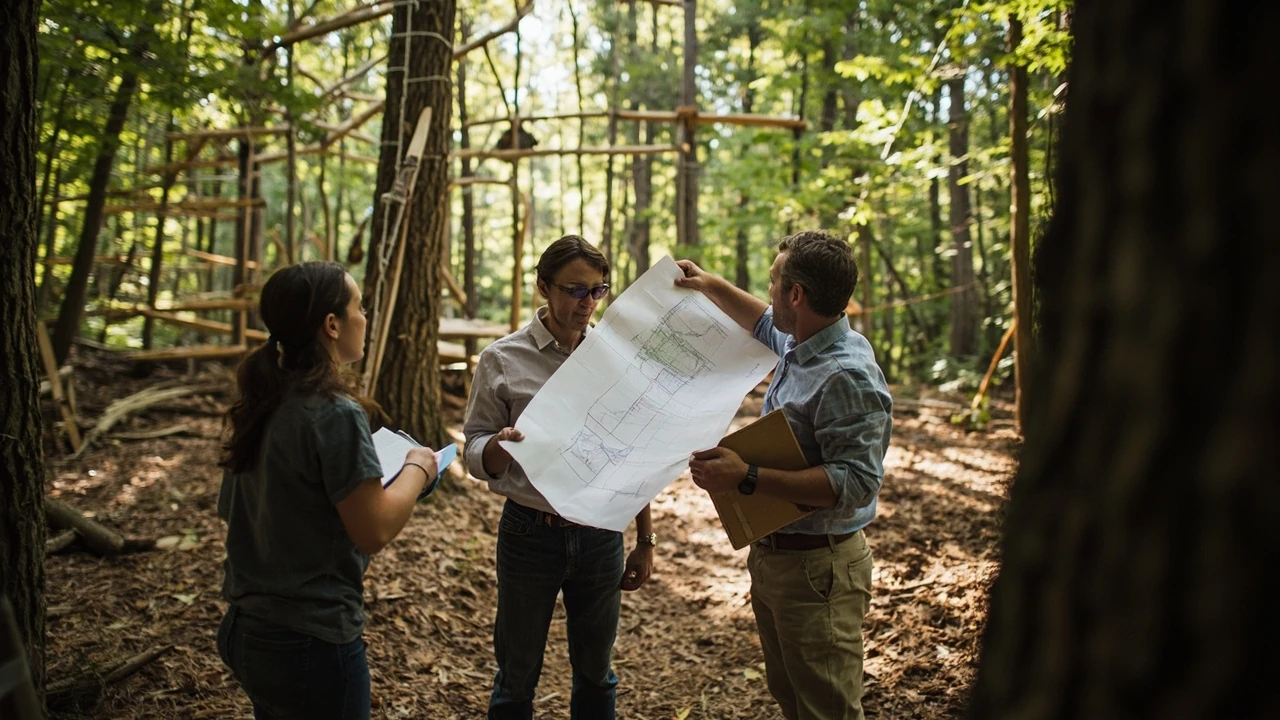
A new parks project almost always starts with a question that looks simple from the outside but is rarely simple in practice: how do you turn an empty piece of land, a schoolyard, a resort lawn, or a forested slope into a place that visitors actually want to come back to? The answer depends on terrain, budget, local rules, the kind of experience you want to offer, and the people who will operate the site day after day. A parks project is not just a construction job. It is a sequence of decisions about audience, risk, identity, and long-term cost that begins long before a single pole goes into the ground.
This guide walks through the full arc of a parks project, from the first site walk and feasibility study through design choices, permitting, construction phases, and the operational setup that follows. It is written for landowners, school administrators, resort managers, community groups, and consultants who are weighing a real build, not a hypothetical one. Where the topic touches safety systems, the language used here reflects widely accepted industry practice for adventure and rope course facilities, and readers should always verify local requirements with a qualified installer and the relevant authority.
Parks Project: What the Phrase Really Covers
The phrase parks project gets used loosely. In municipal planning it often means a public green space with paths, benches, and play equipment. In the outdoor recreation sector, a parks project usually means a more structured facility: a rope course, a zip line tour, a treetop walkway, a climbing park, a team-building park, or a combined adventure park. Both meanings share the same backbone, which is land, design, infrastructure, and operations, but the engineering, safety, and cost profile of an adventure-focused parks project is closer to a small industrial build than to a landscape project.
For this article, the focus sits with the adventure-park reading, because that is where the decisions are densest and where small mistakes tend to be most expensive. The principles still translate to lighter builds, such as school obstacle courses or family zip lines, and the planning logic is the same.
Where most parks projects actually start
In practice, the trigger is rarely a clean brief. It is usually one of the following:
- A landowner with a forested plot who wants a revenue stream and a reason to host visitors.
- A resort, campsite, or activity center that needs a flagship attraction to lift shoulder-season visits.
- A school or university looking for a structured outdoor learning and team-building resource.
- A community group or municipality trying to expand recreation without committing to a full sports facility.
- An entrepreneur who has visited an existing park elsewhere and wants to replicate the model closer to home.
Each of these starting points pushes the design in a slightly different direction, which is why the first job on any parks project is to write the brief down, even if only on one page.
Defining the Brief Before You Define the Site
The single most common reason parks projects run over budget or disappoint visitors is a brief that lives only in the founder’s head. Before you commission drawings, you need a short, written document that locks in five things.
- Who the primary visitor is. Families with young children, school groups, corporate teams, and tourist day visitors each want different things from a parks project.
- What experience you are selling. Active challenge, scenic immersion, team building, or a mix.
- How many visitors you expect at peak and on an average day.
- What you are not building. A boundary now saves a redesign later.
- What success looks like in three years, not just on opening day.
A useful test is to read the brief to someone who has never seen the site. If they can picture the kind of visitor, the kind of activity, and the kind of day, the brief is clear enough to take to a designer.
Audience shapes almost every later decision
Audience is not a marketing detail. It drives the height of elements, the choice of safety system, the number of staff per visitor, and even the color palette. A parks project aimed at eight-year-olds and their grandparents looks very different from one aimed at corporate groups or adventure tourists in their twenties. Trying to serve all of them with the same layout is the surest way to build something that serves none of them well.
Site Assessment: The Decisions You Make Before Design
Once the brief is clear, the next step is a structured site assessment. This is where you trade ambition for reality. The list below is the core of any site assessment for a parks project.
| Assessment area | What you are checking | Why it matters |
|---|---|---|
| Topography | Slope, elevation change, natural benches, drainage paths | Determines course layout, gravity-assisted elements, and where platforms can sit |
| Vegetation | Tree species, trunk diameter, root health, canopy density | Drives whether you build in trees, on poles, or a mix; affects permits |
| Soil and geology | Soil type, bedrock depth, water table | Sets foundation design and cost for poles, anchors, and buildings |
| Access | Vehicle access, delivery routes, parking, public transport | Controls construction cost and daily visitor flow |
| Utilities | Power, water, sewage, telecoms | Drives whether you need generators, wells, or off-grid systems |
| Neighbors and noise | Nearby homes, businesses, protected areas | Shapes operating hours, lighting, and sound limits |
| Climate exposure | Wind direction, sun path, flood history, lightning risk | Determines element placement, shelter needs, and closure rules |
Two sites that look similar from the road can have radically different parks project profiles once this table is filled in. Sloped ground is great for zip lines but punishing for foundations. Dense old trees are perfect for treetop elements but may push you toward specialist, tree-friendly anchoring. A flat, open field is easy to build on but offers little natural cover from sun and rain.
The site walk you actually need
A useful site walk is not a stroll. It is a slow, repetitive pass where you stop, look up, look down, and imagine weight, movement, and queueing. Walk the proposed visitor route. Walk the emergency exit route. Walk it again in the rain. Take photos at the times of day the site will be busiest. Sit on a bench and listen. The things that bother you on a quiet Tuesday will bother your visitors on a busy Saturday.
Choosing a Concept: Theme Park, Forest Park, or Activity Park
After the site is understood, you choose a concept. For most private or semi-private parks projects, the choice sits between three families.
- Classic high ropes and zip line park. Built around elevated elements, belay systems, and zip lines, usually 1.5 to 4 hours of activity per visit.
- Family adventure park. Lower height, more ground-based elements, designed for mixed ages and shorter dwell times.
- Themed or immersive park. Stronger narrative, props, costumes, and sometimes a more theatrical feel, often layered on top of one of the other two.
Each concept carries a different balance of capex, operational complexity, and per-visitor revenue. A themed park commands higher ticket prices but costs more to operate because staff are part of the show. A classic high ropes park is operationally simpler but more exposed to weather closures. A family park is usually the most weather-resilient but also the most price-sensitive segment.
Design Phase: Translating Brief and Site into Drawings
Design is where the parks project becomes a thing on paper. The output of this phase should be a coordinated set of documents, not a single pretty rendering. At minimum, you should expect a site plan, an element layout, a safety system diagram, an operations plan, and a phased cost plan. Readers who want more background can use the National Parks as a reference while reviewing this point.
The documents you should ask for
- Master site plan showing buildings, parking, courses, and emergency routes.
- Course-by-course layout, including platform heights, span lengths, and entry and exit points.
- Belay and safety system schematics, including rescue and evacuation logic.
- Foundation and structural drawings for poles, platforms, and buildings.
- Guest flow diagram from arrival to departure, including staff positions.
- Maintenance access plan so future repairs do not require closing the whole site.
It is worth insisting that these drawings are produced together. A beautiful course layout that ignores maintenance access, or a clever operations plan that fights the guest flow, will cost money for the entire life of the parks project.
Permits, Codes, and the Regulatory Layer
Permitting is the part of a parks project that most founders underestimate, both in time and in cost. Rules differ widely between jurisdictions, but the categories below are nearly universal.
| Regulatory area | Typical question | Common evidence required |
|---|---|---|
| Land use and zoning | Is an adventure park an allowed use on this parcel? | Zoning map, site plan, sometimes a traffic study |
| Building permits | Do the structures meet local building code? | Structural calcs, foundation drawings, engineer sign-off |
| Safety standards | Does the course meet recognized adventure activity standards? | Compliance with relevant national or international norms |
| Environmental review | Will construction or operations harm protected species, waterways, or habitats? | Ecological survey, mitigation plan |
| Tree and vegetation | Can you anchor into, remove, or prune protected trees? | Arborist report, replacement plan |
| Commercial operations | Do you need a business license, food license, or liquor license for adjacent services? | Application forms, insurance, floor plans |
| Insurance and liability | What cover is required to operate? | Policy documents, risk assessments, waiver templates |
You should expect at least one round of revisions on every one of these items. A parks project that finishes permitting on the first pass is either very small or very lucky.
Budgeting: The Real Numbers Behind a Parks Project
Adventure parks are capital-intensive. A small family park can be built for a fraction of a major high ropes build, but the cost drivers are similar. The table below gives a rough sense of how the budget usually breaks down for a mid-sized parks project. Numbers are illustrative, not quotes, and vary widely by region, terrain, and ambition.
| Budget line | Typical share of total capex | What is included |
|---|---|---|
| Course and activity equipment | 35 to 45 percent | Poles, platforms, cables, harnesses, belay devices, zip line hardware |
| Construction and foundations | 15 to 25 percent | Excavation, concrete, anchoring, access tracks, drainage |
| Buildings and guest facilities | 10 to 20 percent | Reception, briefing room, toilets, storage, staff areas |
| Site infrastructure | 5 to 10 percent | Power, water, sewage, fencing, signage, lighting |
| Design, engineering, permitting | 5 to 10 percent | Architect, structural engineer, safety consultant, permit fees |
| Contingency | 5 to 10 percent | Unforeseen ground conditions, design changes, price rises |
Three budget rules are worth pinning on the wall of any parks project meeting. First, hold a contingency until the end, not the start. Second, separate what you need to open from what would be nice to have. Third, build the operating model before you build the physical site, because a park that is expensive to run will drain capital even if it was cheap to build.
Capital cost versus lifetime cost
Capital cost is what you spend before opening. Lifetime cost is what you spend over the next ten to twenty years. The two are linked: cheap equipment usually has higher maintenance and replacement costs, while better-specified gear often costs less per year of service. A parks project that focuses only on the build quote can end up with a site that is technically open but financially painful to operate.
Build Phase: How Construction Actually Unfolds
Construction is the most visible stage of a parks project, but it is also the stage where you have the least room to change direction. A clear sequence keeps things under control.
- Site preparation. Clearing, access tracks, services brought onto site.
- Foundations. Pole bases, anchor points, building footings, drainage.
- Vertical structures. Erecting poles or installing tree attachments.
- Platforms and hardware. Mounting platforms, attaching cables, fitting belay and zip line systems.
- Buildings and guest areas. Reception, briefing rooms, toilets, and storage.
- Site finishing. Paths, signage, landscaping, fencing, and lighting.
- Commissioning and testing. Independent inspection, load testing, staff training, and a controlled soft opening.
Commissioning is not a formality. It is the step that proves the parks project is safe to open and that staff can run it under real conditions. Rushing it, or treating it as a final checkbox, is one of the most expensive mistakes a new park can make.
Choosing a Safety System: Smart Belay, Continuous Belay, and Self-Belay
Safety system choice has a bigger impact on day-to-day operations than almost any other decision. Three families dominate the adventure park market.
- Smart belay systems use a hook or carabiner that automatically locks to the safety line, with no guest action required. They are easy to learn and reduce staff intervention per guest.
- Continuous belay systems, often based on a lanyard that runs along a cable throughout the course, give guests a smooth experience with fewer transfers. They suit higher throughput.
- Self-belay or traditional systems require the guest to clip and unclip at each element, with staff coaching at the start of each course. They are the most flexible but the most staff-intensive.
The right answer depends on the audience, the throughput target, and the local labor cost. A parks project aimed at corporate groups might prioritize throughput and use continuous belay. A park aimed at first-time families might prefer a smart belay for its simpler guest experience. The choice also has a long-term effect on staffing levels, which is one of the largest operating costs in any parks project.
Operations: What Happens After You Cut the Ribbon
Opening day is the midpoint of a parks project, not the end. The next twenty years are shaped by three operational pillars: staff, maintenance, and guest flow. Another relevant reference is the daily hive, which adds context without changing the practical guidance here.
Staffing and training
Most parks need at least one trained operator per active course at all times, plus briefers, harness fitters, ground staff, and supervisors. Training is not a one-off event. It should be scheduled, documented, and refreshed, covering belay operation, rescue techniques, customer service, and weather response. The best operators run a parks project the way a climbing gym runs a wall: with written procedures, regular drills, and clear escalation paths.
Maintenance philosophy
There are two common maintenance philosophies. The first is to fix things when they break. The second is to inspect, predict, and replace on a schedule. The second is more expensive in the short term but dramatically cheaper across the life of a parks project. It also reduces the risk of mid-day closures that damage reputation. A written maintenance plan, with frequencies and responsibilities, should be in place from week one.
Guest flow and dwell time
Guest flow is the operational art of moving people from arrival to departure without queues, confusion, or bottlenecks. It is shaped by parking, reception, briefing, harness fitting, course entry, course exit, and photo or refreshment areas. A parks project that handles flow well feels calm even when full. A park that handles it poorly feels busy even when half empty.
Common Mistakes on a Parks Project
Patterns repeat across failed or underperforming parks projects. The list below is not exhaustive, but it covers the issues that come up most often in post-project reviews.
- Underestimating permitting timelines and starting marketing before the legal right to operate is in place.
- Choosing a concept that does not match the natural site, such as forcing a high ropes park onto flat ground with no trees.
- Spending heavily on equipment but underinvesting in buildings, briefing space, and shelter.
- Cutting contingency to round the budget down to a nice number.
- Choosing a safety system because it is fashionable rather than because it fits the audience and the labor model.
- Designing for opening day rather than for a rainy Tuesday in the third year.
- Ignoring maintenance access in the layout, which turns every future repair into a bigger job than it should be.
How a Parks Project Fits the Wider Outdoor Market
Adventure parks do not exist in isolation. They compete with hiking, climbing, water sports, escape rooms, and traditional attractions. They also complement them. A well-placed parks project can be the anchor attraction that brings families to a region, with hiking, food, and accommodation as the supporting cast. A resort that adds a parks project to an existing offering typically sees longer stays, higher per-guest spend, and a reason for return visits beyond the original draw.
From a regional planning perspective, an adventure park is closer to a small infrastructure project than to a simple recreation site. It needs roads, parking, utilities, staff housing or transport, and a presence in local tourism marketing. Communities that understand this tend to support parks projects; communities that discover it after the build can become obstacles.
A Realistic Timeline for a Parks Project
Timelines depend on scale, but a mid-sized parks project typically follows the rhythm below from the moment a serious decision is made.
- Months 1 to 3. Brief, site assessment, feasibility study, and concept selection.
- Months 3 to 6. Design development, engineer engagement, and permit applications.
- Months 6 to 9. Permit review, revisions, procurement, and contractor selection.
- Months 9 to 14. Construction on site, equipment installation, and staff recruitment.
- Months 14 to 16. Commissioning, staff training, soft opening, and marketing ramp.
- Month 16 onwards. First full season, operational learning, and refinement.
Some steps can run in parallel, but permit review and structural fabrication are usually the bottlenecks. A parks project that ignores this and plans a fixed opening date too early will end up either delaying or cutting corners, and neither is a good look.
Risk Management Across the Project Life Cycle
Risk on a parks project falls into four buckets: safety, financial, regulatory, and reputational. They overlap, but each needs its own treatment.
- Safety risk is managed through design, equipment choice, staff training, and adherence to recognized standards. Independent inspection and a written rescue plan are not optional.
- Financial risk is managed through a realistic cost plan, a credible revenue model, a contingency reserve, and staged investment rather than a single big spend.
- Regulatory risk is managed through early engagement with authorities, accurate documentation, and a willingness to adapt the design to local requirements.
- Reputational risk is managed through honest marketing, careful guest screening, and a clear incident response protocol that is shared with staff before opening.
How to Choose the Right Partners
The market for parks project suppliers ranges from turnkey operators to specialist fabricators and consultants. The right mix depends on your in-house capability. If you are a landowner with no operational experience, a turnkey partner with a track record can be worth the premium. If you are an experienced operator adding a second or third site, a design-and-build contractor working with your own operations team often works better. Three questions help sort serious partners from the rest.
- Can they show you a parks project they built that is still operating successfully, with verifiable visitor numbers?
- Do they have documented, in-house safety procedures, or do they outsource everything to a third party?
- What does their after-build support look like, and what is the cost beyond warranty?
Sustainability and a Long-Term View
Adventure parks have a long physical life. Poles, platforms, and zip lines can last fifteen to twenty-five years with proper care. That long life carries responsibility. A parks project that is designed with the local landscape, materials, and community in mind will feel like it belongs. One that ignores them will eventually feel like an intrusion, and that perception shapes whether the site survives the next round of permits and public scrutiny.
From an environmental angle, the most useful questions are basic but often skipped. Can rainwater be managed on site rather than sent to the storm drain? Can local timber or recycled steel be used for non-critical elements? Can the park operate on a low-energy model, with hand-dryers, LED lighting, and smart controls, rather than always defaulting to high-power solutions? None of these choices is glamorous, but together they shape whether the parks project is welcome in its setting for decades.
Measuring Success After Opening
A parks project should be measured on more than ticket sales. The metrics that matter most are a mix of commercial, operational, and experiential numbers.
| Metric | What it tells you | Target behavior |
|---|---|---|
| Visitor numbers and conversion | Demand and marketing effectiveness | Track weekly and seasonal patterns, not just annual totals |
| Average dwell time | Quality of the experience and on-site revenue | Compare against the design intent, not against other parks |
| Incident and near-miss reports | Real safety performance | Falling rates, not absence of reports, is the sign of a good system |
| Staff utilization | Operational efficiency | Adjust rosters to match demand, not the other way around |
| Maintenance cost per visitor | Long-term financial sustainability | Trend matters more than any single month |
| Guest feedback and reviews | Reputation and repeat-visit potential | Read for patterns, not isolated complaints |
Once a parks project is in operation, these numbers become the most honest feedback you will get. They tell you whether the design, the brief, and the operating model actually meet the reality of the site and the visitor.
Frequently asked questions
What does a parks project usually include?
A typical parks project in the adventure sector includes a site assessment, concept design, course or activity layout, safety system specification, structural engineering, buildings for reception and guest services, site infrastructure such as parking and utilities, permitting, construction, commissioning, and a launch into operations. The exact mix depends on whether the park is high ropes, zip line, family adventure, or a combination.
How long does a parks project take from idea to opening?
For a mid-sized adventure park, a realistic timeline is around fourteen to eighteen months from a serious decision to the first full season. Smaller family builds can be faster, while larger, multi-course projects in sensitive locations can take two to three years. Permitting is usually the longest single step.
How much does a parks project cost?
Costs vary widely by region, terrain, and ambition. A small family park on flat ground can be built for a fraction of a large high ropes park in difficult terrain. The largest cost line is usually the course equipment itself, followed by foundations, buildings, and infrastructure. A contingency reserve of at least five to ten percent is standard practice.
Do I need permits to build a parks project?
In nearly all jurisdictions, yes. You will typically need land use or zoning approval, building permits for the structures, and some form of safety or operating approval. Environmental and tree protections may also apply. The exact list depends on local rules, and engaging with authorities early in the process is strongly recommended.
Which safety system is best for a new parks project?
There is no single best system. Smart belay, continuous belay, and self-belay systems all work well when matched to the right audience and operating model. The choice should be driven by your guest profile, throughput target, local labor cost, and the design of the course rather than by fashion or supplier preference.
Can a parks project work on a small site?
Yes, but the concept has to fit the footprint. Small sites tend to work better as family adventure parks or compact high ropes layouts with a few strong elements, rather than as large multi-course facilities. Vertical design, clever use of existing trees, and ground-based elements can all help a small parks project feel substantial without expanding the footprint.
How do I reduce the risk of running over budget?
Keep the contingency intact, finalize the design before starting construction, and avoid scope changes once procurement has begun. A clear brief, a realistic cost plan, and a phased build that matches your funding are the three most reliable ways to keep a parks project on budget.
What staffing does a parks project need to operate?
At minimum, you need trained operators on each active course, briefers, harness fitters, ground staff, and a supervisor or duty manager. The exact number depends on visitor numbers, course count, and the safety system in use. A written training and drill schedule is essential from opening day.
How long does a parks project last once built?
With proper maintenance, the main course structures of a parks project can last fifteen to twenty-five years or more. Harnesses, helmets, and other wearable safety gear have shorter replacement cycles. The most common reasons for early closure are financial, not physical, which is why the operating model matters as much as the build quality.
What is the most common mistake on a parks project?
The most common mistake is treating the build as the project. In practice, a parks project is a long sequence of decisions, and most of the expensive errors come from unclear briefs, weak feasibility studies, and underestimating permits rather than from construction itself. Investing in the front end of the process almost always pays for itself.
Useful next steps if you are weighing a real build
Before any further drawings, walk the site in different weather and at different times of day, then write a one-page brief covering audience, experience, throughput, exclusions, and a three-year success measure. Share that brief with two or three experienced parks project partners and ask each of them to challenge it. The goal at this stage is not to pick a builder but to pressure-test the idea. Once the brief survives that round, the rest of the process, design, permits, build, and operations, becomes a series of detailed decisions rather than a leap of faith.
Related reading
Explore High Ropes Adventure
Trip tools
Essential adventure planning guides
Use these practical guides to compare rope park activities, prepare for a first high ropes day, check a booking, choose suitable footwear and contact the editorial team. Each page links to the relevant live tools and current planning sections.
Latest articles
- Parks Explained: Types, Rules, and How to Plan a Visit
- Planning a Parks Project: From Site Vision to Built Adventure Space
- How fast do ziplines go? Real speeds and what to expect
- Zipline age requirements: a practical guide for riders and parents
- Outdoor storage for adventure gear: a practical guide
- How to get Metallica Sphere tickets without overpaying
- What Is a Challenge Course Facilitator? Roles, Skills, and Training
- Outdoor storage box: how to choose the right one for your garden
- AAA travel insurance: what it covers and how to use it on a high ropes trip
- Zipline landing positions explained: how to approach, brake, and dismount safely