Choosing an outdoor heater for patio evenings and trail-side stops
Choosing an outdoor heater for patio evenings and trail-side stops
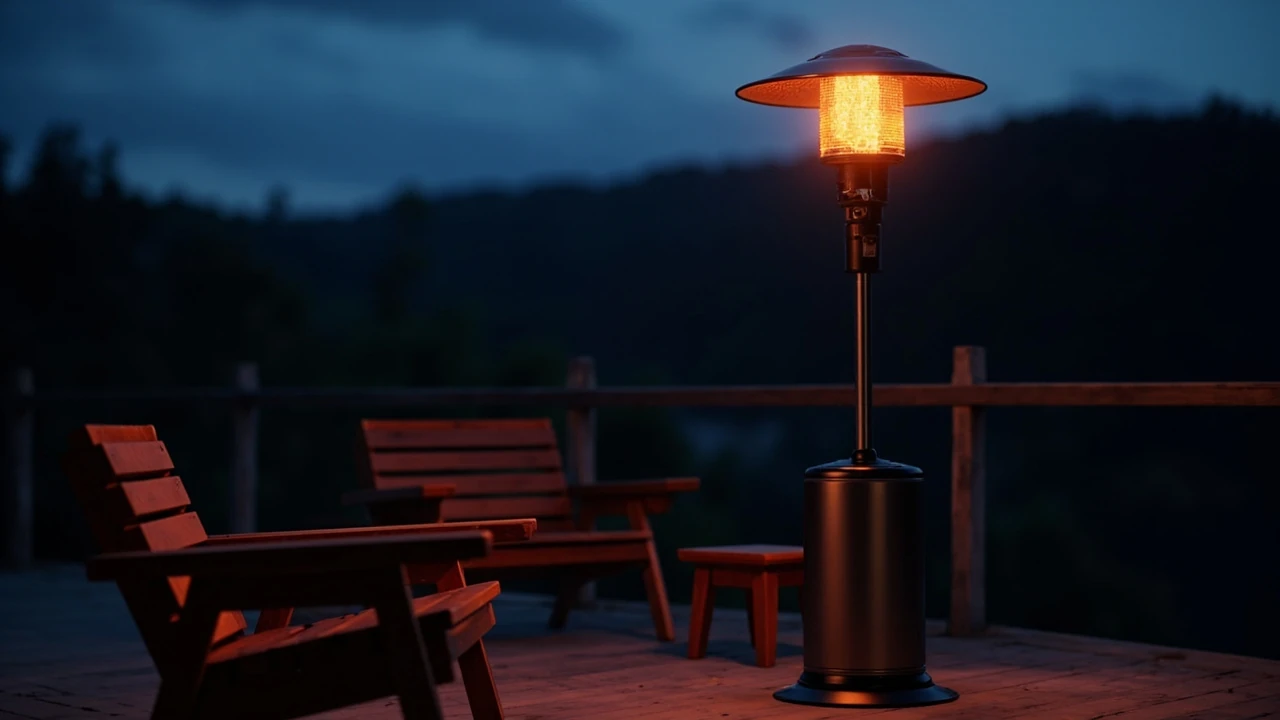
A wooden deck, a slightly damp tablecloth, and four people in fleeces waiting for the first round of drinks to arrive: this is the moment a good outdoor heater quietly earns its place. The wrong unit smells of gas, drifts with the wind, or simply cannot push warmth far enough to reach the far end of the table. The right one disappears into the background and keeps hands warm for an extra two hours, which is often the difference between a short chilly evening and a proper gathering.
Outdoor heating sits in an odd corner of the gear world. It is bought rarely, used seasonally, and misunderstood often. People focus on a single number on the box, such as the kilowatt rating, without thinking about the wind on a real patio, the gas cylinder that has to live somewhere, or the way a tall mushroom-style heater radiates heat upward rather than across a table. This guide walks through how an outdoor heater actually works, how the main fuel types differ, what to look at on the spec sheet, and how to set one up so it is genuinely useful on a deck, a courtyard, or a trail-side rest stop. The advice is written for the kind of mixed-use reader who runs ropes courses, hosts family birthdays, and organises weekend getaways, where one heater often has to serve very different settings across the year.
How an outdoor heater actually warms a space
Most heaters sold for domestic and small commercial use rely on one of three heat-transfer principles, and the principle decides everything about where the unit should sit and how it should be sized.
- Convection warms the air around the unit. A fan or natural draft pulls cool air in, heats it over a flame or element, and pushes it back out. Convection heaters warm enclosed or semi-enclosed spaces well, but lose their effect fast once a breeze picks up.
- Radiant heaters warm objects and people directly, in much the same way the sun warms a stone wall. The air temperature reading can stay low while the people sitting in the line of the heater feel comfortable.
- Conductive heating is rare outdoors and usually shows up in small tabletop units, where a heated plate warms cups and plates rather than the people around them.
For a patio, a courtyard, or a trail-side rest shelter, radiant heat is almost always the better fit. Air temperature drops sharply when the wind rises, but radiant heat still reaches anyone standing or sitting in its line of sight. A patio heater with a reflector at the top throws heat outward and slightly downward in a wide cone, which is why a tall unit placed beside a table can warm people across the table rather than just the spot directly underneath it.
The three main fuel types, and where each one works best
Fuel choice drives running cost, heat output, and convenience. There is no universal winner, and the right answer depends on where the heater will live, how often it will be used, and whether there is a mains hookup nearby.
Propane and butane gas heaters
Gas patio heaters are the most familiar style: a tall post, a heavy round base, and a mushroom-shaped reflector on top. The heat comes from burning propane or butane through a perforated ceramic element or a metal burner, and the reflector spreads the warmth outward.
Propane works well in cold weather and burns cleanly down to about minus forty-two degrees Celsius. Butane is better suited to milder conditions and stores efficiently in small canisters, which is why it is common in portable camping heaters. For a fixed patio in a temperate climate, a propane cylinder behind the base is the most common setup, and a 13 kilogram refill typically runs for around ten to twelve hours on the medium setting.
Gas units heat up fast, often reaching useful output within a few minutes, which makes them a good fit for unpredictable evenings where the temperature drops only after sunset. The trade-off is the cylinder: it has to be stored upright, away from heat sources, and changed when empty, which adds a small running chore to every gathering.
Mains electric heaters
Electric patio heaters have improved dramatically with the arrival of low-glare and infrared carbon elements. They convert most of the input power directly into radiant heat, which means a 2 kilowatt electric unit can feel roughly as warm as a 5 kilowatt gas unit at the table, because the heat lands on people instead of being wasted on warming air that the wind takes away.
For a covered patio, a pergola, a garden room, or a courtyard with a power socket, electric is the most convenient option. There is no flame at floor level, no cylinder to store, and no annual service for a gas valve. The main limits are cable length and the available circuit. A 2 kilowatt unit is roughly the same load as a small space heater, and most domestic outdoor sockets on a 10 amp radial circuit will run one or two units comfortably. Running three or more high-output units on one circuit is a common reason for nuisance trips in restaurants and event spaces.
Wood-burning chimineas and fire pits
Wood gives the most atmospheric heat and the lowest running cost for anyone with a free wood supply, but it is also the least predictable. A chiminea radiates a lot of heat from the front but can smoke when the fire dies down, and a fire pit on a deck needs a serious heat shield to protect the boards underneath. Local rules on outdoor fires vary widely, so any wood unit has to be checked against the local council or park rules before the first lighting.
What to compare on a spec sheet
The same heater can be described in very different ways in different shops, and the most useful numbers are not always the ones printed largest on the box. The table below sets out the figures that actually predict how a unit will perform on a real patio.
| Spec | What it means | Why it matters outdoors | Typical useful range |
|---|---|---|---|
| Heat output (kW or BTU) | Energy the fuel releases per hour | Higher output warms larger areas, but only if the unit can radiate it sideways rather than straight up | 5–12 kW for domestic gas, 1.5–2.5 kW for electric infrared |
| Effective heat radius | Distance at which the heat is still useful | Often the most honest number, because it is measured in real conditions rather than on paper | 2–3 m for tabletop, 3–4 m for full-size post heaters |
| Fuel consumption | Grams per hour for gas, kWh for electric | Determines running cost and how long a cylinder will last | Around 400–900 g/h for propane domestic heaters |
| Ignition type | Piezo, battery, or manual | Battery and piezo light first time, even in damp weather; manual lighting is fine for a chiminea but annoying on a tall post | Piezo or battery preferred for gas post heaters |
| Safety cut-off | Flame failure device or tip-over switch | Required by most modern standards; protects against gas leaks if the flame goes out or the unit falls | Standard on current models; check older second-hand units |
| Ingress protection (IP rating) | Resistance to water and dust | Outdoor units should be at least IPX4, which means they can handle rain from any direction | IPX4 minimum, IPX5 for exposed locations |
The IP rating is the easiest detail to overlook and the most likely to bite a few months after purchase. A heater stored under a pergola can be IPX4, but a unit that will live in the open corner of a deck year-round deserves IPX5 or a proper weather cover in the off-season.
Choosing between gas and electric for a real space
The fuel decision becomes much easier once the space is described in concrete terms. The next table compares the same three settings: a small city balcony, a family-sized patio, and a covered courtyard used for small events.
| Setting | Best fuel choice | Typical unit style | Reason it fits |
|---|---|---|---|
| Small city balcony (2–4 people, partly sheltered) | Electric infrared | Wall- or ceiling-mounted 1.5–2 kW heater | No cylinder storage, no flame on a narrow deck, easy to switch on for a single drink |
| Family-sized patio (4–8 people, open to one side) | Propane post heater | Tall 11 kW post heater or two 7 kW tabletop units | Reflector throws heat across the table, no cable running across the lawn |
| Covered courtyard for small events (10–20 people) | Electric infrared plus a single gas unit | Two 2 kW wall heaters at seating zones, one tall gas heater as a centrepiece | Wall units cover most guests at low running cost, gas unit adds ambience and tops up warmth for latecomers |
| Trail-side rest stop or shelter on a forest day | Portable butane heater | Compact 1–1.5 kW camping heater with a stable base | Light enough to carry, no mains power needed, but only suitable in well-ventilated open shelters |
Trail-side use is the case that needs the most caution. A small butane heater in a wooden shelter with three walls can raise the temperature quickly, but it also consumes oxygen and produces water vapour and small amounts of carbon monoxide. In a fully open-sided shelter, the risk is much lower, and the heater becomes genuinely useful for warming hands between activities. The same heater inside a sealed wooden hut is a different story and should not be used without proper ventilation.
Sizing a heater to the space, not to the price tag
A common mistake is to buy the biggest unit available on the assumption that more heat is always better. In practice, a 14 kilowatt gas post heater in a 3 metre square courtyard will make the people nearest the heater uncomfortably hot while doing little for those at the far table. Two smaller units, each on its own setting, almost always give a more even result.
A useful rule of thumb is to size the heat to the seating layout, not the floor area. A single 11 kW post heater covers a circle of about 3 to 4 metres, which is roughly a 4-person table. Two 7 kW units placed at opposite ends of a longer 6-person table give a wider, gentler warmth. For electric infrared, the same logic applies: a 2 kW wall heater covers about 6 to 8 square metres of seating zone, which is closer to the real number than any figure on the product page.
Wind direction matters as much as area. A patio that faces the prevailing wind needs more heat than a sheltered courtyard of the same size, because radiant heat is partially blocked by moving air. A simple windbreak, even a row of planters, can make a mid-sized heater perform like a much larger one.
Placement and safety on a real deck
Placement is the difference between a heater that feels like a small sun and one that feels like a weak desk lamp. A few rules consistently come up in installation guidance and event safety briefings, and they are worth following even on a small residential deck.
- Keep at least 1 metre clearance from any combustible surface above the heater, including canvas awnings, parasols, and overhanging branches.
- Place the unit on a level surface. A weighted base on a wooden deck should be at least the diameter recommended by the manufacturer, and a tip-over switch is not an excuse to skip this.
- Route gas cylinders outside the seating area and away from doorways. A spare cylinder stored in a hallway is one of the most common safety audit failures at small event venues.
- Keep electric cables off the ground where people walk. A simple cable cover is cheap and prevents the kind of trip that ends a good evening quickly.
- Never use an outdoor gas heater inside a tent, awning, or enclosed space, even with the door open. The carbon monoxide risk is real and builds faster than people expect.
For family use, the most useful safety check is also the simplest: before the first lighting of the season, run the heater for two minutes on the driveway with nobody nearby, and watch for a strong gas smell, an unstable flame, or a burner that does not light evenly. Any of those is a sign to service the unit before taking it onto the deck.
Running costs in plain numbers
Running cost depends on local fuel prices, but the structure of the calculation is consistent. Propane at typical domestic refill rates gives about 12 to 14 kilowatt-hours of usable heat per kilogram, and an 11 kW patio heater burns roughly 0.8 kilograms per hour on the medium setting. Electric infrared at current domestic tariffs delivers one kilowatt-hour of useful radiant heat for roughly the same price as the gas equivalent, with the trade-off that gas gives higher peak output and electric gives finer control.
For a four-hour evening twice a week through spring and autumn, a propane patio heater works out at a moderate running cost per session, while the equivalent electric setup, with a thermostat or a smart plug, is often cheaper and easier to control. Wood is the cheapest option per useful kilowatt-hour for anyone with a free timber supply, but only when the fire burns cleanly. A smouldering wood pile costs fuel without giving much heat back.
Common mistakes when buying and using an outdoor heater
Most problems with patio heating show up in the first month of use, and almost all of them trace back to a small set of predictable mistakes.
- Choosing a heater for the worst possible evening, then running it too high on mild nights. A heater with a good low setting is more useful than a powerful heater that can only be turned full on or full off.
- Ignoring the height of the reflector. A short tabletop unit throws heat sideways but loses much of it at knee height, where it does not help people sitting down.
- Placing a unit directly under a wooden pergola. The clearance rules exist because timber dries out and chars, and the damage is not always visible until the pergola is replaced.
- Using a domestic gas unit on a high balcony without checking the weight of the cylinder and base. A 13 kilogram cylinder plus a 15 kilogram base is around 30 kilograms of fuel and hardware, which is heavier than many balcony railings are designed to handle.
- Storing a heater outside without a cover. Even an IPX5 unit suffers from UV damage on plastic parts and rust on the reflector, and a simple cover doubles the practical life of the unit.
Outdoor heaters and shared spaces: what an event organiser should check
For readers who run group sessions, run small events, or host family days at a venue, an outdoor heater becomes part of a wider risk picture rather than a single piece of kit. The questions below are the ones that come up most often in safety briefings, and they are worth answering before the first guest arrives.
- Is the heater type allowed in the venue, and is there a written policy on gas cylinders indoors or under cover?
- Does the placement respect the venue’s fire lanes and emergency exits, and does the base sit on the type of surface the manufacturer assumes?
- Is the cable run protected against the public, and is the RCD or GFCI on the outdoor circuit tested that day?
- Is there a clear shutdown procedure if a guest notices a strong gas smell, and is the responsible person named in the briefing notes?
Pairing a clear answer to each question with a simple on-site check, much like the routine outlined in the rope park weather and closure briefing, keeps the focus on the guest experience rather than the equipment list.
Frequently asked questions
What size outdoor heater do I need for a 4 metre by 4 metre patio?
A single 11 kilowatt gas post heater or two 1.5 to 2 kilowatt electric infrared units cover a 4 by 4 metre patio comfortably, provided the wind is not blowing directly across the seating area. A windbreak on the exposed side often gives a more even result than a larger heater without one.
Are electric outdoor heaters expensive to run?
Electric infrared is generally cheaper to run per useful hour than a gas patio heater, because almost all of the input energy is turned into radiant heat rather than warm air that drifts away. The trade-off is the higher peak output of a gas unit, which can be useful on very cold evenings.
Can I use a propane patio heater under a covered patio?
Most manufacturers allow it as long as the ceiling clearance is at least 1 metre above the reflector and the area is open on at least two sides. A fully enclosed room is not safe for a gas patio heater, because combustion consumes oxygen and produces carbon monoxide.
How long does a propane cylinder last in a patio heater?
A standard 13 kilogram propane cylinder runs an 11 kilowatt patio heater for roughly 10 to 12 hours on the medium setting. Higher settings use the cylinder faster, and cold weather can reduce usable time slightly because vaporisation slows down.
Is an outdoor heater safe to use around children?
A patio heater with a cool-touch base, a weighted design, and a tip-over switch is generally safe around children as long as the same clearances are kept. The reflector dome and the burner area stay hot during and shortly after use, and a simple barrier or a wider table around the heater keeps small hands away.
Can an outdoor heater be used in light rain?
Most modern gas patio heaters handle light rain without issue, and electric infrared units with at least an IPX4 rating are designed for outdoor use in normal weather. Heavy rain is a reason to switch the unit off, both for safety and to protect the burner or the element from sustained water exposure.
Where should I store a gas cylinder when the heater is not in use?
Store the cylinder upright, outside, in a well-ventilated place, away from ignition sources and direct sun. A simple lockable garden box with a ventilation gap is enough for most homes, and a spare cylinder stored indoors is one of the most common safety audit failures.
Do outdoor heaters work in very cold weather?
Propane patio heaters work well in cold weather, with usable output down to about minus ten degrees Celsius. Butane loses pressure below around five degrees Celsius and is not the best choice for winter evenings. Electric infrared output is stable in any air temperature, since radiant heat does not rely on warming the air first.
What maintenance does an outdoor heater need?
An annual clean of the reflector, a check of the burner ports for spider webs or rust, and a leak test on the gas connections with soapy water keep most gas heaters reliable for years. Electric heaters need little beyond a wipe-down of the element and a check of the cable and plug before the season starts.
How does an outdoor heater fit into a family adventure day or a ropes course visit?
An outdoor heater is a small but real comfort item in the same gear list as a spare layer, a head torch, and a flask. For an early-morning meetup at a first high ropes course, or a late family evening after a long day on the trail, a single well-placed heater can extend the day by an hour or more, which is often the moment people remember most.
Bringing it together for the next gathering
An outdoor heater is a small piece of equipment with a long list of small decisions attached to it. The most useful approach is to describe the space honestly: how many people will sit, which way the wind usually comes from, whether there is a power socket, and how often the heater will be used. Once those are fixed, the fuel choice, the size, and the placement follow more naturally than any product comparison can deliver.
For a one-off purchase on a small patio, a single 2 kilowatt electric infrared unit is a safe, low-fuss option that warms the right people in the right place. For a larger deck or a small event setup, a tall propane post heater with a proper weighted base and a windbreak on the exposed side is still hard to beat. For trail-side rest stops, a small butane unit used in a well-ventilated open shelter is a useful addition to a day bag, used with the same care as a camping stove.
Used well, an outdoor heater is the kind of gear that disappears into the evening. The drinks stay warm, the children stay out a little longer, and nobody goes home saying it was cold. That quiet success is the real sign that the choice, the placement, and the fuel type all fit the space and the people using it.
Related reading
Explore High Ropes Adventure
Trip tools
Essential adventure planning guides
Use these practical guides to compare rope park activities, prepare for a first high ropes day, check a booking, choose suitable footwear and contact the editorial team. Each page links to the relevant live tools and current planning sections.
Latest articles
- Choosing an outdoor heater for patio evenings and trail-side stops
- Travel quotes that actually help you plan the next trip
- Ring outdoor camera placement and setup for adventure parks
- Blink outdoor camera: a practical guide for property monitoring
- Outdoor bar ideas: design, layout, and practical choices
- Tate McRae tickets: how to find, compare, and buy seats without the stress
- Tame Impala tickets: how to find them, what they cost, and what to know before you buy
- Outdoor pillows: how to choose the right ones for a deck or trail rest stop
- How to find Morgan Jay tickets without overpaying
- How to find national parks near me: a practical local search guide