Train or Car for an Outdoor Day Trip? A Practical Comparison
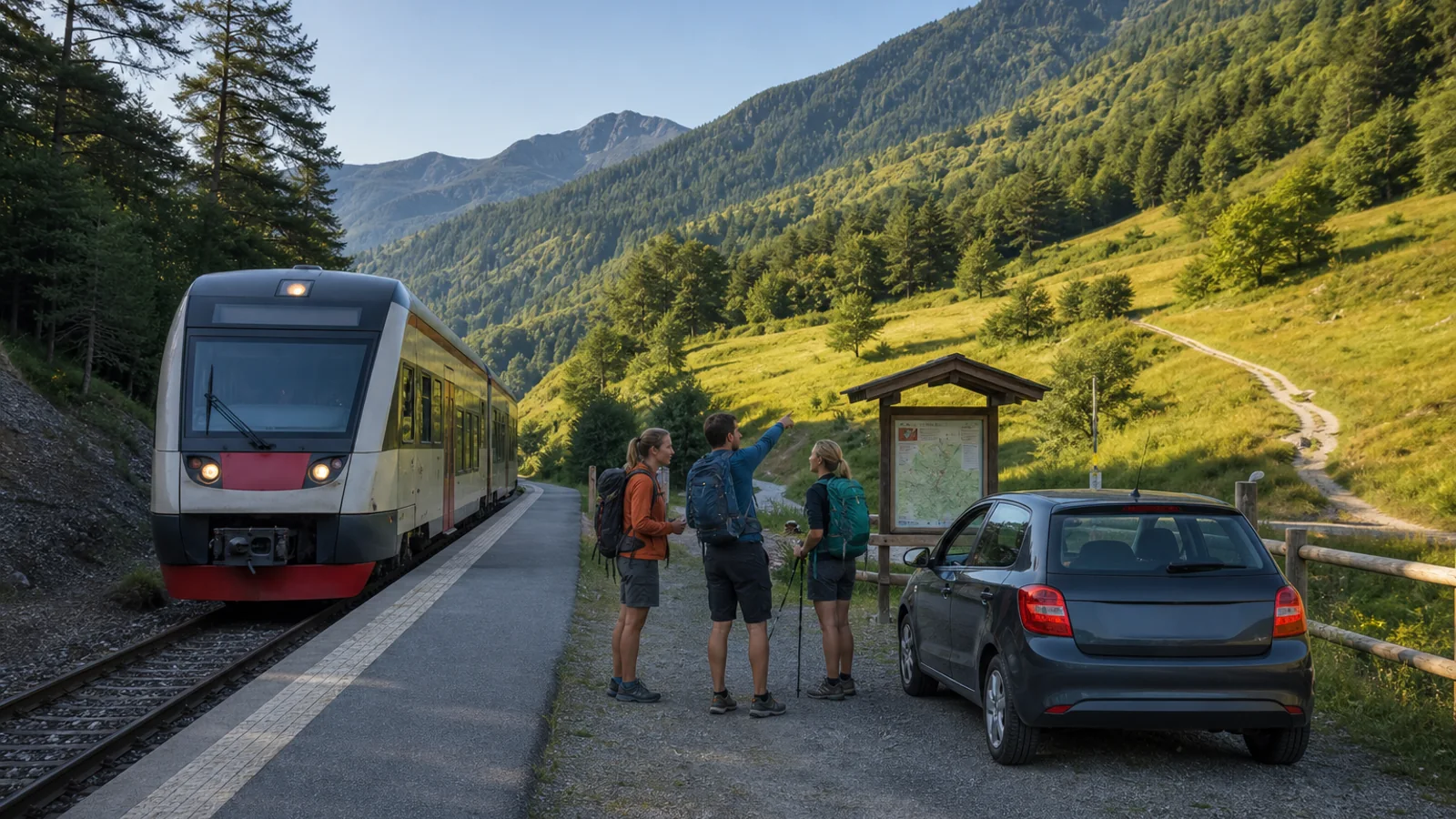
The quickest line on a map is not always the easiest outdoor journey. A useful train or car comparison includes the final mile, the return, equipment and the number of people sharing the cost.
Compare door-to-door time
For rail, add the trip to the station, waiting, changes and the walk or bus from the final stop. For driving, include likely traffic, parking search and the walk from the car park. Use the required venue arrival time rather than the advertised activity start.
A direct train can be calmer than a shorter drive. A rural destination with no evening connection may make the car more practical. The answer depends on the actual timetable and access point.
Inspect the final mile
Outdoor venues often use a place name that covers a large forest, reservoir or estate. Check whether the public transport stop connects to a legal, lit and usable walking route. Confirm the return stop and whether a seasonal shuttle runs on the travel date.
Use the public transport planner to test the journey, then verify the service with the relevant operator.
Calculate the total group cost
Rail costs can include local connections, seat reservations and bicycle charges. Driving costs can include fuel, parking, tolls and vehicle wear. Divide shared costs only after the whole total is known.
For one traveller, public transport may compare well. For a larger family, a full car can change the result. Enter both plans in the day trip budget tool.
Plan the return before booking the activity
Identify the last practical train or bus, leaving enough time for a delayed finish and the walk back to the stop. The final scheduled departure may not be practical if one missed connection leaves the group stranded.
Drivers should plan a proper rest after a physically demanding activity. Decide who will drive home before the day begins.
Choose the mode that protects the day
Use the train when the route is dependable and the final mile works. Use the car when it solves a genuine access or group problem. Avoid choosing either mode from habit before checking the full journey.
Explore High Ropes Adventure
Trip tools
Essential adventure planning guides
Use these practical guides to compare rope park activities, prepare for a first high ropes day, check a booking, choose suitable footwear and contact the editorial team. Each page links to the relevant live tools and current planning sections.
Latest articles
- Zipline braking systems explained for beginners: how they actually work
- Outdoor voices: how to use the sounds around you on a rope park day
- Govee permanent outdoor lights: a practical buyer’s guide
- How children can practice clipping before a ropes course
- Best travel exercises portable: how to stay strong on the road
- Kids activities near me: a practical guide for parents
- High ropes course weather cancellation questions answered
- Outdoor chairs: how to choose the right seat for trails, parks and rope-course days
- Travel agent vs. booking yourself: when a planner still pays off
- What Happens If You Freeze on a Ropes Course: A Practical Guide