High ropes course weather cancellation questions answered
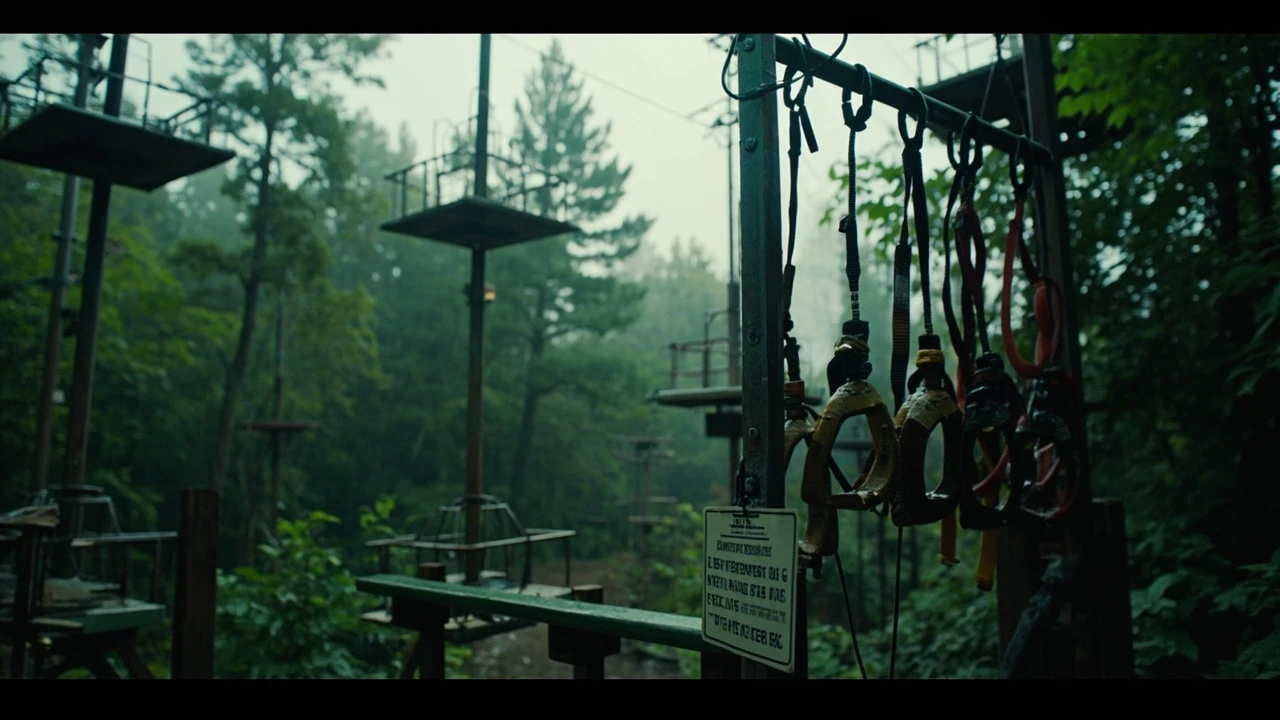
High ropes course weather cancellation questions answered before you book
You have paid for a session, packed the car, and driven twenty minutes to the site, only to find a hand-written sign on the gate: “Closed today – wind.” It is one of the most common frustrations in adventure activities, and it almost always comes down to a decision the operator made on your behalf for safety reasons. The good news is that most of the high ropes course weather cancellation questions visitors ask have predictable answers, because reputable parks follow the same handful of published thresholds and policies.
This guide walks through the questions guests actually ask before and during a visit: when does a course close for rain, wind, lightning, or heat; who decides; how refunds and reschedules work; what to wear; and how to argue your case if you think a closure was avoidable. Where a question is policy-driven rather than safety-driven, the answer will be phrased in the language guests usually use, with a note on where to confirm the specific rule on the day.
What kinds of weather actually close a high ropes course
Most parks draw a line between weather that is uncomfortable and weather that is genuinely unsafe. A light drizzle rarely closes a course, but a steady downpour, a gusting wind above a set threshold, an active thunderstorm, or a heat advisory each trigger a different response. The decision is made by a trained supervisor, often the site manager or duty instructor, using park-specific checklists and the equipment manufacturer’s guidance.
If you are weighing whether to drive out in marginal conditions, the table below summarises the conditions that operators typically treat as closure-worthy on a high ropes course. Your local park may apply slightly different numbers, so always read the booking confirmation and any pre-visit email.
| Weather condition | Typical operator threshold | Likely course status | Why it matters on a high ropes course |
|---|---|---|---|
| Light rain or drizzle | No set limit; visual check | Usually open | Wet gloves reduce grip, but courses are designed for rain |
| Heavy or sustained rain | Around 30+ minutes of heavy rain, or visibility reduced | Often paused or closed | Helmets and harnesses channel water; belay lines get slippery |
| Wind | Sustained winds around 30–40 km/h (about 19–25 mph), gusts higher | Closed or restricted to lower elements | Suspended platforms swing unexpectedly; helmets can lift |
| Lightning | Any storm within roughly 8–10 km (5–6 miles) | Closed immediately | Steel cables and metal carabiners conduct electricity |
| Thunderstorm approaching | Storm cell within 30 minutes of the site | Closed and participants called down | Time to evacuate is too short once the storm arrives |
| Extreme heat | Wet-bulb globe temperature above about 32 °C (90 °F) | Restricted, rescheduled, or closed | Heat illness is a real risk in full harnesses under sun |
| Hail, snow, or ice | Any accumulation on platforms or cables | Closed | Grip and footing become unpredictable |
| Dense fog | Visibility under about 50 m on the course | Closed | Instructors cannot see participants for rescue |
The exact thresholds vary by park because each course is built to a different design standard, sits in a different microclimate, and uses different hardware. A coastal park with frequent sea breezes may operate comfortably at winds that would shut down an exposed hilltop site. Treat the numbers in the table as a planning guide rather than a guarantee.
Who actually decides to cancel a session
The decision is almost never made by a single front-of-house employee reading a phone app. On most operating sites, a duty manager or senior instructor walks the course at the start of the day, checks local weather instruments, and consults a regional radar or lightning tracking service. If any threshold is breached, the manager has the authority to close the course or restrict it to certain elements, and that decision is final for that shift.
This matters because it shapes how you ask follow-up questions. “Why was the course closed?” is best directed at the manager, not the cashier. “Can I reschedule?” is normally handled by the booking team once the closure has been logged. “Did the policy apply to my group specifically?” is rarely a productive question, because the policy applies to everyone on the course that hour, not to individual bookings.
If a park uses an automated lightning detection service, the service itself can trigger a closure when a storm enters a defined radius, even if the sky above the park still looks clear. That is normal and reflects the lead time needed to evacuate participants from height.
Refund, reschedule, and credit policies guests ask about most
Weather policies sit in three layers: what the park publishes, what the booking terms say, and what a reasonable guest would expect. The first two are easy to read. The third is where most disputes happen, and it is worth understanding before you book.
| Scenario | Typical policy on a high ropes course | What to do before you book |
|---|---|---|
| Park cancels before you arrive | Full refund or free reschedule, your choice | Check the email confirmation language for the exact wording |
| Park cancels mid-session | Partial refund or voucher for the unused time | Ask for the policy in writing if you have a large group |
| You cancel because of a forecast | Often treated as a standard cancellation with possible fee | Look for flexible or “any reason” booking add-ons |
| You arrive and leave mid-session due to weather | Usually no refund for the started session | Confirm whether a rain check is offered instead |
| Group or corporate booking cancelled by park | Reschedule priority, sometimes refund, sometimes invoice credit | Get the policy in the contract before signing |
| Course runs in poor weather, you choose not to participate | No refund for unused tickets | Read the rain-or-shine clause on the booking page |
Most reputable parks separate two ideas: a closure, which is the operator’s decision for safety, and a cancellation, which is the guest’s decision for comfort. Refund rules for the two are usually different, and that distinction is the source of many of the high ropes course weather cancellation questions you see in reviews and forum posts.
Common guest questions about specific conditions
The questions below are the ones operators say they hear the most. They are answered in general terms; the precise policy on a given day is always the version your park confirms in writing.
Does a little rain close the course?
Usually no. Modern high ropes courses are built for all-weather use, with galvanised or stainless steel cables, outdoor-rated harnesses, and platforms that drain quickly. A passing shower will not stop a session, though instructors may add a safety briefing about grip and pace. Persistent heavy rain is a different matter and often leads to a pause or closure, especially on courses with wooden platforms that become slippery.
What wind speed closes a high ropes course?
There is no single industry-wide figure, but most parks use a sustained wind threshold somewhere in the 30 to 40 km/h range, with a lower threshold for gusts. The exact number depends on the height and exposure of the course, the type of harness, and the manufacturer’s specification for the belay system. When wind is in the borderline range, the manager may restrict access to the lower elements only rather than closing the whole park.
Can I climb if I can see lightning on the horizon?
No. Lightning protocols treat the entire sky-to-ground distance as a hazard, and most parks use a 30-30 rule: if you cannot count 30 seconds between flash and thunder, the storm is close enough to require evacuation. The course will be closed the moment a storm enters the operator’s defined monitoring radius, often before the first drop of rain at the site itself.
Is the course ever closed for heat?
Yes, especially in regions with humid summers or open forest canopies. Operators watch for signs of heat illness in participants, shorten or delay sessions, and may move group bookings to early morning. On extreme heat days, a course may close even if the air temperature alone would not normally trigger a closure, because the combination of full-body harness, helmet, and physical exertion is harder than ordinary outdoor activity.
What if it hailed or snowed overnight?
Courses are normally closed until staff have walked the course, cleared ice or hail from platforms, and verified that cables and anchors are free of ice. Expect a delayed opening rather than an automatic full-day closure, and check the operator’s social media or answering service for the planned start time.
What if the course closes after I have already started?
Instructors will ask everyone to come down using the designated evacuation route. Your harness stays on until you are on the ground. Refund or credit policies for partial sessions vary; many parks issue a rain check for the unused time, while others treat a started session as final. The exact answer should be in the booking terms, and the front desk will know which rule applies on the day.
Can I get a refund if I choose not to come because of a forecast?
That depends on the booking terms. Standard cancellation windows usually apply, which means a fee or voucher rather than a refund. Some parks offer a “book with confidence” option that lets you cancel for any reason within a defined window, sometimes for a small surcharge. If you are travelling a long distance or booking a large group, paying for that flexibility is often worth it.
Who pays if a corporate event is cancelled by weather?
Contracts vary widely. The most common arrangement is that the operator offers a priority reschedule and absorbs the cost of the lost slot, while the client absorbs any third-party costs such as catering, transport, or accommodation. Read the force majeure clause carefully and ask the operator to put the reschedule mechanism in writing before you sign.
How operators actually decide to close or stay open
The decision process behind a closure is rarely just a single weather reading. It is a layered check that mixes measured data, visual inspection, and instructor judgement. If you want to understand a specific closure, the steps below are the ones a duty manager will usually run through.
- Check the regional weather feed and any lightning detection service the park subscribes to.
- Read the on-site weather instruments for wind, temperature, and rainfall in the last hour.
- Walk a sample of the course to inspect platforms, cables, anchors, and the belay system.
- Compare readings and visual findings to the written closure criteria for the day.
- If any criterion is breached, close the affected elements or the whole course.
- Log the decision with the time, the reason, and the data that triggered it.
- Communicate to guests in person, by phone, and through the booking system.
- Reassess at set intervals, often every 15 to 30 minutes, until conditions clear.
Once a course is open, a different set of triggers can still lead to a mid-session closure. The most common are a sudden wind shift, a thunderstorm building faster than the radar suggested, or visible platform issues such as pooled water, ice, or debris. Operators who log these decisions transparently tend to have fewer disputes with guests, because the reasoning can be explained after the fact.
How to argue a weather closure decision politely
If you genuinely believe a closure was avoidable, raise it calmly and soon. The tone of the conversation matters more than the strength of the argument, because the manager on the day usually has more information than you do. The approach below tends to work better than a refund demand at the front desk.
- Ask what specific threshold was breached, not whether the park was “really” closed.
- Request the time the closure was logged and the data behind it.
- Ask for the reschedule or refund options the policy offers for that scenario.
- If you travelled a long way, mention the cost you have already absorbed and ask about goodwill options such as a priority booking or a small credit.
- Follow up in writing within a day if the on-site answer was not satisfactory.
- Escalate to the park’s customer service email rather than social media, where responses are often slower and more public.
You are more likely to reach a constructive outcome if you treat the closure as a shared problem rather than a personal grievance. The operator wants you to come back; the staff want a quiet day; the manager wants to apply the policy consistently. A clear, factual question usually unlocks that path.
What to ask the operator before you book
The booking page rarely lists every relevant policy, and the questions that matter most are the ones that change your exposure if the weather turns. The checklist below covers the questions that experienced group organisers and repeat guests tend to ask before paying.
- What is the rain-or-shine policy, in writing?
- What wind speed closes the course, and is it the same for every element?
- How are lightning decisions made, and which service do you use?
- If the park cancels, is a refund automatic or do I have to request it?
- If I cancel because of a forecast, what is the fee and the deadline?
- Do you offer a flexible booking add-on for weather-sensitive dates?
- What is the reschedule window, and are there blackout dates?
- How will I be notified if the course closes on the day?
- Is there a partial refund for a session that closes partway through?
- For groups, what does the force majeure clause say about weather?
Keep the answers in one place, ideally in the same email thread as the booking confirmation, so that you do not have to chase the information on a stormy morning. If the operator will not put the policy in writing, that is itself a signal about how the closure dispute will be handled later.
Practical things you can control on a weather-sensitive day
Most of the high ropes course weather cancellation questions are about policy. A smaller, equally useful set of questions is about what you can do to keep a marginal day on the right side of safe and comfortable. None of the items below change the closure thresholds, but they change how much of the day you actually get to use.
- Book the earliest session of the day, when the air is cooler and storms are less likely to have built up.
- Wear quick-dry layers rather than cotton, and bring a thin waterproof jacket you can stow in a locker.
- Leave jewellery, phones in loose pockets, and bulky cameras in the car.
- Tie long hair back, and remove hoods that can block peripheral vision on belayed elements.
- Eat a proper breakfast, and bring water even if the operator sells it on site.
- Arrive 20 to 30 minutes early so the safety briefing is not rushed if the weather shifts.
- Watch the sky and the wind flags on arrival, and ask the front desk if conditions are stable.
- Have a backup plan for the rest of the day, such as a café or indoor activity nearby, in case the session is shortened.
These steps will not stop a closure, but they do reduce the most common reasons guests leave mid-session: cold hands, a soaked base layer, a missed briefing, or hunger. Operators notice when a group is well prepared, and the session tends to run more smoothly as a result.
How this connects to a wider ropes course decision
Weather policy is one of several practical signals that a high ropes course is well run. If a park can answer the questions in this guide clearly, it usually means the rest of the operation is in good shape too: trained instructors, maintained equipment, and a written safety system. If the answers are vague or defensive, that is worth weighing against price and location when you choose where to climb.
For a broader look at the practical signals that a ropes course is safe and well managed, the guide to finding a safe adventure park covers the same themes from a different angle, and the first high ropes course walkthrough explains what a good first session feels like when conditions are normal.
What to remember on a stormy morning
The short version of the high ropes course weather cancellation questions is this. The park will close when measured conditions cross its published thresholds, the decision is logged with a time and a reason, and the policy that applies to you depends on whether the closure was the operator’s call or yours. If you read the booking terms before you pay, book the earliest slot, and bring sensible layers, you will have done almost everything a regular guest can do to make the day work.
If you arrive and the course is closed, ask for the time and the data behind the decision, then choose between the reschedule and refund the policy offers. That is almost always the end of the conversation, and the start of a better-planned visit next time. For the wider context on how ropes courses handle weather, the Wikipedia entry on rope courses is a useful orientation, and the Association for Challenge Course Technology publishes the standards most professionally built high ropes courses follow in North America.
Frequently asked questions
Does a high ropes course close for light rain?
Usually not. Most modern courses are designed to operate in rain, and instructors will simply add a short briefing about grip and footing. A persistent downpour is more likely to trigger a pause or closure, especially on wooden platforms.
What wind speed will close a high ropes course?
There is no single number for the whole industry. Many parks use a sustained wind threshold in the 30 to 40 km/h range, with a lower threshold for gusts. The exact figure depends on the course height, exposure, and the equipment manufacturer’s specification.
How close does lightning need to be to close the course?
Operators usually treat any storm cell within roughly 8 to 10 km as a closure trigger, often based on a dedicated lightning detection service. The course will be evacuated as soon as that threshold is reached, even if the storm is not directly overhead yet.
Will I get a refund if the park cancels for weather?
In most cases yes, either as a full refund or a free reschedule, your choice. The exact wording should be in the booking confirmation email. If the policy is not stated in writing, ask before you pay.
Will I get a refund if I cancel because of a bad forecast?
That depends on the cancellation terms you agreed to when booking. Standard policies usually charge a fee or offer a voucher, not a refund. Some parks sell a flexible booking add-on that allows cancellation for any reason within a defined window.
What happens if the course closes after I have started climbing?
Instructors will bring everyone down using the designated evacuation route, and you will keep your harness on until you reach the ground. The refund or credit for the unused time depends on the policy; many parks offer a rain check rather than a partial cash refund.
Can the park stay open in heavy rain if I want to climb?
No. The decision is based on safety thresholds, not on individual preference. If conditions breach the published criteria, the course is closed for everyone on site at that time, regardless of personal willingness to continue.
Are high ropes courses ever closed for heat?
Yes. Operators watch for signs of heat illness and may delay, shorten, or cancel sessions during extreme heat, especially in humid conditions. Morning sessions are usually less affected than afternoon sessions during a heat wave.
How will I be notified if the course closes on the day?
Most parks use a combination of email, SMS, social media, and an answering service message. The booking confirmation should state which channel is the primary one, and it is worth checking it the night before and the morning of your visit.
Does travel insurance cover a weather cancellation?
Standard travel insurance rarely covers a missed activity that was cancelled by the operator with a refund or reschedule available, because you have not lost the money. It may cover additional costs such as transport or accommodation if the closure is part of a wider disruption, but that depends on the policy wording. Read the section on recreational activities and weather before you rely on it.
Related reading
Explore High Ropes Adventure
Trip tools
Essential adventure planning guides
Use these practical guides to compare rope park activities, prepare for a first high ropes day, check a booking, choose suitable footwear and contact the editorial team. Each page links to the relevant live tools and current planning sections.
Latest articles
- Viator travel agent: how the booking platform actually works
- Sweet tart ropes: what the flavour means in a ropes course
- Demon Slayer movie tickets: how to find a screening and prepare for a day out
- How to choose NBA tickets without overpaying
- Time travel movies worth watching on a slow weekend
- Overseas adventure travel: how to plan a trip that actually works
- Choosing an outdoor bench that actually lasts
- Lows adventure: how low-ropes courses work and who they suit
- outdoor couch
- United travel bank: how prepaid travel money cards actually work