What shoes are best for aerial adventure parks
What shoes are best for aerial adventure parks
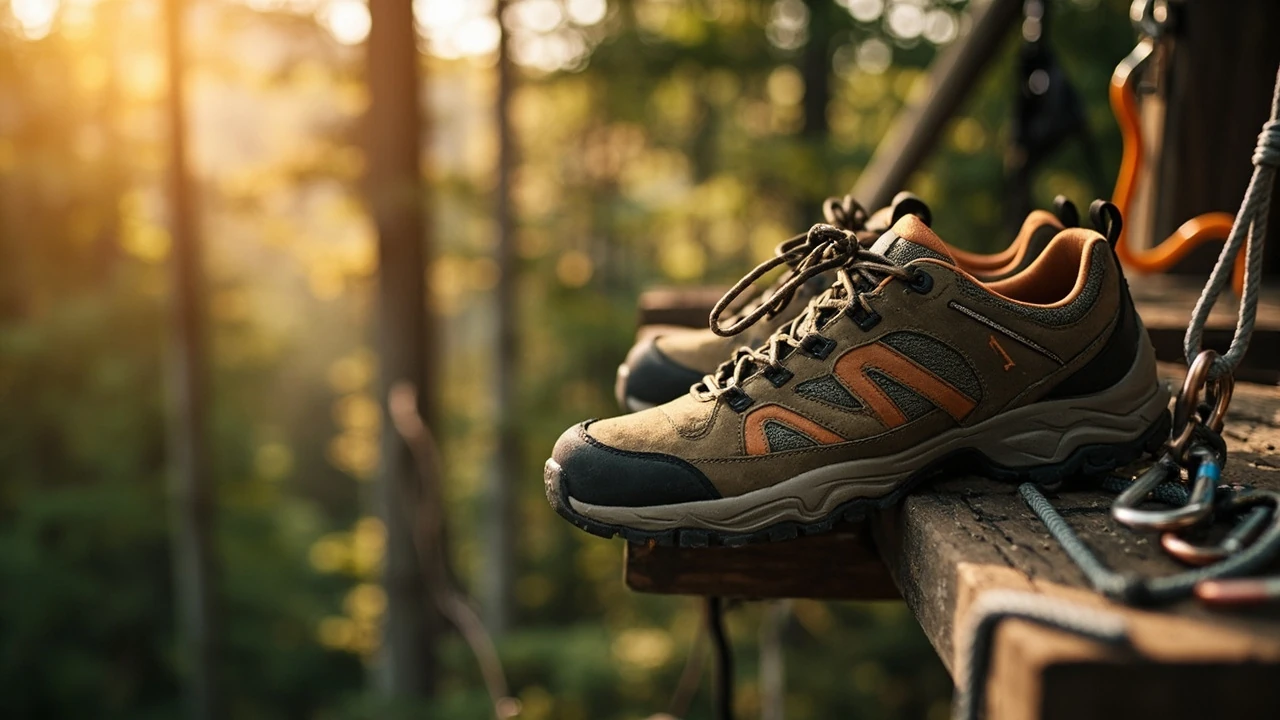
A person is halfway up a 12-meter tower, balancing on a wobbly log bridge when their sandal slips on a damp wooden step. Their foot shoots forward, the heel catches the edge of a wire, and the rest of the climb becomes a slow, frustrating shuffle instead of a fun challenge. Footwear is the one piece of personal gear visitors bring from home that most directly affects how a high ropes course feels, and most courses require closed-toe shoes that lace or strap securely before they will let you clip in. The question of what shoes are best for aerial adventure parks comes down to four things: grip on wood and metal, stability on uneven platforms, security on the foot during dynamic movement, and how the shoe handles rain, dust, or mud at height.
This guide walks through the practical choices a visitor faces, the technical reasons specific features matter on an elevated obstacle, and the small details that often decide whether a climb feels safe and comfortable. It draws on general outdoor footwear design, common sense about harness use, and the everyday rules at family-oriented rope parks rather than on studies that have not actually been done for this exact niche.
Why footwear matters more on a rope course than on a hiking trail
On a hiking trail the ground stays below the foot. On a rope course the foot is the only contact point with platforms, logs, ropes, and sometimes thin steel cables, and that contact has to stay planted while the upper body swings, leans, or falls. A shoe that is fine on a gravel path can be miserable on a swaying cargo net. The mechanics are different enough that it helps to separate the two situations in your head before choosing.
Three specific features get tested harder at height:
- Grip on smooth or wet wood, painted steel, and tensioned cable, not just on rock or trail dirt.
- Lateral stability when a foot lands at an angle on a log, a rope, or a wobbly step.
- Closure security under load, since a loose lace can come undone in seconds once a child starts climbing.
Because harnesses and helmets are usually provided, footwear is the main variable visitors control. Getting it right turns a nervous climb into a normal afternoon activity, which is also why the rest of a family day at a rope park tends to flow better when nobody is fighting their shoes at the start of every tower.
Core features to look for in shoes for aerial adventure parks
Most rope parks list a handful of basic rules on their safety page. The features below are the practical translation of those rules into a shopping list. They are ordered from most to least important for the typical visitor.
Sole grip and rubber compound
Rubber outsoles vary widely. Softer compounds grip better on smooth, wet, or slightly dusty surfaces because they deform around tiny irregularities in the wood or metal, which increases the real contact area. Harder compounds last longer on pavement but skate on damp platforms. For aerial adventure work, a soft to mid-soft rubber with a defined tread pattern is the safer default. Flat, smooth soles and heavily worn-down tread both increase slip risk on cable walks, log bridges, and steel-topped steps.
Look for shoes that still show visible lug depth and that use a sticky rubber rather than a hard carbon-style racing compound. Trail running shoes and approach shoes are usually a good match. Heavy hiking boots with aggressive lugs can be fine for grip but introduce other problems covered in the next section.
Lateral stability and a stable heel cup
When a foot lands on a wobbly log, the shoe needs to hold the foot in place rather than let the ankle roll. A firm heel cup and a sole that does not flex too easily in the middle of the foot are what provide that control. A very soft, very cushioned trainer bends pleasantly on flat ground but can fold under the arch when the foot lands off-center, which then loads the ankle instead of the foot.
Stiffness does not mean heavy. Lightweight approach shoes and low-top trail shoes are usually stiff enough for this job. The test is simple: try to twist the shoe in your hands. If the sole wrings out like a rag, it will be too soft for a course with moving platforms.
Closure that stays done up
Velcro can work, laces work better, and bungee laces with a toggle are a useful middle ground. The point is that the closure has to hold under repeated bending, sweating, and the occasional scrape against a carabiner. A loose tongue that slides sideways is a small but real distraction on a high element, because the brain keeps tracking the wobble instead of the next move.
For children, the safest combination is a secure closure plus a lace tucked in or a strap that a parent can check in two seconds. This is one of the reasons staff at family rope parks often look at the laces before sending a group up the first tower.
Closed toe protection and toe shape
A closed toe is non-negotiable at almost every course. The reason is not paperwork; it is that a dropped foot, a kicked log, or a steel cable can bruise or cut an exposed toe quickly, and at height that translates into a panic response. A reinforced toe cap, the kind found on approach shoes and light hiking shoes, adds useful protection without much weight.
Pointed or very narrow shoes force the toes together, which reduces the contact area on a log or a rope and can cramp the foot after twenty minutes of climbing. A rounder, more anatomical toe box lets the toes spread for balance, which is the same reason barefoot-style balance trainers exist.
Weight, drying, and weather handling
Courses run in light rain as well as sunshine, and a wet, heavy shoe changes how a foot behaves on a wooden step. Mesh uppers dry faster but let water in. Synthetic or lightly treated leather uppers shed light rain and stay warmer. For most visitors, a quick-drying mesh and synthetic upper with a gusseted tongue is the practical choice. Socks matter too: a thin synthetic or merino blend dries faster than a thick cotton sock, which keeps the foot stable inside the shoe once things get damp.
Quick comparison: common shoe types at a rope park
The table below compares the usual footwear candidates a visitor might bring. It is not a brand ranking; it is a general feature comparison meant to help match shoe type to the kind of climbing the course offers.
| Shoe type | Grip on wood and cable | Lateral stability | Drying and weather | Comfort over 2 to 3 hours | Typical fit issues at height |
|---|---|---|---|---|---|
| Approach or trail running shoe | Very good with sticky rubber | Good with a firm heel cup | Dries quickly in mesh versions | High, light on the foot | Toe box can run narrow on some models |
| Light hiking shoe (low cut) | Very good with deeper lugs | Very good with stiffer midsole | Slower to dry, handles wet well | Good, slightly heavier | Can feel stiff on small footholds |
| Mid or high hiking boot | Good but unnecessary grip | Excellent | Slow to dry, holds water | Lower on dynamic moves | Too much leverage if foot slips, can catch on cables |
| Basketball or court trainer | Fair on dry wood, poor on wet | Good on flat surfaces | Average | Comfortable for short sessions | Flat sole reduces feel on logs and cables |
| Running shoe on worn tread | Poor when lugs are smoothed | Fair | Fast drying | Comfortable at ground level | Slips on damp platforms and cable walks |
| Closed-toe sandal with secure strap | Acceptable on dry wood | Lower, foot can shift on heel | Dries instantly | Comfortable, but less controlled | Often rejected by course safety rules |
What rope park operators usually require
Most course operators publish a short list, and a few of the same items show up again and again. Reading the safety page of the specific park is the fastest way to avoid being turned away at check-in, but the following rules are very common across the industry.
- Closed-toe shoes are mandatory. Sandals, flip-flops, Crocs, and similar footwear are usually not allowed on the course, even with a strap.
- Laces or straps that hold the foot securely are required. Some parks specifically ban slip-on shoes because the foot can lift out of the shoe during a fall or a leap.
- Heel and toe protection is preferred, so shoes with a defined toe cap and a defined heel cup are often recommended over soft canvas sneakers.
- Wet, muddy, or visibly damaged shoes are sometimes refused on safety grounds, particularly on courses with steel cable elements where mud reduces friction fast.
- Boots above the ankle are usually permitted but rarely needed, and a few parks warn against stiff boots on dynamic elements because of the leverage they create if the foot slips.
Family-oriented sites such as the ones covered in the planning guide on how to plan a family rope park day around age and height rules often list a specific note that young children should wear secure, easy-to-tighten shoes so staff can recheck the fit before a climb.
How the right shoe changes a climb
Two small physical effects explain most of the difference between a good shoe and a poor one on a rope course. Both are worth understanding, because they help a visitor read product descriptions with more confidence than the marketing claims usually allow.
Edge contact on small footholds
Many high ropes obstacles use small wooden blocks, narrow cables, or thin rungs. The usable surface is often only a few centimeters wide, and a soft, well-shaped sole wraps around that edge to keep the foot in place. A stiff, flat sole can balance on the edge but tends to skid when the body weight shifts, which is what produces the slow, sliding slips that feel unsafe even when nobody is in danger.
This is one reason that approach shoes and trail runners with soft rubber work well on courses: the sole conforms to the edge, while the shoe still holds the foot stable. The same effect on a flat gym floor is much less important, which is why a regular pair of running shoes can feel fine at home and yet feel unstable on a log bridge.
Foot security inside the shoe
When a child jumps from a swinging element to a platform, the foot can briefly weigh several times its normal load. A loose shoe lets the foot slide forward inside the upper, which then jams the toes into the front of the shoe and produces a small shock that the brain reads as a near miss. A secure closure, a heel cup that grips the back of the foot, and a tongue that stays centered all keep the foot in a neutral position under that load, which is what makes the same jump feel routine in a well-fitted shoe.
This is the part of shoe choice that often gets overlooked in product reviews focused on distance running or hiking. On a rope course, the foot is loaded unevenly and repeatedly, and small shifts inside the shoe are felt more sharply than they would be on a flat trail.
Choosing shoes for different visitors
Family groups usually include a spread of ages, foot shapes, and patience for breaking in new gear. A few specific patterns show up often enough to be worth calling out.
Young children
Children’s feet sweat, grow, and get tired faster than adult feet, and they climb with a wider stance. A light trail shoe with a quick closure, a washable upper, and a toe cap that can take a knock is the most forgiving option. Parents often underestimate how much a too-loose shoe affects a child’s confidence on the first few elements, and a quick re-lace before the climb is a small step that prevents a much larger problem on the course.
For very young visitors, shoes that the child can put on and take off by themselves also matter, because the morning queue and the post-climb ice cream stop both run more smoothly when the child feels in control of their own gear. The wider point about keeping a family day relaxed is also covered in the piece on a one-day forest escape planner, which walks through how a small amount of preparation at home changes the feel of the day.
Teens and first-time adults
First-timers tend to grip the safety line tightly, lean backward, and place their feet carefully. A shoe that rewards a careful foot placement, with good edge feel and a stable heel, helps here more than a heavily cushioned shoe that hides the platform under soft foam. A medium-cushion trail running shoe or a low approach shoe is often the right balance.
Repeat visitors and group bookings
People who already know they will book several sessions a year often move toward approach shoes with a stiffer midsole and a slightly tighter fit, because the extra stability pays off over longer sessions. The added control is also useful for visitors on group bookings that mix easier and harder elements, where a course can switch from a flat bridge to a leaning wall within a few towers.
Weather, seasons, and shoe choice
Most courses operate through spring, summer, and autumn, and weather changes the shoe question more than people expect. The table below summarizes how conditions change the priorities for a single pair of shoes.
| Condition | Main shoe risk | Best feature to prioritize | What to avoid |
|---|---|---|---|
| Hot, dry summer day | Sweat and slip inside the shoe | Breathable mesh, moisture-wicking sock | Fully waterproof uppers that hold heat |
| Light summer rain | Smooth wet wood and cable | Sticky rubber lugs that still cut through water | Worn tread, smooth sole |
| Cool autumn morning | Cold toes, slower reaction | Light insulation, snug fit | Cotton socks that stay damp |
| Wet leaves on platforms | Slip on top of leaves, not on wood | Defined lugs that bite through leaf litter | Wide flat soles that skate on leaves |
| Muddy approach path | Mud carried onto the first platform | Easy-clean synthetic upper, gusseted tongue | Open mesh that holds mud in the shoe |
Reading the local forecast on the morning of the visit is the cheapest safety step available. A pair of shoes that was perfect on a dry July afternoon can be a poor match for a damp September morning, even on the same course. The general logic of how a rope park handles incoming weather, including closure questions, is laid out in the rope park weather guide for rain, wind, and closure questions.
Socks, laces, and the small details that matter
The best shoe in the world can be undermined by a bad sock or a loose lace, and a few small habits make a real difference on a high ropes course.
- Skip cotton socks. A thin synthetic or merino blend stays stable when damp, which keeps the foot from sliding inside the shoe on a hot climb.
- Tie a double knot or use a lace lock. A single bow can come undone on a leaning element, and the result is a foot that shifts at the worst possible moment.
- Tuck the lace ends into the shoe or under the tongue. Loose lace tips catch on carabiners, branches, and cable guides, and they distract the brain from the next move.
- Trim the lace tails short. Long tails look tidy at home and turn into a nuisance at height.
- Re-check fit after the first tower. Feet swell slightly during sustained activity, and a small tighten on the second climb is often the difference between a relaxed session and a sore one.
These details sound minor, but they are the same habits that experienced outdoor instructors repeat, because each one removes a small source of slip or distraction that the brain would otherwise have to manage mid-climb.
Common footwear mistakes at a rope park
A few patterns show up at check-in often enough to be worth naming directly. None of them is dramatic on its own, but each one raises the effort required for a climb.
- Wearing brand-new shoes on the day of the visit. Stiff, unbroken-in shoes create hot spots within minutes of climbing, especially on a leaning wall or a long cargo net.
- Wearing old shoes with smooth soles. Once the tread has flattened, the rubber compound still feels grippy on dry pavement but slips on damp wood. Replacing the shoe is safer than hoping the rubber will behave.
- Wearing heavy hiking boots by default. The extra support helps on a long trail and hurts on a dynamic element, where a stiff boot transfers the load to the ankle.
- Wearing slip-ons for convenience. The convenience is real at home and the cost is real at height, since the foot can lift out of a slip-on during a fall or a leap.
- Wearing the wrong socks. Cotton socks hold water, soften the skin, and then the foot moves more inside the shoe, which is the same failure pattern as a loose lace.
For a family group, it is worth doing a quick shoe and sock check before leaving the car. The five-minute check at the parking lot is one of those small habits that turns a good day into a smooth one, and it lines up with the broader planning advice in the piece on how to plan a family rope park day around age and height rules.
How to break in shoes before a rope park visit
Most people only own a few pairs of outdoor shoes, and a rope park visit is a poor place to discover a hot spot. A short, low-effort break-in routine helps without turning the purchase into a project.
- Wear the new shoes around the house for an hour or two on a hard floor, with the same socks planned for the visit.
- Take a short neighborhood walk that includes a slope and a few uneven surfaces, so the foot loads the sole the way it will on a course.
- Step up and down a curb or a low step a dozen times to test the toe box and the heel hold, the two areas that matter most at height.
- Check for any red marks on the foot after the first session and adjust the lacing before the real visit.
Two or three short sessions over a week is usually enough to settle a shoe in without wearing it out. A new pair of trail shoes that has been on two walks and a few sets of stairs will feel very different on a rope course from a pair pulled fresh out of the box on the morning of the visit.
Special situations: kids, nervous adults, and adaptive visitors
Some visitors need a slightly different approach, and a small amount of attention here can prevent a tough day.
Kids who are nervous about heights
A nervous child often looks down at their feet more than usual, which makes shoe fit even more important. A shoe that pinches the toes will pull the child’s attention to the foot and away from the next handhold. A neutral, roomy toe box with a snug heel helps the child keep their eyes up, and that habit is one of the strongest predictors of a confident climb.
Adults returning to outdoor activity
Adults who are returning to outdoor activity after a long break benefit from a shoe that feels familiar, not a shoe that promises a new performance. A pair of broken-in trail shoes, even if not the latest model, is often a better choice than a brand-new racing flat with unfamiliar cushioning. The familiar shoe lets the brain focus on the course instead of the foot.
Adaptive visitors and custom orthotics
Visitors who use orthotics need a shoe with a removable insole and enough depth to keep the foot stable once the orthotic is in place. Many approach and trail shoes accept custom orthotics, but a quick check on the insole thickness and the lacing range avoids a wasted visit. The harness and the course rules remain the same, but the shoe has to do extra work to keep the foot in a neutral position.
How shoe choice fits with the rest of the visit
Footwear is one of several small decisions that together make a rope park day feel relaxed. The other decisions are similar in size but easy to forget: what to wear under the harness, how to manage a backpack on the ground while climbing, what to bring for after the climb. The wider point about preparation is covered in guides such as the realistic day trip budget planner and the outdoor challenges that build real confidence piece, both of which treat the day as a stack of small choices rather than a single big one.
When the shoe is right, the harness fits, the weather is reasonable, and the rest of the day is planned in rough terms, the rope park visit becomes a normal Saturday rather than a special event. That is also the experience most operators are trying to deliver, and footwear is one of the few parts of that experience that visitors bring from home.
Putting it all together: a short shoe checklist for the day
The list below is a fast mental check a visitor can run in the parking lot, or the night before, to confirm that the chosen pair is the right one for the course. It does not replace a brand review, and it does not need to; it is just a quick way to translate the advice above into action.
- Closed toe and a defined toe cap.
- Soft to mid-soft rubber outsole with visible lugs that are not worn flat.
- Firm heel cup that does not collapse when twisted.
- Secure closure, lace or strap, with a knot that will not slip under load.
- Synthetic or mesh upper that dries in a reasonable time after light rain.
- Thin synthetic or merino socks in the bag, no cotton.
- Spare pair of socks for the drive home, especially in cooler months.
If the chosen pair passes most of these checks, it is very likely to be a good match for a typical rope park visit. The exact course might add a specific rule on boot height or strap style, which is why the park’s own safety page is the final word on the day.
What shoes are best for aerial adventure parks in one sentence
A light trail or approach shoe with a sticky rubber sole, a firm heel cup, a secure lace closure, and a closed toe with a reinforced cap is the most reliable all-round choice for a rope park visit, and it handles the spread of conditions a typical course sees through the year. A short shoe check the night before, a synthetic sock in the bag, and a familiar pair of shoes rather than a brand-new pair is the simplest way to keep the day focused on the climb rather than the feet.
Frequently asked questions
Can I wear trainers to an aerial adventure park?
Closed-toe trainers are usually accepted as long as the sole still has visible tread and the laces or straps hold the foot securely. Worn smooth trainers, slip-ons, and shoes with a soft heel that collapses when twisted are the most common reasons trainers get refused at check-in.
Are hiking boots too much for a rope park?
Mid and high hiking boots are often allowed, but the stiffness transfers load to the ankle if the foot slips on a small foothold, which can make a dynamic element feel harder than it needs to be. A low hiking shoe or a trail running shoe is usually a better match for the typical mix of obstacles on a family course.
What about waterproof shoes?
Waterproof membranes help in cool, damp conditions and can keep the foot warmer on an autumn morning. They also dry slowly once wet, so on a hot summer day a breathable mesh upper is often more comfortable. The match between upper and forecast matters more than the brand of membrane.
Are approach shoes better than trail running shoes?
Both work well, and the choice depends on the course. Approach shoes usually have a stiffer midsole and a slightly thicker rand, which helps on rough or rocky elements. Trail running shoes are lighter and dry faster, which helps on long sessions and on hot days. Either is a strong default for a rope park visit.
What socks should I wear for a rope park?
Thin synthetic or merino socks are the most reliable choice. They move sweat away from the skin and stay stable when damp, which keeps the foot from sliding inside the shoe on a long climb. Cotton socks are best kept for the post-climb meal rather than the climb itself.
Do children need different shoes than adults for a rope park?
Children benefit from a lighter shoe with a quick, secure closure that a parent can recheck, a reinforced toe cap, and a roomy enough toe box for the foot to spread. The same general rules apply as for adults, but the fit needs a little more attention because children sweat more and shift their weight differently on moving elements.
How do I know if my shoes have enough grip left?
Look at the lugs. If the pattern is still visible and the rubber feels slightly soft rather than glassy, the shoe is fine. If the lugs have flattened and the sole looks smooth across the contact area, the shoe is past its safe point for a rope park, and a replacement pair is a better investment than hoping the rubber will behave.
Can I borrow shoes at the rope park?
Some parks lend or rent shoes, and the rules vary by operator. Borrowing is a useful fallback for an unexpected visit, and a borrowed pair is a better choice than a refused pair at check-in. For regular visits, bringing a personal pair that fits well and is broken in is the most reliable approach.
Are steel toe caps a good idea for a rope park?
Steel toe caps are heavier than they need to be for the typical obstacle, and the extra weight is felt more on a long session than the protection is felt on a single drop. A reinforced rubber or plastic toe cap on a trail or approach shoe offers a better balance of protection and weight for most visitors.
Should I buy shoes specifically for a rope park visit?
If the visit is a one-off, a general trail running shoe or a light hiking shoe that is already in the closet is usually good enough, provided it still has tread and fits well. If the family plans several rope park visits a year, plus hiking and travel, a dedicated pair of approach shoes is a reasonable purchase that will pay for itself across the year in comfort alone.
Related reading
Explore High Ropes Adventure
Trip tools
Essential adventure planning guides
Use these practical guides to compare rope park activities, prepare for a first high ropes day, check a booking, choose suitable footwear and contact the editorial team. Each page links to the relevant live tools and current planning sections.
Latest articles
- What shoes are best for aerial adventure parks
- Gate 1 travel: what it means and how to plan through it
- Adventure of the seas: what the phrase means and how to plan a sea-based adventure day
- How harness fit checks work for children on ropes courses
- Demon Slayer Infinity Castle tickets: how to buy, prices, and screening tips
- Fora Travel: How to Plan an Adventure Park Trip Like a Traveller
- Zipline braking systems explained for beginners: how they actually work
- Outdoor voices: how to use the sounds around you on a rope park day
- Govee permanent outdoor lights: a practical buyer’s guide
- How children can practice clipping before a ropes course