Parks near me: how to find the right outdoor space for your next visit
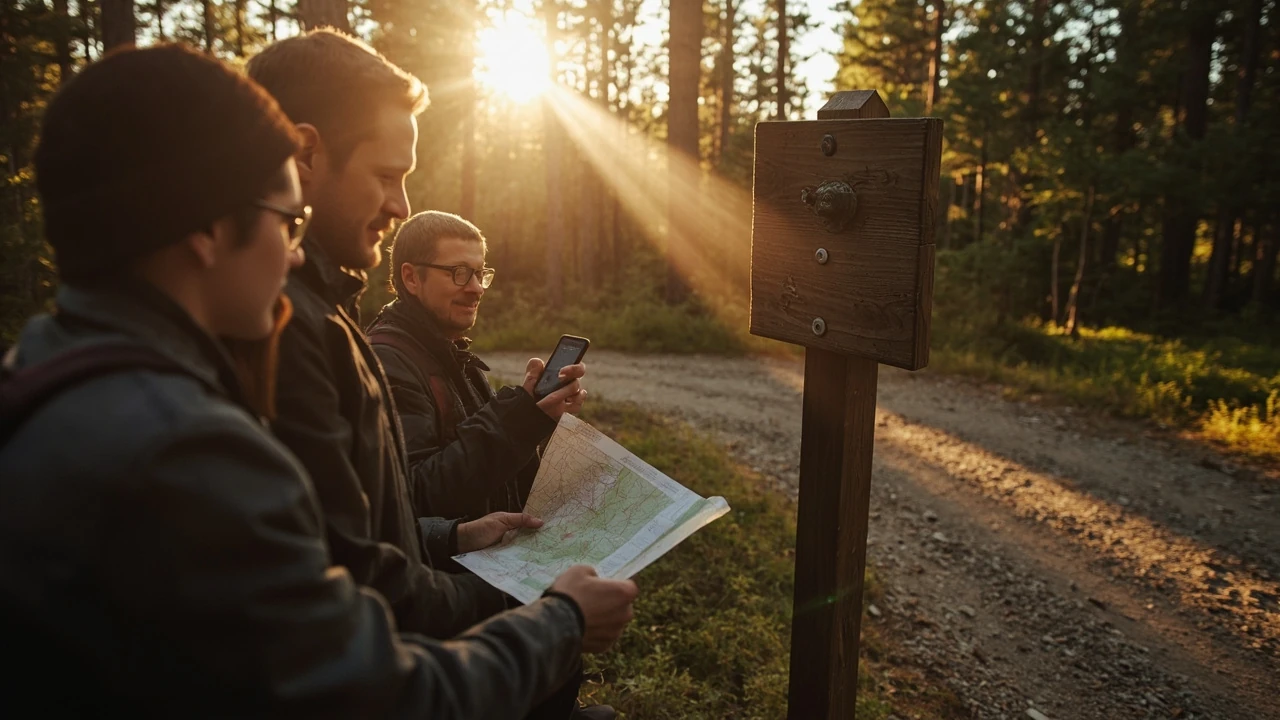
Parks near me: how to find the right outdoor space for your next visit
You typed “parks near me” into a search bar because you want somewhere to actually go, not a generic list of green polygons on a map. The honest problem with that query is that a search engine has no idea what kind of park you mean. A forested high ropes course an hour away might be perfect for one group, while a five-minute stroll to a small neighbourhood green is exactly right for another. The job of this article is to help you turn that one short phrase into a deliberate shortlist, so the place you pick matches your time, your group, and your appetite for effort.
Below is a practical way to filter parks near you using free tools, official data, and a few ground-level checks. It is written for readers who want a real outing, whether the plan is a thirty-minute dog walk, a family weekend, or a full day in the trees.
Start with the question, not the map
The first decision is what “park” actually means in your case. People search for parks near me with very different intentions, and a useful shortlist begins with naming the intention rather than scrolling pins.
- You want a quick green space for a walk, picnic, or dog exercise close to home.
- You want a destination park, meaning somewhere worth driving 30 to 90 minutes for because of the terrain, the views, or the activities on offer.
- You want a managed outdoor attraction such as a ropes course, climbing centre, or zipline operator, which technically sits on parkland or in a forest but charges a fee and runs timed sessions.
- You want a nature reserve, country park, or national park with marked trails and visitor infrastructure.
Once you can name the type, the rest of the search gets sharper. A small urban green often shows up on council maps, while a destination park is usually marketed through its own website and booking pages. Managed outdoor attractions live in a different category again, because their hours, age rules, and capacity matter as much as their location.
Free tools that genuinely help
You do not need a paid app to find parks near you, but some tools are more useful than others. The table below compares the most common options so you can pick the right starting point for the type of park you want.
| Tool | Best for | What it shows well | What it tends to miss |
|---|---|---|---|
| Google Maps | Quick filtering of any park type | Opening hours, photos, reviews, distance by car, transit and walking times | Small local greens without a business listing |
| Ordnance Survey / official mapping apps | Walking routes and footpaths | Public rights of way, contours, woodland and water features | Activity providers and ticket-only attractions |
| AllTrails and Komoot | Trail-based parks and country parks | Route distance, elevation, user reviews, dog and family ratings | Urban parks and small paid attractions |
| Local council websites | Neighbourhood parks and playgrounds | Free facilities, sports pitches, accessibility, byelaws | Marketing language and visitor experience |
| Operator websites (for example, a high ropes park) | Bookable outdoor attractions | Pricing, age and height rules, group sessions, weather policies | Anything outside that operator’s site |
A useful pattern is to start broad with one tool, then verify with another. A pin on Google Maps tells you the place exists and is reachable. A council or operator page tells you whether it is suitable for your group on the day you have in mind.
How to build a shortlist in about ten minutes
Once you know which tools suit your type of park, a short filtering routine saves you from ending up with a giant list you never act on.
- Open your main map tool and search the focus keyword “parks near me”.
- Switch the map layer to show parks, forests, or nature reserves if the tool offers it.
- Set a realistic travel time. Twenty minutes by car is a sensible default for a regular outing. Push it to sixty or ninety minutes only for a destination day.
- Look at the photo layer and skim the most recent reviews. Older reviews often praise facilities that have since closed or deteriorated.
- For anything that looks promising, open the official site or council page. Confirm opening, parking, dogs policy, and any booking requirement.
- Add a single backup option. Weather, roadworks, and unexpected closures are normal, so a plan B prevents the whole day from collapsing.
If you only have time for two steps, do the first and the fifth. Confirming what is actually open, bookable, and allowed saves more wasted trips than any other check.
Filter by the day, not just the destination
Most search results for parks near me are static, but the park that suits you is dynamic. The right park on a wet Tuesday in February is rarely the right park on a hot Saturday in July. A small set of day-level filters tends to be more useful than chasing a “best ever” list.
- For a short weekday evening, look for parks within a short drive that have lit paths, surfaced trails, or open grassy areas, so the time spent walking to the actual park is minimal.
- For a full weekend day, prioritise parks with parking, toilets, a café or kiosk, and shaded shelter, especially if children or older relatives are in the group.
- For hot weather, parks with mature tree cover and a water feature, even a small stream, are noticeably more comfortable than open fields.
- For wet weather, focus on parks with all-weather paths, visitor centres, and covered picnic areas, or shift the plan towards a managed attraction with indoor briefing rooms.
This kind of day-specific filtering is also where the difference between a free park and a paid outdoor attraction matters. A managed site may not be the cheapest, but its infrastructure often makes a marginal weather day far easier to handle.
What to check before you drive anywhere
Once you have a small shortlist, five quick checks remove most of the common disappointments. None of them require specialist knowledge, and each one has failed someone you have probably met.
| Check | Where to confirm | What “good” looks like | Common pitfall |
|---|---|---|---|
| Parking | Operator site or council page | Free or clearly priced, adequate capacity, surfaced in normal conditions | Small car park that fills by 10am on weekends |
| Access and surface | AllTrails, Google reviews, official site | Suitable for pushchairs, wheelchairs, or unsteady walkers if needed | Steep, uneven, or muddy routes that you only discover on arrival |
| Toilets and facilities | Operator site, council page, recent reviews | Open during your visit, with accessible options if required | Closed in winter or after 5pm even when the park itself is open |
| Rules and dogs | Official byelaws or visitor info | Clear policy on dogs, BBQs, ball games, drones, swimming | Well-meaning assumptions that turn into a fine or an awkward conversation |
| Booking and capacity | Operator booking system | Off-peak slots available, clear cancellation policy, timed entry if relevant | Turning up to a sold-out session at a managed attraction |
These checks cost a few minutes online and almost always decide whether the day is smooth or stressful.
Matching the park to the group
Even a beautiful park is the wrong park if it does not suit the people in the car. The table below is a quick way to sanity-check a shortlist against the most common group types.
| Group | What usually matters most | Watch out for |
|---|---|---|
| Toddlers and pre-schoolers | Short flat paths, fenced play area, toilets, café nearby | Long walks to a featureless viewpoint |
| School-age children | Activities they can actually do, not just look at, plus a sense of adventure | Over-groomed urban parks that bore them within an hour |
| Teenagers | Challenge, novelty, and something to talk about afterwards | A standard playground or a flat circuit walk |
| Older relatives | Bench-friendly routes, toilets, accessible parking, shaded seating | Steep steps disguised as “an easy walk” |
| Dog walkers | Off-lead areas, water access, waste bins, well-drained ground | Parks with seasonal restrictions or livestock nearby |
| Solo or pairs who want activity | Routes with distance and elevation, or a bookable outdoor activity | A flat one-kilometre loop that takes twenty minutes |
If you are planning a day with mixed ages, it is usually worth prioritising the most demanding member of the group. A park that suits the least mobile adult almost always suits everyone else, whereas the reverse is rarely true.
Budgeting a park visit without overthinking it
Searches for parks near me are often framed as free days out, but the realistic cost depends on how the day is structured. A short list of line items covers most cases.
- Fuel or transit fares, calculated on actual travel time rather than straight-line distance.
- Parking, which is free in some parks and a meaningful cost in others.
- Food and drink, which is cheap if you bring a flask and expensive if you buy everything on site.
- Activity fees, which can dominate the day for managed attractions like ropes courses, climbing centres, or zipline operators.
- Small extras such as dog waste bags, sun cream, or replacement batteries for head torches on shorter winter days.
For a deeper look at how these costs stack up across a day trip, the day trip budget guide walks through a worked example you can adapt to your own group.
When the best “park” is actually an activity site
A surprising number of visitors searching for parks near me are really looking for an activity that happens to sit in a park-like setting. High ropes courses, adventure parks, zipline operators, and forest activity centres fall into this category. They are listed in park directories, they look like parks on a map, and they often sit inside a larger country park or forest estate, but they run like any other paid attraction.
Two consequences matter when you are choosing one.
- Booking usually replaces the simple act of “turning up”. Sessions are timed, capacity is limited, and the safest, best-supervised slots fill first.
- Age, height, weight, and health rules are not suggestions. They exist because the safety systems and equipment are designed around specific ranges, and a refusal on the day is a routine occurrence.
If you are weighing this kind of site against a free public park, a good test is to ask what would make the day feel successful. If the answer involves doing something specific, the activity site is usually the better match. If the answer involves wandering, sitting, and unstructured time, a free park is the better match.
For families in particular, the family rope park rules guide is a useful reference before you book, because the age and height bands vary more than you would expect between operators.
Reading reviews the right way
Reviews for parks near me can be misleading if you treat them as a single score. A four-star average built on dog walkers in winter and a two-star average built on a wet August bank holiday are telling you different things. A few habits help.
- Sort recent reviews by lowest score and read the last ten. Patterns in complaints are far more useful than average ratings.
- Look for reviews from people whose group matches yours, especially in terms of age and ability.
- Treat photos with caution. They are often taken at the best angle, in the best light, and outside peak hours.
- Cross-reference at least one review with the official site. If a reviewer claims something is “free” or “always open” and the site says otherwise, the site is right.
For an external perspective on how public parks are managed in the United Kingdom, the Public park article on Wikipedia gives a useful overview of typical facilities, governance, and history.
Safety, weather, and the boring checks that matter
Outdoor settings carry normal, manageable risks. The aim is not to eliminate risk, but to be confident that the risks you do take are the ones you chose.
- Check the weather forecast for wind and rain, not just temperature. High winds in particular close or restrict high ropes courses and ziplines even when the rest of the park is open.
- For managed activity sites, read the weather and cancellation policy before booking. Some sites reschedule for free, others offer credit, and a few are stricter.
- Wear footwear that grips on wet grass, woodchips, or timber, and that you are happy to get muddy.
- Carry water, even in mild weather. Most park visitors underestimate how much they drink on a longer walk.
- Tell someone where you are going, especially for longer routes in country parks or forests.
For a closer look at how wind and rain affect outdoor activity operators, the rope park weather guide is a useful read even if you are not booking a rope park, because the same logic applies to any high or exposed outdoor setting.
Frequently asked questions
How do I find parks near me that are actually open today?
Search your area in Google Maps and filter by “open now”, then check the official site or council page for the most accurate hours. Smaller neighbourhood parks are usually open at all hours, while country parks, managed attractions, and sites with gates can close at dusk or in winter.
Are the parks shown in search results always free to enter?
Many public parks are free, but paid attractions such as high ropes courses, forest activity centres, and some country parks charge an entry or activity fee. Always check the operator or council site before you travel so the cost is not a surprise on arrival.
What is the best app to find parks near me for walking?
For route-based walking, AllTrails and Komoot are strong. For general discovery and travel times, Google Maps is the most practical. For rights of way and contours, the official Ordnance Survey or national mapping app is the most accurate.
How far should I be willing to drive for a good park?
For a regular outing, twenty to thirty minutes each way is a sensible upper limit. For a full day with activities, sixty to ninety minutes is reasonable. Beyond ninety minutes, the park needs a clear feature such as a major viewpoint, a unique activity, or a specialist trail to justify the travel.
How do I know if a park is suitable for young children or older relatives?
Look for surfaced paths, toilets, seating, and a short main loop. Recent reviews from families or older visitors are more useful than average ratings. If accessibility matters, search for the park’s accessibility statement on its official site.
Are dogs allowed in every park near me?
No. Some parks have year-round dog restrictions, others have seasonal rules around wildlife or livestock, and a few require leads at all times. Check the official byelaws or visitor information page for the specific park before you go.
When is the best time of day to visit a popular park?
Early morning on weekdays tends to be quietest, with the best light and the most wildlife. Weekends from late morning to mid-afternoon are busiest, especially in summer, which is also when parking fills and queues at managed activities are longest.
Can I rely on a park’s Google reviews to decide whether to visit?
Use reviews as one signal among several, not as the deciding factor. Read recent low-score reviews for recurring complaints, look for visitors whose group matches yours, and always cross-check with the official site for hours, prices, and rules.
What should I pack for a park visit that I might forget?
Water, a small first-aid item, sun protection in summer, an extra layer in cooler months, and a bin bag for rubbish. For managed activity sites, also bring any booking confirmation, signed forms, and suitable closed-toe footwear.
What is the difference between a country park, a nature reserve, and a national park?
A country park is usually a managed green space with visitor facilities, often run by a local authority. A nature reserve is managed primarily for wildlife, with rules designed to protect habitats. A national park is a large designated area with its own authority, covering settlements, farmland, and wild land together.
A short checklist before you leave
Before you set off, run through a final five-point list. It is the same list that experienced park-goers use to avoid the common frictions.
- Confirm the park is open and any required booking is in place.
- Check the weather, including wind, and pack for it.
- Charge your phone, note the park name in your maps app, and tell someone where you are going for longer routes.
- Pack water, a small snack, and any essentials for dogs, children, or accessibility needs.
- Set a realistic turnaround time so the day ends before everyone is tired and hungry.
Searching for parks near me is a starting point. The park you actually enjoy is the one that fits the day, the group, and the level of effort you want to spend. With a short filtering routine, a couple of reliable tools, and the boring checks above, that decision is usually quicker and easier than it looks.
Related reading
Explore High Ropes Adventure
Trip tools
Essential adventure planning guides
Use these practical guides to compare rope park activities, prepare for a first high ropes day, check a booking, choose suitable footwear and contact the editorial team. Each page links to the relevant live tools and current planning sections.
Latest articles
- How high ropes course difficulty ratings work
- Thousand Trails: How the Membership Works and What to Check Before You Join
- Turners Outdoor: A Practical Guide for Adventure Day Visitors
- Low ropes vs high ropes team building activities: how to choose
- Space Needle tickets: a practical guide to choosing, booking, and timing your visit
- Outdoor sauna: how it works, what it costs, and how to plan a safe setup
- What to pack for a family ropes course day
- Best mountain biking trails: how to choose, where to ride, and what to check
- Costco Disneyland tickets: how members really save and what to watch
- High ropes course waiver questions to read before you sign