Outdoor sauna: how it works, what it costs, and how to plan a safe setup
Outdoor sauna: how it works, what it costs, and how to plan a safe setup
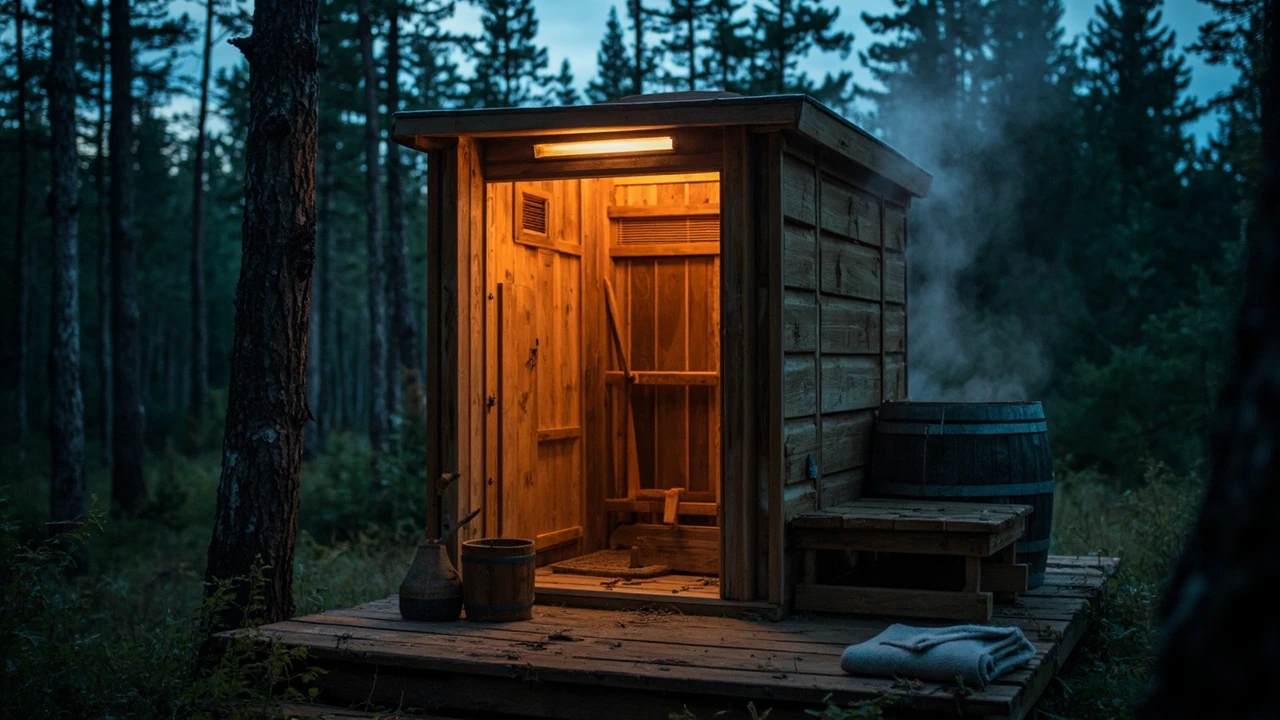
Picture a small timber cabin tucked at the edge of a garden, with a single strip of warm light leaking from a vent near the roof and a faint curl of steam drifting above a metal chimney. That is the image most people have in mind when they first search for an outdoor sauna, and it is also where the practical questions begin. How hot does it actually get inside, what does it cost to run, where can you legally place it, and how do you keep it safe through years of weather? This guide works through the real decisions behind buying, siting, and using an outdoor sauna so you can plan a build that fits your space, budget, and climate without expensive surprises.
The term outdoor sauna covers a wide range of products, from a compact barrel sauna for two people to a small cabin that seats six with a changing room and a cold-plunge barrel beside it. The shared logic is the same: a sealed, insulated hot room heated by a dedicated stove, usually with a water bucket and ladle for steam. The differences sit in the heater type, the timber, the footprint, the foundation, and the local rules that decide whether you can build one at all. The rest of this article treats each of those pieces in order, so a first-time buyer can move from a vague idea to a clear plan.
What an outdoor sauna actually is
An outdoor sauna is a freestanding hot room designed to sit in a garden, yard, terrace, or other open-air space, rather than inside a house. The hot room is built from thick, stable timber such as Nordic spruce, Western red cedar, or thermally modified pine, and the walls and ceiling are filled with mineral or natural fibre insulation so the heater can hold a steady 70 to 90 degrees Celsius at bench level. Almost every outdoor sauna has a weatherproof shingle, metal, or timber shingle roof, a tight-fitting door with a small window, and adjustable vents near the floor and ceiling so fresh air can be drawn in and stale air pushed out during a session.
Most outdoor saunas are sold as factory-built kits. The panels arrive cut to size, the benches are pre-assembled, and the heater ships separately. Larger cabin saunas can also be built on site by a carpenter, which is common for non-standard shapes, attached changing rooms, or panoramic glass fronts. The choice between kit and custom build usually turns on budget, lead time, and how much the site restricts access for delivery.
Heater choices that drive comfort and running cost
The heater is the heart of any outdoor sauna, and it decides how the room feels, how fast it heats, and what the long-term running cost looks like. Three heater families cover almost the whole market:
- Wood-burning sauna stoves heat with split logs, give the traditional soft heat and rhythmic crackle, and work in any location without electrical supply. They need a flue, a fireproof base, and a longer heat-up time of 45 to 90 minutes.
- Electric sauna heaters use a bank of heating elements and a thermostat. They heat faster, hold a chosen temperature very precisely, and switch on with a button, but they require a dedicated electrical circuit and a weatherproof supply to the outdoor cabin.
- Infrared outdoor cabins use radiant panels mounted on the walls rather than a hot room. They run at lower air temperatures, around 45 to 60 degrees Celsius, and feel less intense, but they still depend on a sealed, insulated shell to work well.
For a small garden sauna used mainly in the evening, an electric heater is the most convenient. For a rural or off-grid site, a wood stove is usually the only realistic option. The running cost gap is real: a wood stove burns about 8 to 15 kilograms of dry hardwood per session, while an electric heater for a two- to three-person cabin typically draws 6 to 9 kWh per session, depending on insulation and outside temperature.
Common outdoor sauna types and who they suit
Before looking at foundations and permits, it helps to match the cabin shape to the way you actually plan to use it. The table below summarises the most common forms, with their typical capacity, footprint, and best use case.
| Sauna type | Typical capacity | Approx. footprint | Best suited to |
|---|---|---|---|
| Barrel sauna | 2 to 4 people | 2.0 to 2.4 m long, 1.8 to 2.0 m deep | Small gardens, fast install, traditional feel |
| Cube or pod cabin | 2 to 4 people | 1.8 to 2.4 m on each side | Compact yards, modern look, good heat retention |
| Square cabin with changing room | 4 to 6 people | 2.5 to 3.5 m on each side | Family use, social sessions, mixed weather |
| Panoramic glass-front cabin | 2 to 4 people | 2.0 to 2.5 m on each side | View-led sites, modern gardens, year-round use |
| Custom timber build | 4 to 8 people | Variable, often over 8 m² | Non-standard shapes, attached changing rooms, retreats |
The footprint matters more than capacity for many buyers, because a small garden, a tight side return, or a roof terrace all impose hard limits on the base size. A barrel or cube sauna under 2.5 m long will usually fit through a standard side gate, which is often the deciding factor in older properties.
Siting, foundations, and access
An outdoor sauna behaves like a small timber outbuilding for planning and structural purposes, and the ground it sits on matters as much as the cabin itself. Three site questions resolve most placement issues before they become expensive problems.
- Is the ground stable and free-draining? A compacted gravel pad, concrete piers, or a small concrete slab are all common choices. A sauna on soft, wet soil will settle unevenly, twist the frame, and eventually leak at the door.
- How far is the nearest safe wall and boundary? Local fire rules often set minimum distances between a sauna heater flue and a wooden fence, a tree, or a neighbouring building. The exact number depends on the country and the flue temperature rating.
- Where will the supply and waste run? Electric heaters need a weatherproof armoured cable and an isolator switch outside. Wood stoves need a clear flue path and a dry log store within reach.
A flat, level pad of about 1.5 times the cabin footprint gives you a dry walking surface, a place to step out barefoot, and room to set down a bucket of water. Drainage should fall slightly away from the cabin so rainwater and any splash-out from the heater do not pool at the base.
Realistic cost ranges and what changes them
Outdoor sauna prices range widely because the cabin, the heater, the foundation, and the electrical or flue work are usually quoted by different trades. The figures below are typical ranges for a private buyer in a temperate climate, before site-specific groundworks or long cable runs. They are not quotes and should be used as a planning anchor only.
| Cost line | Typical budget range | What usually moves the price |
|---|---|---|
| Sauna kit (barrel or cube, 2 to 4 people) | £2,000 to £5,000 | Timber grade, bench quality, window size |
| Sauna kit (cabin with changing room, 4 to 6 people) | £4,000 to £9,000 | Wall thickness, insulation, door glazing |
| Electric heater, 6 to 9 kW | £350 to £900 | Brand, control type, stone capacity |
| Wood-burning stove with flue | £500 to £1,400 | Steel thickness, water tank, flue length |
| Foundation (gravel pad or small slab) | £300 to £1,200 | Access, ground conditions, drainage work |
| Electrical supply and isolator | £400 to £1,000 | Cable run length, consumer unit changes |
For a complete small outdoor sauna with an electric heater, prepared base, and electrical work, a realistic all-in budget for a competent kit install starts around £3,500 and climbs to £7,000 or more for a larger cabin with a custom changing room. A wood-heated build on a rural site is often cheaper on parts but needs a chimney specialist and more site time.
Permits, rules, and neighbour considerations
Whether you need formal planning permission for an outdoor sauna depends on where the cabin sits, how big it is, and how visible it is from the road. Most countries treat a small, low timber outbuilding in a rear garden as permitted development, but the exact rules vary by jurisdiction, and conservation areas, listed buildings, and rental properties often have tighter limits. Before ordering a kit, it is worth confirming three local points:
- The maximum height and footprint allowed for an outbuilding without a planning application.
- The required distance from a property boundary, especially for a flue that exits above fence height.
- Any covenants on the title that restrict garden structures, often set by the original developer.
For most private gardens, a sauna placed more than two metres from a boundary and under 2.5 m at the ridge is unlikely to need a formal application, but a quick check with the local planning office or a written note from a building control officer is cheap insurance against a retrospective problem.
Neighbour relations matter as much as formal rules. A heater flue that points at a neighbouring patio, a cabin window that overlooks a neighbour’s garden, or a hot room that runs late at night can all become disputes even where rules are technically met. Orienting the door and the window toward your own view, and using a flue extension if the wind pattern sends smoke sideways, avoids most of those conversations.
How an outdoor sauna performs in cold and wet weather
Most outdoor saunas are designed to be used year-round in temperate climates, but the experience changes with the season. A well-insulated cabin with a good heater will reach 80 degrees Celsius at bench level in 30 to 45 minutes in summer, and 45 to 60 minutes in midwinter, especially if the wind chill on the cabin walls is significant. Two practical details make a real difference in cold weather:
- Wind protection. A solid fence, a hedge, or a small porch on the windward side can cut heat-up time by 15 to 20 percent, because the cabin is no longer losing heat to moving air.
- Snow and ice management. A small roof overhang keeps the door clear, and a grit path to the cabin is safer than wet timber decking in freezing conditions.
Wet weather is less of a problem than cold weather for the cabin itself, because the timber is dried to a low moisture content before use and the roof sheds rain. The main risk is prolonged damp at the base, which is why a free-draining foundation and a small gap between the bottom timbers and the ground matter more than the cabin’s own weather resistance.
Safety, ventilation, and looking after the timber
Outdoor sauna safety rests on three habits: keeping the air fresh, controlling the stove, and protecting the timber from rot. The heater, not the cabin, is the largest source of risk, and most modern heaters have built-in thermostatic controls and overheat cut-outs that should be tested at least once a year.
Ventilation is often misunderstood. Even a hot room needs a small low vent near the heater to bring in fresh air, and a matching high vent near the ceiling, usually on the opposite wall, to let stale air and carbon dioxide leave. Without those vents, the air at head height becomes thick and the session feels claustrophobic even when the thermometer still reads 80 degrees. Opening the door for a few seconds every ten to fifteen minutes also helps when many people are inside.
Timber care is straightforward but worth keeping on a small annual list:
- Brush down benches and floor grilles once a month during heavy use, and air the cabin with the door open for an hour after each session.
- Check the door seal, vent slats, and roof flashing once a year, and re-treat the outer timber with a UV-resistant oil or stain every two to four years, depending on exposure.
- Empty ash from a wood stove only into a metal ash bucket with a tight lid, and store the bucket on a non-combustible surface away from the cabin.
Looking at a sauna as a piece of outdoor furniture, rather than an indoor room, helps set the right maintenance rhythm. The cabin is built to take rain and sun; it just needs a short, predictable care routine to keep doing so for ten to twenty years.
How an outdoor sauna fits with the rest of an active day outdoors
Many readers who look up an outdoor sauna are not buying for the sauna alone. They are planning a wider day or weekend around it, often combined with walking, a session on a rope course, a swim, or a long bike ride. A sauna works best in that context when it sits at the end of the active block, because the contrast between exertion and heat is part of the appeal. If you are using a sauna as the warm-up to a winter trail day, a short 10 to 15 minute warm room followed by a cool rinse is a more useful pattern than a full deep-heat session.
For a family or group planning a wider day outside, an outdoor sauna is also a useful anchor for a small base camp, where people can rotate between hotter and cooler periods without losing the social thread of the day. A simple rotation might be 15 minutes in the hot room, 10 minutes outside, and a short cool rinse, repeated twice, followed by a slower cooldown with water and a snack. The same cabin will behave very differently for a two-person quiet session and a six-person social session, so it helps to agree on a rough structure before lighting the heater.
For readers who also spend time on rope courses and zip lines, the pattern is similar in spirit: short bursts of focused activity, a clear safety briefing, and a slow end-of-session cooldown. If you are weighing a day at an outdoor activity centre against building a sauna at home, the practical questions are usually about lead time, cost per use, and the kind of group you usually host. A home sauna pays back fastest for two regular users across several years of weekly sessions, while an activity day suits a one-off family or friends’ gathering.
For more on planning a wider outdoor day, it is worth reading up on what to actually pack and how to think about transport, since both feed into whether a sauna session at the end of a day is realistic or just a wish. A few practical pieces from this site’s existing guides sit naturally alongside an outdoor sauna build:
Common mistakes first-time buyers make
Most outdoor sauna regrets fall into a small set of patterns, and most of them are easier to avoid at the planning stage than to fix after delivery.
- Undersizing the heater. A 6 kW electric heater in a poorly insulated 3 m² cabin can struggle to reach 80 degrees in a UK or northern European winter. Match the heater output to the cabin volume, not just the footprint.
- Ignoring the foundation. Placing a kit on uneven paving slabs or a bare lawn usually leads to a twisted frame and a door that no longer closes cleanly within the first year.
- Skipping the electrical plan. A long, thin extension lead to the cabin is unsafe and usually fails the installer’s sign-off. Plan the armoured cable run before the cabin arrives.
- Choosing a wood stove for convenience. Wood stoves are excellent, but they need a dry log supply, a longer heat-up, and chimney cleaning. Buyers who actually want a one-button experience should choose electric.
- Forgetting the cold rinse. A sauna without any way to cool down at the end of a session is half a build. A garden hose, a cold shower, or a small plunge barrel makes a real difference to how the sauna feels.
Each of these is fixable, but the fix is usually a small budget item added at the start and a much larger budget item added at the end. Working through this list before ordering turns most of these regrets into line items on the original plan.
Frequently asked questions
How long does an outdoor sauna take to heat up?
A small, well-insulated outdoor sauna with a correctly sized electric heater usually reaches 70 to 80 degrees Celsius in 30 to 45 minutes in summer and 45 to 60 minutes in midwinter. A wood-burning stove takes longer, often 45 to 90 minutes, because the fire has to warm the stones, the flue, and the air together. Wind exposure, cabin volume, and outside temperature all change the heat-up time, so the first session of the year is often slower than mid-season sessions.
Do I need planning permission for an outdoor sauna?
In most regions, a small timber outbuilding under 2.5 m at the ridge, placed more than two metres from a boundary, and used only by the household is treated as permitted development and does not need a formal planning application. Conservation areas, listed buildings, rental properties, and very tight urban plots often have stricter rules. The safest step is a quick check with the local planning office, a look at the title deeds for any restrictive covenants, and a brief note to a building control officer if there is any doubt.
Can an outdoor sauna be used in winter?
Yes. Outdoor saunas are designed for year-round use in temperate climates. The cabin is built to take snow loads on the roof, and the heater is sized to bring the room to a usable temperature even when the outside air is below freezing. The main practical adjustments are a wind break on the windward side, a non-slip path to the door, and a slightly longer heat-up time, especially for the first cold session of the year.
What is the difference between a barrel sauna and a cabin sauna?
A barrel sauna uses curved staves to form a cylinder with the heater at one end, which gives a soft, even heat and a short heat-up time. A cabin sauna uses straight walls and a flat or pitched roof, which gives more usable floor area, easier bench layouts, and a longer heat-up because there is more wall surface to warm. Barrel saunas are usually cheaper and faster to install, while cabin saunas are easier to insulate well, easier to add a changing room to, and easier to sit on uneven ground.
How much does it cost to run an outdoor sauna?
Running cost depends on the heater type, the local energy price, and how often the sauna is used. A small electric heater in an insulated cabin typically uses 6 to 9 kWh per session, so a weekly 90-minute session in a typical European household electricity tariff lands in the low single-digit euros or pounds per session. A wood-burning sauna burns around 8 to 15 kilograms of dry hardwood per session, so the running cost is set by the local price of seasoned firewood. Annual maintenance, including a small amount of timber treatment and occasional heater service, is modest compared with the purchase price.
Do I need a water supply next to the outdoor sauna?
Not strictly, but a water source makes the sauna far more usable. The traditional löyly steam comes from a bucket of water ladled onto the hot stones, and most users also want water for a cool rinse at the end of a session. A garden tap, a rain barrel, or a simple outdoor shower within a few metres of the cabin is enough. A full plumbing connection is only needed if you want a permanent changing room, a sink, or a hot shower next to the sauna.
What timber is best for an outdoor sauna?
Spruce, pine, and Western red cedar are the most common choices. Spruce and pine are affordable, hold heat well, and take a clear or stained finish. Western red cedar is more expensive, but it is naturally resistant to rot and has a low density that stays comfortable to the touch even in a hot room. Thermally modified pine and spruce sit between the two, with better outdoor durability than standard timber at a lower price than cedar. The interior benches are usually made from a finer-grained timber like aspen or abachi because it stays cooler against the skin.
How long does an outdoor sauna last?
With a sound foundation, a sensible timber treatment routine, and basic heater care, an outdoor sauna typically lasts fifteen to twenty-five years, and well-built examples can run longer. The outer cladding and the roof are the parts that age fastest, and both can usually be replaced without disturbing the rest of the cabin. The heater is the shortest-lived component, with electric elements often needing replacement after ten to fifteen years of regular use and wood stoves lasting longer with routine chimney cleaning.
Can an outdoor sauna sit on a roof terrace or balcony?
It can, but only after a structural check. The combined weight of the cabin, the heater, the stones, and any users can easily reach 500 kilograms for a small two-person sauna, before any snow load on the roof. A structural engineer or the building’s management company should confirm the load capacity, the waterproofing detail, and any rules on flue exit or smoke before a kit is ordered. Many roof terrace builds use a small electric heater and a compact cabin to keep the load manageable.
How do I keep the outdoor sauna clean and hygienic?
A simple routine is enough. After each session, leave the door open for at least an hour to let the cabin dry, brush the benches, and empty any water buckets. Once a month, wipe the benches with warm water and a mild, unscented sauna cleaner, and check the floor grille for debris. Avoid strong household cleaners, which can off-gas at high temperatures, and avoid leaving damp towels on the benches, which will mark the timber over time.
Related reading
Explore High Ropes Adventure
Trip tools
Essential adventure planning guides
Use these practical guides to compare rope park activities, prepare for a first high ropes day, check a booking, choose suitable footwear and contact the editorial team. Each page links to the relevant live tools and current planning sections.
Latest articles
- Sweet tart ropes: what the flavour means in a ropes course
- Demon Slayer movie tickets: how to find a screening and prepare for a day out
- How to choose NBA tickets without overpaying
- Time travel movies worth watching on a slow weekend
- Overseas adventure travel: how to plan a trip that actually works
- Choosing an outdoor bench that actually lasts
- Lows adventure: how low-ropes courses work and who they suit
- outdoor couch
- United travel bank: how prepaid travel money cards actually work
- National parks in California: a practical guide to choosing your trip