What to wear under a climbing harness: a practical clothing guide
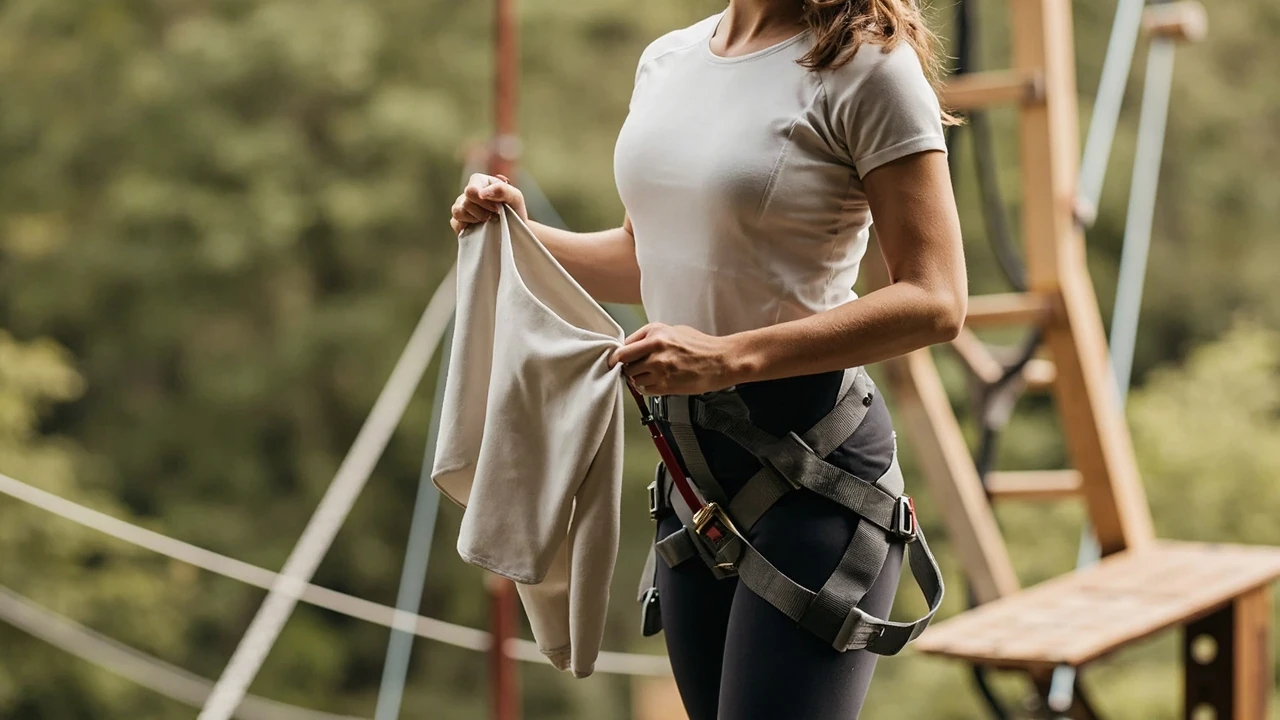
What to wear under a climbing harness: a practical clothing guide
A harness only feels comfortable when the layers underneath are chosen with intent. The waistbelt sits against bare skin or a thin base layer for hours, the leg loops dig into the thighs on long routes, and a single bulky seam can press into the hip bone until it bruises. Picking the right clothes is not a fashion decision; it is part of the safety system, because loose fabric can bunch under the waistbelt and change how the harness loads across the body.
Most people arriving at a ropes course or indoor wall treat their harness like a rental item and forget to plan the layers underneath. A little thought on fabric, fit, and accessories prevents chafing, keeps the leg loops in the right place, and lets the belay loop sit flat against the body where a partner can clip a carabiner without fumbling. This guide walks through the base layer, mid layer, bottom, socks, and small accessories that work best, and it explains why each choice matters for climbing and ropes-course comfort.
Why the layers under your harness matter more than people expect
A climbing harness is designed to transfer force to the body through the waistbelt and leg loops. When a climber hangs freely, sits in the harness for a long belay, or takes a short fall, the load travels through the padding and into the skin and muscle underneath. The wrong fabric can turn a normal session into a hot, itchy, or painful one, and in extreme cases can interfere with how the harness sits on the hips.
Three factors drive most of the discomfort that climbers blame on the harness itself:
- Fabric choice. Cotton absorbs sweat, holds moisture against the skin, and causes friction burns on the lower back. Synthetic blends and merino wool breathe, dry quickly, and stay soft when damp.
- Fit and bulk. A puffy mid layer or bunched shirt pushes the waistbelt away from the body, changes the load angle, and creates pressure points. The harness should sit against a smooth, slim profile.
- Seam placement. Heavy shoulder seams, rear pockets, or raised back yokes press into the lumbar pad of the harness. Flat or offset seams are far more comfortable over a full day.
None of these factors change the safety rating of the harness, but together they decide whether a long session is pleasant or miserable. Choosing the right layers is one of the easiest ways to climb and to handle the harness on a ropes course with confidence.
Base layer tops: the single most important choice
The base layer is the shirt that sits directly between the harness waistbelt and your skin. It needs to be smooth, close-fitting, and made of a fabric that handles sweat. A loose cotton T-shirt is the most common mistake, because it wads up under the padding, holds moisture, and slides around when you lean back in the harness.
For most sessions, a fitted synthetic or merino top is the best option. Synthetics such as polyester and nylon dry fast and handle repeated movement. Merino wool stays comfortable across temperature swings and resists odor, which helps on multi-pitch days and full-day ropes-course events. Both options are widely available in long-sleeve, three-quarter, and short-sleeve cuts.
For a high ropes course, indoor climbing gym, or a single outdoor route, a short-sleeve athletic top is usually enough. For a long alpine day or a cool evening event, a long-sleeve merino layer adds warmth without bulk. The fit should be close enough that there are no loose folds under the waistbelt, but not so tight that it restricts shoulder movement or breathing.
Base layer fabric comparison
| Fabric | Moisture handling | Drying speed | Odor resistance | Best for |
|---|---|---|---|---|
| Merino wool | High | Medium | High | Long days, cool weather, multi-pitch routes |
| Polyester / nylon blend | High | Fast | Medium | Gym sessions, warm weather, high-output climbing |
| Cotton | Low (absorbs and holds sweat) | Slow | Low | Not recommended under a harness |
| Silk | Medium | Fast | Low | Lightweight travel days, layering in mild weather |
The short version: pick a synthetic or merino top that fits close to the body, has flat or minimal seams, and reaches just past the waistband of your pants. The waistbelt should sit on the shirt, not on a belt or a pocket.
Mid layers: keep them thin or skip them
Mid layers add warmth, but they also add bulk where a harness needs to sit flat. A down jacket or a thick fleece is a poor choice because the waistbelt cannot tighten correctly over the extra padding, and the leg loops slide around the thighs. If you expect cold weather, choose a thin fleece or a light insulated jacket that compresses flat, and be ready to take it off and stash it on a sling or in a pack while you are on the rope.
On a high ropes course, mid layers rarely come into play because the activity generates heat and the harness holds the body. On a multi-pitch route, the belayer sits still for long periods and may want a thin insulating layer that can be added or removed without taking the harness off. A lightweight zip-up fleece or a synthetic pullover works well, and the front zip lets you vent without pulling fabric out from under the waistbelt.
Bottoms: leggings, hiking pants, or shorts
The bottom half of the outfit has to work with the leg loops. The leg loops sit high on the upper thigh, and they need to slide freely when you lift a leg for a high step. The fabric should be smooth, stretchy, and free of thick seams in the groin and inner thigh, where chafing is most likely. For broader context, the Glossary of climbing terms provides a concise reference for this section.
For most climbers, the practical options are:
- Stretchy leggings or climbing-specific pants. Smooth, four-way stretch fabric moves with the leg loops and stays in place. Many climbing brands add a gusset at the crotch and put flat seams on the outside of the thigh for comfort under a harness.
- Lightweight hiking or soft-shell pants. Good for cool weather, scrambles, and approaches. Choose a pair without a thick waistband or bulky cargo pockets that could press into the lower back when the harness is loaded.
- Athletic shorts over leggings or tights. A common combination at ropes courses in summer, where modesty, sun protection, and chafing control all matter. The base layer keeps the leg loops from rubbing skin, and the shorts provide coverage when the harness lifts.
What to avoid: rigid denim jeans, low-rise pants that expose the lower back, and shorts with a thick inner seam. Denim has almost no stretch, holds sweat, and can dig into the inner thigh when a leg loop is weighted. Low-rise pants leave a gap between shirt and waistband, which lets the harness sit against bare skin on the lower back.
Bottom layer comparison
| Option | Stretch | Chafing risk | Weather range | Notes under a harness |
|---|---|---|---|---|
| Stretch leggings / climbing pants | High | Low | Mild to cool | Smooth profile, flat seams, easy layering |
| Light hiking pants | Medium | Medium | Cool to cold | Skip heavy cargo pockets and thick waistbands |
| Athletic shorts over tights | High | Low | Warm to hot | Good coverage and sun protection on ropes courses |
| Loose cotton shorts | Low | High | Warm | Bunches under leg loops, holds sweat |
| Denim jeans | Very low | High | Cool | Not recommended for harness comfort |
Socks, shoes, and small details that change everything
Climbing shoes are part of the outfit, but socks often get forgotten. A thin synthetic or merino sock is the best match for a tight climbing shoe, because it manages sweat and reduces friction on the toes. Thick cotton athletic socks are tempting for comfort, but they crowd the toe box and trap heat, which is the opposite of what you want in a shoe that already fits snugly.
For a high ropes course, where approach shoes or trail shoes replace climbing shoes, a mid-weight hiking sock is more useful. Cushioning under the heel and toe helps with the long walks between elements, and a wool blend handles sweat on a hot day. Just make sure the sock does not bunch at the ankle, where a leg loop might catch it.
A few small accessories are worth thinking about before you put the harness on:
- Hat or headband. Useful on a sunny course, but choose a soft brim or a cap that fits under a helmet without shifting. A stiff brim can interfere with the helmet strap.
- Sunglasses. Helpful on high platforms, but secure them with a retainer strap so they do not fall on a belay partner below.
- Watch and jewelry. A watch with a soft band is fine, but bulky metal bracelets, dangling earrings, and rings with raised settings can press into the skin under a waistbelt or catch on webbing.
- Hair tie. Long hair should be tied back so it does not pull under the waistbelt when the climber leans back.
Weather-specific clothing plans
Weather changes what you can wear without ruining the harness fit. The same base layer can work in a wide range of conditions, but the mid layer and shell need to be chosen so they can be removed and packed while the harness stays on. A bulky shell that cannot compress sits on the lower back and pushes the waistbelt out of position.
Warm and dry conditions
On a hot summer day at an outdoor ropes course, the lightest possible setup is usually the most comfortable. A fitted short-sleeve synthetic top, stretchy leggings or tights, athletic shorts over the tights for coverage, thin socks, and approach shoes are enough for most participants. Sun protection comes from the shorts, the shirt, and a hat, while sunscreen handles the lower legs and face.
Cotton feels cool at first, but it soaks up sweat and stays damp for the rest of the session. A simple change from a cotton T-shirt to a synthetic one is often the biggest comfort upgrade a beginner can make, and it is the simplest answer to the question of what to wear under a climbing harness in summer.
Cool and dry conditions
On a cool autumn morning or an indoor gym in winter, a long-sleeve merino or synthetic base layer is the main piece. Add a thin fleece or a light insulated vest that can be removed and clipped to a carabiner on the harness when the work gets harder. A soft-shell pant adds warmth on the approach and stays comfortable under the leg loops.
Wet conditions
Wet weather turns the clothing plan into a layering puzzle. A waterproof shell that goes over the harness keeps the padding dry, but it traps heat. A light pair of waterproof pants over soft-shell leggings keeps the legs dry without restricting the leg loops. Cotton is especially bad in the rain because it absorbs water, loses insulation, and stays cold against the skin, which can lead to chafing and chills on a long descent. For an independent reference, the rock climbing terms and definitions provides additional context for this point.
Wet webbing on a harness is more slippery to handle, and a damp base layer against the lower back feels colder than the air temperature would suggest. Choosing a quick-dry fabric is the best way to keep the session safe and comfortable when the weather turns.
Common mistakes to avoid under a harness
Most discomfort under a harness comes from a few recurring mistakes. Spotting them before you put the harness on saves a lot of fiddling on the ground and on the wall.
- Wearing a tucked-in shirt with a thick belt. A belt is a second waistband, and the harness waistbelt cannot sit flat over both. Skip the belt, or wear the harness over the shirt and a smooth waistband.
- Choosing a shirt with a back pocket. Phone, keys, or wallet in a rear pocket becomes a hard lump under the lumbar pad. Move small items to a chalk bag, a sling pouch, or a pack on the ground.
- Pulling thick socks up over the leg loops. The cuff can catch under the leg loop and twist it. Keep the sock cuff below the leg loop, or choose a low-cut sock that does not reach that high.
- Wearing a down jacket while on rope. The puffy fabric compresses under the waistbelt, throws off the fit, and insulates the body so well that overheating is almost guaranteed. Stash the puffy and wear a thin fleece instead.
- Wearing jewelry that catches on webbing. Rings, bracelets, and long necklaces can press into the skin or hook onto gear. A simple silicone band or a thin chain is safer than a heavy metal piece.
How the harness should sit when the layers are right
The right clothing makes the harness easier to fit, and a well-fitted harness is a useful final check on the outfit. With the layers chosen, a few quick checks confirm that everything is in the right place.
- Waistbelt position. The waistbelt should sit just above the hip bones, with the padding flat against the base layer. A finger should slide between the webbing and the body, but no more than a finger.
- Belt buckle. The buckle should be centered in front, not tilted to one side by a shirt seam or a belt loop.
- Leg loop fit. Each leg loop should sit flat against the upper thigh. There should be room for a flat hand between the webbing and the leg, but not a loose fist.
- Belay loop. The belay loop should hang flat against the front of the body, with the tie-in points and gear loop clear of bulky fabric.
- Lumbar pad. The padding in the lower back should rest against the base layer without a fold of shirt or a pocket underneath.
If any of these checks fails, the problem is usually a clothing issue, not a harness issue. A quick adjustment to the layers is often faster and more effective than tightening another strap. For a more complete walk-through of harness fit, our guide to climbing harnesses: how to choose, fit and use them safely covers the same checks in more detail.
Clothing for first-timers on a high ropes course
First-time visitors to a ropes course usually arrive in whatever they wore to breakfast, and a few small changes make the day go more smoothly. Closed-toe shoes with rubber soles are the first requirement, because approach shoes, running shoes, or light hiking shoes all grip the wooden platforms and the wire elements. Sandals, crocs, and slip-ons are usually not allowed on a course because they can catch on webbing and lack the grip needed for steel platforms.
Beyond shoes, the rest of the outfit is mostly about staying comfortable for two to three hours of movement. The classic first-timer kit is:
- A fitted synthetic or merino top that can be tucked in or worn loose, with flat seams.
- Stretchy pants, leggings, or hiking pants with a smooth waistband.
- Optional athletic shorts for coverage and a place to clip gloves or a buff.
- Thin or mid-weight socks that do not bunch at the ankle.
- A small pack or a locker key on a carabiner for valuables, because pockets are not reliable under a harness.
If you want a step-by-step preview of the day before you go, our walkthrough of your first high ropes course: what to expect covers arrival, harness fitting, and the order of the elements, which helps with planning the layers in advance.
Care and laundry: make the layers last
Climbing and ropes-course clothing takes a beating from sweat, chalk, and friction against webbing. A few small habits keep the layers functional for many seasons. Synthetic base layers last longer if they are washed in cool water and hung to dry, because high heat breaks down the elastic fibers. Merino wool benefits from a gentle detergent and a flat dry, which prevents shrinking. Avoid fabric softener on technical tops, because it coats the fibers and reduces moisture-wicking performance.
Chalk dust on a base layer is hard to remove once it has settled into the weave. A pre-soak in cool water before the regular wash helps. If a layer has stretched out, has a permanent smell, or has visible wear under the arms or at the waistband, it is time to retire it from harness duty and move it to a casual use, because a stretched base layer no longer sits flat under the waistbelt.
Putting it all together: a simple checklist
Before you clip in, run through this short list. It is the same checklist a guide uses when a group arrives for a ropes-course session, and it is just as useful for a gym climb or a multi-pitch day.
- Base layer is fitted, smooth, and synthetic or merino, with flat seams.
- No thick belt, no back pocket, and no bulky shirt fold under the waistbelt.
- Bottom layer is stretchy, with no rigid seams across the inner thigh.
- Socks fit the shoe and do not bunch at the ankle.
- Jewelry is removed or replaced with a soft version, and long hair is tied back.
- Mid layer is thin and easy to take off, or already stashed in a pack.
- Hat, sunglasses, and sunscreen are ready for the weather.
With that list complete, the harness will sit where it should, the leg loops will move where they need to, and the only thing left to think about is the climb itself. If you are planning a group day, our guide to group adventures: how to plan a high ropes day that actually works is a useful companion for the rest of the planning.
Frequently asked questions
Should I wear anything under a climbing harness at all?
Yes, a thin base layer is strongly recommended. A fitted synthetic or merino top keeps the waistbelt against a smooth surface, manages sweat, and prevents chafing on the lower back during a long belay or a ropes-course session.
Is it okay to wear a cotton T-shirt under a climbing harness?
Cotton absorbs sweat, dries slowly, and causes friction burns on the lower back. It is not the best choice, but a close-fitting cotton tee is still safer than no shirt at all, because the harness should never sit directly on bare skin for long.
What kind of pants are best under a harness?
Stretchy leggings, climbing pants, or soft hiking pants with a smooth waistband are the best options. They move with the leg loops, do not bunch under the waistbelt, and avoid thick inner-thigh seams that cause chafing.
Can I wear shorts under a harness on a ropes course?
Yes, and many participants prefer them in warm weather. Athletic shorts over tights or leggings are a common combination, because the tights prevent chafing from the leg loops and the shorts add coverage when the harness lifts.
Do I need special socks for climbing?
For a ropes course or approach walking, a mid-weight hiking sock works well. For indoor climbing in tight shoes, a thin synthetic or merino sock is better, because a thick sock crowds the toe box and reduces sensitivity on small holds.
Should I tuck my shirt in under the harness?
It depends on the shirt. A fitted base layer can be tucked in so it does not ride up under the waistbelt, but a loose cotton shirt should be left untucked, because a tucked-in loose shirt bunches under the lumbar pad and creates pressure points.
Can I wear a hoodie or a sweatshirt under a climbing harness?
Thick mid layers like hoodies and sweatshirts are uncomfortable under a harness because they compress unevenly under the waistbelt and the leg loops. A thin fleece or a light synthetic jacket is a better choice for cold weather.
How do I keep my phone and keys safe if I cannot use pockets?
Leave valuables in a locked car, a locker, or a small pack on the ground. If you need a phone for photos, a small zippered chalk bag or a sling pouch that clips to the gear loop keeps it out from under the waistbelt.
Is a sports bra the right base layer for women on a ropes course?
Yes, a supportive sports bra is part of the base layer system and works well under a harness. Choose a smooth, seamless style if possible, because raised seams and heavy clasps can press into the skin under the waistbelt.
What should kids wear under a harness at a ropes course?
Kids do best in the same simple setup as adults: a fitted athletic top, stretchy pants or shorts, and closed-toe shoes with rubber soles. Avoid dresses, jeans, and shoes with laces that can catch on webbing.
Related reading
Explore High Ropes Adventure
Trip tools
Essential adventure planning guides
Use these practical guides to compare rope park activities, prepare for a first high ropes day, check a booking, choose suitable footwear and contact the editorial team. Each page links to the relevant live tools and current planning sections.
Latest articles
- Tame Impala tickets: how to find them, what they cost, and what to know before you buy
- Outdoor pillows: how to choose the right ones for a deck or trail rest stop
- How to find Morgan Jay tickets without overpaying
- How to find national parks near me: a practical local search guide
- Paylater travel: how buy now, pay later works for trip bookings
- Bagsmart Blast Travel Backpack: A Practical Review for Day Trips and Adventure Days
- How to choose an outdoor rocking chair that actually lasts
- Indiana travel advisory map: how to read it before a day trip
- How to plan an outdoor day around a concert stop: a cardi b tickets field guide
- Outdoor sectional sofas: a practical buyer’s guide for patio living