What to ask about zipline weight limits before you book a tour
What to ask about zipline weight limits before booking a tour
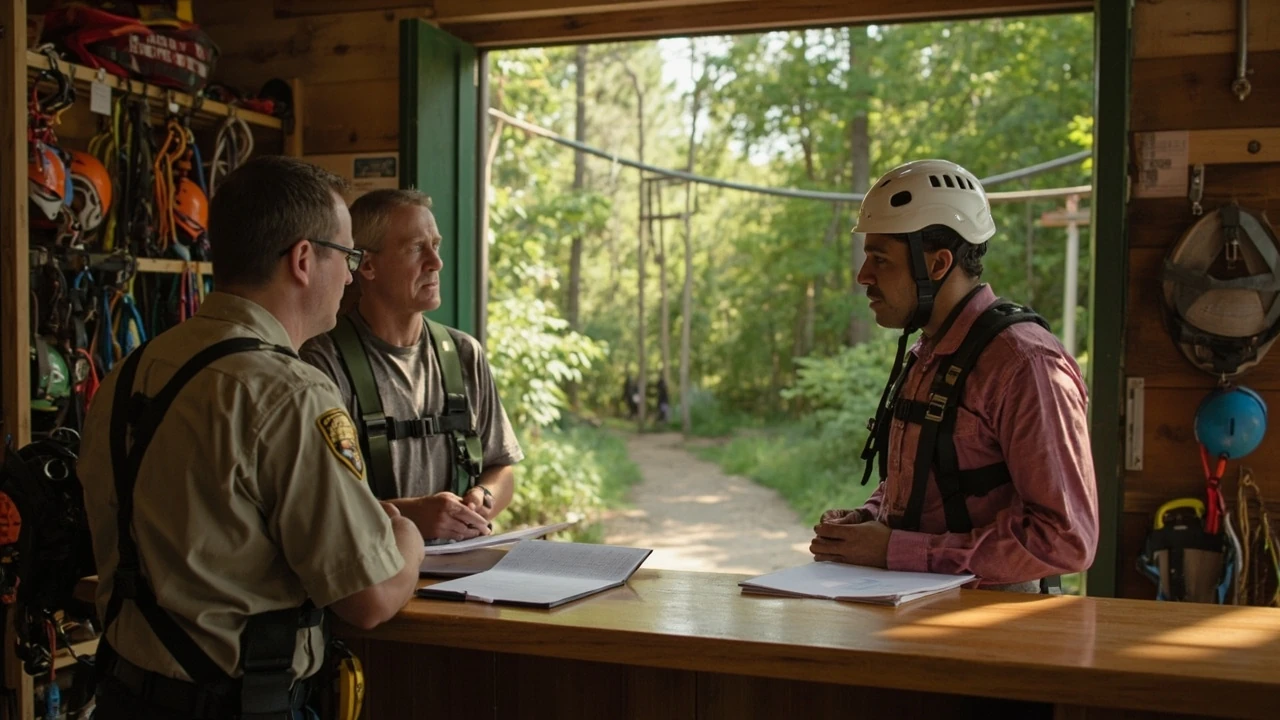
Two friends stand at the check-in desk of a high ropes park. One is six foot three and broad-shouldered. The other just had a baby six months ago and is still working on regaining her pre-pregnancy fitness. They are about to hand over their credit cards when a small sign on the counter catches their eye: “Participant weight range: 70–250 lb.” That single line is the start of a much longer conversation, and it is exactly the kind of conversation worth having before you book, not after you have driven two hours to the site.
Zipline weight limits are not a marketing footnote. They are part of the engineering envelope that keeps the cable, the trolley, the harness, and the braking system working as their designers intended. When you know what to ask about zipline weight limits before booking, you avoid the awkward call where a guest is turned away at the harness room, the disappointment of a non-refundable deposit, or worse, the temptation to under-report a number so the booking goes through.
This guide walks through the practical questions that experienced adventure travelers actually ask operators. It is written for the booking stage, so you can get clear answers in writing, choose the right course, and arrive on the day already knowing whether the experience is built for your body.
Why zipline weight limits exist in the first place
Every zipline is designed around a load range, not a single number. Engineers calculate that range using the cable’s working load limit, the tensile strength of the anchors, the trolley design, the harness webbing, and the expected braking forces. The result is a window that keeps every component safely below its rated capacity, with an extra margin for dynamic loads, wind gusts, and the natural variation between calm and lively participants.
When you understand the logic behind the window, the questions you ask an operator become sharper. You are not trying to “get past” a limit. You are trying to confirm that the course you are booking is the right course for the people in your group.
How operators actually set their minimum and maximum weights
Most commercial zipline operators publish two numbers: a minimum and a maximum, expressed in pounds or kilograms. In practice, those numbers come from three sources working together.
- The harness. Harness manufacturers test their gear on a body range and label it. A harness built for 220 lb of static load will generally fit participants between roughly 70 and 250 lb, but the exact numbers depend on the model.
- The cable and trolley system. Engineers set a working load range that accounts for the rider’s weight, the sag of the cable, the speed at the end of the run, and the braking force. Exceeding that range can cause excessive sag, higher-than-expected landing speeds, or hard stops.
- The braking system. Whether the course uses a passive magnetic brake, an active hand brake, or a catch net, the system is tuned to a specific rider weight. A rider far outside that range changes how much energy the brake needs to absorb.
Because each of these systems has its own range, the operator’s published limits are usually the intersection of the three, with a small additional safety buffer. That is why two nearby courses with similar cables can list very different weight windows.
Core questions to ask the operator before you book
These are the questions that booking agents, guides, and course managers are used to hearing. If an operator seems uncomfortable answering any of them, treat that as a signal to slow down and keep asking.
What is the published minimum and maximum weight for this specific course?
Ask for the number, not a vague “we have a range.” You want the lower and upper figure, in the unit you understand, and ideally in writing. A reputable operator will state this clearly on their booking page or in their confirmation email. If the answer is “just tell us your height,” that is not the same as a weight answer and you should keep asking.
Are the limits the same for every line on the course?
Multi-line canopy tours often have different limits on different segments. A long, fast line into a landing platform may have a tighter upper limit than a short introductory line. Ask whether the published range applies to every line or only the most restrictive one, and ask which line you would not be allowed to ride if you were near the edge of the range.
Does the limit include clothing, footwear, and gear?
Your fully dressed weight, including boots, harness, and helmet, is what matters on the cable. Most operators do the math for you and accept a small margin, but it is reasonable to ask how much leeway is built in. A 250 lb limit that is checked on a calibrated scale at check-in is very different from a 250 lb limit that is estimated by eye.
Do you weigh guests at check-in?
Some parks quietly weigh participants or require a signed weight declaration. Others rely on the honor system and ask you to be honest on the waiver. Neither approach is unusual, but it is helpful to know in advance. If you are near the limit and the park weighs guests, you will want to know before you drive there.
Are the limits per rider or per pair on tandem lines?
Tandem ziplines, where two riders are clipped to the same trolley, are governed by a combined weight range rather than an individual one. If you are booking a course with a tandem option, ask what the combined minimum and maximum are, and whether one heavy rider can be paired with a lighter partner to stay within range.
What harness do you use, and what is its rated range?
Operators who take pride in their kit will name the harness brand and model. You can then look up the manufacturer’s rated range. If the operator cannot or will not name the harness, treat that as a yellow flag, especially if you are near the edge of the range.
What happens if a guest arrives outside the range?
Ask the direct question: “If I show up and I am two pounds over the upper limit, what is your policy?” A clear, written policy is a good sign. A vague “we’ll figure it out” is not. You want to know whether you get a refund, a reschedule, or a downgrade to a different course on site.
Is there a different course at the same park that suits a smaller or larger body?
Larger parks often run several courses with different difficulty ratings and weight ranges. The park you first looked at may be the wrong course, not the wrong experience. Ask whether there is a beginner course with a wider harness range, or a kid-sized course for a smaller family member.
How does the limit change for children, teens, and seniors?
Limits are not only about the upper bound. Children and older adults often fall on the lower bound of the same window. Ask whether the operator has a separate harness or a separate course for younger riders, and what the minimum age and minimum weight really are, rather than what the marketing page says.
Are there medical conditions the operator screens for alongside weight?
Weight limits overlap with conditions that affect harness fit, back health, joint stability, and recovery. A good operator will ask about pregnancy, recent surgery, and certain heart or spinal conditions on the waiver. You do not have to share your medical history with the booking agent, but it is reasonable to ask whether your situation will be reviewed before you arrive.
Reading a typical zipline weight range table
When an operator publishes a weight range, it usually looks like a single line of small print. The table below shows how that single line tends to break down across the different components of the system. Use it as a mental model when you are comparing two parks.
| Component | Typical range | What affects the number |
|---|---|---|
| Full-body harness, adult size | 70–250 lb (32–113 kg) | Webbing strength, buckle design, leg-loop size |
| Full-body harness, child size | 40–100 lb (18–45 kg) | Adjustable leg loops, smaller D-rings |
| Sit harness, standard | 70–220 lb (32–100 kg) | Waist belt length, leg loop size |
| Cable and trolley system | Set by engineer, often 50–275 lb | Cable diameter, sag, anchor rating |
| Passive magnetic brake | Tuned to a target rider weight window | Eddy current strength, line length, line angle |
| Active hand brake | Depends on rider grip and reach | Glove design, lever force, instruction quality |
| Combined tandem trolley | Sum of both riders within band | Per-trolley spec, often 130–450 lb |
If a course publishes a single weight range of 70–250 lb, that is usually the harness. The cable and brake may accept a wider or narrower set of riders, and the operator has chosen the most restrictive published number to keep everything conservative.
Special situations worth raising in the booking call
Some riders fall into categories that deserve a direct conversation, not a quick yes or no on the booking form. Calling ahead protects both you and the operator.
Larger-bodied riders and the upper limit
If you are near the top of the published range, ask the operator to confirm the exact harness they will issue and the maximum waist and thigh size it accepts. Body composition, not just scale weight, affects harness fit. A taller, lean rider at 235 lb often fits a different harness than a 235 lb rider with a 42-inch waist. Some parks keep a small selection of extra-large harnesses on hand. Others do not, and you will only find that out when you arrive.
It is also worth asking whether the park has a wider “comfort harness” available, and whether there is a per-rider weight buffer that the staff will use on the day. Two pounds of buffer is not the same as twenty.
Smaller adults and the lower limit
The lower limit is just as real as the upper one. Harnesses are designed to keep the rider upright and the trolley correctly positioned. A 95 lb adult on a harness sized for a 250 lb rider can sit too high in the waist belt, which affects braking posture on a hand-brake line. If you are a smaller adult, ask whether the park has a smaller harness in stock and what the minimum waist size really is.
Children, tweens, and teens
Kids’ weight limits are usually set by harness sizing and by the course design. Some courses offer a dedicated junior line with a lower speed and a lower minimum. Ask whether the child will be on the same line as adults, and whether the operator requires a parent to ride tandem with anyone under a certain age or weight. A useful question is: “If my child is right at the minimum, who carries them on the line and how does the brake work for them?”
Pregnancy and postpartum riders
Zipline operators generally decline participants who are pregnant, regardless of weight, because of the harness pressure on the abdomen and the jolting forces on landings. If you are early postpartum, ask your clinician and the operator separately. Most parks will ask you to sign a specific acknowledgment if there is any recent pregnancy involved.
Older adults and joint issues
Weight is a proxy for the load on the body, but age and joint health matter just as much. Ask whether the course has a low-impact line, whether there are stairs or ladders, and whether the landing zone is flat. Many parks will let a 200 lb 70-year-old ride a course that they will not let a 110 lb 70-year-old ride, simply because the harness fits better and the rider can brace with their legs.
Tattoos, body modifications, and piercings
This sounds unrelated to weight, but it comes up in the same conversation. Some operators ask about body piercings, implants, or very recent tattoos because of the harness’s contact area. If you have any of these, raise it during the booking call so you are not surprised on the day.
Questions to ask about policies and paperwork
Weight limits do not exist in isolation. They live inside a set of policies that determine what happens if something does not match.
- Does the operator charge a deposit, and is it refundable if a guest is turned away for weight or harness fit?
- Can you reschedule to a different course at the same park if your original booking does not suit you?
- Is there a weigh-in at check-in, and is it visible to the guest?
- Is there a written acknowledgment of the weight range in the waiver?
- Are group bookings, school bookings, and corporate bookings held to the same per-rider limits?
These questions are not confrontational. They are the same questions any sensible event planner would ask a venue, and a good operator will answer them in a single email.
How to compare two zipline operators using weight data
If you have a shortlist of two or three parks, the weight data is one of the cleanest ways to compare them. Build a simple side-by-side table from the booking pages and the email confirmations.
| Comparison point | Park A | Park B | Park C |
|---|---|---|---|
| Published minimum weight | 70 lb | 60 lb | 80 lb |
| Published maximum weight | 250 lb | 265 lb | 240 lb |
| Number of lines covered | All 6 lines | Main course only, kid line separate | All 4 lines |
| Tandem option available | Yes, lines 3 and 5 | Yes, all lines | No |
| Harness brand named on site | Yes | No | Yes |
| Weigh-in at check-in | Optional honor system | Required on a digital scale | Optional honor system |
| Policy for out-of-range guests | Reschedule or refund | Reschedule only | No refund, no reschedule |
Once you see the numbers side by side, the choice often becomes obvious. The park with the highest upper limit is not automatically the best fit. The park that is honest about its policies, names its harness, and weighs guests on a calibrated scale is usually the park with the strongest safety culture.
What to do if you are right at the edge of the range
Riders who fall within a few pounds of either bound should treat the booking call as a planning session, not a transaction.
- Ask the operator to repeat the limit back to you and to confirm it applies to the specific course you want.
- Ask what harness they will issue and what the harness’s own minimum and maximum are.
- Ask whether there is a weigh-in on the day, and whether you will be told the result privately.
- Ask what the backup plan is if the harness does not fit, including a downgrade to a different course or a refund.
- Get the answer in writing in the confirmation email so the front-desk staff can see the same thing you saw.
This approach costs you a few minutes of extra reading and one extra email. It can save you a wasted weekend and an awkward conversation at the harness room.
Questions that are not about weight but come up in the same call
Because the booking call is your only real chance to speak with a human before arrival, use it well. A few adjacent questions are worth raising alongside the weight conversation.
- What should I wear, and what footwear is allowed?
- Is there a weight, height, or age limit on the harnesses for younger family members watching but not riding?
- Can I bring a small action camera, and is there a chest mount option if a helmet mount is not allowed?
- Are there lockers, or should I travel light?
- How long is the full experience, including check-in, harness fitting, briefing, and the course itself?
These details are not the focus keyword, but they affect the same booking decision. You can read more about the wider ropes course experience in our practical guide to ropes courses explained: types, safety systems, and who they suit, and you can think through the practicalities of getting to a course in our piece on rope park weather: rain, wind and closure questions to ask.
How the booking confirmation email should look
Before you pay a deposit, look at the confirmation email and check that it covers the key points. A solid confirmation will include all of the items in the table below.
| Confirmation line | Why it matters |
|---|---|
| Course name and difficulty level | Confirms you are booked on the right course, not a different one |
| Date, start time, and total duration | Helps you plan travel and parking |
| Weight range for the course | Your record of the operator’s published number |
| Harness brand or model, if named | Lets you check the manufacturer’s spec at home |
| Deposit amount and refund terms | Sets the expectation if a guest is out of range |
| Contact for changing the booking | Makes a reschedule easy if the weather changes |
| Reduces stress on the day |
If the confirmation is missing the weight range, write back and ask. A reputable operator will add the line without making a fuss.
Frequently asked questions
What is a typical minimum and maximum weight for a commercial zipline?
Most commercial courses publish a range of roughly 60 to 100 lb at the lower end and 250 to 275 lb at the upper end. The exact numbers depend on the harness, the cable, and the brake. Always read the operator’s own range for the course you want, because the wider industry range is only a starting point.
Can a rider be turned away at the park if they exceed the weight limit?
Yes. Most parks reserve the right to refuse a rider whose weight is outside the published range, even if the rider signed a waiver at booking. That is why the booking call matters. A clear answer in advance is better than an awkward conversation at the harness room.
Do zipline harnesses have a separate weight limit from the cable?
Usually yes. The harness, the cable and trolley, and the brake each have their own range. The operator publishes the most restrictive of those numbers, so the harness limit is often the one you see on the website.
How accurate do the published weight limits tend to be?
For established commercial operators, the published numbers are accurate within a small margin, usually a few pounds. The numbers come from manufacturer specs, engineering calculations, and insurance requirements. They are not marketing estimates.
Are weight limits different for tandem ziplines?
Yes. Tandem trolleys list a combined weight range. The two riders’ weights are added together and must fall within the trolley band. If one rider is near the upper individual limit, ask the operator about pairing and the combined maximum before booking.
What should I do if I am a few pounds over the upper limit?
Call the operator before you book, ask whether they have a wider harness available, and ask whether a small buffer is built into the on-the-day check. If the answer is no, treat the limit as final and choose a different course or a different park.
Do kids have their own weight range, or is it the same as adults?
Children almost always have a separate range, and many parks keep child-sized harnesses on hand. Ask whether the course is run at the same speed and braking setting as the adult line, because the answer changes how comfortable the experience will be for a smaller rider.
Is the weight limit affected by wind or rain on the day?
Weight is one limit, and weather is another. Wind and rain can close a course even if every guest is comfortably inside the weight range. You can read more about how operators handle weather in our guide to rope park weather: rain, wind and closure questions to ask, and the underlying systems that govern course safety in our piece on high ropes belay systems explained for first-time visitors.
Should I mention a medical condition at the booking stage?
Yes, if it could affect harness fit, joint stability, or the ability to follow braking instructions. The booking call is the right place to ask whether the operator is set up for your situation, and it gives them a chance to flag any course they would rather you skip.
Can a larger-bodied rider use a sit harness instead of a full-body harness?
Some parks offer a choice, others do not. The choice depends on the course design, the brake type, and the harness stock. Ask the operator which harness they would issue and what the rated range is for that specific model before you assume a sit harness is available.
A short checklist you can take into the booking call
If you only have a few minutes, work through this list with the booking agent. Tick each box before you pay a deposit.
- Confirmed minimum and maximum weight for the specific course, in writing.
- Confirmed whether the range applies to every line or only the most restrictive one.
- Confirmed harness brand or model, and its rated range.
- Confirmed policy for guests who arrive outside the range, including refund or reschedule.
- Confirmed whether the park runs a weigh-in at check-in.
- Confirmed any medical, pregnancy, or age-related questions on the waiver.
- Confirmed what the weather and reschedule policy looks like, given the forecast for your date.
If the operator answers all seven clearly, you are booking with a team that has thought about the experience end to end. If two or more answers are vague, consider a different park. The weight limit is only one of many small signals about how a course is run, and the way an operator handles that conversation usually predicts how they will handle the day itself.
Related reading
Explore High Ropes Adventure
Trip tools
Essential adventure planning guides
Use these practical guides to compare rope park activities, prepare for a first high ropes day, check a booking, choose suitable footwear and contact the editorial team. Each page links to the relevant live tools and current planning sections.
Latest articles
- Tame Impala tickets: how to find them, what they cost, and what to know before you buy
- Outdoor pillows: how to choose the right ones for a deck or trail rest stop
- How to find Morgan Jay tickets without overpaying
- How to find national parks near me: a practical local search guide
- Paylater travel: how buy now, pay later works for trip bookings
- Bagsmart Blast Travel Backpack: A Practical Review for Day Trips and Adventure Days
- How to choose an outdoor rocking chair that actually lasts
- Indiana travel advisory map: how to read it before a day trip
- How to plan an outdoor day around a concert stop: a cardi b tickets field guide
- Outdoor sectional sofas: a practical buyer’s guide for patio living